Volvo XC60 vs Lexus NX: Luxury SUV Showdown
Discover which premium compact SUV delivers superior performance, efficiency, and features for your lifestyle.
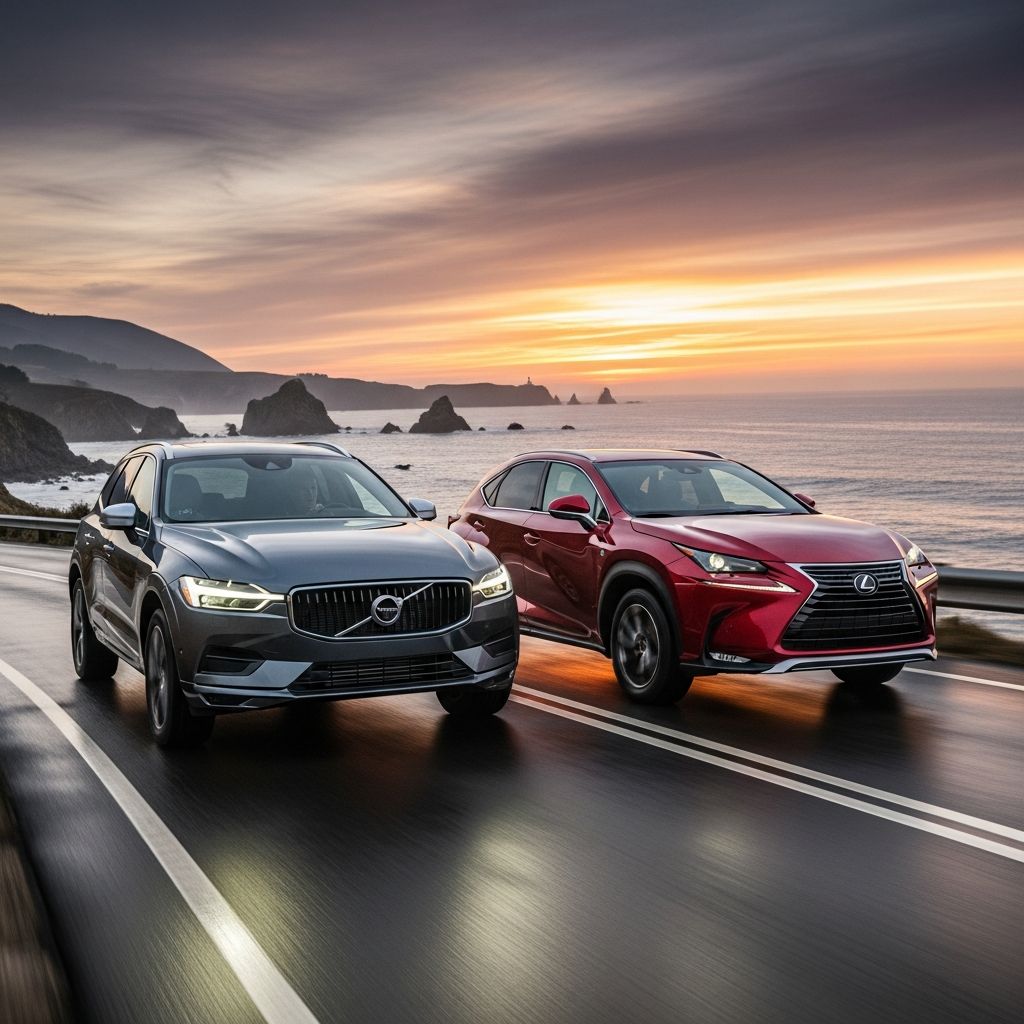
Volvo XC60 vs Lexus NX: A Comprehensive Luxury SUV Comparison
The market for premium compact SUVs continues to expand, with discerning buyers seeking vehicles that balance performance, efficiency, comfort, and advanced technology. Two standout contenders in this segment are the Volvo XC60 and Lexus NX, both offering distinctive approaches to luxury motoring. While the Volvo emphasizes Scandinavian design philosophy and comprehensive safety features, the Lexus focuses on hybrid efficiency and reliability. Understanding the differences between these two vehicles can help prospective buyers make an informed decision aligned with their priorities and lifestyle requirements.
Engine Performance and Acceleration Capabilities
When evaluating the powertrains of these two luxury SUVs, distinct philosophies emerge. The Volvo XC60 features a 2.0-liter turbocharged four-cylinder engine paired with a mild-hybrid system, generating 247 horsepower and 266 pound-feet of torque. This configuration prioritizes efficiency without sacrificing responsive performance. The Lexus NX, conversely, utilizes a 2.4-liter turbocharged engine producing 275 horsepower and 317 pound-feet of torque, delivering notably higher power output.
Despite the Lexus’s superior horsepower specification, acceleration metrics tell a different story. The Volvo XC60 achieves a 0-60 mph time of 6.5 seconds, while the Lexus NX reaches the same milestone in 6.6 seconds. This demonstrates how efficient engine tuning and transmission optimization can deliver real-world performance advantages that exceed raw horsepower numbers.
For buyers considering plug-in hybrid variants, the performance gap widens dramatically. The Volvo XC60 PHEV generates 455 horsepower, substantially outpacing the Lexus NX 450h+ which produces 304 net horsepower. This significant difference makes the plug-in Volvo particularly appealing to those seeking maximum performance flexibility.
Fuel Efficiency and Tank Capacity Analysis
Fuel economy represents a critical consideration for luxury vehicle owners, particularly given the premium fuel requirements of both models. The two SUVs employ different efficiency strategies, resulting in varied real-world consumption patterns.
The Volvo XC60 achieves EPA-estimated ratings of 23 city, 30 highway, and 26 combined miles per gallon. Its 18.8-gallon fuel tank capacity provides an extended cruising range, particularly advantageous for highway driving. The Lexus NX hybrid variant delivers 42 city, 38 highway, and 40 combined miles per gallon, substantially superior in urban and combined driving scenarios. However, its smaller 14.5-gallon tank results in more frequent refueling stops despite better efficiency ratings.
The choice between these efficiency profiles depends on driving patterns. City-centric drivers benefit from the Lexus hybrid technology, while highway commuters may find the Volvo’s larger tank and respectable highway economy more practical. The combined efficiency advantage of the Lexus becomes evident in mixed driving, where it achieves approximately 14 MPG better performance.
Towing and Payload Capabilities
Practical utility often influences luxury vehicle selection, particularly for owners with recreational or professional hauling requirements. The Volvo XC60 offers a maximum towing capacity of 3,500 pounds, providing substantial capability for small trailers, jet skis, or lightweight recreational equipment. The Lexus NX, by contrast, provides only 2,000 pounds of towing capacity, limiting its utility for many towing scenarios.
This considerable difference—75 percent greater capacity for the Volvo—reflects different vehicle engineering priorities. The Volvo’s architecture and driveline components were designed with towing applications in mind, whereas the Lexus NX emphasizes lightweight efficiency and on-road dynamics over hauling versatility. For buyers with occasional towing needs, the Volvo provides substantially greater flexibility.
Interior Dimensions and Passenger Comfort
Space perception significantly impacts daily driving satisfaction, particularly during longer journeys or when transporting passengers. The Volvo XC60 presents overall dimensions of 185.4 inches in length, 78.7 inches in width, and 65.4 inches in height. The Lexus NX measures 183.5 inches long, 73.4 inches wide, and 65.8 to 66.1 inches tall.
These dimensional differences translate into practical interior advantages for Volvo passengers. Front headroom measures 39.7 inches in the XC60 versus 38.3 inches in the NX, while front legroom extends to 41.5 inches compared to the Lexus’s 41 inches. Rear passenger accommodation favors the Volvo as well, offering 38 inches of legroom against the NX’s 36.1 inches. Both vehicles accommodate five passengers comfortably, though the Volvo provides noticeably more generous space for rear occupants on extended drives.
Cargo versatility complements passenger comfort. The Lexus NX offers 22.7 cubic feet with rear seats in place, expandable to 46.9 cubic feet with seats removed. While specific maximum cargo figures weren’t detailed for the Volvo XC60 in available comparisons, its larger overall dimensions typically accommodate greater cargo volumes, appealing to buyers prioritizing versatility.
Technology and Infotainment Integration
Modern luxury vehicles distinguish themselves significantly through technology offerings, with integrated infotainment systems becoming increasingly central to the ownership experience. The Volvo XC60 standard configuration includes an 11.2-inch center display complemented by a 12.3-inch driver information display. This dual-screen approach creates a comprehensive digital cockpit supporting navigation, vehicle controls, and entertainment functions. The Lexus NX provides a 9.8-inch touchscreen and 7-inch multi-information display, offering functional capability with a more conservative tech footprint.
The Volvo’s larger, higher-resolution displays facilitate easier interaction with complex functions, while its contemporary design language appeals to tech-forward buyers. The Lexus approach prioritizes simplicity and proven reliability over cutting-edge specification, reflecting Toyota’s corporate emphasis on dependability over innovation.
Standard Equipment and Interior Appointments
Luxury vehicle differentiation extends beyond performance metrics into the quality and sophistication of included amenities. The Volvo XC60 arrives standard with distinctive Scandinavian design elements, including a crystal gear selector knob crafted by Orrefors and quilted Nordico upholstery reflecting Swedish design heritage. Practical comfort features include a panoramic sunroof, wireless phone charging, two-zone climate control, rain-sensing windshield wipers, and adaptive cruise control. Exterior refinement includes glossy black roof rails and LED lighting technology.
The Lexus NX emphasizes traditional luxury appointments with NuLuxe synthetic upholstery, dual-zone climate control, roof rails, rain-sensing windshield wipers, and full-speed-range dynamic radar cruise control. This feature set prioritizes proven comfort technology over distinctive design elements, reflecting Lexus’s conservative approach to interior design.
Safety Performance and Structural Protection
Safety considerations paramount for family vehicle selection reveal significant performance differentials between these models. The Volvo XC60 achieved an overall 5-star rating across NHTSA testing, with 5-star ratings in both driver and passenger frontal protection categories. Driver-side testing demonstrated notably favorable metrics: HIC (Head Injury Criterion) of 125 versus the NX’s 233, neck injury risk of 22 percent compared to 34.2 percent, and neck stress of 198 pounds versus 303 pounds.
Passenger-side performance similarly favored the Volvo, with HIC measurements of 178 against the NX’s 285, representing substantially improved head protection. Neck injury risk percentages of 28 percent for the Volvo versus 34.9 percent for the Lexus reinforce Volvo’s engineering advantages in crash safety.
Rollover protection testing demonstrated continued superiority, with the XC60 achieving 5-star ratings and lower impact forces. Pole crash testing showed dramatically better results for the Volvo: maximum damage depth of 12 inches versus 13 inches, HIC of 237 compared to 380, and hip force of 410 pounds against the NX’s 892 pounds.
Pricing and Value Proposition
Investment considerations significantly impact purchase decisions, particularly in the premium vehicle segment. The 2026 Lexus NX begins at approximately $46,070, positioning itself as the more accessible entry point for luxury compact SUV shoppers. The Volvo XC60 starts around $51,095, reflecting its additional technology features, safety systems, and Scandinavian design sophistication.
The approximate $5,000 price differential represents meaningful value positioning. Lexus buyers prioritize proven hybrid efficiency and legendary reliability, while Volvo customers invest in comprehensive safety technology, contemporary design language, and superior performance metrics. Lease programs offer flexibility for both nameplates, allowing test drives before long-term commitments.
Comparative Summary Table
| Feature | Volvo XC60 | Lexus NX |
|---|---|---|
| Engine | 2.0L Turbo 4-cyl | 2.4L Turbo 4-cyl |
| Horsepower | 247 hp | 275 hp |
| 0-60 Time | 6.5 seconds | 6.6 seconds |
| Towing Capacity | 3,500 lbs | 2,000 lbs |
| Combined MPG | 26 MPG | 40 MPG (Hybrid) |
| Center Display | 11.2-inch | 9.8-inch |
| Starting Price | $51,095 | $46,070 |
Making Your Decision: Buying Considerations
Selecting between the Volvo XC60 and Lexus NX ultimately depends on individual priorities and lifestyle requirements. Buyers prioritizing comprehensive safety technology, Scandinavian design sophistication, performance capabilities, and towing versatility should strongly consider the Volvo XC60. Its superior crash test ratings, larger displays, distinctive interior appointments, and genuine acceleration advantage justify the premium investment for safety-conscious families and active lifestyle enthusiasts.
Conversely, buyers emphasizing fuel economy, affordability, proven hybrid reliability, and traditional luxury appointments benefit from the Lexus NX. Its exceptional fuel efficiency delivers substantial long-term savings, particularly for urban commuters, while Lexus’s legendary dependability provides peace of mind and reduced maintenance costs throughout the ownership experience.
Both vehicles represent excellent luxury compact SUV options, each excelling in distinct categories. Test drives reveal important subjective factors—interior ambiance, seat comfort, control intuitiveness, and driving dynamics—that prove decisive for many buyers beyond objective specifications and pricing metrics.
References
- Volvo XC60 Vs. Lexus NX: Luxury SUV Comparison & Review — Volvo Cars Sarasota. 2026. https://www.volvocarssarasota.com/volvo-xc60-vs-lexus-nx.htm
- Compare the 2026 Volvo XC60 vs 2025 Lexus NX — Suburban Volvo Cars. 2026. https://compare.suburbanvolvocars.com/comparison/288250
- Lexus NX vs Volvo XC60 – Car Comparison — Edmunds. 2026. https://www.edmunds.com/car-comparisons/lexus-nx-vs-volvo-xc60/
- Lexus NX vs. Volvo XC60 Comparison — TrueCar. 2026. https://www.truecar.com/compare/lexus-nx-vs-volvo-xc60/
Similar Articles





Read full bio of Sneha Tete