Volvo V50: 3 Engine Options, Safety, And Practicality
Discover why the Volvo V50 remains a smart, safe, and versatile choice for practical drivers seeking reliability and style in a compact estate.
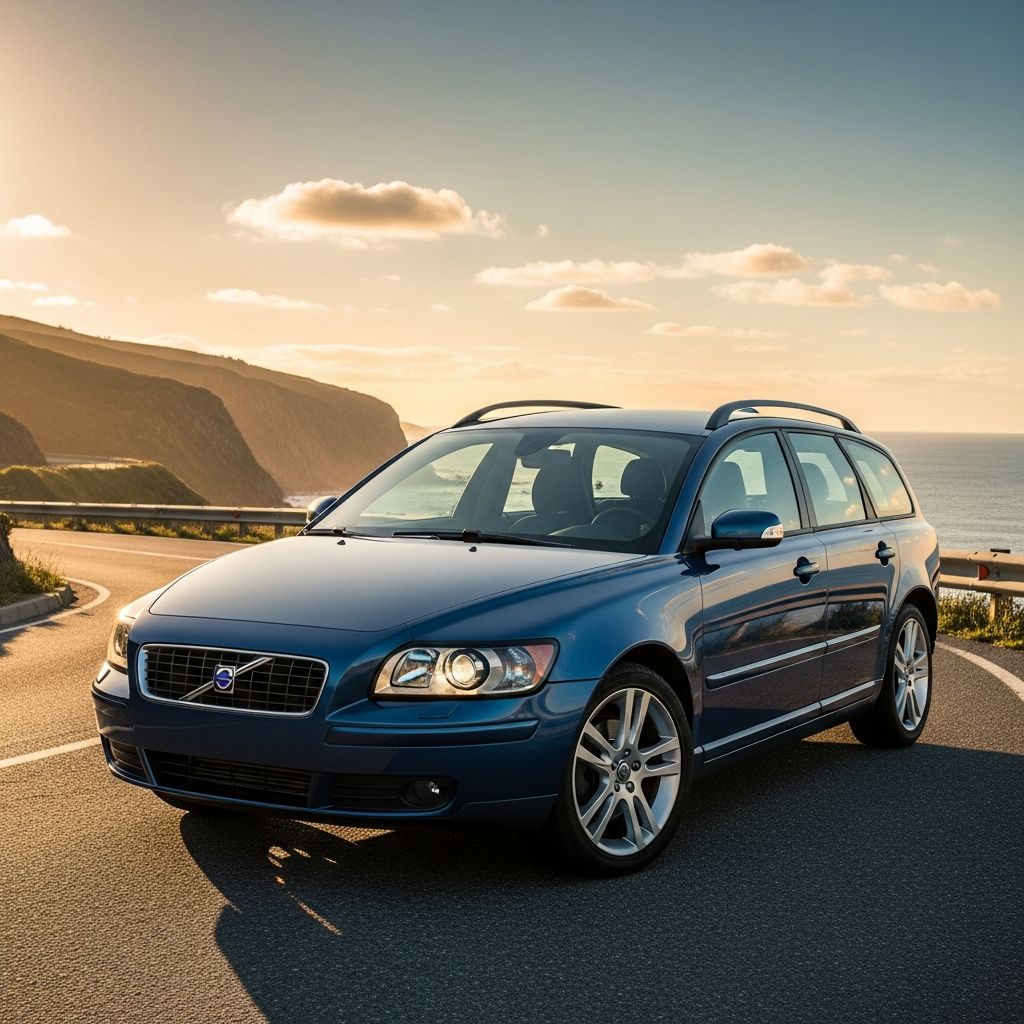
The Volvo V50 stands out as a compact estate car that masterfully combines everyday practicality with premium safety standards and engaging driving dynamics. Produced from 2004 to 2012, this wagon built on Volvo’s reputation for building secure vehicles while offering flexible loading options and efficient powertrains suitable for urban commutes or long highway journeys.
Design and Build Quality
The V50’s exterior design features clean, Scandinavian lines with a boxy yet aerodynamic profile that maximizes interior space without sacrificing maneuverability. Its compact dimensions—approximately 4.5 meters in length—make it easy to park in tight city spots while providing wagon versatility. The body structure incorporates high-strength steel, contributing to Volvo’s hallmark crash protection, which earned top ratings in independent tests during its production run.
Inside, the cabin emphasizes durability and comfort. Materials like supple leather and robust plastics create a sturdy feel that holds up well over time, even on high-mileage examples. The floating center console adds a unique touch, housing controls for climate and audio systems in an intuitive layout. Seats offer excellent support for long drives, with ample adjustability for driver and front passenger.
Engine Options and Performance
Volvo offered a range of engines for the V50, catering to different needs from fuel-efficient diesels to spirited petrol variants. The 1.6-liter diesel delivers 113 horsepower and 270 Nm of torque from low revs, making it ideal for A-road cruising and motorway efficiency. Owners report smooth power delivery that feels adequate without being overwhelming, perfect for daily driving.
For more thrill, the T5 turbocharged petrol engine produces around 220 horsepower in all-wheel-drive configurations. This setup accelerates from 0-60 mph in under 7 seconds, with quarter-mile times around 15.2 seconds at 93 mph. Top speeds reach 141 mph in European models, though U.S. versions are limited to 130 mph. Handling benefits from optional 17-inch wheels and high-performance tires, achieving 0.85g of lateral grip on skidpads.
| Engine | Power | Torque | 0-60 mph | Fuel Economy (Combined) |
|---|---|---|---|---|
| 1.6D Diesel | 113 hp | 270 Nm | ~10.5s | ~45-50 mpg |
| 2.4i Petrol | 170 hp | 230 Nm | ~8.5s | ~25 mpg |
| T5 AWD Petrol | 220 hp | 320 Nm | 6.9s | ~22-25 mpg |
Braking performance is another strong suit, with anti-lock systems stopping the car from 70 mph in 163 feet, outperforming rivals like Audi and BMW wagons of the era. The all-wheel-drive T5 variant adds stability in wet or snowy conditions, enhancing confidence on varied roads.
Practicality and Space Utilization
Despite its compact footprint, the V50 shines in cargo versatility. Standard boot space measures 417 liters with seats up, expanding to 1,307 liters when folded flat. The 40/20/40 split-folding rear seats allow flexible configurations for passengers or gear. Notably, the front passenger seat folds flat, accommodating longer items like flat-pack furniture.
- Seating: Rear space is modest for adults on long trips but sufficient for children or shorter journeys.
- Storage: Ample cubbies, door pockets, and a deep center console provide convenient spots for essentials.
- Loading: Low lift-over height and wide opening simplify heavy item placement.
Fuel efficiency varies by engine: diesels achieve up to 50 mpg on highways, while petrol models average 25 mpg combined. This makes the V50 a cost-effective choice for high-mileage drivers.
Safety Features and Engineering
Volvo’s safety legacy defines the V50. Standard equipment includes multiple airbags, ABS, traction control, and electronic stability control. The structure’s rigidity was validated in crash tests, with side-impact protection particularly praised. Advanced features like BLIS (blind-spot information system) appeared in later models, reducing lane-change risks.
Owner forums highlight long-term reliability when maintenance is diligent, especially timing belt and water pump services every 100,000 miles. The shared Ford C1 platform ensures parts availability, with robust Aisin-Warner transmissions lasting with regular fluid changes.
Driving Experience and Handling
On twisty roads, the V50 feels nimble thanks to its well-balanced chassis. The T5 AWD model’s sports suspension firms up the ride without excessive harshness, delivering stable highway manners and fun cornering. Diesel variants prioritize comfort, absorbing bumps effectively for relaxed touring.
Steering provides precise feedback, and the car’s low center of gravity—under 3,500 pounds for most models—enhances agility. Reviewers note its superiority over predecessors in acceleration, braking, and grip, making it competitive against premium German estates.
Ownership Costs and Reliability
Running costs remain reasonable for a premium badge. Insurance groups are moderate, and servicing intervals suit fleet use. Common issues include occasional PCV system needs around 100,000 miles and minor interior creaks, but overall durability impresses. Resale values hold for low-mileage, well-maintained examples.
Consumer ratings average 4-4.5 stars, praising dependability, economy (25-32 mpg reported), and handling. Drawbacks include limited rear space and aging platform by 2010, though refinements kept it fresh.
Market Position and Rivals
The V50 slotted between smaller hatches and larger estates, rivaling Audi A3 Sportback, BMW 1 Series Touring, and Ford Focus wagons. Its safety edge and wagon utility set it apart, appealing to families valuing protection over outright speed.
Why Choose a Used V50 Today?
In 2026, used V50s offer premium features at budget prices. Well-equipped T5 models provide sports-wagon thrills, while diesels excel as economical runners. With robust parts support, it’s a low-regret buy for enthusiasts seeking understated excellence.
Frequently Asked Questions
Is the Volvo V50 reliable?
Yes, with proper maintenance like timing belt changes; many exceed 150,000 miles reliably.
How much boot space does it have?
417 liters standard, up to 1,307 liters with seats folded.
What’s the best engine for efficiency?
The 1.6D diesel, achieving 45-50 mpg on highways.
Does it have all-wheel drive?
T5 models offer AWD for better traction.
Are parts easy to find?
Yes, sharing Ford platform ensures good availability.
References
- Tested: 2004 Volvo V50 T5 AWD – Car and Driver — Car and Driver. 2004-06-01. https://www.caranddriver.com/reviews/a15132314/volvo-v50-t5-awd-road-test/
- Volvo V50 Review – 1.6 Diesel Estate Daily Driver — Spanner Rash. 2023-05-15. https://www.spannerrash.com/volvo-v50-review/
- 2010 Volvo V50 Expert Review — MotorTrend. 2010-01-01. https://www.motortrend.com/cars/volvo/v50/2010
- 2009 Volvo V50 Review & Ratings — Edmunds. 2009-01-01. https://www.edmunds.com/volvo/v50/2009/review/
- 2005 Volvo V50 Consumer Reviews & Ratings — Kelley Blue Book. 2005-01-01. https://www.kbb.com/volvo/v50/2005/consumer-reviews/
Similar Articles






Read full bio of Sneha Tete