Volvo S60 T8 Plug-In Hybrid: Performance and Efficiency
Luxury meets sustainability in Volvo's advanced plug-in hybrid sedan
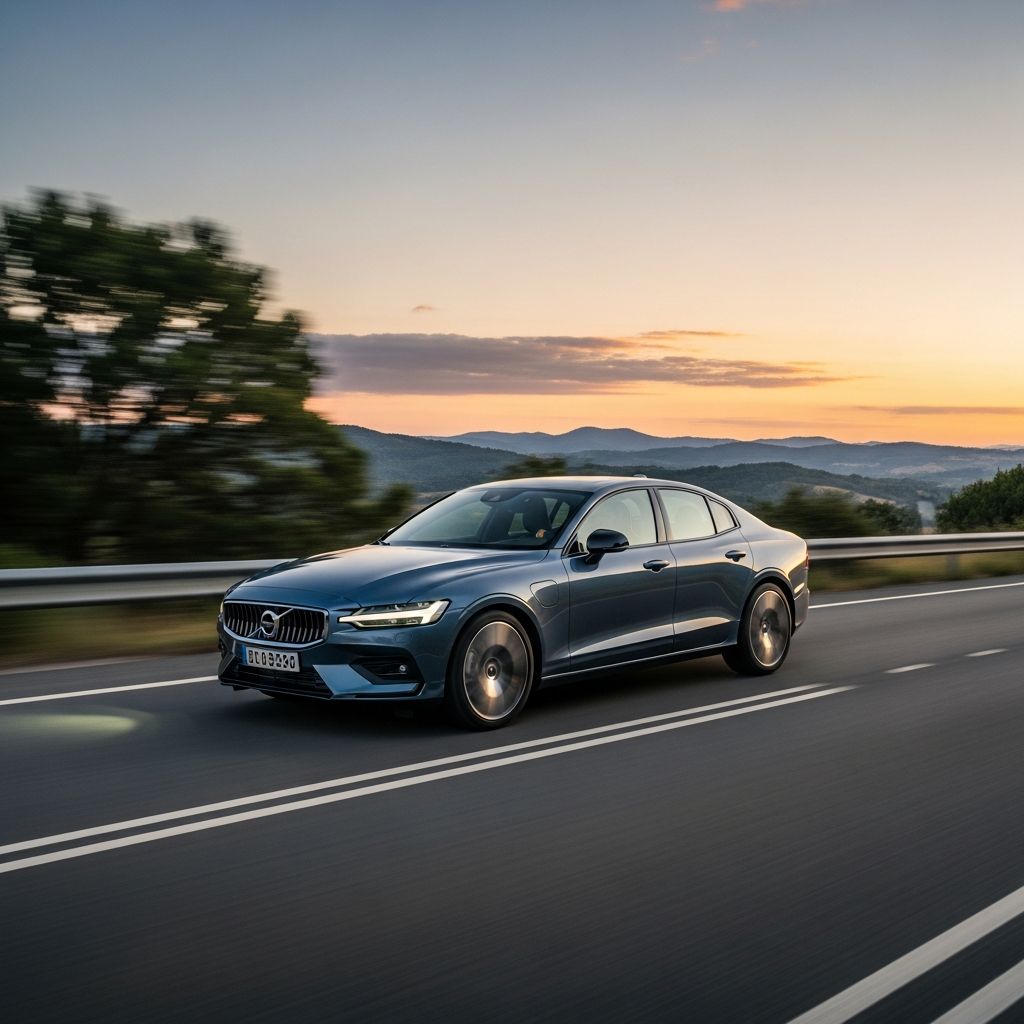
Understanding the Volvo S60 T8 Twin-Engine System: A Comprehensive Performance Analysis
The automotive landscape continues to shift toward electrification, yet many manufacturers recognize that plug-in hybrid technology represents a pragmatic transition period for drivers unwilling to sacrifice range and flexibility for environmental responsibility. The Volvo S60 T8 exemplifies this philosophy, combining traditional combustion engine capabilities with electric motor assistance to create a vehicle that caters to diverse driving patterns and priorities.
The Dual-Powertrain Architecture: How the T8 System Functions
Volvo’s T8 designation represents a sophisticated engineering approach that integrates two distinct power sources into a unified drivetrain. The system comprises a 2.0-liter turbocharged and supercharged petrol engine paired with an electric motor, producing a combined output of approximately 385 to 405 horsepower depending on specification level. This configuration provides drivers with remarkable flexibility, automatically switching between power sources based on driving conditions, battery charge state, and selected driving mode.
The petrol engine delivers 318 horsepower and 430 Newton-meters of torque through the front axle, while the electric motor contributes 87 horsepower and 240 Newton-meters from the rear, enabling all-wheel-drive functionality. This layout offers significant advantages beyond mere performance metrics. The distribution of power between axles enhances traction control and stability, particularly during aggressive acceleration or adverse weather conditions.
Real-World Fuel Economy Expectations and Driving Patterns
One of the most compelling aspects of plug-in hybrid evaluation involves understanding how actual usage patterns translate into efficiency figures. Laboratory testing often diverges substantially from everyday driving scenarios, making long-term ownership data invaluable for prospective buyers. Testing demonstrates that S60 T8 owners operating within typical urban and suburban environments—characterized by short journeys with regular home charging—can achieve fuel economy figures ranging from 45 to 105 miles per gallon.
This extraordinary variance reflects the critical role that driving behavior and charging discipline play in plug-in hybrid ownership. Vehicles driven predominantly on short routes where the 36-mile electric range proves sufficient can operate almost entirely on battery power for several days between fuel fill-ups. Testing revealed that owners consistently achieving high electric-only mileage saw fuel consumption rates approaching 105 mpg across extended periods.
Conversely, drivers undertaking predominantly motorway journeys or those who neglect regular charging witness substantially different outcomes. Long-distance highway driving activates the petrol engine continuously, reducing efficiency to approximately 30-36 mpg. However, even under these less favorable conditions, the plug-in hybrid architecture still outperforms conventional petrol-only counterparts of similar power output.
Battery Capacity and Electric Range Considerations
The S60 T8 incorporates an 11.6 kilowatt-hour usable battery pack delivering an official electric range of 36 miles under standardized test conditions. Practical experience demonstrates that drivers can consistently extract 25 to 28 miles of zero-emission driving before the combustion engine requires activation. This range proves perfectly suited to typical commuting patterns where average journey lengths remain under 20 miles.
Battery charging occurs via a standard domestic power supply, a 7-kilowatt wallbox installation, or public charging infrastructure. Home charging from a standard outlet requires approximately eight hours for a complete charge cycle, while a dedicated wallbox reduces this to roughly three hours. The flexibility of charging from various sources removes the barrier to entry that pure electric vehicles present for drivers lacking dedicated charging facilities.
Performance Characteristics and Driving Dynamics
Despite its efficiency credentials, the S60 T8 delivers genuinely engaging performance. The 4.4-second acceleration time from zero to 62 miles per hour places it among segment rivals with higher displacement engines, while the 155 miles per hour top speed confirms its sporting capability. However, real-world driving reveals nuances that extend beyond headline figures.
The sophisticated powertrain management system demonstrates considerable intelligence regarding when to deploy electric assistance. Gentle throttle inputs during city driving maintain electric propulsion, providing whisper-quiet operation and seamless acceleration. Aggressive acceleration triggers the petrol engine, which spirals to life almost imperceptibly, delivering substantial additional thrust for highway merging or overtaking maneuvers.
The available Pölestar Performance Software optimization upgrade further enhances responsiveness, sharpening throttle mapping and accelerating power delivery transitions. Owners report that this modification transforms the driving character, elevating the S60 T8 from competent family sedan to genuinely entertaining sports saloon. Independent testing confirmed that the optimized variant delivers 405 horsepower system output with improved dynamic feel.
Driving Modes and Adaptive Performance Delivery
The S60 T8 offers multiple driving mode selections that fundamentally alter vehicle character and powertrain behavior:
- Pure Mode prioritizes electric-only operation for maximum efficiency during city driving, though petrol engine engagement occurs if acceleration demands exceed available battery power
- Hybrid Mode automatically optimizes between power sources based on driving conditions and remaining battery charge
- Dynamic Mode delivers more aggressive engine response and enhanced throttle sensitivity, favoring petrol power for spirited driving
- Off-Road Mode provides improved traction control management for challenging terrain, though this remains an unlikely scenario for most owners
Drivers report appreciating the seamless transitions between modes, with no discernible pause or hesitation as the system engages its alternative power source. This refinement reflects considerable development effort to eliminate the jarring experiences that characterized earlier plug-in hybrid systems.
Interior Quality and Practical Considerations
As befits the Volvo badge and luxury positioning, the S60 T8 interior showcases high-quality materials and sophisticated design execution. Swedish minimalism defines the cabin aesthetic, with clean lines and restrained ornamentation creating an ambiance that feels contemporary rather than trendy. Soft-touch plastics predominate in the touch zones, while metallic accents and available wood veneers add premium character.
The central infotainment display presents navigation, charging status, and powertrain information with clarity and intuitive organization. Owners particularly appreciate the battery charge monitoring function, which allows planned charging around driving schedules and trip requirements. However, some criticism emerged regarding limited physical storage compartments within the cabin, a trade-off occasioned by the substantial battery pack beneath the rear seats.
Real-World Ownership Economics
Financial considerations prove central to plug-in hybrid appeal. The S60 T8 commands a premium over conventional petrol variants—typically representing an additional £8,000 to £10,000 at purchase. However, several factors contribute to favorable long-term ownership economics:
| Factor | Benefit |
|---|---|
| Fuel costs | Reduced consumption translates to substantial savings, particularly for high-mileage drivers with regular charging access |
| Tax incentives | Lower CO2 emissions (42 g/km) qualify the vehicle for reduced vehicle tax in many markets |
| Insurance | Competitive premiums reflect the vehicle’s sophisticated safety systems and luxury market positioning |
| Depreciation | Growing environmental consciousness supports retained value for used plug-in hybrids |
Long-term testing revealed that owners achieving consistent mid-to-high 40s fuel economy and engaging in regular home charging could recover the purchase premium within 5-7 years through fuel and tax savings alone. Add residual value advantages and the economics strengthen further.
Charging Infrastructure and Ownership Practicality
Successful plug-in hybrid ownership fundamentally depends on regular charging access. Drivers with dedicated home charging facilities enjoy maximum benefits, leveraging battery capacity for daily commutes while reserving petrol consumption for occasional longer journeys. This ownership model delivers the most compelling efficiency figures and lowest operational costs.
Conversely, buyers relying on public charging infrastructure only face less optimistic outcomes. Unpredictable charger availability, inconsistent functionality, and charging time delays diminish the practical advantages of plug-in technology. The S60 T8 performs admirably as a traditional luxury sedan when operated without regular charging, but in doing so, it forfeits a substantial portion of its value proposition.
Environmental Performance and Emissions Profile
The S60 T8’s official CO2 emissions rating of 42 grams per kilometer places it among the lowest-emission vehicles in the luxury sedan category. This achievement reflects the substantial contribution of electric-only driving to overall emissions reduction when averaged across real-world usage patterns. Vehicles consistently charged overnight and driven on daily commutes can achieve near-zero-emission operation for the majority of weekly kilometers, with combustion engine operation reserved for occasional longer journeys or weekend travel.
Reliability and Maintenance Characteristics
Extended ownership data confirms that the S60 T8 demonstrates the reliability characteristics expected from Volvo’s reputation for engineering durability. The dual-powertrain architecture adds complexity, yet manufacturers have thoroughly engineered the integration of electric and combustion systems. Brake systems incorporate regenerative technology that captures kinetic energy during deceleration, reducing friction brake wear and extending service intervals for traditional brake components.
Routine maintenance requirements remain straightforward, with regular oil changes, filter replacements, and fluid checks following conventional schedules. The electric motor requires no scheduled maintenance, while battery health monitoring systems track degradation patterns and provide advance warning if replacement becomes necessary.
Is the S60 T8 the Right Choice?
The Volvo S60 T8 appeals most strongly to buyers whose usage patterns align with plug-in hybrid strengths: primarily urban/suburban commuting with consistent home charging access, supplemented by occasional longer journeys. These owners benefit from the lowest operational costs, environmental impact, and the flexibility to operate emission-free for the majority of weekly driving.
Conversely, drivers averaging more than 150 miles daily without reliable charging access would achieve better value from conventional petrol or diesel engines, or alternatively, from fully electric vehicles with appropriate battery range. The S60 T8 represents an optimal middle ground for a specific ownership demographic—one that values environmental responsibility alongside the practical flexibility and range security that combustion engines continue to provide.
References
- Volvo S60 T8 Twin Engine: long-term test review — Auto Express. 2019-2020. https://www.autoexpress.co.uk/volvo/s60/108685/volvo-s60-t8-twin-engine-long-term-test-review
- Driven: Volvo S60 T8 Polestar Engineered — Car Enthusiast. 2020. https://www.carenthusiast.com/reviews/article/12865/-/2020-Volvo-S60/Road+test+-+T8+Polestar+Engineered.html
- Volvo S60 T8, Still a PHEV Worth Getting? — Car Journalism. 2020. https://www.carjournalism.com/reviews/volvo-s60-t8-still-a-phev-worth-getting
- 2020 Volvo S60 T8 Long-Term Road Test — Car and Driver. 2021. https://www.caranddriver.com/reviews/a32452307/2020-volvo-s60-t8-reliability-maintenance/
- Volvo S60 T8 Twin Engine review – DrivingElectric — DrivingElectric. 2019. https://www.drivingelectric.com/volvo/s60
- 2020 Volvo S60 T8 Long-Term Review Wrap-Up — Autoblog. 2021. https://www.autoblog.com/reviews/2020-volvo-s60-t8-long-term-test
Similar Articles



Read full bio of Sneha Tete