Volvo’s Philosophy: Where Protection Meets Prestige
Discovering how Swedish engineering transformed vehicle safety into an aspirational lifestyle feature
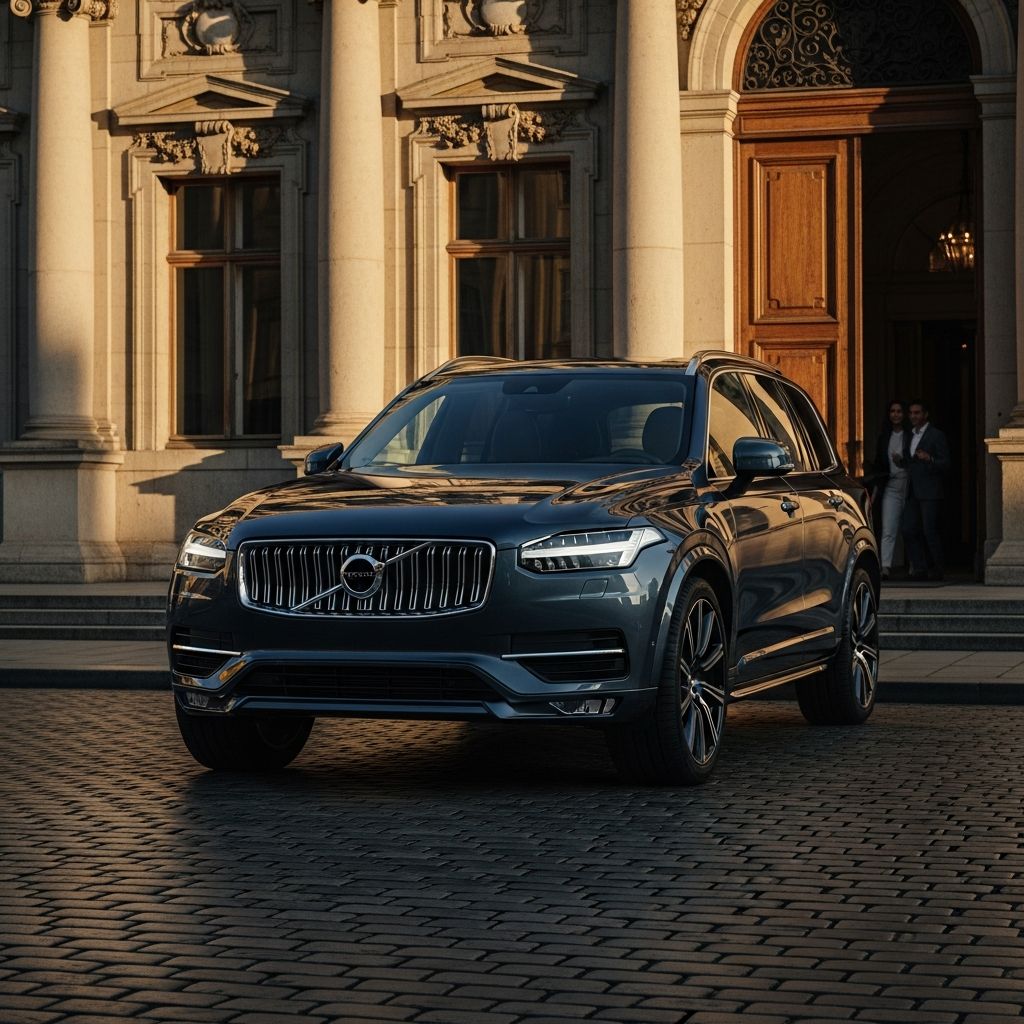
In the competitive landscape of luxury automotive manufacturing, few brands have successfully positioned safety as a defining element of prestige rather than merely a technical specification. Volvo has accomplished this remarkable feat by fundamentally reconceptualizing how consumers perceive vehicle protection systems. Where competitors view safety as a checklist item—a regulatory requirement to meet legal standards—Volvo treats safety innovations as core expressions of luxury and exclusivity. This strategic positioning has transformed protective technologies into aspirational features that drive purchasing decisions and brand loyalty among discerning consumers.
The transformation began with a philosophical commitment that permeates every aspect of the organization. Rather than relegating safety developments to an engineering department, Volvo integrated safety thinking into product strategy, marketing messaging, and customer experience design. This holistic approach has created a compelling narrative: that true luxury encompasses not just comfort, aesthetic refinement, or performance, but the peace of mind that comes from comprehensive protection on every journey.
The Historical Foundation of Safety Innovation
Volvo’s dedication to vehicle safety extends back decades, establishing a legacy that distinguishes the brand from competitors. The company’s commitment began in 1959 when engineer Nils Bohlin invented the three-point safety belt, a revolutionary design that became an industry standard. This innovation fundamentally changed automotive protection by distributing crash forces across the chest and pelvis rather than concentrating impact on a single point. By choosing to share the patent with competitors rather than restrict access, Volvo demonstrated that corporate values extended beyond competitive advantage to include genuine concern for public welfare.
This foundational philosophy established Volvo as an organization where safety innovation reflects core principles rather than market positioning. Over subsequent decades, the brand continued advancing protective technologies, introducing features like whiplash protection seating, curtain airbags, and electronic roll stability control systems. Each advancement represented not incremental improvement but fundamental rethinking of how vehicles could shield occupants from various crash scenarios.
Contemporary Safety Architecture and Premium Integration
Modern Volvo vehicles incorporate multiple layers of protective technology designed to work synergistically. The safety systems can be categorized into three primary categories: structural protection, collision avoidance and mitigation, and occupant restraint systems. Understanding how these integrate into the luxury experience reveals why Volvo’s approach represents a departure from traditional automotive industry practices.
Structural Engineering and Materials Science
Each contemporary Volvo model incorporates a high-strength safety cage constructed from advanced materials engineered to distribute and absorb impact energy. The vehicles feature strategically designed crumple zones that deform in controlled ways during collisions, converting kinetic energy into structural deformation rather than allowing that force to transmit into the passenger compartment. Side-impact protection systems provide additional shielding against lateral collisions, particularly relevant in urban driving environments where side-impact accidents represent a significant proportion of serious crashes.
What distinguishes Volvo’s structural approach is the integration of proprietary crash data analysis. The company maintains dedicated accident research teams that study real-world crash patterns and material performance, continuously refining design parameters based on actual collision data rather than solely theoretical modeling. This empirical approach to engineering creates superior real-world performance compared to competitors who rely primarily on standardized testing protocols.
Proactive Collision Avoidance Systems
City Safety represents Volvo’s flagship collision avoidance technology, utilizing integrated camera, radar, and laser sensor networks to maintain continuous environmental awareness. Unlike basic automatic emergency braking systems that detect only stationary vehicles, City Safety identifies multiple potential hazards including moving vehicles, pedestrians, cyclists, and large animals. The system operates through a cascade of interventions: visual alerts, auditory warnings, brake force pulses, and ultimately automatic braking if the driver fails to respond to initial warnings.
Recent enhancements include intersection detection capabilities that monitor cross-traffic situations and identify vehicles potentially running red lights or turning into the vehicle’s path. This represents a significant advancement beyond basic collision avoidance, as intersection crashes remain among the most severe traffic accidents. The technology provides warning and intervention during these particularly dangerous scenarios.
Adaptive Driving Assistance and Driver Engagement
Adaptive cruise control, now standard across all 2026 Volvo models, represents another layer of protective technology. The system maintains driver-set speeds while automatically adjusting to preceding traffic, using radar to measure distance and relative velocity. Traffic gap management further refines acceleration and deceleration patterns based on traffic flow characteristics, creating smoother speed transitions that reduce collision risk during stop-and-go driving conditions.
Pilot Assist, available on higher trim levels, combines these technologies with active lane-centering capabilities. Operating at speeds up to 80 miles per hour and managing stop-and-go traffic scenarios, Pilot Assist maintains vehicle positioning within lane markings while coordinating speed and following distance. This represents a step toward semi-autonomous driving while maintaining full driver engagement and control.
Positioning Safety as Luxury Appeal
The transformation of safety into luxury requires more than technological sophistication; it demands strategic communication that connects protective capabilities to aspirational values. Volvo accomplishes this through several integrated approaches that reframe how consumers evaluate vehicle worth.
Comprehensive Standard Equipment Strategy
Unlike competitors who restrict advanced safety features to premium trim levels or expensive optional packages, Volvo includes comprehensive protective technology as standard equipment across model lineups. City Safety collision avoidance, automatic high-beam LED headlights, blind spot information systems, and cross-traffic alerts with automatic braking appear on all 2026 models regardless of trim level. This democratization of protective technology communicates that safety represents a fundamental value proposition rather than a luxury upgrade reserved for wealthy consumers.
By making premium safety features standard, Volvo achieves multiple strategic objectives: elevating brand perception, establishing competitive differentiation, and creating a baseline of protection that extends benefits across socioeconomic segments.
Design Integration and User Experience
Volvo positions safety technology not as intrusive mechanical systems but as integrated features that enhance rather than complicate the driving experience. Advanced lighting systems that automatically adjust beam patterns and intensity create visibility enhancements perceived as quality-of-life improvements. Blind spot monitoring and cross-traffic alerts function seamlessly in background systems rather than demanding conscious operator attention.
This seamless integration represents a fundamental design philosophy: protective technology should operate invisibly during normal driving, activating only when necessary. This contrasts with competitors’ approaches where safety systems sometimes feel like aftermarket additions rather than cohesive design elements.
Award Recognition and Third-Party Validation
Volvo’s commitment to safety has earned numerous accolades from independent testing organizations. Models have received highest honors from the Insurance Institute for Highway Safety and the National Highway Traffic Safety Administration. The 2026 XC60, for example, earned superior ratings for daytime pedestrian crash prevention and advanced ratings for nighttime pedestrian crash scenarios from IIHS testing.
These independent validations carry significant weight in luxury automotive markets. Affluent consumers researching vehicle purchases rely heavily on third-party safety ratings when making purchase decisions. By consistently achieving top ratings, Volvo builds credibility that marketing messaging alone cannot achieve. These accolades become marketing assets that communicate objective technical superiority.
The Future of Safety-Luxury Integration
Volvo continues advancing safety technology in ways that reinforce its luxury positioning. The company introduced the multi-adaptive safety belt in the fully electric Volvo EX60 in 2026, utilizing real-time sensor data to adapt to specific crash conditions and individual wearer characteristics. This innovation, recognized as one of TIME’s Best Inventions of 2025, demonstrates continued commitment to advancing protective capabilities beyond conventional approaches.
The EVA initiative represents another innovative approach where Volvo shares nearly 70 years of accumulated safety research data with any interested organization at no cost. This initiative extends beyond traditional competitive dynamics, positioning Volvo as a contributor to industry-wide safety advancement rather than a competitor hoarding proprietary knowledge. This approach aligns with the brand’s foundational philosophy established through the three-point seatbelt patent sharing.
Frequently Asked Questions
How does Volvo’s City Safety system differ from basic automatic emergency braking?
City Safety represents a more comprehensive approach than basic emergency braking. While conventional systems detect only stationary vehicles, City Safety identifies moving vehicles, pedestrians, cyclists, and large animals using integrated camera, radar, and laser sensors. Recent versions include intersection detection capabilities that identify potential collision scenarios at intersections, providing warnings and intervention during these particularly dangerous situations.
Are advanced safety features standard or optional on Volvo models?
Volvo includes comprehensive safety technology as standard equipment across all model lineups. This includes City Safety collision avoidance, automatic high-beam LED headlights, blind spot information systems, and cross-traffic alerts. Some advanced features like Pilot Assist and 360-degree camera systems remain optional on certain models, but core protective technology comes standard regardless of trim level.
What makes Volvo’s structural design approach different?
Volvo incorporates high-strength safety cages with strategically designed crumple zones and advanced side-impact protection systems. The company maintains dedicated accident research teams that study real-world crash data and use these insights to continuously refine structural design parameters, moving beyond theoretical testing to empirically-validated engineering.
How does Pilot Assist enhance driving safety?
Pilot Assist combines adaptive cruise control with active lane-centering capabilities, operating at speeds up to 80 miles per hour and managing stop-and-go traffic. The system maintains vehicle positioning within lane markings while coordinating speed and following distance, reducing driver workload during extended highway driving while maintaining full driver engagement and control authority.
What is the multi-adaptive safety belt?
Introduced in the 2026 Volvo EX60, the multi-adaptive safety belt uses real-time sensor data to adapt to specific crash conditions and individual wearer characteristics, providing enhanced protection compared to conventional safety belt designs. This innovation was recognized as one of TIME’s Best Inventions of 2025.
Comparison of Safety Features Across 2026 Volvo Models
| Feature Category | 2026 XC40 | 2026 XC60 | 2026 XC90 |
|---|---|---|---|
| Standard Collision Avoidance | City Safety with intersection detection | City Safety with intersection detection | City Safety with intersection detection |
| Adaptive Cruise Control | Standard (new for 2026) | Standard | Standard |
| Lane-Keeping Technology | Lane-keeping assist standard | Lane-keeping aid standard | Lane-keeping aid standard |
| Blind Spot Monitoring | Standard | Standard with information system | Standard with information system |
| Optional Advanced Features | 360-degree camera system | Pilot Assist, 360-degree camera | Pilot Assist, 360-degree camera |
| Parking Assistance | Front park assist standard | Front park assist standard | Front park assist standard |
| Automatic High-Beam Headlights | Standard LED system | Standard LED system | Standard LED system |
The Business Case for Safety-Centric Luxury
Volvo’s approach to positioning safety as luxury appeals to several converging market forces. Aging demographics increase consumer focus on accident prevention and impact mitigation. Growing urban congestion creates more opportunities for collisions, amplifying consumer awareness of accident risk. Simultaneously, regulatory pressure continues escalating minimum safety standards across global markets.
By positioning safety as a luxury feature rather than a regulatory checklist item, Volvo captures multiple market segments. Affluent consumers attracted to Scandinavian design and minimalist aesthetics appreciate how safety technology integrates seamlessly into overall vehicle experience. Parents prioritize comprehensive protection for family members. Commuters value features reducing stress in congested traffic environments.
This multi-segment appeal creates competitive advantages in luxury market segments where multiple brands compete on similar dimensions of performance, design, and amenities. Safety differentiation provides a meaningful distinction that resonates across demographic and psychographic segments.
Conclusion: Redefining Luxury Through Protection
Volvo’s transformation of safety into a luxury feature represents a fundamental reimagining of what constitutes automotive excellence. By integrating comprehensive protective technology into comprehensive design strategies, establishing top safety ratings through third-party validation, and communicating the peace-of-mind benefits of advanced systems, Volvo has successfully positioned protective capabilities as core luxury attributes.
This approach extends beyond marketing positioning into authentic brand values that influence every organizational decision. The commitment to sharing safety innovations, maintaining accident research programs, and continuously advancing protective technologies reflects genuine organizational priorities rather than cynical market manipulation.
As luxury consumers increasingly evaluate vehicles through multidimensional criteria encompassing environmental responsibility, technological sophistication, and comprehensive protection, Volvo’s safety-centric positioning positions the brand at the intersection of these evolving preferences. The result transcends traditional competitive dynamics to establish a compelling narrative about what luxury automobiles should represent in contemporary society.
References
- Volvo Cars Safety Legacy — Volvo Cars USA. 2024. https://www.volvocars.com/us/safety/legacy/
- Why Volvo Remains a Top Choice for Luxury and Safety — Smythe Volvo Cars. January 17, 2024. https://www.smythevolvocars.com/blog/2024/january/17/why-volvo-remains-a-top-choice-for-luxury-and-safety.htm
- Volvo Safety Innovations: What Sets the Brand Apart — Volvo of Perrysburg. June 11, 2025. https://www.volvoofperrysburg.com/blog/2025/june/11/volvo-safety-innovations-what-sets-the-brand-apart.htm
- Which 2026 Volvo is the Safest? Standard & Optional Safety Features — Volvo Cars Mission Viejo. 2026. https://www.volvocarsmissionviejo.com/blog/2026-volvo-suv-safety-features-ratings
- Volvo Safety: Features & SUV Ratings — Quantrell Volvo Cars. 2024. https://www.quantrellvolvocars.com/volvo-safety.htm
- Pioneering Automotive Safety — Volvo Cars USA. 2024. https://www.volvocars.com/us/safety/legacy/
Similar Articles





Read full bio of medha deb