Volkswagen XL1: The Ultimate Efficiency Machine
Discover how Volkswagen's groundbreaking XL1 redefined automotive efficiency with record-breaking fuel economy and innovative design.
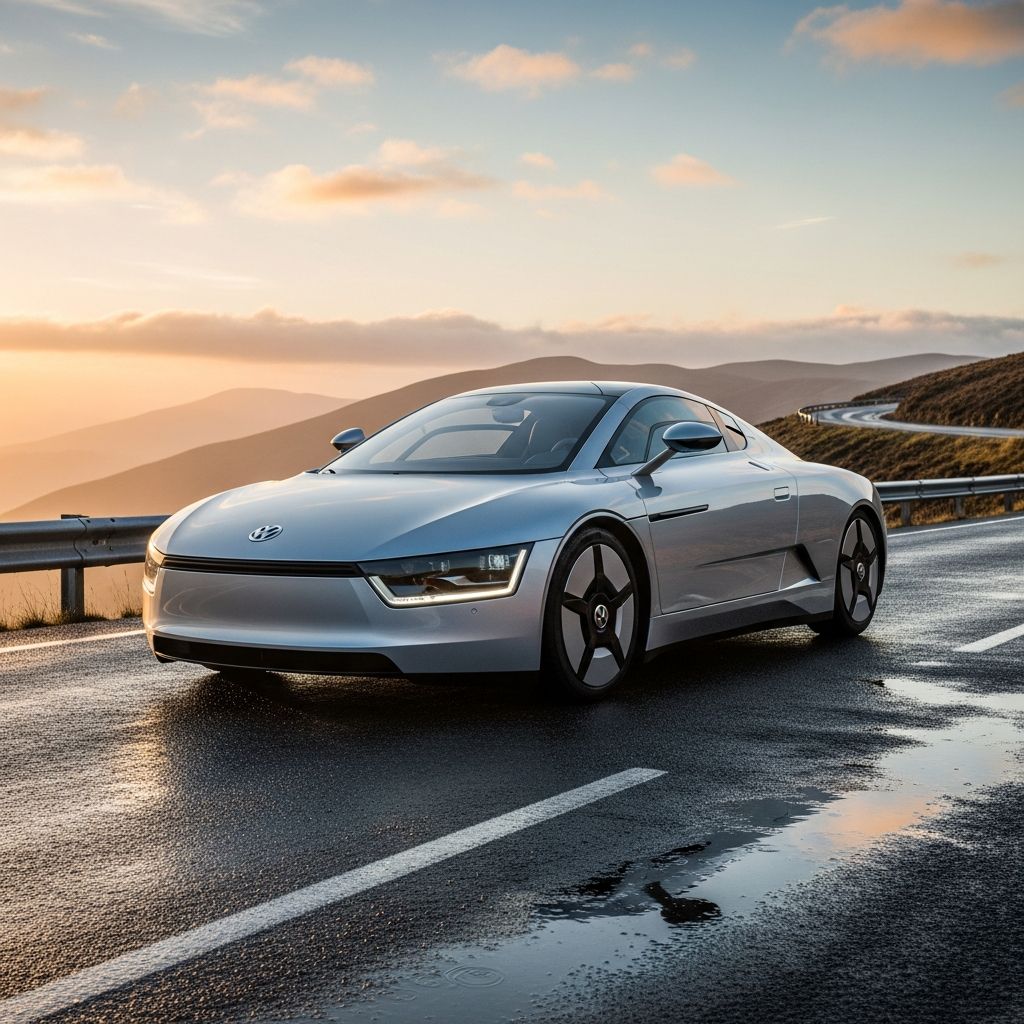
The Volkswagen XL1 stands as a landmark in automotive engineering, embodying the pinnacle of fuel efficiency and aerodynamic innovation. Launched as a limited-production model, this plug-in hybrid coupe achieved an unprecedented European combined fuel consumption of 261 mpg, setting new benchmarks for sustainable transportation.
Design Philosophy: Lightweight and Aerodynamic Mastery
At the core of the XL1’s extraordinary performance is its uncompromising design philosophy, which prioritizes minimal weight and maximal aerodynamic efficiency. Weighing just 795 kg without driver or fuel, the vehicle utilizes a carbon fiber reinforced plastic (CFRP) monocoque chassis that tips the scales at only 230 kg. This lightweight construction, combined with a drag coefficient (Cd) of 0.189, makes it the slipperiest production car ever built, modeled after fluid dynamic principles inspired by marine life like dolphins.
The body’s low height of 1,153 mm and low center of gravity enhance stability, mimicking sports car dynamics while focusing on efficiency. Traditional side mirrors are replaced by compact cameras feeding live feeds to door-mounted displays, further reducing drag. The flat underbody, fully covered rear wheels, and polycarbonate windows—33% lighter than glass—contribute to this holistic approach.
- Key Aerodynamic Features: Cd 0.19, no wing mirrors, dolphin-inspired shape.
- Weight-Saving Materials: CFRP body, magnesium alloy wheels and transmission, carbon fiber anti-roll bars.
- Dimensions: 3,888 mm long, exceptionally low profile for minimal wind resistance.
Powertrain Innovation: Diesel-Electric Hybrid Excellence
The XL1’s plug-in hybrid system integrates a 48 PS (35 kW) 0.8-liter two-cylinder TDI turbo-diesel engine with a 27 PS (20 kW) electric motor, delivering combined torque of 103 lb-ft (140 Nm). Paired with a seven-speed DSG dual-clutch transmission in magnesium alloy, power is efficiently routed to the rear wheels. The 5.5 kWh lithium-ion battery enables up to 32-50 km of zero-emission electric-only driving, with a recharge time of about one hour.
In operation, the XL1 defaults to electric mode for low-speed cruising, engaging the diesel only under heavy acceleration or above 100 km/h. This setup allows sustained 62 mph travel on just 8.4 PS (6.2 kW), emitting only 21-24 g/km CO2—far below competitors like the Toyota Prius. Top speed reaches 99 mph, with 0-62 mph in 12.7 seconds, proving efficiency need not sacrifice usability.
| Component | Specs | Benefits |
|---|---|---|
| Diesel Engine | 48 PS, 800 cc TDI | High torque, low emissions |
| Electric Motor | 27 PS, 140 Nm | Silent EV mode, quick recharge |
| Battery | 5.5 kWh Li-ion | 32+ miles electric range |
| Transmission | 7-speed DSG | Smooth, efficient shifts |
Interior and Practicality: Minimalist Yet Functional
Designed for two occupants, the XL1’s cabin emphasizes functionality with a driver-centric layout. Tandem seating maximizes aerodynamics, while lightweight materials extend inside: polycarbonate glazing and minimalistic dashboard. Side camera displays replace mirrors for a futuristic touch, and LED lighting throughout enhances efficiency.
Despite its radical exterior, the driving experience feels conventional. Electric propulsion provides smooth, quiet acceleration, with the diesel’s distinctive hum audible under load—like a compact power tool. Features like electrically driven air-conditioning and carbon-ceramic brakes ensure every element supports the efficiency goal without excess weight.
Performance Metrics: Record-Breaking Efficiency
Official figures confirm the XL1’s supremacy: 0.9 l/100 km (261 mpg European cycle), outpacing all rivals. Real-world tests validate its ability to cruise efficiently at highway speeds on minimal power. Electric mode tops 50 mph for 22+ miles, with the diesel seamlessly intervening to prevent range anxiety.
- 261 mpg combined (European NEDC for plug-ins)
- 21 g/km CO2
- 99 mph top speed
- 12.7s 0-62 mph
This efficiency stems from synergistic engineering: less than 0.1 kWh per km in EV mode.
Engineering Highlights: Advanced Materials and Tech
Volkswagen pushed boundaries with plasma-sprayed cylinder walls in the diesel for durability and lightness, plus a balance shaft to quell vibrations. The chassis integrates crash structures without added bulk, and wheels feature lightweight magnesium alloys. Even brakes use carbon-ceramic for fade resistance at low mass.
Safety integrates subtly: low CoG aids handling, though the focus remains efficiency over high-speed prowess.
Legacy and Impact on Future Mobility
Though produced in tiny numbers (250 units), the XL1 proved super-efficiency feasible, influencing VW’s later hybrids and EVs. It demonstrated diesel-electric synergy could undercut pure EVs in emissions and practicality. Today, its principles echo in modern efficient designs.
Pros and Cons: Balanced Assessment
| Pros | Cons |
|---|---|
| World-leading 261 mpg | Limited 2-seater space |
| Ultra-lightweight build | Slow acceleration |
| Zero-emission EV range | High production cost |
| Low CO2 (21 g/km) | Low production volume |
Frequently Asked Questions (FAQs)
What is the fuel economy of the Volkswagen XL1?
The XL1 achieves 261 mpg (0.9 l/100 km) in the European combined cycle, the highest for any production car.
How does the XL1’s hybrid system work?
It pairs a 48 PS diesel with a 27 PS electric motor and 5.5 kWh battery, prioritizing EV mode for up to 50 km range.
What makes the XL1 so aerodynamic?
A Cd of 0.189, camera mirrors, flat underbody, and dolphin-like shape minimize drag.
Is the XL1 street-legal?
Yes, limited units were homologated for road use in Europe.
What’s the top speed and acceleration?
99 mph top speed and 0-62 mph in 12.7 seconds.
Conclusion: A Visionary Benchmark
The Volkswagen XL1 remains an icon of what’s possible when efficiency drives innovation, blending diesel heritage with electric future.
References
- Volkswagen XL1, world’s most fuel-efficient and aerodynamic production car — Volkswagen Media. 2013-10-15. https://media.vw.com/releases/28
- Volkswagen XL1 Concept First Drive Review — Car and Driver. N/A. https://www.caranddriver.com/reviews/a15126025/volkswagen-xl1-concept-first-drive-review/
- XL1 — Volkswagen Newsroom. N/A. https://www.volkswagen-newsroom.com/en/xl1-3588
- Volkswagen XL1 is a super-economical supercar — Torque. N/A. https://www.torque.com.sg/reviews/volkswagen-xl1-super-economical-supercar/
- Volkswagen XL1 — MotorWeek. N/A. https://motorweek.org/first_impressions/volkswagen_xl1/
Similar Articles







Read full bio of medha deb