Volkswagen Golf GTI Engine Performance
Explore the turbocharged powerhouse driving modern hot hatch excellence
Volkswagen Golf GTI Engine Performance and Specifications
The Volkswagen Golf GTI has maintained its position as one of the automotive industry’s most celebrated performance hatchbacks, combining accessible pricing with genuine driving engagement. At the core of this sporting character lies the turbocharged engine that has become synonymous with the GTI nameplate. The current generation delivers a refined balance between power delivery, efficiency, and everyday usability, making it an attractive proposition for drivers seeking performance without compromise.
The Modern Turbocharged Heart: 2.0L TSI Architecture
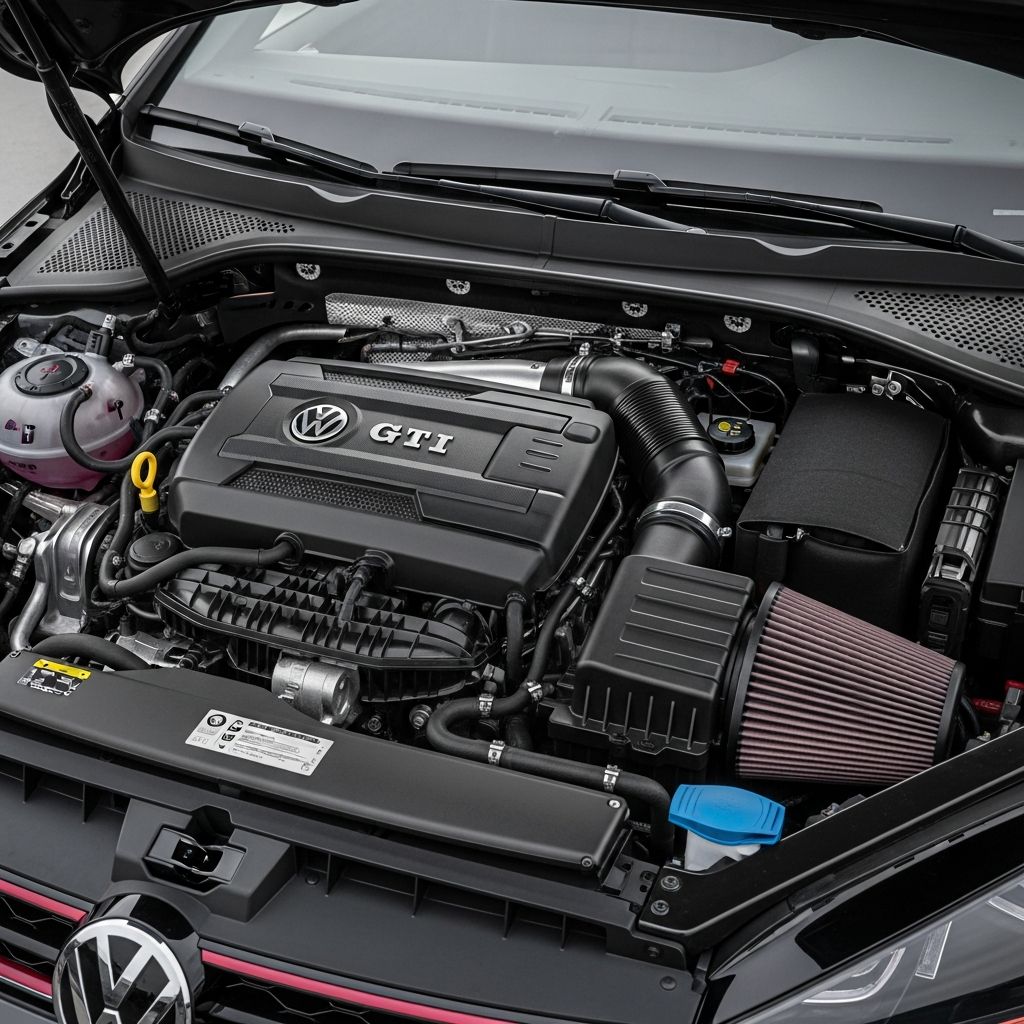
The contemporary Golf GTI relies on a 2.0-liter turbocharged four-cylinder engine that represents the culmination of decades of engineering refinement. This powerplant produces 241 horsepower at 6,500 rpm and generates 273 pound-feet of torque between 1,600 and 4,300 rpm. The engine features direct fuel injection, a turbocharger with intercooling, and a dual overhead camshaft configuration with 16 valves, demonstrating Volkswagen’s commitment to extracting maximum efficiency from a relatively modest displacement.
The TSI designation reflects Volkswagen’s turbocharged stratified injection technology, which allows the engine to operate across varying conditions with optimized fuel consumption and reduced emissions. The combination of these technologies enables the Golf GTI to deliver compelling performance while maintaining reasonable fuel economy figures that make ownership practical for daily drivers.
Transmission Options and Drivetrain Configuration
The transmission choice represents a significant evolution in the Golf GTI lineup. Recent model years have undergone a notable transition in powertrain options. Earlier iterations offered buyers a choice between a traditional six-speed manual transmission and a seven-speed dual-clutch automatic, allowing enthusiasts to select their preferred engagement level. However, current market offerings have evolved, with the seven-speed DSG (direct-shift gearbox) dual-clutch automatic becoming the standard or sole transmission option on many variants.
The DSG transmission incorporates Tiptronic technology, permitting drivers to manually override automatic shifting through either a gear selector or steering wheel-mounted paddle shifters. This hybrid approach appeals to those seeking automatic convenience without sacrificing driver involvement. The transmission delivers gear changes in milliseconds, contributing to the GTI’s responsive character and engaging driving dynamics.
All Golf GTI models employ front-wheel drive architecture, with a VAQ limited-slip front differential providing enhanced traction control during aggressive cornering or acceleration. This differential prevents torque steer and distributes power more effectively to the front wheels, allowing drivers to access the engine’s full potential without fighting against understeer or wheel spin.
Acceleration Performance and Real-World Capability
The GTI’s performance credentials extend beyond headline horsepower figures. With the seven-speed DSG automatic transmission, the Golf GTI achieves a 0-60 mph time of approximately 6.0 seconds, demonstrating genuine acceleration without excessive drama. This acceleration profile positions the GTI competitively within the compact performance segment, offering quick enough responses for spirited driving while maintaining a composed demeanor in routine driving scenarios.
The torque delivery characteristics deserve particular attention. Peak torque arrives at relatively low engine speeds (1,600 rpm), providing immediate response when departing traffic lights or merging onto highways. This low-end punch reduces the need for aggressive downshifting and contributes to the GTI feeling more powerful than displacement-based predictions might suggest.
Fuel Consumption and Efficiency Metrics
Despite significant performance capabilities, the Golf GTI maintains respectable fuel economy figures. EPA-estimated ratings vary slightly depending on transmission and model year specifics:
- Seven-speed DSG automatic: Approximately 24 miles per gallon city / 32-33 miles per gallon highway
- Six-speed manual (where available): Approximately 23 miles per gallon city / 32-34 miles per gallon highway
These figures demonstrate that modern turbocharging technology, coupled with direct injection and sophisticated engine management systems, successfully reconciles performance ambitions with environmental responsibility. The modest penalty for automatic transmission operation reflects the added complexity of the dual-clutch system, though many drivers accept this trade-off for convenience.
Engine Technology and Operational Features
The Golf GTI engine incorporates several contemporary technologies that enhance both performance and efficiency. The turbocharger features variable geometry, optimizing boost delivery across the engine’s operating range. This approach minimizes turbo lag while preventing overboosting at higher rpm levels, resulting in a linear power delivery characteristic that feels naturally responsive rather than artificially supercharged.
The aluminum cylinder head and iron engine block represent a traditional approach that prioritizes durability and thermal management over weight reduction. This construction technique has proven reliable across millions of applications, giving owners confidence in long-term dependability. Direct fuel injection provides precise fuel metering directly into the combustion chamber, enabling leaner mixtures and more complete combustion compared to traditional port injection systems.
Performance Specifications Comparison Table
| Specification | Rating |
|---|---|
| Engine Displacement | 1,984 cc (121 cubic inches) |
| Maximum Horsepower | 241 hp @ 6,500 rpm |
| Maximum Torque | 273 lb-ft @ 1,600 rpm |
| Engine Type | Turbocharged 4-cylinder DOHC |
| Fuel Injection | Direct injection |
| Valve Configuration | 16 valves |
| Cylinders/Configuration | 4 cylinders inline |
| 0-60 Acceleration | Approximately 6.0 seconds (automatic) |
Driving Modes and Performance Customization
Modern Golf GTI models offer adjustable driving characteristics through selectable driving modes. These modes modify throttle response, transmission behavior, and suspension damping (where DCC adaptive chassis control is equipped) to match different driving conditions and driver preferences. Comfort mode prioritizes smooth operation and fuel efficiency, Sport mode sharpens responses and holds gears longer, while Eco mode optimizes fuel consumption through conservative shift programming and reduced engine response.
The availability of paddle shifters on the DSG automatic allows drivers to engage with the driving experience more actively, selecting gears manually while the transmission manages the mechanics of gear changes. This feature appeals to enthusiasts who appreciate the precision of manual control without the daily hassle of clutch operation in congested traffic.
Braking and Chassis Balance
Matching the engine’s output requires robust stopping power and precise handling characteristics. The Golf GTI incorporates 13.4-inch ventilated front brakes and 12.2-inch ventilated rear brakes, providing excellent heat dissipation during sustained performance driving. This brake sizing ensures drivers can confidently access the engine’s capabilities without brake fade or extended stopping distances compromising safety.
The chassis architecture emphasizes balance and predictability. The front-wheel-drive layout, combined with the VAQ differential and sport-tuned suspension geometry, creates a platform that feels composed during aggressive cornering while remaining communicative and engaging. The firm brake pedal feedback mentioned across multiple vehicle reviews suggests Volkswagen prioritized driver confidence in emergency braking scenarios.
Engine Evolution and Historical Context
The current 2.0-liter turbocharged architecture represents the latest chapter in a lineage stretching back through multiple generations. Earlier GTI variants employed turbocharged 1.8-liter and 2.8-liter V6 engines, with some older models featuring naturally aspirated powerplants. The evolution toward the current 2.0-liter TSI represents Volkswagen’s response to emissions regulations and consumer demand for improved efficiency without sacrificing performance characteristics.
The consistency of the 241-horsepower output across recent model years demonstrates Volkswagen’s confidence in this platform. Rather than pursuing incremental power increases that might require significant engineering revisions, the manufacturer has maintained this power level while refining engine management systems and transmission software to enhance responsiveness and overall driving experience.
Frequently Asked Questions
What is the fuel requirement for the Golf GTI engine? The Golf GTI requires premium unleaded gasoline (91 or higher octane rating in the United States). Using regular gasoline can trigger engine knock and reduce performance.
How often does the Golf GTI require oil changes? Volkswagen recommends oil changes at intervals specified in the maintenance schedule, typically every 10,000 miles under normal driving conditions. The specific interval depends on driving patterns and engine oil specification used.
Can the Golf GTI engine be tuned for additional performance? Aftermarket tuning options exist for the Golf GTI engine, with professional tuners offering software modifications, turbocharger upgrades, and intake system enhancements. Modifications may void manufacturer warranty coverage.
What is the expected engine lifespan for routine maintenance? With proper maintenance, the Golf GTI engine typically demonstrates reliability through 150,000 miles or more. Consistent oil changes, filter replacement, and adherence to service schedules significantly influence long-term durability.
How does the automatic transmission compare to the manual in real-world use? The dual-clutch automatic delivers slightly faster acceleration and provides convenience in congested driving, while the manual (where available) offers more direct driver engagement and potential for improved fuel economy under disciplined driving techniques.
References
- 2026 Volkswagen Golf GTI Review, Pricing, and Specs — Car and Driver. Retrieved April 2026. https://www.caranddriver.com/volkswagen/golf-gti
- 2026 Golf GTI Review Near Valparaiso, IN – Team Volkswagen — Team Volkswagen. Retrieved April 2026. https://www.teamvw.com/research/vw-golf-gti.htm
- 2024 Volkswagen Golf GTI Horsepower, Engine, & 0-60 Time — Jenkins Volkswagen. Retrieved April 2026. https://www.jenkinsvolkswagen.com/research/new-volkswagen-golf-gti-performance.htm
- We Drive Every Generation of the VW Golf GTI in a Single Day — Car and Driver. Retrieved April 2026. https://www.caranddriver.com/features/a61489048/volkswagen-golf-gti-every-generation-drive/
Similar Articles



Read full bio of Sneha Tete