Vauxhall Monaro: Australian V8 Muscle Comes to Britain
Exploring the raw power and driving character of Vauxhall's iconic Aussie coupe
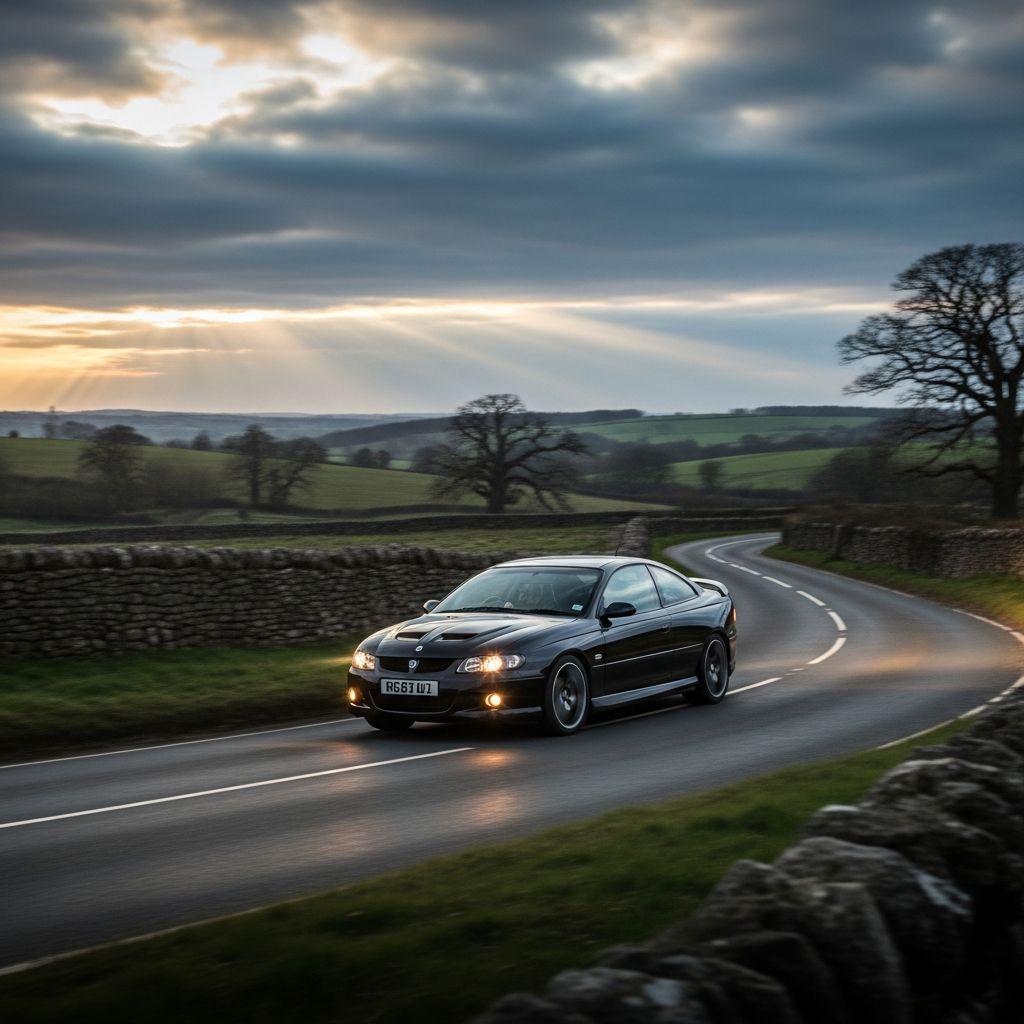
When Vauxhall introduced the Monaro to the British market, it represented something genuinely different from the conventional European sports cars dominating showrooms. This Australian-born coupe brought an entirely fresh philosophy to performance driving—one rooted in straightforward mechanical excellence and unbridled engine power rather than technological sophistication. The Monaro’s arrival marked a pivotal moment in how British enthusiasts perceived muscle cars, proving that raw V8 capability could coexist with genuine everyday usability.
The Heart of an Australian Legend
The Monaro’s defining characteristic lies beneath its expansive bonnet: a generously displacing V8 engine that dominates the driving experience. The base model featured a 5.7-litre naturally aspirated powerplant producing substantial torque delivery that made the car’s considerable mass feel almost agile in acceleration. This engine philosophy differs fundamentally from contemporary rivals that relied on smaller-capacity turbocharged units to achieve comparable figures. The Monaro’s approach prioritized the linear, accessible nature of large-displacement power, making performance available throughout the rev range without requiring precise gear selection or turbo boost management.
The engine’s character emerges most vividly during throttle application. The initial response proves explosive and unfiltered, with each press of the accelerator pedal generating tangible mechanical feedback. This directness creates an intimate connection between driver input and vehicle response that modern engine management systems often obscure. The transmission to the rear wheels arrives with authority, setting the car on its suspension as the substantial torque figure announces itself to occupants. For drivers accustomed to progressive, electronically mediated power delivery, the Monaro’s mechanical immediacy represents a visceral departure.
Performance Credentials That Demand Respect
The standard Vauxhall Monaro VXR delivered 382 horsepower, positioning it directly in the conversation with established performance benchmarks of its era. However, raw horsepower figures tell only part of the story. The critical metric lies in torque delivery: 376 pounds-feet of rotational force available across a broad engine rpm range. To contextualize this figure, contemporary BMW M3 models managed only 269 pounds-feet, yet the Monaro’s acceleration felt marginally less intense owing to its 1,650-kilogram kerb weight and aerodynamic characteristics.
The supercharged variant elevated the equation dramatically. Limited-edition VXR 500 models benefited from forced induction technology that generated 493 horsepower and further enhanced already impressive torque characteristics. This supercharged configuration transformed the driving experience into something approaching ferocious. The supplementary power arrived with such immediate force that few automotive experiences could prepare drivers for the instant, explosive acceleration that characterized every gear. Unlike the standard engine’s measured approach, the supercharged unit delivered its performance with hard, insistent shove available at any engine speed and in any gear selection.
Acceleration figures reflected this extraordinary capability. The Monaro achieved zero to sixty miles per hour in approximately five seconds, with top speed potential exceeding 180 miles per hour under favorable circumstances. These numbers become particularly impressive when considering the vehicle’s size, weight, and the relatively simple technology producing them. Modern turbocharged engines might match these figures using computer-controlled fuel injection and variable valve timing, but the Monaro achieved them through straightforward mechanical displacement and forced induction.
Operational Economics and Practicality
A frequently overlooked attribute of the Monaro involves its genuine practicality for daily driving. Despite the massive engine and performance orientation, the car demonstrated surprising fuel economy capabilities when driven with restraint. The sixth gear ratio sat extremely high, allowing cruising speeds of nearly ninety miles per hour at just 1,800 engine revolutions per minute. This relatively relaxed engine speed at highway velocities enabled average fuel economy approaching 23.7 miles per gallon, an achievement that would prove remarkable in many performance-oriented vehicles.
This efficiency paradox arose from the Monaro’s fundamental design philosophy. The massive engine’s inherent torque eliminated any requirement for aggressive gear ratios or constant acceleration. Highway cruising could proceed at genuine relaxation levels, the engine loitering at low rpm with minimal fuel consumption. Compare this to the frenetic engine management of equivalent-power turbocharged competitors, which often struggled to achieve respectability in fuel economy metrics. The Monaro demonstrated that size and efficiency need not prove incompatible, particularly when mechanical design prioritizes everyday usability alongside performance capability.
Suspension Dynamics and Cornering Behavior
The Monaro’s suspension architecture revealed surprising competence given its dimensions and mass. Engineered to maintain tautness while retaining adequate compliance across varied road surfaces, the suspension delivered numerous positive attributes. The setup brought increased responsiveness to the vehicle’s handling characteristics without adopting an aftermarket or track-focused demeanor. This balance proved essential for a car designed to accommodate both spirited weekend drives and mundane daily commuting.
Cornering behavior demonstrated exemplary body control despite the car’s generous proportions. Where observational expectations suggested the Monaro would ground out, pitch forward, and generally unsettle occupants, the car demonstrated game resolve and composed behavior. The body control remained exemplary for such a large vehicle, suggesting engineers had invested considerable development effort in mastering the dynamics of such substantial mass. The steering feel, while not offering the precision of European sports cars, provided directness that inspired confidence when threading the car through confined spaces.
The car’s width occasionally created challenges on particularly narrow road sections, yet this represented less a handling defect than a simple consequence of the Monaro’s imposing physical presence. Drivers possessed sufficient steering directness to negotiate tight corners with practiced confidence, transforming what might otherwise constitute a disadvantage into an engaging driving challenge. The psychological element of threading such a visually commanding vehicle through confined passages added entertainment value to ordinary driving tasks.
Interior Environment and Long-Distance Capability
The Monaro’s cabin revealed a distinctly different character from the external brutality. Stepping inside revealed electrically adjustable seating surfaces finished in leather that functioned more like luxury armchairs than conventional performance car seats. These seats prioritized comfort and support across extended journeys, positioning the Monaro as a legitimate grand touring proposition rather than pure track instrument. The interior demonstrated that the car’s creators understood the distinction between weekend warrior and daily driver requirements.
The ambient environment maintained this hospitality throughout the interior. Despite the vehicle’s obvious performance intentions, the cabin invited relaxation and extended cruising comfort. Air conditioning and sound insulation allowed the driver to establish dialogue with passengers without voice elevation, a critical attribute often overlooked in performance vehicles. The Monaro proved genuinely capable of functioning as a practical, comfortable long-distance cruiser—a capability that distinguished it from many competitors that sacrificed livability for performance metrics.
Acoustic Character and Engine Sound
Modern vehicles frequently employ sound engineering to enhance perceived performance through synthetic audio enhancement piped through speaker systems. The Monaro rejected this approach entirely. The authentic acoustic character of the engine and mechanical systems formed the entirety of the auditory experience. This unpretentious approach created a remarkably meaty sound signature, particularly when supercharged variants engaged the blower mechanism. The supercharger generated eleven pounds of boost pressure while producing distinctive mechanical noise entirely unmanufactured by signal processing.
This acoustic integrity contributed significantly to the overall driving experience. The engine’s voice communicated what was occurring mechanically without interpretation through digital systems. Drivers received direct information about engine speed, load, and mechanical operation through sound alone. This feedback loop enhanced the sensation of pilot engagement with the vehicle’s operation, creating a more immersive driving experience than many modern vehicles could achieve through technology.
Contextualizing the Monaro Within Performance Vehicle Categories
Contemporary automotive journalism occasionally attempted to categorize the Monaro alongside the BMW M3 and Mercedes-Benz C63, creating comparisons that fundamentally misunderstood each vehicle’s design priorities. The BMW emphasized responsiveness, precision, and technological sophistication—an approach reflected in notably stiffer suspension tuning and sharper steering calibration. The Mercedes-Benz pursued luxury-oriented performance, prioritizing material quality and ergonomic refinement above sporting aggression.
The Monaro occupied genuinely different philosophical territory. A more accurate comparison referenced the Jaguar XKR, reimagined with manual transmission, mechanical limited-slip differential, and an unrefined exhaust system. The Monaro shared the Jaguar’s grand touring capability while replacing refinement and opulence with mechanical engagement and raw power delivery. This positioning acknowledged that performance vehicles need not pursue identical objectives—the Monaro offered transcontinental capability alongside moment-to-moment driving involvement that luxury-focused competitors could not match without compromising their design intent.
Technical Refinements in Performance Variants
Limited-edition supercharged variants received careful mechanical attention intended to manage the substantially elevated power output. The standard transmission architecture required supplementation through beefed-up clutch mechanisms, reinforced pressure plates, and specially engineered flywheels. These modifications distributed the concentrated mechanical load across more robust components, extending drivetrain durability under sustained performance driving.
The suspension received corresponding enhancements designed to accommodate the increased performance envelope. Lower spring rates improved cornering capability while maintaining ride quality across varied surfaces. Nineteen-inch wheel fitments shod in high-performance rubber provided the mechanical interface between the elevated power and the road surface. Carbon fiber driveshafts managed rotational forces more effectively than conventional steel components, contributing to overall system resilience.
The Appeal of Mechanical Simplicity
The Monaro represented an increasingly rare automotive proposition: the notion that performance could derive from straightforward mechanical excellence rather than technological sophistication. The vehicle provided exciting, engaging driving character without requiring driver interpretation of complex electronic systems. This simplicity proved refreshing in an era increasingly dominated by computers managing virtually every aspect of vehicle operation.
The absence of artificial complications allowed drivers to focus entirely on the fundamental driving experience. Acceleration felt immediate and unfiltered. Steering communicated road texture without electronic assistance obscuring sensations. Suspension response resulted from physical suspension geometry rather than active systems attempting to modify characteristics in real time. This directness created an authentic connection between pilot and machine that many contemporary performance vehicles struggled to achieve despite vastly more sophisticated systems.
Market Position and Contemporary Relevance
The Monaro offered contemporary buyers a compelling alternative to European performance conventions. The vehicle presented a genuinely different approach to sports car motivation, grounded in Australian engineering traditions emphasizing mechanical reliability and straightforward performance. British enthusiasts discovered in the Monaro a refreshing departure from the increasingly complex technological paradigms dominating European sports car design.
The car’s appeal transcended mere performance figures. The Monaro provided engaging, uncomplicated driving character in an era when many high-performance vehicles required computer system expertise to fully comprehend. The vehicle succeeded because it delivered on fundamental automotive promises: acceleration when requested, composed cornering capability, and reasonable everyday practicality.
Conclusion: An Honest Approach to Performance
The Vauxhall Monaro represents a distinct moment in performance automobile history when large-displacement mechanical excellence still dominated engineering solutions. The vehicle refused to apologize for its substantial size, considerable thirst for fuel during enthusiastic driving, or the mechanical drama inherent in driving such potent machinery. Instead, the Monaro embraced these characteristics as fundamental to its identity, creating a refreshingly honest performance car in an increasingly complex automotive landscape. For drivers seeking genuine, unmediated driving engagement without technological complications, the Monaro remains a compelling reminder that performance and accessibility need not prove incompatible objectives.
References
- Vauxhall Monaro VXR500 Review – Supercharged Aussie Goes Out With A Bang — Evo Magazine. December 2006. https://www.evo.co.uk/vauxhall/vxr8
- Vauxhall Monaro (2004-2006) Used Car Review — RAC Drive. November 28, 2005. https://www.rac.co.uk/drive/car-reviews/vauxhall/monaro/monaro-2004-2006/
- Supercharged Vauxhall Monaro VXR Review: The Heart of an… — Car Throttle. https://www.carthrottle.com/post/m8eqb7y
- Vauxhall Monaro VXR 6.0 Review – Zero XXXX Given — Rush Magazine. https://www.rushmagazine.co.uk/post/vauxhall-monaro-vxr-6-0-review
- Road Test: Vauxhall Monaro 5.7 V8 2dr — Top Gear. 2026. https://www.topgear.com/car-reviews/vauxhall/57-v8-2dr/road-test
- Vauxhall Monaro – PH Used Buying Guide — PistonHeads UK. https://www.pistonheads.com/news/ph-buying-guides/vauxhall-monaro–ph-used-buying-guide/44022
Similar Articles




Read full bio of Sneha Tete