Used Suzuki Celerio Guide
Discover why the Suzuki Celerio remains a smart, affordable choice for budget-conscious drivers seeking reliability and efficiency in a compact package.
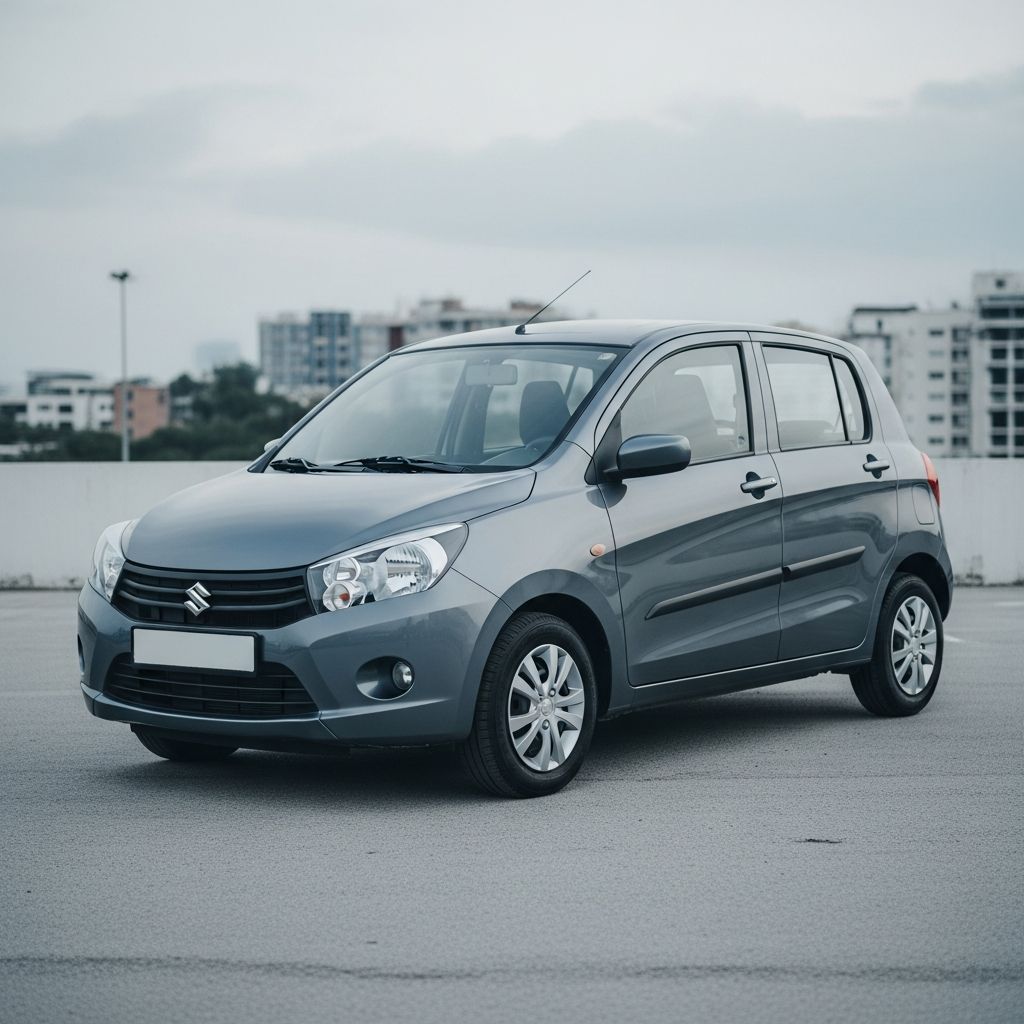
Used Suzuki Celerio Guide: Budget-Friendly Urban Mobility
The Suzuki Celerio stands out in the crowded city car segment as a no-nonsense option for drivers prioritizing affordability and practicality over excitement. Produced primarily between 2015 and 2019 in its most relevant European market version, this lightweight hatchback delivers exceptional fuel economy and low ownership costs, making it an appealing prospect on the used market. With prices often dipping below £5,000 for well-maintained examples, it’s perfect for first-time buyers, urban commuters, or those needing a second car for short trips. While it lacks the flair of rivals like the Ford Ka+ or Toyota Aygo, its simplicity translates to fewer headaches and cheaper bills.
Model History and Variants Overview
Suzuki launched the second-generation Celerio in Europe around 2015, targeting the entry-level supermini market with a focus on emerging economies and budget buyers. The car rode on a basic platform shared with other Suzuki models, emphasizing lightness—kerb weight hovers around 800-850kg—which aids efficiency. Key trims included SZ2, SZ3, SZ4, and occasional special editions, with differences mainly in wheels, tech, and upholstery.
- SZ2: Base model with air conditioning, electric windows, Bluetooth, and remote locking—surprisingly well-equipped for the price.
- SZ3: Adds alloy wheels, fog lights, and privacy glass for a touch more style.
- SZ4: Top spec with sat-nav, rear parking sensors, and auto climate control.
Transmission choices were a five-speed manual (standard and precise) or a five-speed automated manual (AMT), the latter introduced as an affordable auto alternative. Avoid early AMTs if high mileage, as they can feel jerky and wear faster. Diesel variants existed pre-2017 in some markets but were rare in Europe and prone to noisy operation. Production wrapped up around 2019, leaving a solid pool of used stock aged 5-10 years.
Engine Performance and Driving Dynamics
Power comes from a sole 1.0-litre three-cylinder petrol engine, producing 67bhp and 65lb ft of torque. Acceleration is leisurely—0-62mph in about 13.1 seconds—but adequate for city speeds and motorway cruising. The engine buzzes characterfully at low revs yet quiets down under moderate loads, though it strains audibly when pushed hard.
Handling benefits from the low weight: steering offers decent feedback, grip is predictable, and the car feels nimble in traffic. Ride quality impresses, soaking up urban potholes better than firmer rivals, though motorway wind and tyre noise intrude at higher speeds. The firm suspension introduces some body roll in corners but never feels unstable. Clutch take-up is high and springy, requiring adaptation, especially for novices.
| Engine | Power | 0-62mph | Fuel Economy (Combined) |
|---|---|---|---|
| 1.0L Petrol (Standard) | 67bhp | 13.1s | 65mpg |
| 1.0L Dual-Jet | 67bhp | 13.1s | 78mpg |
Dual-Jet versions with refined fuel injection hit superior economy figures, ideal for high-mileage users. Manuals shift slickly despite a light feel; autos lag in responsiveness.
Fuel Efficiency and Running Costs Breakdown
The Celerio shines here: real-world figures often exceed 60mpg in mixed driving, with Dual-Jet models pushing 70+mpg on longer runs. Pre-2017 cars dodge road tax entirely in the UK; later ones cost £190 annually. Insurance groups 1-3 keep premiums low—group 2 averages under £300/year for young drivers.
Service intervals are every 9,000 miles or annually, slightly shorter than rivals, but parts are inexpensive due to Suzuki’s straightforward engineering. Tyres (165/55 R14) cost £40-60 each, brakes last 40,000+ miles. Expect £150-200 for major services. Reliability is a strong suit—Suzuki consistently tops surveys, with few major issues beyond occasional clutch wear in manuals or AMT hesitations.
Interior Space and Practicality Assessment
Don’t let the compact exterior (3.67m long) fool you: the Celerio maximizes cabin room with a boxy shape. Front seats accommodate tall drivers comfortably, though steering rake-only adjustment limits perfection. Rear benches fit three adults tightly but two with ample leg and headroom—even a 6ft passenger behind another.
Boot space measures 254 litres, expandable to 901 litres, competitive for shopping or weekend gear. Visibility excels with slim pillars, aiding parking, complemented by standard reversing camera on higher trims. Plastics feel basic but durable; switchgear is logical, infotainment (where fitted) simple with USB/AUX.
Safety Ratings and Features
Euro NCAP awarded three stars in 2014 testing—dated by modern standards but acceptable for cautious driving. Standard kit includes twin front/twin side airbags, ABS, ESP, and hill-hold. Higher trims add curtain bags and ISOFIX. No crash test dummy for autonomous tech, but basics suffice for city use.
- Strengths: Strong child protection scores.
- Weaknesses: Marginal adult occupant protection.
Common Issues and Maintenance Tips
Most Celerios prove bulletproof, but watch for:
- Clutch judder in high-mileage manuals (replace around 60,000 miles).
- Early AMT jerkiness leading to solenoid failures—test thoroughly.
- Rusty sills/undercarriage on salted-road examples.
- Air-con compressor wear post-80,000 miles.
Pre-purchase checks: Full service history, smooth shifts, no diesel rattle (if applicable), even tyre wear. Budget £500-1,000 for immediate fixes on neglected cars. Suzuki’s warranty (up to 3 years/60,000 miles originally) often transferable.
Buying Advice: Market Prices and Rivals
2015-2017 models start at £3,500; 2018-2019 SZ4s reach £7,000. Aim for sub-70,000 miles with history. Rivals:
| Model | Price Range | Strengths | Weaknesses |
|---|---|---|---|
| Suzuki Celerio | £3.5k-£7k | Economy, space | Performance |
| Ford Ka+ | £4k-£8k | Fun handling | Higher costs |
| Toyota Aygo | £4.5k-£9k | Reliability | Cramped rear |
| VW up! | £5k-£10k | Quality build | Premium price |
The Celerio undercuts most on price while matching on efficiency.
Owner Experiences and Long-Term Ownership
Owners praise penny-pinching running costs and urban agility. One 200-mile motorway test confirmed composure. Drawbacks: Bland looks devalue resale (next-to-worthless after 3-4 years per some), vague high-speed steering. Ideal for 5,000-10,000 annual miles; less so for keen drivers.
Frequently Asked Questions (FAQs)
Is the Suzuki Celerio reliable?
Yes, Suzuki’s strong reputation holds; expect 150,000+ miles with care.
What’s the best fuel economy?
Dual-Jet manuals achieve 78mpg officially, 60-70mpg real-world.
Any transmissions to avoid?
Pre-2017 AMTs can be jerky; test extensively.
How spacious is the boot?
254-901 litres, great for a city car.
Suitable for motorway driving?
Adequate cruising, but noisy above 70mph.
Final Recommendations
For budget urban warriors, the used Celerio delivers unbeatable value. Prioritize Dual-Jet manuals with history for hassle-free motoring. Test drive multiple to gauge refinement—its charm lies in simplicity.
References
- Suzuki Celerio review 2015-2019 | Road-tested – Cinch — Cinch. 2023. https://www.cinch.co.uk/used-cars/suzuki/celerio/review
- Suzuki Celerio – Used Car Review — Eurekar. 2023-10-20. https://www.eurekar.co.uk/articles/2023-10-20/suzuki-celerio—used-car-review
- Best Value City Car? Suzuki Celerio Review — Car Obsession. 2018-03-04. https://carobsession.co.uk/single-post/2018/03/04/best-value-city-car-suzuki-celerio-review/
- 4 Things to Check before buying a used Maruti Suzuki Celerio — Spinny. N/A. https://www.spinny.com/blog/things-to-check-used-celerio/
- Suzuki Celerio in-depth review – Carbuyer — YouTube (Carbuyer). N/A. https://www.youtube.com/watch?v=VIWUd3d8_ng
Similar Articles



Read full bio of medha deb