UK ZEV Mandate Explained
Discover how the UK's Zero Emission Vehicle Mandate is transforming the automotive industry towards a fully electric future by 2035.
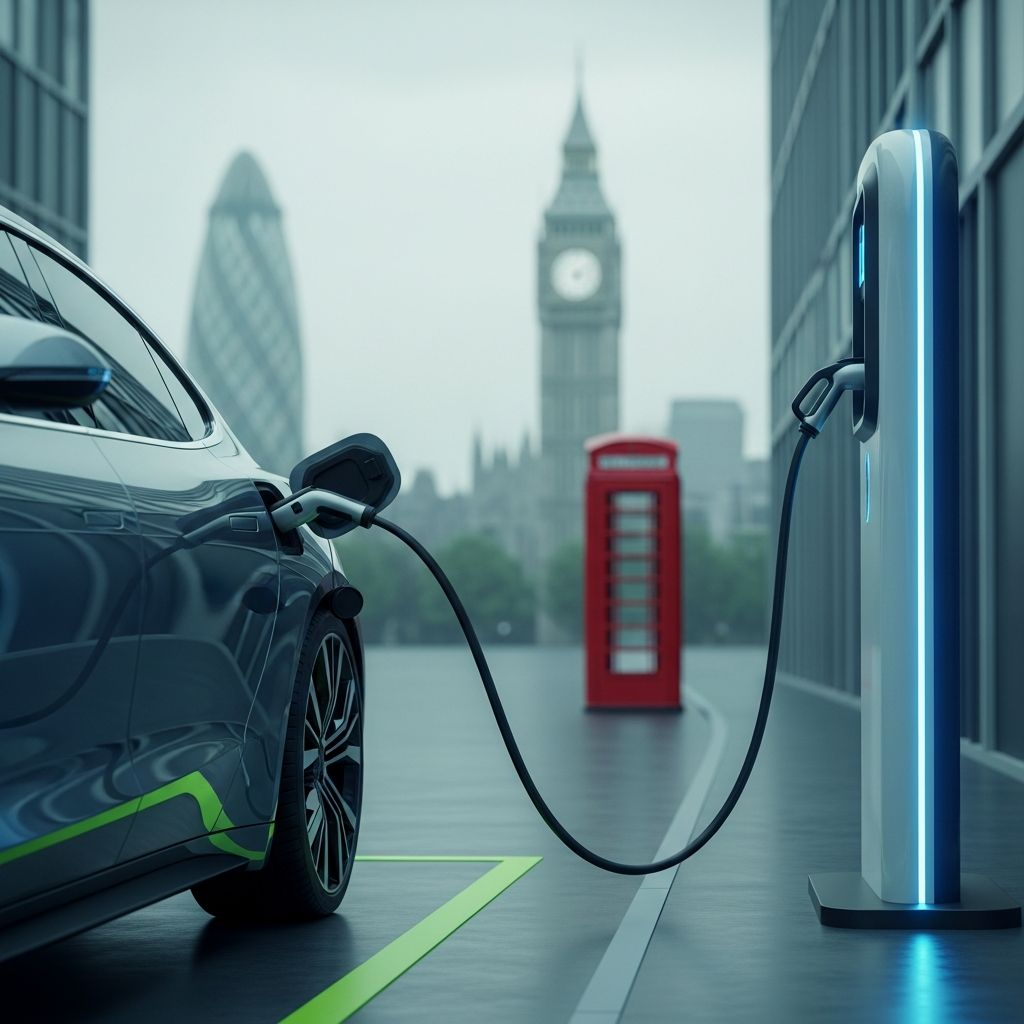
The UK’s Zero Emission Vehicle (ZEV) Mandate represents a landmark policy shift, mandating that car and van manufacturers progressively increase sales of battery electric vehicles (BEVs) and other zero-emission models. Enacted on January 3, 2024, it sets annual targets culminating in 100% zero-emission new vehicle sales by 2035, aligning with the nation’s net zero ambitions.
Origins and Core Objectives of the ZEV Mandate
Launched as part of the UK’s broader strategy to decarbonize transport, which accounts for about 26% of national emissions with road vehicles contributing the majority, the ZEV Mandate legally binds manufacturers to specific sales quotas. This policy tool emerged from extensive consultations and responds to the legal commitment under the Climate Change Act of 2008, ensuring the automotive sector supports interim carbon reduction goals en route to net zero by 2050.
Government investment exceeding £2 billion underpins the initiative, funding charging infrastructure expansion and incentives to ease the transition for industry and consumers alike. By providing regulatory certainty, it aims to protect jobs, stimulate economic growth, and position the UK as a leader in global EV adoption, comparable to policies in France, Germany, and Canada.
Annual Sales Targets and Timeline
The mandate imposes escalating percentages of zero-emission vehicle sales on manufacturers each year. Key milestones include:
- 2024: 22% for cars, 13% for vans
- 2025: 28% for cars, 17% for vans
- 2026: 35% for cars, 22% for vans
- 2027: 42% for cars, 27% for vans
- 2028: 52% for cars, 32% for vans
- 2029: 66% for cars, 45% for vans
- 2030: 80% for cars, 70% for vans
- 2035: 100% for both cars and vans
These targets apply to sales in Great Britain, with credits tradable among manufacturers to balance compliance across the sector.
| Year | Car Sales Target (% ZEV) | Van Sales Target (% ZEV) |
|---|---|---|
| 2024 | 22% | 13% |
| 2025 | 28% | 17% |
| 2030 | 80% | 70% |
| 2035 | 100% | 100% |
This structured ramp-up allows time for supply chain adaptations and consumer familiarization with EVs.
How the Credit Trading System Works
To foster flexibility, the ZEV Mandate operates as a tradable credit scheme. Manufacturers earn credits for exceeding targets and can sell them to those falling short, or bank them for future use with limits on borrowing from subsequent years. This market-based mechanism encourages early investment in EV production while mitigating risks for smaller firms.
Credits are calculated based on a manufacturer’s total UK sales volume, promoting collective progress without bankrupting non-compliant entities. Strict rules on banking and borrowing prevent long-term deferral of obligations.
Penalties for Non-Compliance
Failure to meet targets incurs significant fines: up to £15,000 per non-compliant vehicle, potentially totaling millions for large-scale shortfalls. Rather than a direct fine per ICE vehicle sold, penalties apply to the deficit in ZEV sales against mandated percentages, incentivizing compliance through financial pressure.
Exemptions exist for limited production runs or niche models, but widespread non-adherence could strain manufacturer finances, underscoring the policy’s enforceability.
Effects on Automakers and Production Strategies
Manufacturers must reorient portfolios towards BEVs, plug-in hybrids gaining reduced credit value over time to prioritize full zeros. This has prompted factory retooling, battery supply deals, and R&D acceleration, though challenges like raw material shortages and production bottlenecks persist.
Industry feedback highlights the need for simplified rules to avoid complexity in credit management, ensuring the focus remains on rapid EV scaling. The policy safeguards UK jobs by mandating domestic compliance, boosting local manufacturing.
Consumer Impacts and Market Shifts
Consumers won’t face direct mandates to buy EVs, but reduced ICE availability and potential price pressures from compliance costs could influence choices. Rising model variety and falling battery prices are expected to broaden appeal, supported by infrastructure growth.
Early data shows EV market share growth, though volatility tied to economic factors and charging access remains. The mandate accelerates affordability through scale.
Charging Infrastructure and Government Support
Over £2 billion funds rapid charger deployment on motorways and local networks, critical for consumer confidence. Additional grants for home charging and fleet incentives complement the mandate, addressing range anxiety.
Industry Challenges and Recent Developments
By 2026, UK car production hit 70-year lows, prompting government reviews of ZEV rules amid EV sales slowdowns. Labour’s administration reaffirmed 2035 goals but eyes stricter timelines, balancing ambition with feasibility.
Stakeholders urge adjustments for supply constraints without diluting decarbonization drive.
Global Comparisons and Future Outlook
The UK’s framework is among the world’s most ambitious, surpassing many peers in stringency. As EV tech evolves—potentially including hydrogen—the mandate adapts to ensure sustained progress towards cleaner roads.
Frequently Asked Questions (FAQs)
What exactly is a zero-emission vehicle under the mandate?
Primarily battery electric vehicles (BEVs) with zero tailpipe emissions; plug-in hybrids qualify with declining credits.
Will I be forced to buy an electric car?
No, the mandate targets manufacturers, not individuals; ICE options diminish gradually.
What happens if a manufacturer misses targets?
Fines up to £15,000 per shortfall vehicle, offsettable via credit trading.
Does it apply to vans too?
Yes, with separate, slightly lower targets reaching 100% by 2035.
Has the policy changed under the new government?
Maintained with potential enhancements; reviews address industry pressures.
References
- ZEV Mandate – EVA England — EVA England. 2024. https://www.evaengland.org.uk/our-work/zev-mandate/
- The UK’s Zero Emission Vehicle Mandate — SaveMoneyCutCarbon. 2024-01-03. https://www.savemoneycutcarbon.com/learn-save/the-uks-zero-emission-vehicle-mandate/
- Pathway for zero emission vehicle transition by 2035 becomes law — UK Government Department for Transport. 2024-01-03. https://www.gov.uk/government/news/pathway-for-zero-emission-vehicle-transition-by-2035-becomes-law
- What is the ZEV Mandate? — Kia UK. 2024. https://www.kia.com/uk/about/news/what-is-zev-mandate/
- ZEV Mandate Series Part 1: What is the ZEV Mandate? — New AutoMotive. 2023. https://newautomotive.org/blog/zev-1
- What is the UK ZEV mandate: Is it good for business? — Virta. 2024. https://www.virta.global/blog/what-is-the-uk-zev-mandate
- Zero Emission Vehicle Mandate and CO₂ Regulations Consultation Cost-Benefit Analysis — UK Government. 2023-11. https://assets.publishing.service.gov.uk/media/6554be55544aea000dfb2d59/zev-mandate-consultation-final-cost-benefit-analysis.pdf
Similar Articles






Read full bio of Sneha Tete