UK Roads Lag Behind France’s Network
Exploring why Britain's road infrastructure falls short of France's superior system in quality, scale, and driver experience.
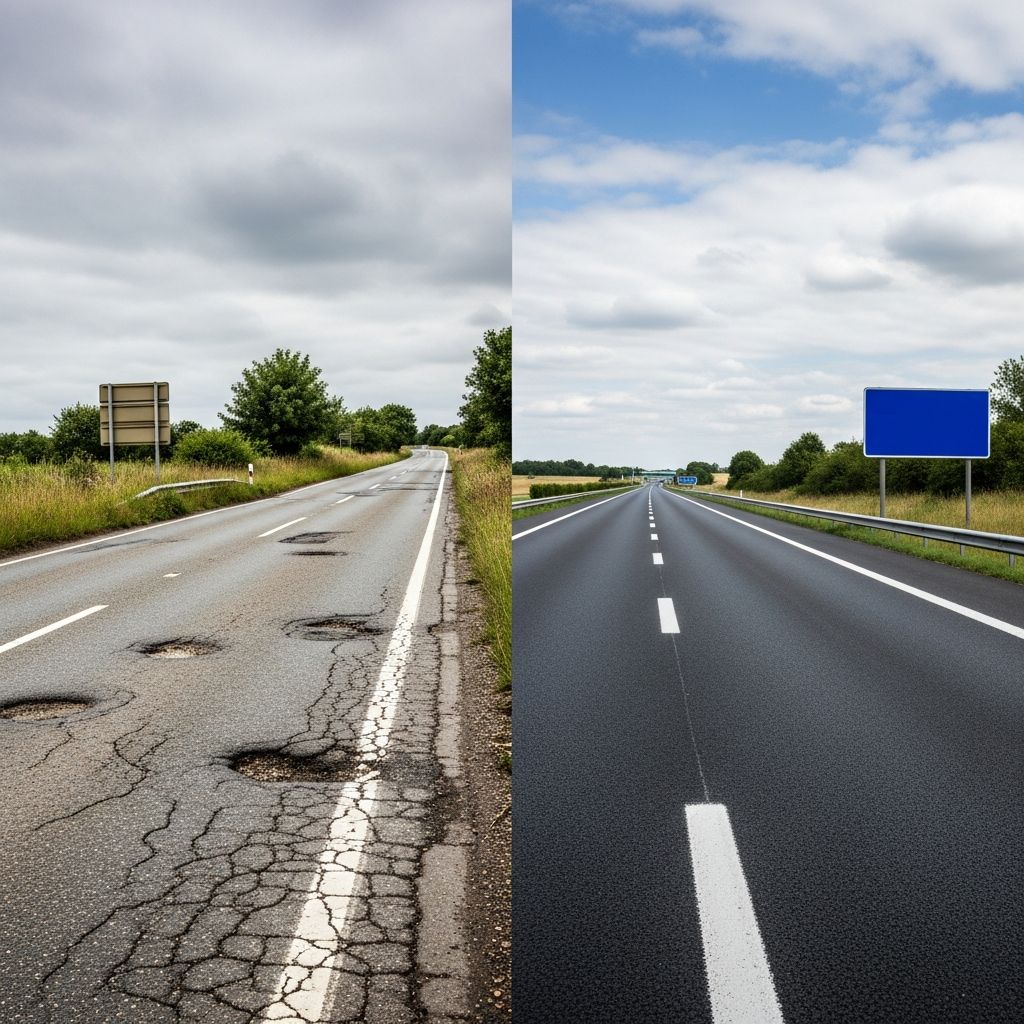
France boasts a road infrastructure that significantly surpasses the United Kingdom’s in terms of scale, quality, and overall driving pleasure. With over twice the total road length despite comparable population pressures, French roads offer smoother journeys, higher speeds, and fewer frustrations for motorists.
The Vast Scale of French Highways
France’s autoroute system stands as one of Europe’s most impressive engineering feats, spanning thousands of kilometers with modern designs and consistent upkeep. In contrast, the UK’s motorway network feels constrained and overburdened, leading to frequent delays and suboptimal travel times.
Key statistics underscore this disparity. France maintains approximately 1,053,215 km of total roads, all paved, with a density of 191 km per 100 km². The UK, by comparison, has 424,129 km of roads at a higher density of 175 km per 100 km², reflecting its smaller land area but also greater congestion pressures. French controlled-access highways total 11,671 km, dwarfing the UK’s 3,701 km, which translates to more direct, high-speed routes across the country.
| Metric | France | UK |
|---|---|---|
| Total Roads (km) | 1,053,215 | 424,129 |
| Road Density (km/100 km²) | 191 | 175 |
| Controlled-Access (km) | 11,671 | 3,701 |
| Paved Roads (%) | 100% | 100% |
This table highlights France’s advantage in sheer volume and specialized high-speed infrastructure, enabling efficient long-distance travel.
Smooth Surfaces Versus Britain’s Pothole Plague
One of the most noticeable differences emerges in road surface quality. French autoroutes feature glassy-smooth asphalt that allows vehicles to cruise at high speeds without the jarring vibrations common on UK motorways. Travelers report minimal need for speed adjustments due to imperfections, fostering a more relaxed driving environment.
In the UK, persistent pothole issues plague even major routes, exacerbated by harsh weather and deferred maintenance. Government data from the Department for Transport indicates millions spent annually on repairs, yet drivers face ongoing disruptions. France invests proactively in resurfacing, resulting in roads that feel newly laid even after years of heavy use.
- French roads: Consistent resurfacing every few years maintains pristine conditions.
- UK roads: Frequent patching leads to uneven surfaces and safety risks.
- Impact: French drivers enjoy 130 km/h limits comfortably; UK averages drop due to defects.
Motorway Design and Capacity Excellence in France
French motorways exemplify forward-thinking design with wide lanes, generous hard shoulders, and strategic rest areas equipped with fuel, food, and sanitary facilities every 20-30 km. These péages (toll roads) fund ongoing improvements, ensuring capacity matches demand.
UK motorways, like the M25, suffer from narrow lanes and inadequate merging zones, creating bottlenecks. Smart motorways with variable speed limits introduce confusion via overhead gantries, often enforcing conservative 50-60 mph due to software glitches or traffic flow algorithms.
France’s radial network, centered around Paris, connects peripheries efficiently, reducing urban sprawl impacts. The UK’s piecemeal development leaves gaps, such as missing links between motorways, forcing detours.
Speed Limits and Driving Freedom
France permits 130 km/h on most autoroutes, promoting swift progress and fuel efficiency. Enforcement relies on clear signage and occasional cameras, without the dynamic restrictions hampering UK travel. British drivers endure average speeds below 70 mph on key routes, throttled by temporary limits for minor works or phantom congestion.
This freedom in France enhances overtaking opportunities and reduces journey times. A 600-mile trip might take hours less, transforming holidays into pleasures rather than ordeals.
Investment and Policy Shortfalls in the UK
Government spending reveals priorities. France allocates billions to infrastructure via toll revenues and national budgets, yielding a network that supports economic growth. The UK, post-Brexit and amid fiscal squeezes, prioritizes rail like HS2 over roads, leaving motorists underserved.
Population density plays a role—France’s 67 million across larger terrain versus UK’s 67 million in tighter space—but proactive planning mitigates this. French regional bypasses decongest cities; UK equivalents lag.
Environmental and Safety Considerations
Both nations pursue green goals, but France integrates them seamlessly. Electric vehicle chargers dot autoroutes, and noise barriers line urban stretches. Safety records show French motorways with lower incident rates per kilometer due to superior geometry and surfaces.
UK efforts, like average speed cameras, aim to curb accidents but often frustrate. Wider French lanes reduce side-swipes; UK’s narrower profiles heighten risks.
Real-World Journeys: France Wins Hands Down
Cross-Channel drivers notice the upgrade immediately. Exiting the Eurotunnel, French A16 glides effortlessly to Calais, contrasting the UK’s halting approaches. Long hauls to the Alps or Riviera showcase endurance, with service plazas rivaling airports.
UK equivalents, such as Dover to London, crawl through works zones. Weekend getaways amplify differences—French roads empty post-rush hour; British ones gridlock.
Lessons for UK Infrastructure Revival
To compete, the UK needs bolder investment: expand motorways, standardize surfaces, and simplify limits. Privatized tolls could mirror France’s model, self-funding upgrades. Political will must shift from rail fixation to balanced transport.
Public pressure grows; surveys show drivers value road quality highly. Emulating France could boost productivity, tourism, and satisfaction.
Regional Road Comparisons
Beyond motorways, France’s national roads (RNs) and departments (RDs) maintain high standards, with scenic routes drawing tourists. UK’s A-roads suffer similar ills—potholes, narrowness—lacking the charm and reliability.
| Aspect | France Strength | UK Weakness |
|---|---|---|
| Rest Areas | Frequent, comprehensive | Sparse, basic |
| Lane Width | 3.5m+ standards | Often under 3.3m |
| Signage | Clear, intuitive | Cluttered, confusing |
Future Prospects and Challenges
France plans autoroute extensions and EV integration; UK faces funding hurdles but eyes upgrades like M25 improvements. Closing the gap requires cross-party commitment.
Frequently Asked Questions
Why are French roads smoother than UK ones?
French proactive maintenance and toll-funded resurfacing ensure superior surfaces, unlike UK’s reactive pothole fixes.
How much longer is France’s motorway network?
France has 11,671 km of controlled-access roads vs UK’s 3,701 km, over three times longer.
Do tolls justify France’s quality?
Yes, péages generate revenue for upkeep, delivering value through faster, safer travel.
Can the UK catch up?
With increased investment and policy shifts, significant improvements are feasible.
Is road density the main issue?
Higher UK density (175 vs 191) strains capacity, but design and maintenance amplify problems.
References
- Britain’s road network is awful compared to France’s — Auto Express. 2025-04-23. https://www.autoexpress.co.uk/opinion/366616/britains-road-network-awful-compared-frances
- British Roads vs French Roads — Grand Prix Grand Tours. N/A. https://www.grandprixgrandtours.com/blog/british-roads-vs-french-roads/
- List of countries by road network size — Wikipedia (data from official sources). 2024. https://en.wikipedia.org/wiki/List_of_countries_by_road_network_size
- UK Road Network Statistics — Department for Transport (UK Gov). 2023-12-31. https://www.gov.uk/government/statistical-data-sets/road-network-statistics
- Réseau routier français — Ministère de la Transition écologique (France Gov). 2024-01-15. https://www.ecologie.gouv.fr/reseau-routier-national
Similar Articles








Read full bio of medha deb