Turbochargers Explained
Discover how turbochargers boost engine power using exhaust energy for superior performance and efficiency in modern vehicles.
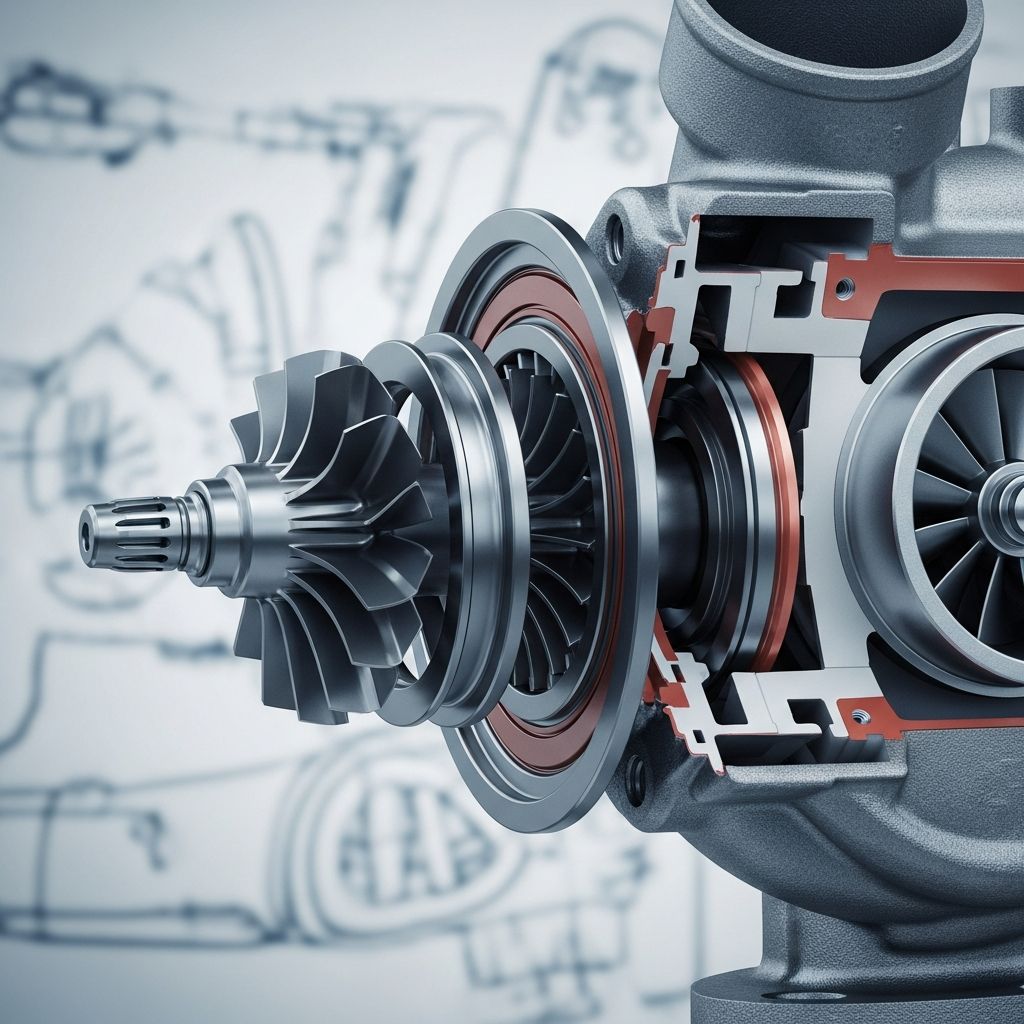
Turbochargers Explained: Powering Modern Engines
Turbochargers represent a pinnacle of automotive engineering, transforming waste exhaust energy into usable power for enhanced engine performance. By forcing more air into combustion chambers, these devices enable smaller engines to produce output rivaling larger naturally aspirated ones, all while improving fuel efficiency and reducing emissions.
The Fundamental Principle of Turbocharging
At its core, a turbocharger functions as a forced induction system that harnesses exhaust gases to drive a turbine connected to a compressor. Exhaust from the engine’s cylinders flows into the turbine housing, where high-velocity gases strike the turbine blades, causing them to spin at extraordinary speeds—often exceeding 200,000 RPM. This rotation is transferred via a central shaft to the compressor wheel on the opposite side.
The compressor draws in ambient air through the intake, compressing it to higher pressures before delivering it to the engine. This dense, oxygen-rich air allows for more fuel to be burned efficiently in each combustion cycle, directly translating to increased horsepower and torque. Typical boost levels range from 6 to 8 psi above atmospheric pressure, enabling up to 30% more power from the same engine displacement.
Key Components and Their Roles
A turbocharger comprises several precisely engineered parts working in harmony:
- Turbine Housing and Wheel: The ‘hot side’ endures temperatures up to 1,900°F as exhaust pulses spin the wheel, converting thermal energy into mechanical rotation.
- Compressor Housing and Wheel: The ‘cold side’ sucks in and compresses air, flinging it outward centrifugally for maximum density before it reaches the intercooler.
- Center Bearing Housing: Supports the shaft with oil-lubricated bearings to handle extreme speeds and minimize friction.
- Wastegate: A valve that diverts excess exhaust away from the turbine to regulate boost pressure and prevent over-spinning.
- Blow-Off Valve (BOV): Releases pressure buildup during throttle lift-off, producing the characteristic ‘pssh’ sound and protecting the system.
These elements are mounted directly to the exhaust manifold, ensuring rapid response to engine output.
Exhaust Flow: From Waste to Power
Internal combustion engines expel hot gases in pulses due to sequential cylinder firing. In a single-scroll turbo, these pulses collide, somewhat diminishing efficiency. Twin-scroll designs separate flows from paired cylinders, channeling them alternately to maintain steady turbine momentum and reduce interference.
Post-turbine, gases exit to the catalytic converter for emission control before leaving via the tailpipe. Meanwhile, compressed air often passes through a charge-air cooler (intercooler) to shed heat gained during compression, further densifying it for optimal combustion.
Overcoming Turbo Lag: Strategies for Instant Response
One common challenge is turbo lag—the brief delay between throttle input and boost delivery as the turbine spools up from low exhaust volume at idle or low RPM. Below the boost threshold, minimal exhaust flow fails to spin the turbine adequately.
Manufacturers employ several countermeasures:
- Variable Geometry Turbines (VGT): Adjustable vanes in the turbine housing alter exhaust flow paths, optimizing for low- or high-speed operation.
- Twin-Scroll Technology: As noted, pulse separation enhances low-end response.
- Sequential Twin Turbos: A small turbo activates quickly for low RPM, handing off to a larger one at higher revs via bypass valves.
- Electric Assist: Hybrid e-turbos use motors to spin the compressor instantly, bridging lag until exhaust takes over.
These innovations ensure smoother power delivery across the rev range.
Types of Turbocharger Configurations
Turbo setups vary to match engine needs:
| Configuration | Description | Advantages | Applications |
|---|---|---|---|
| Single Turbo | One unit handling all boost duties. | Simple, cost-effective; good mid-range power. | Most passenger cars, diesels. |
| Twin Turbo (Parallel) | Two identical turbos, one per cylinder bank (e.g., V6/V8). | Balanced boost, high total flow. | Sports cars like Nissan GT-R. |
| Sequential Twin | Small + large turbo switching roles. | Minimal lag, broad powerband. | Toyota Supra MK4, Mazda RX-7. |
| Compound (Series) | Small turbo feeds large one for staged compression. | Extreme boost for racing. | High-performance diesels. |
Choosing the right setup depends on engine size, desired power curve, and packaging constraints.
Benefits Beyond Power: Efficiency and Emissions
Turbocharging downsizes engines without sacrificing performance— a 2.0L turbo four-cylinder can match a 3.0L naturally aspirated V6. This ‘right-sizing’ cuts fuel consumption by 20-30% under load while meeting stringent emissions standards.
Denser air promotes complete fuel burn, reducing unburnt hydrocarbons and particulates. In diesels, turbos lower soot by improving air-fuel ratios. Modern systems integrate with direct injection and variable valve timing for peak efficiency.
Maintenance Essentials for Longevity
Though robust, turbos demand care:
- Regular oil changes with high-quality synthetic lubricants to prevent coking in bearings.
- Avoid immediate shutdown after hard driving; idle 1-2 minutes to cool the turbine.
- Monitor for shaft play, unusual noises, or boost leaks indicating bearing wear or hose failure.
- Upgrade intercoolers and piping for tuned applications to handle higher pressures.
Proper maintenance extends life to 150,000+ miles.
Turbochargers in Everyday and Performance Vehicles
From compact economy cars to supercars, turbos dominate. Volkswagen’s EA888 engine powers millions with a single turbo for responsive torque. Porsche 911 Turbos employ variable geometry for lag-free acceleration. Diesel trucks like Cummins X15 rely on massive units for hauling power.
Future trends include electrically assisted turbos and integrated exhaust manifolds for faster heat-up and better cold-start efficiency.
Frequently Asked Questions (FAQs)
What causes the turbo ‘whoosh’ sound?
The compressor spooling and blow-off valve venting excess pressure create audible airflow turbulence.
Do turbos shorten engine life?
No, when properly maintained; they often outlast components due to smoother operation and lower overall stress from downsizing.
Turbo vs. Supercharger: Key Differences?
Turbos use exhaust (free energy, lag-prone); superchargers use crankshaft power (instant response, parasitic drag).
Can any engine be turbocharged?
Most can, but requires reinforced internals, fueling, and cooling for reliability under boost.
How much power gain from a turbo?
Typically 30-50% increase, scalable with size and tuning.
References
- What Is a Turbo and How Does It Work? – Knowledge Guide — Garrett Motion. 2023. https://www.garrettmotion.com/knowledge-center-category/oem/what-is-a-turbo-and-how-does-it-work/
- How Does A Turbocharger Work? — Turbo Dynamics. 2023. https://www.turbodynamics.co.uk/how-does-a-turbocharger-work
- How Turbochargers Work — HowStuffWorks. 2024-01-15. https://auto.howstuffworks.com/turbo.htm
- Turbos: How They Work | Science Garage — YouTube (MotorTrend). 2016-10-12. https://www.youtube.com/watch?v=lrCwmpjR77U
- How a Turbo Actually Works (Explained) — YouTube (CNM Diesel Lab). 2023. https://www.youtube.com/watch?v=ZbBcvSfSWKw
- Turbocharger — Wikipedia (citing engineering standards). 2026-04-01. https://en.wikipedia.org/wiki/Turbocharger
Similar Articles





Read full bio of Sneha Tete