Toyota Corolla: Performance, Efficiency & Reliability
Discover why the Toyota Corolla remains a top choice for family car buyers
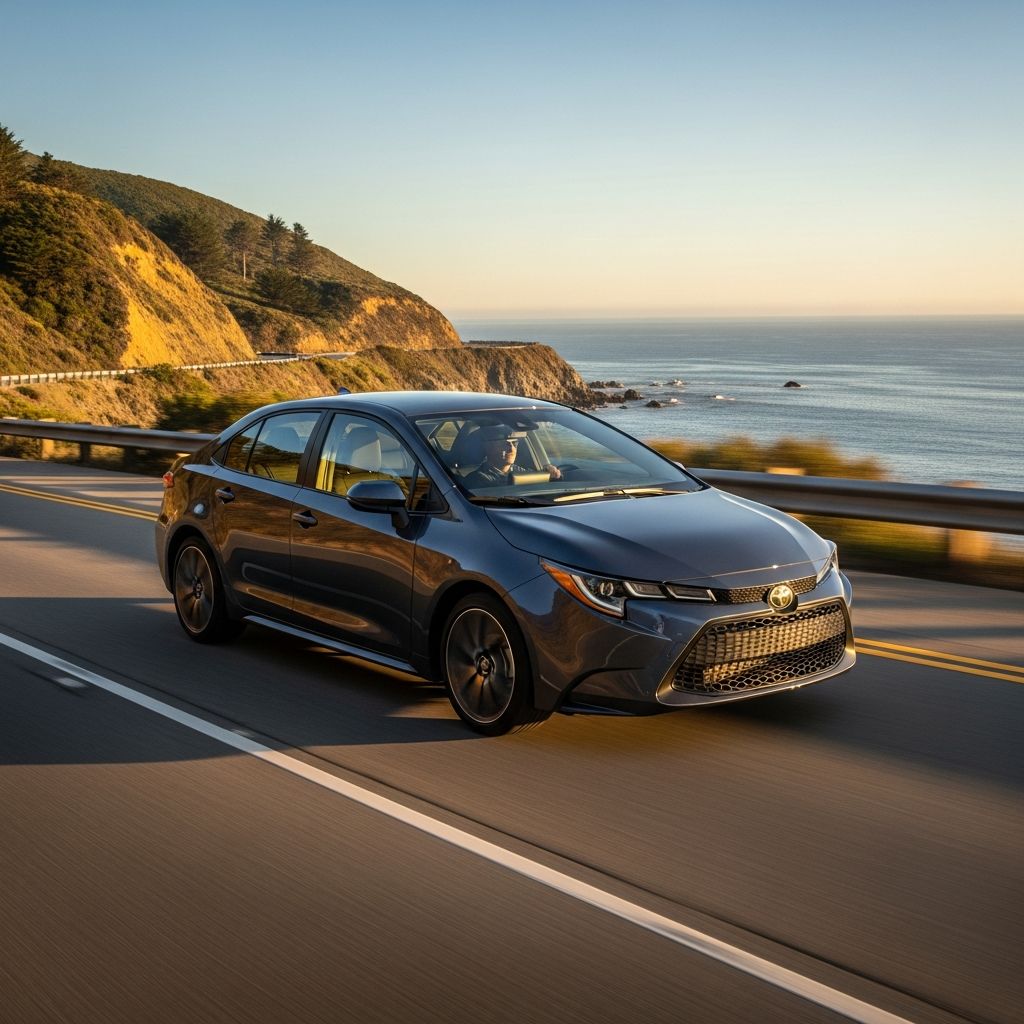
The Toyota Corolla has long been synonymous with dependability and practicality in the automotive world. In its latest iteration, this iconic nameplate continues to deliver what buyers expect: a refined driving experience, impressive fuel economy, and the legendary build quality that has made Toyota a household name. Whether you’re a first-time buyer seeking a straightforward family vehicle or an experienced driver looking for a reliable daily driver, the Corolla presents a compelling proposition in today’s increasingly competitive hatchback segment.
Engineering Foundation and Platform Architecture
At the heart of the current Corolla lies the Toyota New Global Architecture (TNGA) platform, a sophisticated foundation shared with other notable Toyota models including the C-HR SUV and the latest Prius. This modern platform represents a significant departure from previous generations, bringing enhanced structural rigidity and improved weight distribution. The TNGA platform contributes substantially to the vehicle’s overall refinement and dynamic characteristics, setting a solid technical baseline for what drivers experience behind the wheel.
The architectural decisions made during development have resulted in a hatchback that feels cohesive and well-engineered. The platform’s engineering principles influence everything from suspension geometry to interior packaging, creating a vehicle that balances multiple competing demands effectively. This foundation explains why the Corolla manages to deliver such composed handling despite its practical orientation.
Powertrain Options and Propulsion Technology
One of the most significant aspects of the modern Corolla is its commitment to hybrid technology. Unlike some competitors that offer traditional petrol or diesel alternatives, the Corolla has fully embraced electrification, making it a hybrid-only proposition. This strategic decision reflects Toyota’s confidence in hybrid technology as a mature, customer-ready solution for improving efficiency without sacrificing performance.
The Corolla presents buyers with two main powertrain configurations:
- A 1.8-litre petrol engine paired with an electric motor, delivering a balanced approach to economy and everyday driving
- A 2.0-litre petrol engine combined with electric motor assistance, offering enhanced performance for those prioritizing responsiveness
Both configurations utilize a continuously variable transmission (CVT) automatic gearbox, which has been tuned specifically for hybrid operation. This transmission choice represents a philosophical approach to efficiency, though some drivers may find the characteristic behaviour of CVT systems takes adjustment. The hybrid system works seamlessly to optimize the balance between the petrol engine and electric motor, adapting to driving conditions automatically.
Notably, the Corolla does not offer a plug-in hybrid variant, distinguishing it from certain rivals in the segment such as the Vauxhall Astra, Peugeot 308, and Volkswagen Golf. This decision streamlines the model range and keeps the focus on conventional hybrid technology. The Honda Civic has made a similar commitment to hybrid-only powertrains for its latest generation, making these two Japanese manufacturers’ most direct competitors in this space.
Driving Dynamics and On-Road Behavior
The Corolla’s suspension architecture deserves particular attention when evaluating its dynamic character. The multi-link rear suspension design contributes to a refined ride quality that manages to absorb road imperfections effectively while maintaining composure through more spirited driving. The front suspension works in concert with the rear to create balanced handling characteristics that inspire confidence rather than adrenaline.
The steering presentation strikes an interesting middle ground. While not as sharp as some enthusiast-focused vehicles, the steering offers good weight and precision, allowing drivers to place the vehicle with certainty through corners. The overall effect is a car that feels secure and controllable, though it prioritizes comfort and accessibility over outright sporting engagement. This balanced approach suits the Corolla’s positioning as a family hatchback rather than a performance tool.
Acceleration and performance metrics reflect the hybrid powertrain’s character. The 1.8-litre hybrid variant achieves 0-62 mph in approximately 9.2 seconds with a top speed around 111 mph, figures that are entirely adequate for everyday motoring and highway merging. While not thrilling for performance enthusiasts, these numbers demonstrate that the Corolla never feels underpowered in real-world conditions. The electric motor assistance provides responsive torque delivery that masks what might otherwise feel like a modestly powered engine.
Efficiency and Environmental Considerations
The Corolla’s hybrid system delivers remarkable fuel economy figures. Real-world testing reveals combined fuel consumption in the range of 53-61 mpg depending on driving style and conditions, with CO2 emissions typically falling between 104-108 g/km. These numbers represent a substantial achievement in an era where many manufacturers struggle to balance performance with environmental responsibility.
What makes these efficiency figures particularly impressive is that they don’t come at the expense of refinement or driving pleasure. The hybrid system operates almost imperceptibly during normal driving, with the transition between petrol and electric power occurring seamlessly. Regenerative braking captures energy during deceleration, feeding it back into the hybrid battery system to extend electric-only driving during low-speed maneuvers such as parking or crawling through traffic.
For buyers concerned about their environmental footprint, the Corolla represents a pragmatic solution. While fully electric vehicles continue to develop, conventional hybrids like the Corolla provide immediate emissions reductions without requiring new charging infrastructure or dealing with battery range limitations.
Interior Refinement and Comfort Features
The Corolla’s cabin environment emphasizes refinement and quality construction. The materials used throughout the interior reflect Toyota’s commitment to durability, with soft-touch surfaces in key contact areas and robust plastics in more utilitarian zones. Build quality throughout remains exceptional, with panel gaps consistent and assembly standards meeting Toyota’s exacting standards.
Comfort on longer journeys is well-served by the Corolla’s suspension tuning and seat design. The ride remains pliant and composed, absorbing motorway imperfections without transmitting harshness into the cabin. Seats provide adequate support for extended driving periods, with sufficient adjustment range to accommodate various body types and driving postures.
Noise insulation has been carefully engineered, with the cabin remaining hushed even at higher speeds. The hybrid powertrain contributes to this quietness, as the electric motor operates silently during low-speed driving, and the petrol engine rarely needs to labour noticeably. Wind and road noise are well-controlled, creating an environment conducive to conversation and enjoying audio entertainment.
Technology and Infotainment Systems
Modern updates to the Corolla’s infotainment technology have significantly improved the user experience compared to earlier iterations. The system offers higher resolution displays with simplified menu structures that prioritize intuitive operation. Touch-screen responsiveness has been enhanced, and the overall interface design reflects contemporary automotive standards.
The infotainment improvements represent more than cosmetic changes—they genuinely make daily operation easier. Smartphone integration works smoothly, navigation systems provide clear guidance, and climate controls remain accessible without requiring excessive screen interaction while driving. These practical improvements demonstrate Toyota’s attentiveness to what modern drivers actually want from their vehicles’ digital interfaces.
Practical Considerations and Space Limitations
The Corolla’s packaging prioritizes comfort and driving quality over maximum internal space. While boot capacity is adequate for most family scenarios, those accustomed to larger hatchbacks may find the cargo area somewhat constrained. The hybrid system’s battery placement does impact available space compared to traditional petrol alternatives, though Toyota has managed this trade-off reasonably well.
Rear seat accommodation provides adequate legroom for most adult passengers on typical journeys. However, longer trips with three adults in the rear might reveal space limitations. The pragmatic buyer will recognize that the Corolla makes deliberate choices about prioritizing ride comfort and handling over raw cargo volume—a decision that suits its intended market.
Competitive Positioning
The Corolla operates in a segment populated by well-regarded competitors. The latest Honda Civic represents perhaps its most direct rival, having similarly committed to hybrid-only powertrains for the newest generation. Other competitors include the Vauxhall Astra, Peugeot 308, and Volkswagen Golf, though these vehicles offer different technology paths and design philosophies.
What distinguishes the Corolla in this competitive landscape is its singular focus on hybrid reliability and its commitment to building quality that has been proven over decades. While some competitors may offer more space or performance, few match the Corolla’s reputation for long-term dependability.
Summary of Key Advantages and Considerations
Advantages:
- Exceptional build quality and materials throughout the cabin
- Composed and refined ride combined with precise, confidence-inspiring handling
- Hybrid technology delivering outstanding fuel economy without complexity
- Quiet, hushed cabin environment even at motorway speeds
- Multi-link rear suspension providing excellent bump absorption
- Toyota’s legendary reliability reputation backed by consistent quality
- Modern infotainment systems with improved usability
Considerations:
- Cargo space is more constrained than some competing hatchbacks
- Rear seat legroom may feel tight during longer journeys with multiple adult passengers
- CVT automatic gearbox requires acclimatization for some drivers
- Driving character prioritizes comfort over sporting engagement
- No plug-in hybrid option for buyers wanting electric-only driving capability
Practical Performance Metrics
| Specification | 1.8 Hybrid Variant | Key Details |
|---|---|---|
| Engine | 1.8-litre 4-cylinder + electric motor | Hybrid-only configuration |
| Power Output | 138 bhp combined | Responsive daily performance |
| Transmission | CVT automatic, front-wheel drive | Seamless power delivery |
| Acceleration | 0-62 mph in 9.2 seconds | Adequate for everyday motoring |
| Top Speed | 111 mph | Safe highway cruising |
| Fuel Economy | 61.4 mpg combined | Excellent efficiency |
| CO2 Emissions | 104 g/km | Low environmental impact |
Final Verdict
The Toyota Corolla represents a thoughtful evolution of the family hatchback formula. Rather than pursuing maximum space or outright performance, Toyota has crafted a vehicle that excels at providing reliable, efficient, and refined daily transportation. The hybrid-only approach eliminates complexity while delivering genuine efficiency gains. For buyers prioritizing build quality, fuel economy, and a composed driving experience, the Corolla merits serious consideration.
The vehicle acknowledges its practical limitations without apology, instead celebrating the qualities it does deliver: exceptional craftsmanship, sophisticated engineering, and a commitment to longevity that few manufacturers can match. In a segment often dominated by compromise, the Corolla makes calculated choices that result in a coherent, well-balanced proposition for modern family buyers.
References
- Toyota Corolla Review — Auto Express. March 10, 2026. https://www.autoexpress.co.uk/toyota/corolla
- New Toyota Corolla 2023 Review — Auto Express. February 14, 2023. https://www.autoexpress.co.uk/toyota/corolla/359647/new-toyota-corolla-2023-review
- Toyota Corolla GR Sport Long-Term Test — Auto Express. November 17, 2023. https://www.autoexpress.co.uk/toyota/corolla/360685/toyota-corolla-gr-sport-long-term-test-high-quality-slightly-cramped-hybrid
- Toyota New Global Architecture Platform Overview — Toyota Official Technical Documentation. Accessed April 2026. https://www.toyota.com
Similar Articles


Read full bio of Sneha Tete