Toyota Corolla: Comprehensive Guide to Features & Performance
Discover why the Toyota Corolla remains a trusted choice for family drivers seeking reliability and efficiency.
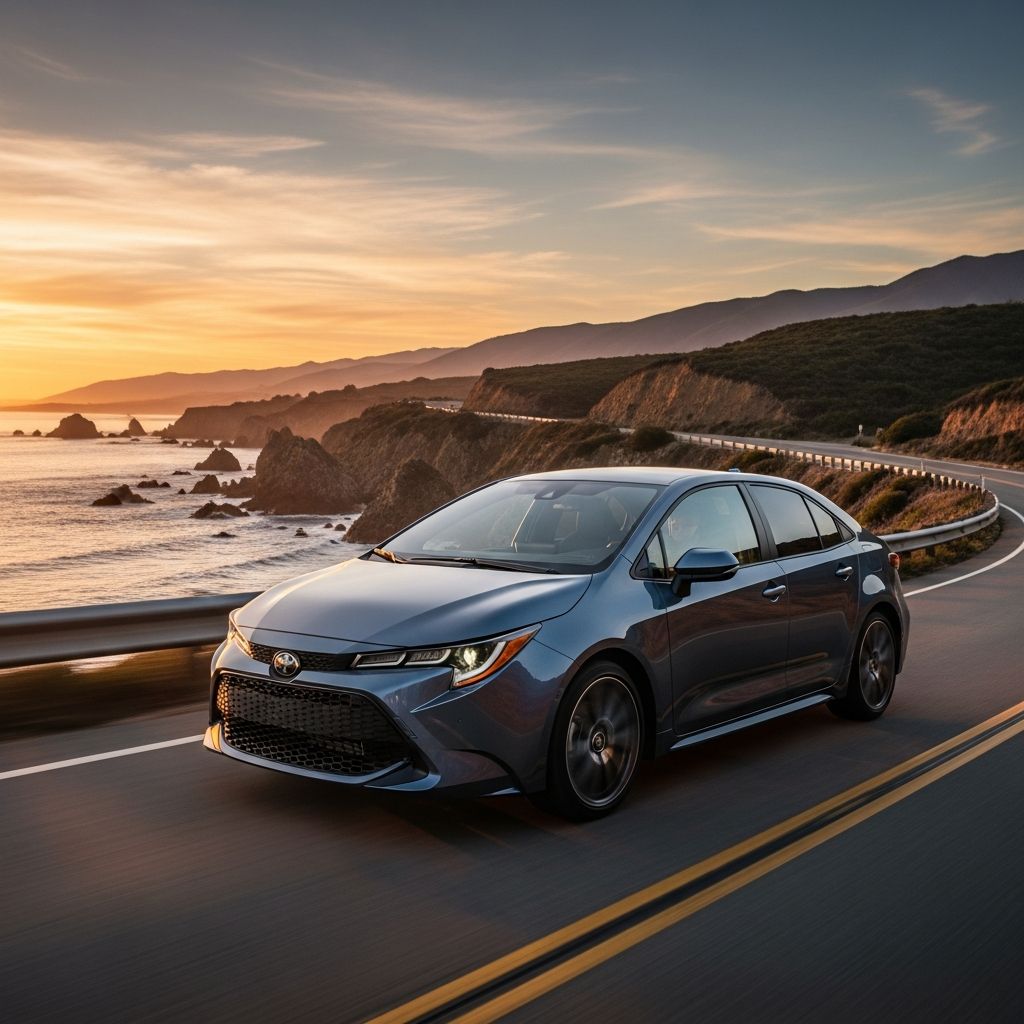
The Toyota Corolla stands as one of the world’s best-selling automobiles, a distinction it has maintained through decades of consistent quality and practical design. This globally recognized nameplate has earned its reputation by delivering vehicles that balance everyday practicality with dependable engineering. The current generation represents a significant evolution, combining modern technology with Toyota’s legendary build quality to create a compelling option in the competitive family hatchback segment.
Platform Innovation and Technical Architecture
The modern Corolla sits on Toyota’s TNGA platform, a modular foundation that has also underpinned other successful Toyota models including the C-HR SUV and the latest Prius generation. This advanced platform delivers a sophisticated underpinning that contributes significantly to the vehicle’s refined driving experience and structural integrity. The TNGA architecture enables Toyota to optimize weight distribution, improve rigidity, and enhance overall vehicle dynamics while maintaining manufacturing efficiency.
The platform’s multi-link rear suspension geometry is particularly noteworthy, offering superior handling characteristics compared to simpler suspension designs. This setup allows the rear axle to absorb surface imperfections independently, reducing noise and vibration transmission to cabin occupants while maintaining responsive cornering behavior.
Powertrain Options and Hybrid Technology
Toyota has committed to a hybrid-only powertrain strategy for the Corolla, eliminating conventional petrol-only engines from the lineup. This decision reflects the automotive industry’s broader shift toward electrification and demonstrates Toyota’s confidence in hybrid technology’s maturity and customer acceptance.
Two engine displacements are available to suit different driving requirements:
- 1.8-litre hybrid engine: Produces 138 horsepower and delivers 61.4 mpg combined economy with 104g/km CO2 emissions
- 2.0-litre hybrid engine: Offers increased power output for drivers prioritizing performance over maximum fuel economy
Both engines pair with an electric motor and a continuously variable transmission (CVT), eliminating the need for a traditional stepped automatic gearbox. The hybrid system operates intelligently, allowing the vehicle to traverse congested urban environments in electric-only mode for surprisingly extended periods, while seamlessly engaging the petrol engine during acceleration or highway driving.
Unlike some competitors such as the Vauxhall Astra, Peugeot 308, and Volkswagen Golf, Toyota has not developed a plug-in hybrid variant. This represents a deliberate engineering choice, as the self-charging system provides sufficient efficiency gains for most driving scenarios without requiring external charging infrastructure.
Dynamic Handling and Suspension Characteristics
Despite its hybrid powertrain and CVT transmission, the Corolla delivers surprisingly capable handling dynamics. The steering system features precise calibration and consistent weight progression, inspiring confidence during cornering maneuvers. The suspension tuning balances compliance with control, absorbing road surface irregularities smoothly while maintaining composure during spirited driving.
The vehicle positions itself between more spirited sports hatchbacks and ultra-comfortable cruising-oriented competitors. It lacks the agility of purpose-built performance cars but excels at delivering a balanced driving experience that appeals to the broader family car demographic. The rear suspension’s independent linkages contribute to this balance by managing body roll effectively while maintaining vertical compliance.
The steering geometry has been optimized to reduce straight-line vagueness, a common criticism of early hybrid vehicles with electric power steering systems. Drivers experience direct feedback from the road surface while benefiting from reduced parking effort and improved low-speed maneuverability.
Interior Refinement and Cabin Quality
Toyota has invested significantly in cabin quality, employing solid construction techniques and quality materials throughout the interior. The dashboard design conveys robustness without excessive complexity, prioritizing intuitive control placement and straightforward operation.
Seating comfort receives particular attention, with the front seats featuring generous padding and support structure. Long-distance drivers appreciate the cushioned back rests and adjustable lumbar support, though rear passenger accommodation represents a compromise. The rear seats, while functional, provide limited legroom compared to some direct competitors, a characteristic that reflects the vehicle’s overall packaging constraints.
The cabin’s acoustic environment benefits from extensive sound-deadening materials, with the multi-link rear suspension contributing to reduced road noise transmission. The self-charging hybrid system operates nearly silently during low-speed urban driving, enhancing the sense of refinement during stop-and-go traffic.
Infotainment and Technology Integration
Recent updates to the Corolla’s infotainment system represent a substantial improvement over earlier implementations. The newer interface provides higher resolution graphics, more intuitive menu navigation, and simplified access to frequently used functions. Touch screen responsiveness has been enhanced, reducing frustration during typical operation.
The system supports smartphone integration through both Apple CarPlay and Android Auto connectivity, allowing seamless access to navigation applications, music streaming services, and communication functions. Voice control capabilities have been refined to recognize natural speech patterns more reliably.
Build Quality and Durability Assessment
Toyota’s legendary reputation for reliability and build quality manifests in every aspect of the Corolla’s construction. Panel gaps remain consistently tight, suggesting careful assembly tolerances. Interior trim pieces fit flush without rattles, and door seals provide adequate weather protection. The bodywork displays no signs of poor welding or assembly shortcuts.
The self-charging hybrid system has evolved significantly, with improvements to battery chemistry enabling enhanced performance without compromising fuel economy or reliability. Toyota’s experience building hybrid vehicles across multiple model lines has resulted in robust, proven components that deliver consistent performance across hundreds of thousands of vehicles.
Performance Metrics and Real-World Efficiency
| Metric | 1.8 Hybrid | Performance Rating |
|---|---|---|
| Power Output | 138 bhp | Adequate for family driving |
| 0-62 mph Acceleration | 9.2 seconds | Moderate pace |
| Top Speed | 111 mph | Highway capable |
| Combined Fuel Economy | 61.4 mpg | Excellent efficiency |
| CO2 Emissions | 104 g/km | Low environmental impact |
Real-world testing by automotive journalists has demonstrated that the Corolla achieves genuinely impressive fuel economy figures in typical driving conditions. During extended family trips combining motorway and secondary road driving, the vehicle has demonstrated 53-58 mpg efficiency, approaching manufacturer claims despite varied driving styles and road conditions.
Competitive Positioning Within the Segment
The Corolla faces increasing competition from rivals that have evolved to match or exceed its capabilities. The latest Honda Civic has adopted a hybrid-only strategy mirroring Toyota’s approach, positioning itself as a direct competitor. Both vehicles share similar technological philosophies while targeting slightly different customer demographics.
Volkswagen, Peugeot, and Vauxhall continue refining their offerings with plug-in hybrid options unavailable in the Corolla lineup. These alternatives appeal to drivers with reliable home charging access or those prioritizing zero-emission urban commuting. The Corolla remains the superior choice for purchasers without charging infrastructure or those seeking simplicity and low acquisition cost.
Practicality Considerations and Packaging Limitations
The Corolla’s styling direction has sacrificed some interior volume compared to previous generations, resulting in constrained packaging that affects practical capability. The boot space, while adequate for weekly shopping, cannot accommodate large items requiring the expansive cargo areas available in some competing hatchbacks. Rear passenger headroom and legroom similarly reflect style-over-space prioritization.
For families with growing children or those requiring extensive cargo capacity, these limitations warrant careful consideration. Long-distance trips with multiple passengers and luggage can feel cramped, though the practical compromise remains acceptable for most family driving scenarios.
Environmental Performance and Sustainability
The Corolla’s hybrid powertrain delivers meaningful environmental benefits through reduced fuel consumption and associated CO2 emissions. The self-charging system recovers energy during deceleration that would otherwise dissipate as waste heat in conventional vehicles, converting this energy into battery charge that supplements engine output during acceleration.
Operating in electric-only mode during urban driving significantly reduces local emissions and noise pollution. In congested city environments, the Corolla spends substantial time in EV mode, meaning zero tailpipe emissions during low-speed driving periods that constitute significant portions of urban commutes.
Price Point and Value Proposition
The Corolla occupies the mid-range of the family hatchback segment, with pricing between £28,409 and £38,875 depending on engine selection and trim level. This positioning reflects the vehicle’s quality, technology content, and Toyota’s brand reputation without commanding premium pricing typical of luxury marques.
Relative to competing vehicles offering similar technology and build quality, the Corolla represents solid value. Ownership costs remain predictable due to Toyota’s legendary reliability, and resale values typically hold well due to strong used market demand for proven, dependable vehicles.
Strengths and Appeal Factors
- Exceptional build quality and perceived durability across all components
- Refined hybrid powertrain combining efficiency with adequate performance
- Sophisticated suspension tuning delivering balanced ride and handling characteristics
- Comfortable front seating suitable for extended driving periods
- Precise steering with appropriate weight and feedback
- Quiet cabin environment enhanced by sound-deadening materials
- Proven reliability track record supporting long-term ownership confidence
Areas Requiring Compromise
- Limited rear passenger accommodation compared to some competitors
- Constrained boot space affecting cargo versatility
- CVT transmission produces characteristic drone sound under hard acceleration
- Infotainment interface feels less premium than some alternative systems
- Performance characteristics emphasize efficiency over driving excitement
Frequently Asked Questions
Does the Corolla require external charging?
No. The Corolla uses a self-charging hybrid system that generates electricity through regenerative braking and engine operation. No plug or charging infrastructure is necessary, distinguishing it from plug-in hybrid alternatives.
How does the CVT transmission affect driving experience?
The continuously variable transmission provides smooth acceleration without gear changes. Some drivers perceive characteristic engine drone during hard acceleration, though this remains generally unobtrusive during normal driving.
Is rear passenger space adequate for family use?
Rear accommodation suits occasional passengers and children adequately. Taller adults may find legroom limiting on extended journeys, representing a known limitation of the current design.
What maintenance requirements apply to the hybrid system?
Hybrid systems require no special maintenance beyond conventional vehicle servicing. Battery longevity remains excellent, with Toyota’s experience demonstrating reliable performance across hundreds of thousands of vehicles.
References
- Toyota Corolla Review — Auto Express. 2026-03-10. https://www.autoexpress.co.uk/toyota/corolla
- New Toyota Corolla 2023 Review — Auto Express. 2023-02-14. https://www.autoexpress.co.uk/toyota/corolla/359647/new-toyota-corolla-2023-review
- Toyota Corolla GR Sport Long-Term Test Review — Auto Express. https://www.autoexpress.co.uk/toyota/corolla/360685/toyota-corolla-gr-sport-long-term-test-high-quality-slightly-cramped-hybrid
- 2025 Toyota Corolla Review — MotorTrend. https://www.motortrend.com/cars/toyota/corolla
Similar Articles


Read full bio of medha deb