Toyota Avensis 2003-2008: Owner’s Guide And Reliability Tips
Discover why the Toyota Avensis 2003-2008 remains a reliable choice for budget-conscious buyers seeking family-friendly motoring.
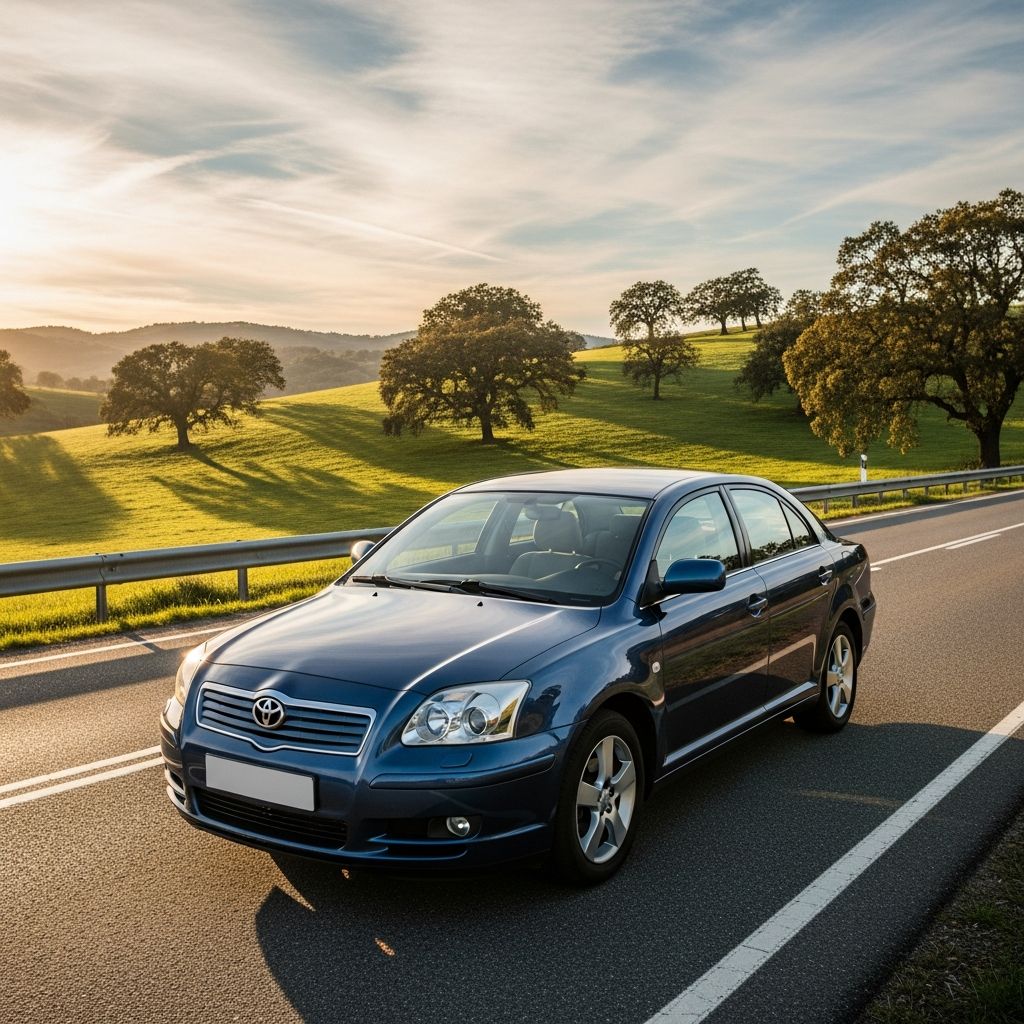
The Toyota Avensis from 2003 to 2008 stands out as a practical and sturdy vehicle designed primarily for everyday family use. This second-generation model, often referred to as the T250 series, prioritized comfort, space, and reliability over flashy performance, making it a favorite among budget buyers in the used market today. Available mainly as a saloon or estate, it offered ample room for passengers and cargo, coupled with Toyota’s renowned build quality.
Design and Practicality Highlights
Measuring around 4645mm in length, 1760mm in width, and 1480mm in height, the Avensis provided a generous footprint ideal for families. The saloon boot capacity reached 520 liters, while the estate variant expanded this further, proving excellent for school runs, shopping trips, or weekend getaways. Its turning circle of 11 meters ensured maneuverability in urban settings despite the car’s size.
Interior space accommodated adults comfortably front and rear, with high-quality plastics mimicking premium materials like wood and aluminum in higher trims. However, these surfaces could become fragile over time, especially on dashboards exposed to sunlight. Standard features like dual-zone climate control, power windows, remote locking, and a six-speaker audio system added to its appeal without inflating the price excessively.
Engine Lineup and Performance
Power came from a range of petrol engines, with the 2.0-liter four-cylinder producing 110kW initially, later upgraded to a punchier 2.4-liter unit delivering 115-120kW and up to 231Nm of torque. These engines featured timing chains for longevity, avoiding the need for frequent belt replacements. Fuel economy hovered around 9.5 liters per 100km on premium unleaded, reasonable for the era.
Transmission options included a five-speed manual or four/five-speed automatic, both noted for smooth shifts. The 2.4-liter proved better suited to the car’s weight, especially when fully loaded, offering adequate acceleration without sporting pretensions. Diesel variants, popular in Europe, provided efficiency but are less common in some markets.
| Engine | Power | Torque | Fuel Economy |
|---|---|---|---|
| 2.0L Petrol | 110kW | ~200Nm | ~9-10L/100km |
| 2.4L Petrol | 115-120kW | 211-231Nm | 9.5L/100km |
Handling, Ride, and Safety Standards
On the road, the Avensis delivered a composed ride thanks to MacPherson struts up front and a multi-link rear suspension. This setup handled bumps comfortably and maintained stability at highway speeds, even in adverse weather. Electro-hydraulic power steering provided precise feedback without being overly heavy.
Safety was a strong suit, earning a five-star ANCAP rating with features like multiple airbags, ABS, and electronic stability control in later models. Its robust chassis and braking system contributed to secure stopping distances, making it a top pick for families prioritizing protection.
Reliability Strengths and Maintenance Costs
Toyota’s reputation shines through here: the Avensis is well-built with fewer major failures than rivals. Servicing intervals were every 15,000km or 12 months, keeping ownership costs manageable. A space-saver spare wheel was standard, and towing capacity reached 1400kg braked. Used prices range from $5,000 to $13,000 for models with 70,000-120,000km.
- Pros: Spacious boot, excellent safety, standard premium features, timing chain durability.
- Cons: Potential oil consumption in high-mileage engines, fragile trim.
Common Problems and How to Spot Them
While reliable overall, watch for oil usage in petrol engines, particularly after 100,000km—regular top-ups may be needed. Air conditioning compressors fail periodically, and clogged drains can lead to cabin water ingress, causing floor corrosion. Rear suspension bushings wear due to complex multi-link design, increasing repair costs.
Electrics are generally solid, but check for dashboard cracking and ensure timing chain tensioners are intact. Pre-purchase inspections should focus on service history, as neglected maintenance amplifies issues like these.
Trims, Features, and Market Value
Entry-level GLX models included essentials like air-con and power accessories, while Ultima or TR variants added alloys, fog lights, leather steering wheels, and spoilers. A 2003 facelift refreshed styling with new lights and bumpers, boosting desirability.
In today’s market, low-mileage examples under $10,000 offer great value, undercutting flashier competitors while matching reliability. Estates command a slight premium for extra space.
Buying Guide: What to Look For
Prioritize full service records, especially oil changes and suspension checks. Test drive for smooth gearbox operation and AC function. Rust under mats signals water issues—avoid without proof of repair. Aim for post-facelift 2.4-liter models for better power.
- Verify ANCAP-equivalent safety gear.
- Inspect boot space and folding seats.
- Budget $1,000-2,000 annually for upkeep.
Alternatives to Consider
Competitors like the Honda Accord or Ford Mondeo offer similar space but may lack Toyota’s bulletproof engines. The Mazda6 provides sportier handling at comparable prices.
| Model | Price Range | Key Strength |
|---|---|---|
| Toyota Avensis | $5k-$13k | Reliability |
| Honda Accord | $6k-$15k | Refined ride |
| Ford Mondeo | $4k-$12k | Space |
Owner Experiences and Long-Term Ownership
Owners praise the Avensis for low running costs and family practicality. Many exceed 200,000km with routine care. Fuel efficiency improves with regular servicing, and parts availability remains strong due to Toyota’s global network.
Frequently Asked Questions (FAQs)
Is the 2003-2008 Toyota Avensis reliable?
Yes, it’s highly reliable with timing chain engines and solid build, though monitor oil levels and AC.
What is the fuel economy of the Avensis 2.4?
Expect 9.5L/100km combined, better on highways.
Does it have a timing belt or chain?
Timing chain, no regular replacement needed.
Common issues with Toyota Avensis 2003-2008?
Oil consumption, AC compressor failures, suspension wear, and potential water leaks.
Is it safe for families?
Five-star safety rating makes it excellent.
Conclusion: Worth Buying in 2026?
For affordable, spacious, and safe family transport, the 2003-2008 Avensis excels. Its dirt-cheap used prices reflect age, not flaws—ideal if you value dependability over modernity.
References
- Toyota Avensis 2003-2009 used car review — Trade Me Motors, Richard Edwards. Accessed 2026. https://www.trademe.co.nz/c/motors/review/toyota-avensis-2003-2009-used-car-review
- Used Toyota Avensis review: 2001-2009 — CarsGuide. Accessed 2026. https://www.carsguide.com.au/car-reviews/used-car-review-toyota-avensis-verso-13437
- Toyota Avensis II (2003-2008) – how many problems does it have? — YouTube Transcript. Accessed 2026. https://www.youtube.com/watch?v=-wmn2anRm1A
- TOYOTA AVENSIS 2003-2009: Why it is dirt cheap! — 0-60 MOTORING TV, YouTube. Accessed 2026. https://www.youtube.com/watch?v=tzxWEgCKXdE
Similar Articles








Read full bio of Sneha Tete