Toyota 4Runner Towing Capacity Guide
Discover the Toyota 4Runner's impressive towing power across generations, from 5,000 lbs standard to 6,000 lbs hybrid max.
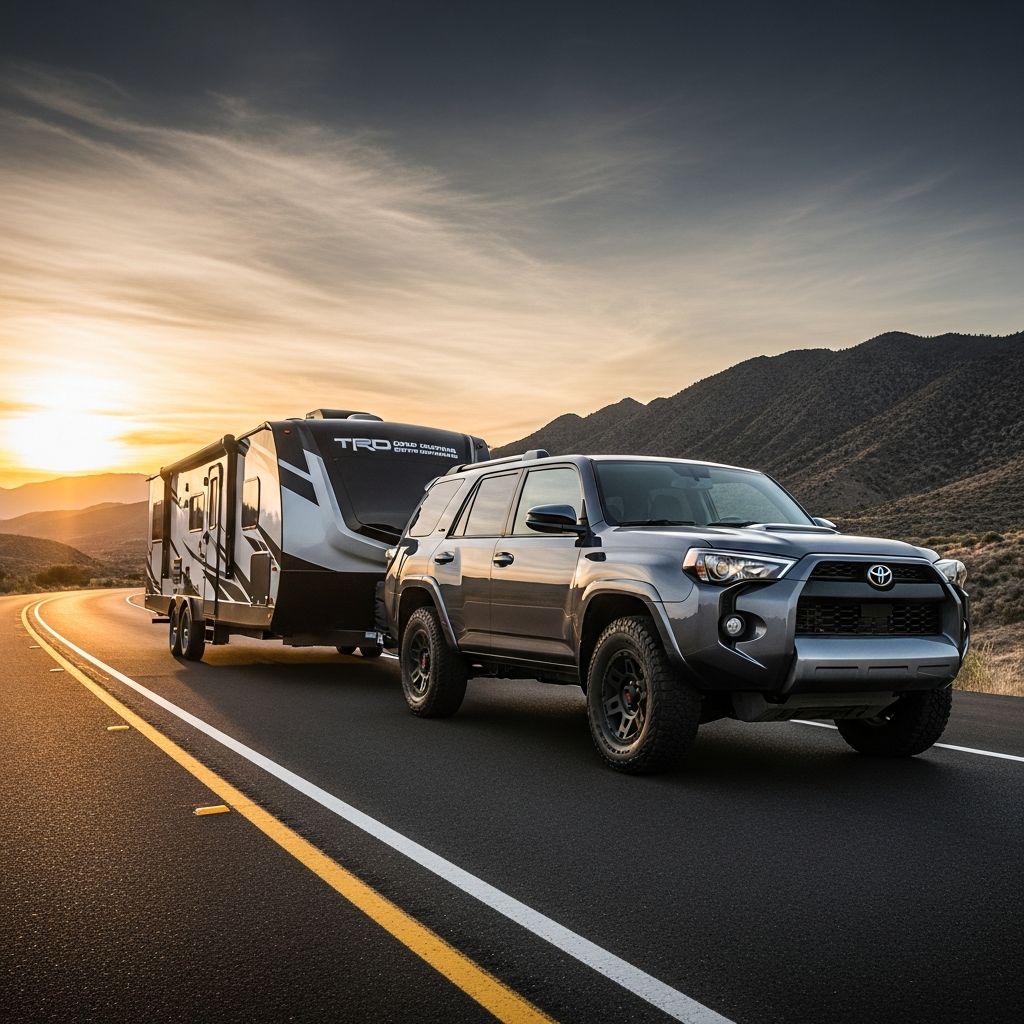
The Toyota 4Runner stands out as a durable midsize SUV renowned for its off-road prowess and reliable towing performance. Capable of hauling up to 6,000 pounds in its latest hybrid configuration, it serves adventurers, families, and workers who need a vehicle that combines rugged capability with everyday usability.
Understanding Towing Capacity in the 4Runner Lineup
Towing capacity refers to the maximum weight a vehicle can safely pull, factoring in the trailer’s total loaded mass including cargo, water, and passengers. For the 4Runner, this rating varies by model year, engine type, drivetrain, and equipment package, ensuring buyers select the right setup for their needs. Official Toyota specifications confirm consistent strength across generations, with enhancements in recent models boosting limits through advanced powertrains.
Key elements influencing capacity include the engine’s horsepower and torque, frame construction, axle ratios, and cooling systems. The 4Runner’s body-on-frame design provides the structural integrity needed for heavy loads, distinguishing it from unibody crossovers.
Evolution of Towing Power Across Model Years
Over decades, the 4Runner has maintained a reputation for towing reliability. Earlier models like the 2023 version featured a 4.0-liter V6 engine producing 270 horsepower and 278 lb-ft of torque, delivering a solid 5,000-pound capacity suitable for small trailers and recreational gear.
Advancements peaked with the 2025 redesign, introducing a turbocharged 2.4-liter i-FORCE engine standard at 278 horsepower and 317 lb-ft of torque, retaining the 5,000-pound rating. The game-changer is the optional i-FORCE MAX hybrid variant, combining the turbo engine with electric motors for 326 horsepower and 465 lb-ft of torque, elevating capacity to 6,000 pounds. This hybrid setup not only increases towing muscle but improves efficiency for longer hauls.
| Model Year | Engine | Horsepower/Torque | Max Towing Capacity |
|---|---|---|---|
| 2023 | 4.0L V6 | 270 hp / 278 lb-ft | 5,000 lbs |
| 2025 Standard | 2.4L Turbo i-FORCE | 278 hp / 317 lb-ft | 5,000 lbs |
| 2025 Hybrid | 2.4L i-FORCE MAX | 326 hp / 465 lb-ft | 6,000 lbs |
This table highlights the progression, showing how Toyota’s engineering upgrades have expanded versatility without sacrificing the SUV’s iconic toughness.
Trim Levels and Their Towing Capabilities
Not all 4Runner trims tow equally; higher-end versions often include features that maximize ratings. Base SR5 models with the standard engine handle 5,000 pounds reliably, while TRD Off-Road and Pro trims add low-range gearing and locking differentials for better control under load.
The hybrid i-FORCE MAX appears in premium trims like Limited and Platinum, unlocking the full 6,000-pound potential. These configurations pair with part-time 4WD systems, enhancing traction on slippery ramps or uneven terrain during hookup. Buyers should verify Gross Combined Weight Rating (GCWR) in the owner’s manual, as it caps the vehicle-plus-trailer total weight.
- SR5: Entry-level towing at 5,000 lbs, ideal for light campers.
- TRD Sport/Off-Road: Enhanced suspension for stable highway towing.
- Limited/Platinum (Hybrid): Top 6,000 lbs with luxury comforts.
Powertrain Breakdown: Gas vs. Hybrid Options
The traditional V6 in older models provided proven durability, powering through mud or sand while towing ATVs or jet skis up to the 5,000-pound limit. Fuel economy hovered around 16-19 mpg combined, adequate for occasional use.
Newer turbo and hybrid powertrains redefine performance. The i-FORCE turbo offers responsive throttle for merging with trailers, while the hybrid’s electric boost delivers instant torque for hill climbs. Expect 19-23 city and 24-26 highway mpg, a notable gain that reduces stops on long trips. Both include an integrated tow hitch receiver and 4/7-pin wiring harnesses for easy connectivity.
Safety and Control Features for Confident Towing
Toyota equips the 4Runner with technologies that prioritize stability. Trailer Sway Control automatically adjusts braking and throttle to counteract fishtailing, crucial at highway speeds. Multi-Terrain Select optimizes traction for mud, sand, or rocks when launching boats or off-roading with trailers.
Available 4WD with low-range transfer cases multiplies torque to the wheels, preventing wheel spin during steep inclines. Additional aids like Hill Start Assist and Downhill Assist Control maintain control on trails. For visibility, rearview cameras with dynamic gridlines assist precise hitching.
Practical Applications: What Can You Tow?
With 5,000 pounds standard, the 4Runner pulls small campers, fishing boats under 20 feet, utility trailers with ATVs, or horse trailers for light equestrian use. The 6,000-pound hybrid upgrade accommodates slightly larger setups like pop-up campers or mid-size pontoons.
Always calculate tongue weight (10-15% of trailer gross) against the hitch rating, typically 500-600 pounds for the 4Runner’s Class III/IV receiver. Payload capacity around 1,200-1,700 pounds accounts for passengers, gear, and hitch weight to avoid overloading.
Comparing 4Runner to Competitors
Against rivals like the Jeep Wrangler (3,500-5,000 lbs) or Ford Bronco (3,500-4,500 lbs), the 4Runner’s higher ceiling and hybrid option give it an edge for serious towing. The Chevrolet Tahoe offers more (8,400 lbs) but sacrifices off-road agility for its truck-like size. The 4Runner balances both worlds effectively.
| Vehicle | Max Towing | Key Advantage |
|---|---|---|
| Toyota 4Runner Hybrid | 6,000 lbs | Off-road prowess + hybrid efficiency |
| Jeep Wrangler | 5,000 lbs | Extreme rock crawling |
| Ford Bronco | 4,500 lbs | Modular doors/roof |
Towing Best Practices and Maintenance Tips
To maximize safety, distribute trailer weight evenly, check tire pressures (including spares), and use sway control hitches for longer rigs. Pre-trip inspections cover brakes, fluids, and lights. The 4Runner’s 120V/400W outlet powers tools or coolers at campsites.
Regular maintenance like transmission coolers (standard on tow packages) prevents overheating. Consult Toyota’s towing guide for axle ratios and altitude adjustments, as high elevations reduce capacity by about 10% per 3,000 feet.
Frequently Asked Questions
What is the maximum towing capacity of a Toyota 4Runner?
Up to 6,000 pounds with the i-FORCE MAX hybrid; 5,000 pounds standard.
Does the 4Runner require a towing package?
Higher trims include it; others need hitch and wiring upgrades for full capacity.
Can the 4Runner tow a boat?
Yes, small to medium boats under 5,000-6,000 pounds loaded weight.
How does hybrid towing affect fuel economy?
Improves to 19-26 mpg range, better for extended trips.
Is 4WD essential for towing?
Recommended for traction; available on most models.
Why Choose the 4Runner for Your Towing Needs
The Toyota 4Runner’s blend of towing strength, off-road readiness, and family-friendly space makes it a top pick. From weekend warriors to daily haulers, its capacities meet diverse demands backed by Toyota’s legendary reliability. Test drive to experience the power firsthand.
References
- The 2023 Toyota 4Runner Towing Capacity and Other Specs — Kelly Toyota of Hamburg. 2023. https://kellytoyotaofhamburg.com/blog/2023-toyota-4runner-towing-capacity
- Toyota 4Runner Towing Capacity & Tow Rating — AutoNation Toyota Thornton Road. 2025. https://www.autonationtoyotathorntonroad.com/research/toyota-4runner-towing-capacity-and-tow-rating.htm
- Toyota Vehicles for Towing — Toyota.com. 2026. https://www.toyota.com/toyotas-for-towing/
Similar Articles



Read full bio of Sneha Tete