Tesla Model S vs Porsche Panamera Hybrid
Discover which luxury performer wins: Tesla's electric prowess or Porsche's plug-in hybrid engineering in acceleration, efficiency, and luxury.
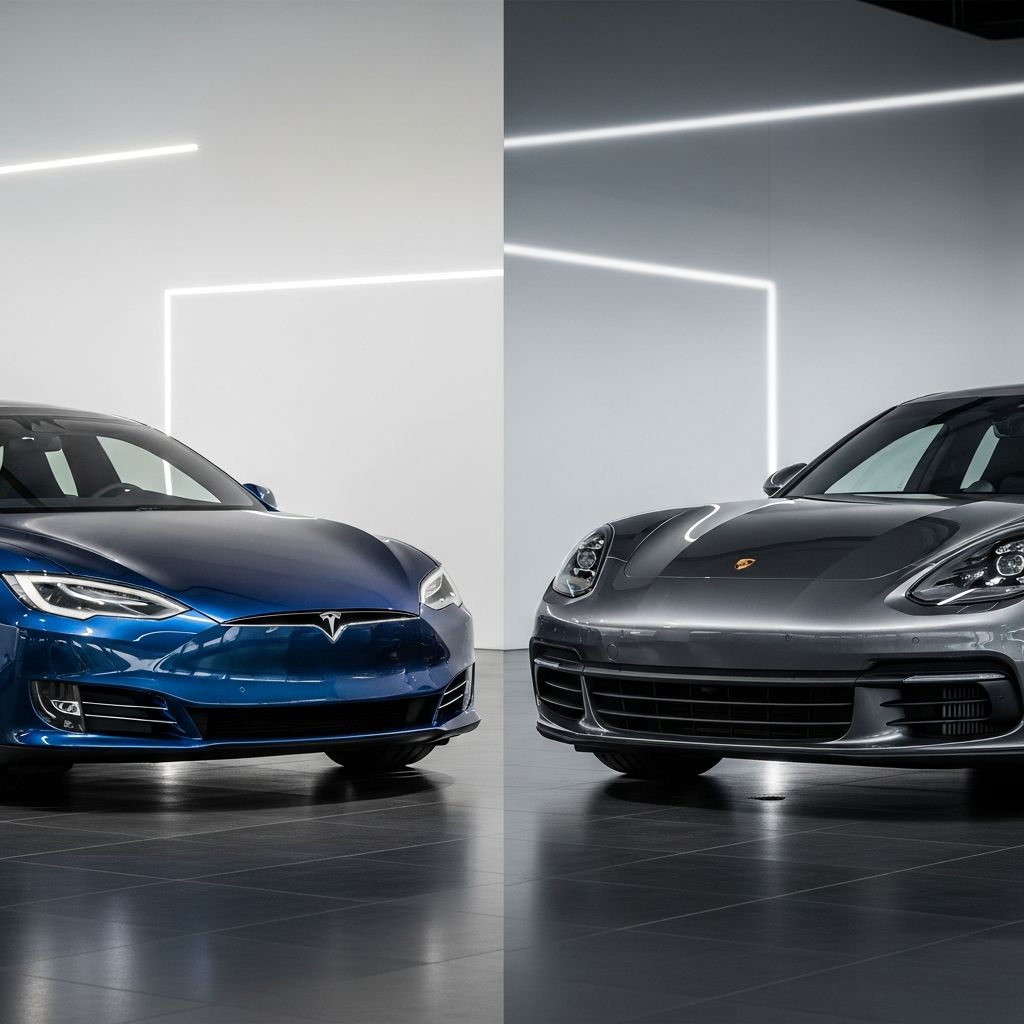
Tesla Model S vs Porsche Panamera Hybrid: Ultimate Luxury Showdown
The battle between electric innovation and traditional engineering excellence heats up with the Tesla Model S facing off against the Porsche Panamera S E-Hybrid. These two vehicles represent the pinnacle of luxury performance, blending cutting-edge technology, blistering speed, and opulent interiors. While the Model S delivers pure electric torque, the Panamera combines a potent V6 with battery power for plug-in versatility. This analysis dives into their specs, real-world performance, ownership costs, and driving experiences to determine the superior choice for enthusiasts.
Powertrain Technologies: Electric Purity Meets Hybrid Sophistication
The Tesla Model S relies on a battery-electric powertrain, with dual motors producing up to 670 horsepower in modern variants and instant torque delivery that propels it forward without gear shifts. Its 100 kWh battery offers an EPA-estimated range of 402 miles, with MPGe ratings of 127 city / 116 highway / 124 combined, making it ideal for long-distance travel without frequent stops. Charging takes about 14 hours on a 240V Level 2 charger, and it supports DC fast charging for quicker top-ups.
In contrast, the Porsche Panamera S E-Hybrid pairs a 2.9-liter twin-turbo V6 engine with an electric motor, yielding around 416-463 horsepower combined. This setup provides 51/60/55 MPGe in electric-hybrid mode and uses premium unleaded fuel alongside electricity. The hybrid system allows short electric-only drives, but its range is shorter than the Tesla’s, emphasizing flexibility over pure EV endurance.
| Specification | Tesla Model S | Porsche Panamera S E-Hybrid |
|---|---|---|
| Power (hp) | 670 | 463 |
| Torque (lb-ft) | Instant max | 443-601 |
| Battery Capacity | 100 kWh | Not specified (hybrid) |
| MPGe (Combined) | 124 | 55 |
| Range | 402 miles | Hybrid-limited |
Acceleration and Speed: Instant vs Engineered Thrust
Raw acceleration highlights the Tesla’s edge. Data from track comparisons show the Model S P85 variant hitting 0-100 kph in 4.5 seconds, outpacing the Panamera’s 5.1 seconds. It maintains superiority up to 180 kph (13.6s vs 15.8s), though the Porsche edges ahead beyond 200 kph due to its higher top speed of 270 kph versus the Tesla’s 210 kph. Quarter-mile times favor the Tesla at 12.4 seconds @ 112.5 mph against 13.4 seconds for the Panamera.
Braking performance is close, with the Tesla stopping from 100 kph in 35 meters and 160 kph in 94 meters, slightly behind the Panamera’s 33m and 91m. Maximum acceleration peaks at 0.70g for the Model S, showcasing its grip. In rolling acceleration like 80-120 kph, the Tesla clocks 2.7 seconds versus 3.2 seconds, thanks to no gear changes.
- 0-60 mph: Model S ~3.0s (Ludicrous mode); Panamera ~3.9s (4S Diesel variant for reference).
- 30-70 mph: Model S 2.4s; Panamera 3.4s.
- Top Speed: Panamera leads at 177+ mph; Model S capped at 155-168 mph.
Handling and Dynamics: Agility in Large Bodies
Despite their size, both cars excel in cornering. The Tesla’s low battery placement lowers its center of gravity, aiding stability, but its 2,123 kg weight impacts slalom speeds at 64.9 kph through 18m cones. The lighter Panamera (2,106 kg) manages 66.6 kph, hinting at sharper responses. Porsche’s adaptive air-suspension and rear-axle steering enhance agility, while Tesla’s air suspension prioritizes comfort.
Real-world tests praise the Model S for relaxing highway cruises and effortless overtaking, but note less precision in tight turns compared to Porsche’s sportier feel. The Panamera’s PDK transmission shifts seamlessly, maintaining momentum where the Tesla’s single-speed shines in straight lines.
Interior Luxury and Technology: Screens vs Craftsmanship
Tesla’s minimalist cabin revolves around a massive 17-inch touchscreen controlling everything from navigation to climate. It offers premium upgrades like heated/ventilated seats and panoramic roofs, but build quality has drawn criticism for rattles. Space is generous, with a 402-mile range enabling family road trips.
Porsche counters with supple leather, massaging seats, and physical controls for tactile feedback. Options like LED matrix headlights and 21-inch wheels add flair. Both support advanced driver aids: Tesla’s Autopilot for lane-keeping and adaptive cruise; Porsche’s InnoDrive for similar autonomy.
| Feature | Tesla Model S | Porsche Panamera |
|---|---|---|
| Infotainment | 17″ touchscreen | Analog-digital cluster |
| Seating | Heated/ventilated | Massaging, ventilated |
| Driver Aids | Enhanced Autopilot | InnoDrive |
Pricing and Ownership: Value for Performance
Base pricing favors the Tesla at around $76,380 MSRP versus the Panamera’s $115,350. Used markets show Model S at €96,000 average versus €121,000 for Panamera. Reliability ratings give Tesla a 8.2/10 edge over Porsche’s 7.6/10. Running costs are lower for EV with zero emissions tax (£310 vs £450) and no fuel, though charging infrastructure lags in some areas.
Options inflate both: Tesla’s wheels and packages add $10,000+; Porsche’s air suspension and alloys exceed £5,000. Over time, Tesla’s efficiency (19.6 kWh/100km vs 7.2 L/100km) saves money, especially with incentives.
Fuel Efficiency and Environmental Impact
The Model S dominates with no tailpipe emissions and superior MPGe, ideal for eco-conscious buyers. Panamera’s hybrid cuts consumption to 33 mpg US but relies on gasoline for longer trips. CO2 output is 176g/km for Porsche versus 0g/km for Tesla, influencing taxes and appeal.
- City Efficiency: Tesla 127 MPGe; Panamera 21 MPG.
- Real-World: Tesla limited by charging; Panamera flexible refueling.
Real-World Usability: Daily Drives to Track Days
For commuters, Tesla’s range and home charging shine, with over-the-air updates keeping it fresh. Porsche suits those preferring gas stations and hybrid backup. Track scores tie at 0, but straight-line speed gives Model S a 100/88 verdict. Both handle luxury duties well, but Tesla feels more futuristic.
Pros and Cons at a Glance
- Tesla Model S Pros: Explosive acceleration, long range, lower costs, tech-forward.
- Tesla Cons: Charging needs, top-speed limit, build quality.
- Panamera Pros: Higher top speed, handling finesse, hybrid versatility, premium feel.
- Panamera Cons: Slower sprints, higher fuel use, pricier.
Which One Wins?
The Tesla Model S claims victory in outright performance and efficiency, ideal for speed demons embracing electrification. Porsche Panamera S E-Hybrid excels for traditionalists valuing top-end speed and driving purity. Choice depends on your EV readiness and priorities.
Frequently Asked Questions (FAQs)
Is the Tesla Model S faster than the Porsche Panamera?
Yes, in 0-100 kph and quarter-mile, but Panamera leads at top speed.
Which has better reliability?
Tesla scores 8.2/10 vs Porsche’s 7.6/10.
What’s the price difference?
Tesla starts lower at $76k vs $115k for Panamera.
Can the Panamera drive on electric only?
Yes, for short distances in hybrid mode.
Which is more efficient?
Tesla with 124 MPGe combined.
References
- Tesla Model S P85 vs Porsche Panamera S E-Hybrid — FastestLaps.com. Accessed 2026. https://fastestlaps.com/comparisons/m395pffma1zb
- Tesla Model S vs. Porsche Panamera — iSeeCars.com. Accessed 2026. https://www.iseecars.com/compare/tesla-model_s-vs-porsche-panamera
- Porsche Panamera vs Tesla Model S — Auto Express. Accessed 2026. https://www.autoexpress.co.uk/porsche/panamera/99232/porsche-panamera-vs-tesla-model-s
- Porsche Panamera vs. Tesla Model S — TrueCar. Accessed 2026. https://www.truecar.com/compare/porsche-panamera-vs-tesla-model-s/
Similar Articles


Read full bio of Sneha Tete