Suzuki Twin: Complete Guide To The Micro Car’s Specs & Legacy
Discover the pint-sized Suzuki Twin, Japan's clever kei car that challenged city driving norms with hybrid innovation and unbeatable agility.
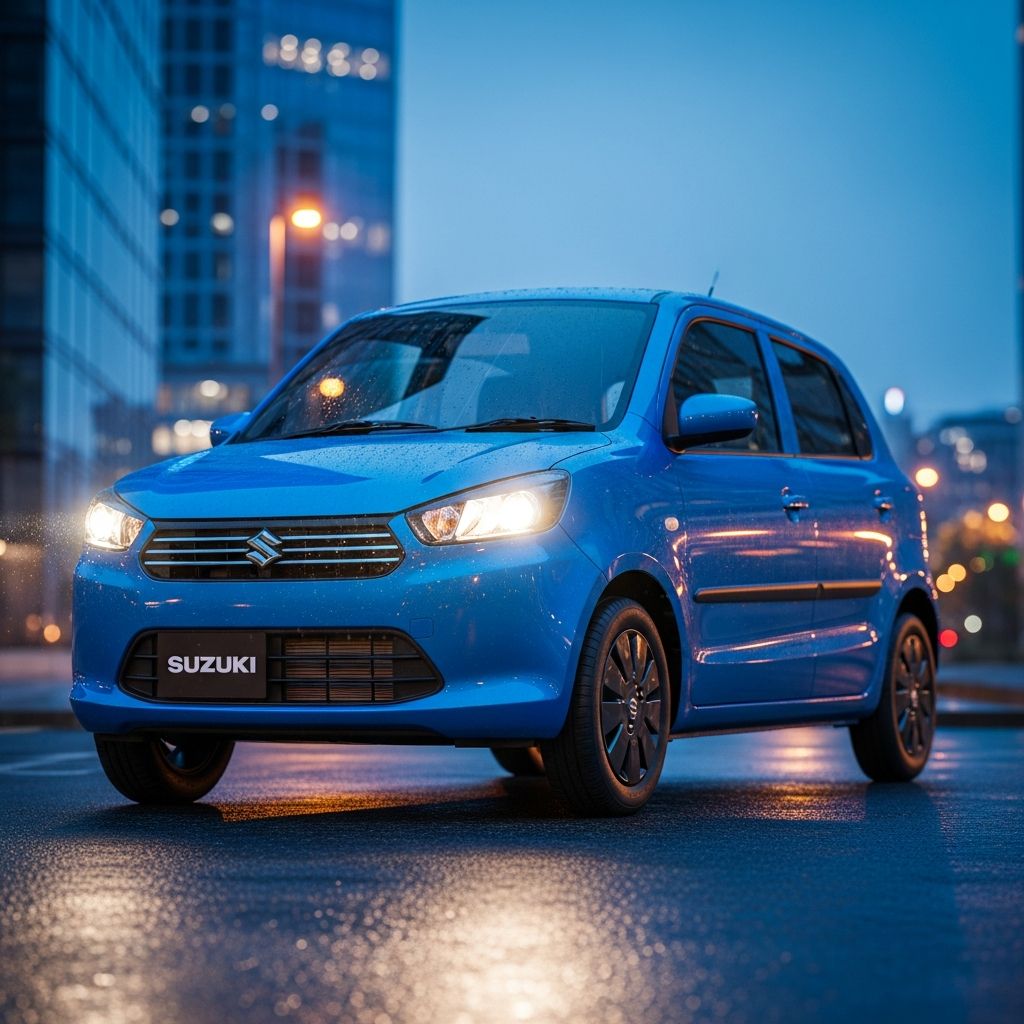
The Suzuki Twin stands out as one of the most compact and innovative vehicles ever produced, embodying Japan’s mastery of kei car engineering. Launched between 2003 and 2005 exclusively for the Japanese market, this two-seater micro car measured just 2,735mm in length and 1,475mm in width, making it narrower than a classic Mini and only slightly longer than modern quadricycles like the Citroën Ami. Derived from the Suzuki Alto platform, the Twin shortened the wheelbase by 560mm to achieve a remarkable 7.2-meter turning circle, enhancing its prowess in tight urban environments.
Origins and Design Philosophy
Suzuki’s expertise in small cars is legendary, with the Twin previewed by the Pu3-Commuter concept at the 1999 Tokyo Motor Show. This production model pushed kei car boundaries, prioritizing extreme compactness without sacrificing usability. Its cartoonish, bubbly exterior—often likened to a child’s drawing—concealed practical features like a front-mounted engine and a rear boot accessible via a flip-up rear window. The design emphasized simplicity and affordability, targeting budget-conscious city dwellers seeking an alternative to larger vehicles.
Unlike the rear-engined Smart Fortwo, the Twin adopted a conventional front-wheel-drive layout, borrowing heavily from the contemporary Alto. This setup allowed for a more familiar driving experience while keeping overall dimensions minuscule. The body style was a strict two-seater, but the passenger seat folded flat to accommodate longer items, adding versatility for shopping or errands.
Powertrain Options: From Petrol to Pioneering Hybrid
At the heart of the Suzuki Twin was the 658cc K6A three-cylinder engine, delivering 43bhp in its naturally aspirated form. Paired with a lightweight kerb weight of 570kg for the manual version, it provided peppy acceleration suitable for stop-start traffic. A five-speed manual transmission was standard on base models, offering engaging control in congested streets.
The Twin’s true innovation lay in its hybrid variant, marking Japan’s first hybrid kei car. This system integrated a 5kW (7bhp) electric motor between the engine and a four-speed automatic gearbox, powered by simple 12V lead-acid batteries sourced from motorcycles. The setup added about 100kg but promised exceptional efficiency, with official figures claiming up to 96mpg under Japan’s lenient testing cycle—translating to real-world economy around 70-80mpg. This rivaled the Honda Insight’s claims at the time, all while keeping maintenance costs low due to the batteries’ replaceability.
| Powertrain | Power | Transmission | Weight | Fuel Economy |
|---|---|---|---|---|
| Petrol (NA 658cc) | 43bhp | 5-speed Manual | 570kg | ~60mpg (est.) |
| Hybrid (658cc + Electric) | 50bhp combined | 4-speed Auto | 670kg | 96mpg (claimed) |
This table highlights the key differences, showcasing how the hybrid balanced added weight with superior efficiency for urban use.
Dimensions and Urban Agility
The Twin’s specs made it a parking dream: shorter than the Smart Fortwo by a few inches in width and with a turning radius tighter than the later Toyota iQ’s 7.8 meters. At 1,800mm wheelbase, it slipped into the smallest spaces effortlessly. Height provided ample headroom for tall drivers, though the cabin felt more utilitarian than spacious.
- Length: 2,735mm – Ideal for narrow streets.
- Width: 1,475mm – Narrower than most modern cars.
- Wheelbase: 1,800mm – Contributes to nimble handling.
- Turning Circle: 7.2m – Superior maneuverability.
These attributes positioned the Twin as a genuine city warrior, outshining rivals in tight maneuvers.
Interior Practicality and Features
Inside, the Twin prioritized essentials over luxury. Base models lacked air conditioning, power steering, and a stereo, keeping costs down—the entry-level price equated to about £3,100 in today’s money. Higher-spec automatics, including hybrids, added these comforts. Luggage space was modest, accessed via the lifting rear screen rather than a tailgate, sufficient for weekly groceries when seats were folded.
Materials were basic plastics, reflecting its no-frills ethos. Despite austerity, the cabin offered surprising legroom for two adults, with a straightforward dashboard layout. Optional single-speaker audio kept things simple, and the overall build quality aligned with kei car standards—durable for daily commutes.
Performance in Real-World Scenarios
With only 43bhp propelling 570kg, the petrol Twin accelerated adequately in urban settings but struggled on highways, where its tiny engine felt underpowered. Top speed hovered around 80mph, fine for city limits but not for long journeys. The hybrid’s electric boost aided low-speed torque, making it smoother in traffic.
Owners praised its fun factor: lightweight chassis delivered go-kart-like handling, and the short gearing encouraged playful driving. However, noise levels were high at speed, and wind resistance grew beyond 50mph. Fuel sipping was a highlight, especially for hybrids, proving ideal for high-mileage urbanites.
Market Positioning and Pricing Strategy
Priced from 490,000 Yen (around £3,100 adjusted), the Twin undercut competitors dramatically, echoing the original 1979 Alto’s affordability. The hybrid version at 1,290,000 Yen (~£8,200) remained a bargain. Suzuki eyed UK export with a sub-£5,000 tag, positioning it against the £6,560 Smart Fortwo—a cheaper, front-engined alternative without rear-engine quirks.
In Japan, it appealed to those ditching scooters for enclosed transport. Low sales—around 10,000 units—stemmed from kei buyers preferring four-seaters like the Alto. Niche appeal limited longevity, ending production after two years.
Comparisons with Contemporaries
Versus the Smart Fortwo, the Twin was longer but narrower, with fold-flat seats and front-drive simplicity. The Smart’s tailgate was more practical, but Twin’s lower price and hybrid option gave it an edge. Against other kei cars, its two-seat focus was unusual, akin to a roadster but fully enclosed.
| Feature | Suzuki Twin | Smart Fortwo (2003) |
|---|---|---|
| Length | 2,735mm | 2,500mm |
| Width | 1,475mm | 1,521mm |
| Power | 43-50bhp | 45-61bhp |
| Price (adj.) | £3,100-£8,200 | £6,560+ |
This comparison underscores the Twin’s value proposition.
Modern Enthusiast Appeal and Modifications
Today, the Twin captivates collectors for its rarity and charm. Bubbly styling inspires custom widebody kits, like the ‘Pocket Bunny’ transforming it into a mini hot hatch reminiscent of an R32 GT-R. Tuners leverage the lightweight frame for track days or shows, with the 658cc engine tunable for more pep.
Restoration is straightforward due to shared Alto parts. Hybrids intrigue eco-enthusiasts, while manuals draw driving purists. Online communities share resto-mods, from engine swaps to retrofitted AC.
Legacy and Why It Matters
The Suzuki Twin pioneered hybrid tech in kei cars, influencing future efficient micros. Its failure to conquer markets highlighted demand for practicality over novelty, yet it remains a testament to Suzuki’s ingenuity. In an era of EVs, the Twin’s simplicity reminds us of analog joys in compact form.
Frequently Asked Questions (FAQs)
Was the Suzuki Twin available outside Japan?
No, it was Japan-only, though Suzuki considered UK sales at under £5,000.
How efficient was the hybrid Twin?
Claimed 96mpg in tests; real-world 70-80mpg feasible.
Can you modify a Suzuki Twin?
Yes, popular for widebody kits and engine tunes due to its light weight.
What’s the relation to Suzuki Alto?
Based on the Alto platform, with a shortened wheelbase.
Why did production end so soon?
Low sales (10,000 units); buyers preferred four-seaters.
References
- The Suzuki Twin was like a kid’s drawing made real — Hagerty UK. 2022. https://www.hagerty.co.uk/articles/car-profiles/the-suzuki-twin-was-like-a-kids-drawing-made-real/
- Missed Out? 2003-05 Suzuki Twin – Cute ForTwo — Curbside Classic. 2017-11-21. https://www.curbsideclassic.com/cc-global/missed-out-2003-05-suzuki-twin-cute-fortwo/
- Suzuki Twin — Auto Express. 2003-12-09. https://www.autoexpress.co.uk/car-reviews/15676/suzuki-twin
Similar Articles



Read full bio of medha deb