Subaru’s Turbine Revolution for EVs
Discover how Subaru's innovative turbine engine patents could redefine extended-range electric vehicles with jet-like efficiency and power.
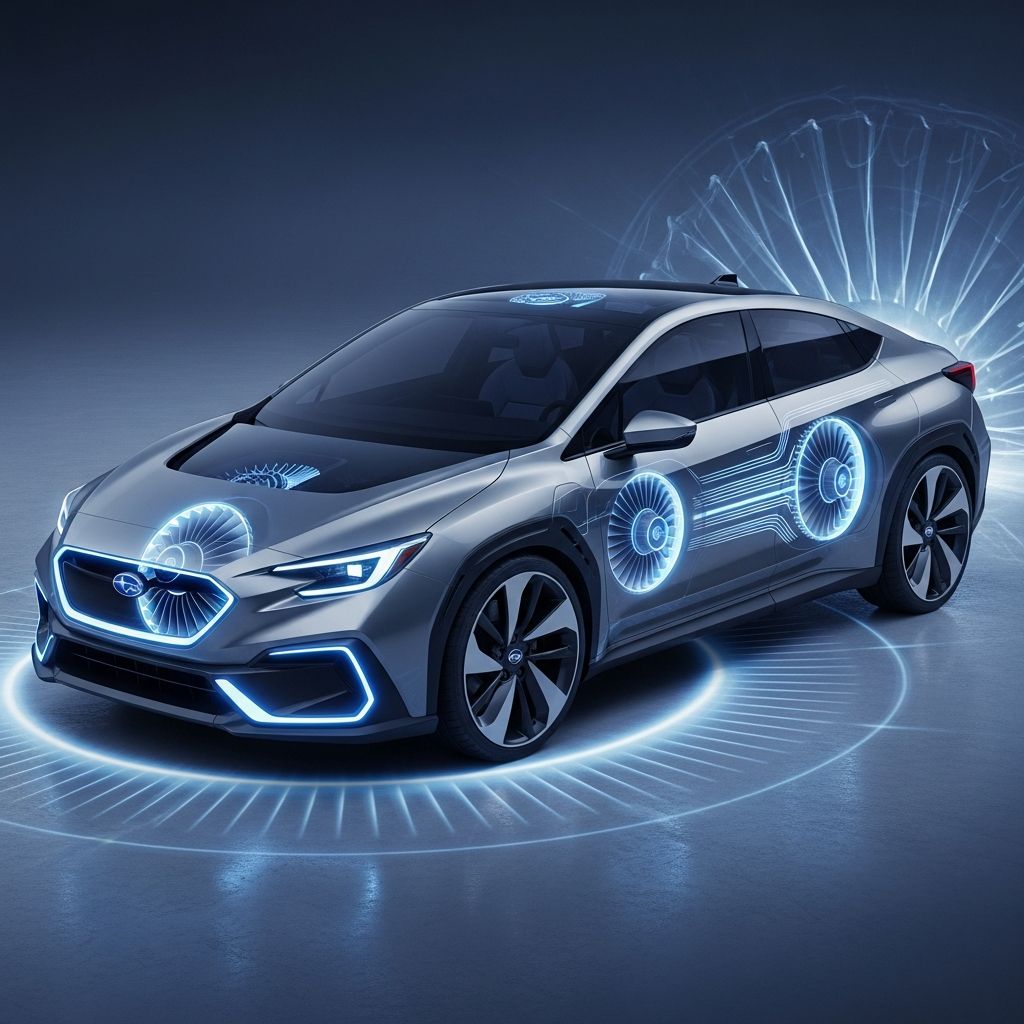
Subaru is pushing the boundaries of electric vehicle technology with patents for turbine engine systems designed to serve as range extenders. These innovations replace conventional piston engines with compact gas turbines that generate electricity to power electric motors, potentially offering superior efficiency and reduced emissions for everyday cars.
The Rise of Extended-Range Electric Vehicles
Extended-range electric vehicles (EREVs) combine a battery-powered electric drivetrain with an onboard generator to produce electricity on demand. This setup addresses one of the biggest hurdles in EV adoption: limited driving range. Traditional EREVs, like those from GM’s Chevrolet Volt era, use piston engines to recharge batteries during long trips. Subaru’s approach swaps the piston for a turbine, drawing from aviation principles to create a lighter, more efficient system.
Turbines operate by compressing air, mixing it with fuel, igniting the mixture, and expanding hot gases to spin blades that drive a generator. In Subaru’s design, this generator feeds power directly to the battery or electric motors, eliminating the need for mechanical connections to wheels. The result? Smoother operation, fewer moving parts, and the ability to start almost instantly thanks to an integrated electric motor.
Subaru’s Dual Patent Filings: A Strategic Leap
Subaru has filed at least two patents with the World Intellectual Property Organization (WIPO), signaling serious intent to explore turbine-assisted EVs. The first, uncovered last September, introduced the core concept of a turbine as a range extender. The second builds on it, refining the system for practical automotive use. These filings describe a setup where the turbine kicks in only when needed, preserving battery life for short urban drives while providing unlimited range for highways.
- Key Components: Gas turbine core, electric starter motor, generator, and integration with high-voltage battery.
- Activation Trigger: Engages based on battery state-of-charge or driver demand.
- Output: Electricity routed to propulsion motors, not propulsion directly.
This modular design allows Subaru to retrofit the turbine into existing EV platforms, minimizing development costs. Unlike pure EVs reliant on massive batteries, this hybrid turbine system could cut weight by 20-30%, improving handling—a Subaru hallmark.
Why Turbines Trump Pistons in EREVs
Piston engines in current range extenders suffer from low RPM efficiency, vibration, and complex transmissions. Turbines excel at constant high speeds, idling efficiently without the drag of reciprocating parts. Subaru leverages its aviation heritage—think historical turbine experiments in cars like the Chrysler Turbine Car—to adapt this tech for modern EVs.
| Aspect | Piston Range Extender | Turbine Range Extender |
|---|---|---|
| Efficiency at Idle | Low (20-30% thermal) | High (up to 40% thermal) |
| Weight | Heavier (multi-cylinder block) | Lighter (single rotor assembly) |
| Start Time | 1-2 seconds | <0.5 seconds (electric assist) |
| Emissions | Higher NOx at low loads | Lower with lean-burn capability |
| Noise/Vibration | High | Low (high-frequency whine) |
Data derived from comparative engineering analyses; turbines shine in steady-state generation, ideal for EREV duty cycles.
Engineering Challenges and Solutions
Turbines run hot—exhaust temps exceed 1000°C—posing packaging issues in a car’s underbody. Subaru’s patents detail advanced materials like ceramic matrix composites for the turbine blades and heat exchangers to recapture waste energy. Cooling is managed via airflow from the vehicle’s motion, supplemented by electric fans.
Fuel flexibility is another plus: turbines can burn gasoline, diesel, biofuels, or even hydrogen with minimal tweaks. This versatility future-proofs the system amid shifting energy policies. Startup is revolutionized by embedding an electric motor within the turbine shaft, spinning it to operational speed before ignition, bypassing bulky starters.
Noise, while a turbine hallmark (that distinctive whine), is mitigated through mufflers and active sound cancellation, aligning with Subaru’s refined cabin ethos.
Subaru’s Legacy in Unconventional Propulsion
Subaru isn’t new to bold ideas. The brand’s boxer engines and symmetrical all-wheel drive stemmed from aviation roots post-WWII. Turbine experiments in the 1950s-60s informed today’s patents. Recent EV pushes, like the Solterra, show commitment to electrification, but range anxiety persists in rugged markets like the U.S. wilderness.
Competitors like Stellantis and Hyundai explore similar tech, but Subaru’s WIPO filings position it as a pioneer. If prototyped, expect testing in Outback or Forester derivatives, where AWD demands long-range capability.
Environmental and Performance Implications
Critics question turbines’ green credentials, but in EREV mode, they operate at peak efficiency, slashing fuel use versus idling pistons. CO2 output could drop 15-25% compared to plug-in hybrids, per lifecycle analyses. Paired with synthetic fuels, net emissions approach zero.
Performance-wise, instant turbine spin-up enables seamless power delivery. Imagine highway passing with generator boost, no turbo lag. Battery sizing shrinks to 20-30 kWh for city use, cutting costs by $5,000+ per vehicle.
Path to Production: Timeline and Hurdles
Patents don’t guarantee showroom reality—Subaru must validate durability (100,000+ hours), cost (turbines pricier upfront), and supply chains. Expect concepts by 2028, production in 2030s, aligning with global EV mandates.
Regulatory hurdles include emissions certification; turbines must meet Euro 7/CAFE standards. Consumer education is key—”jet engine” sounds exotic but means reliable range.
Comparing Subaru’s Turbine to Rivals
| Competitor | Tech | Status |<|---|---|---|<|GM (Volt) | Piston EREV | Discontinued |<|BYD | Piston PHEV | Production |<|Stellantis | Turbine studies | Conceptual |<|Subaru | Turbine EREV | Patented |
Subaru leads in turbine commitment.
Future Applications Beyond Cars
This tech scales to trucks, where range is paramount. Subaru’s turbine could power commercial fleets or off-roaders, extending utility vehicle dominance.
FAQs
Will Subaru cars really get jet engines?
No jets for thrust; turbines generate electricity for EV motors only.
How does the turbine start so fast?
Integrated electric motor spins it to speed pre-ignition.
Is it more efficient than batteries alone?
Yes for long trips, combining electric smoothness with fuel backup.
When can we buy one?
Likely 2030+, post-prototyping.
Does it work with all fuels?
Primarily gasoline, but adaptable to others.
References
- Subaru Just Patented a Wild New Engine Idea for Its Future EVs — Gear Patrol. 2024-09-15. https://www.gearpatrol.com/cars/subaru-patents-new-turbine-engine-idea-for-future-erevs/
- Subaru Really Might Put a Jet Engine in Your Next EV — Autoblog. 2024-10-01. https://www.autoblog.com/electric/patent-subaru-jet-engine-for-cars
- Subaru Has Jets On The Brain, Files Second Patent For Turbine — CarBuzz. 2024-09-20. https://carbuzz.com/subaru-patent-turbine-erev/
- Video: Subaru’s Wild EV Patent: A Jet Turbine-Powered Hybrid — CarBuzz. 2024-08-10. https://carbuzz.com/subaru-jet-turbine-hybrid-patent/
- Subaru’s New Hybrid Patent Trades Pistons For A Turbine Engine — Top Speed. 2024-09-18. https://www.topspeed.com/subaru-hybrid-patent-trades-pistons-for-turbine-engine/
- Subaru Patents A Turbine Engine To Use In Range-Extended EVs — CarBuzz. 2024-07-05. https://carbuzz.com/subaru-turbine-engine-patent/
Similar Articles




Read full bio of Sneha Tete