SsangYong Korando: Comprehensive Vehicle Analysis
Discover the features, performance, and value of the modern SsangYong Korando compact crossover.
Understanding the SsangYong Korando: A Modern Compact Crossover
The SsangYong Korando represents a significant evolution in the Korean manufacturer’s lineup, positioning itself as a practical and affordable option within the competitive compact crossover segment. This vehicle bridges the gap between traditional compact cars and larger SUVs, offering a compelling package for buyers seeking versatility without excessive size or cost. The Korando’s design philosophy emphasizes functionality, modern technology integration, and spacious interior accommodation, making it an increasingly relevant contender in today’s automotive marketplace.
Design and Exterior Architecture
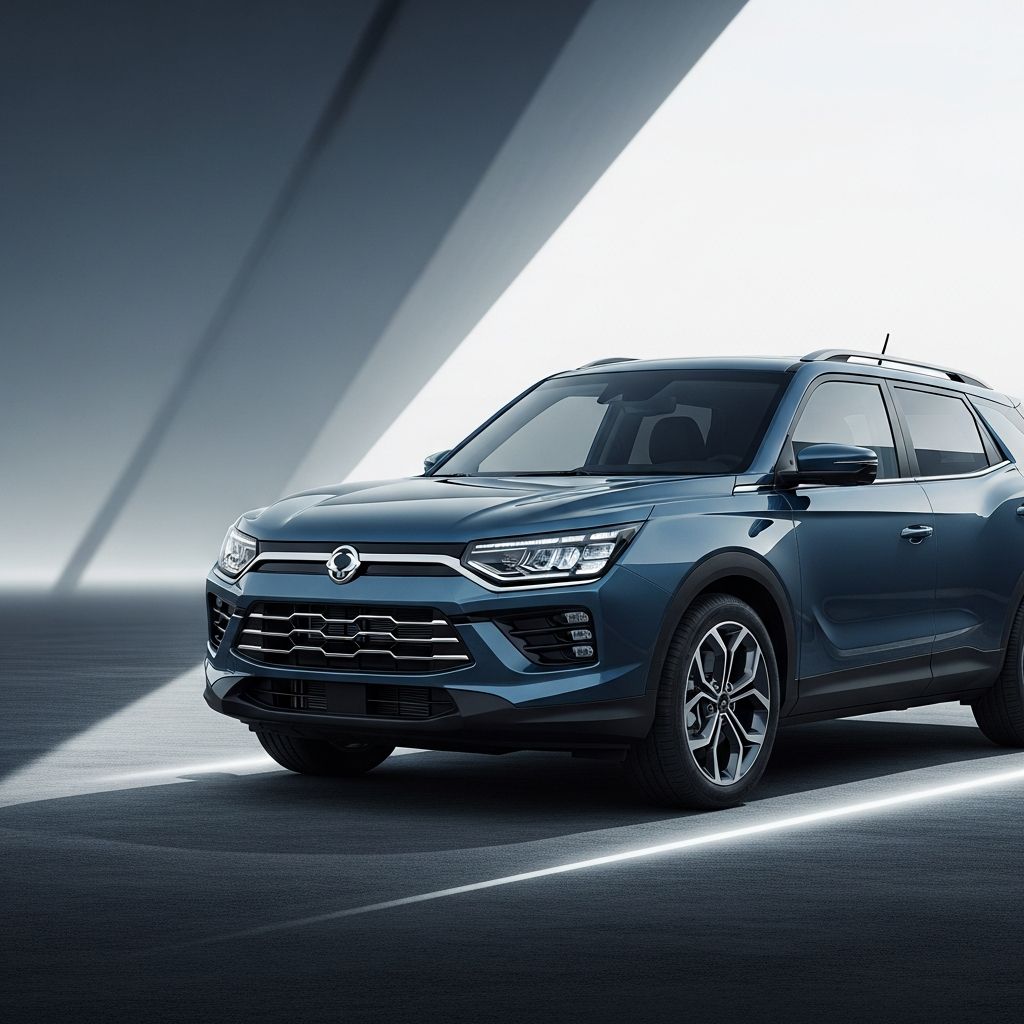
The Korando’s exterior design demonstrates thoughtful proportioning that maximizes interior volume while maintaining a manageable footprint. Measuring less than 4.5 meters in length—comparable to a Ford Focus—the vehicle achieves a remarkable balance between road maneuverability and usable cargo capacity. This compact dimension allows for easier parking and urban navigation without sacrificing the commanding driving position that buyers increasingly expect from modern crossovers.
The visual styling incorporates contemporary design language with distinctive character lines and a well-proportioned stance. The front fascia features a carefully integrated grille design, while the body side profile suggests dynamic movement despite the vehicle’s practical orientation. LED lighting elements and smooth body contours contribute to a cohesive aesthetic that avoids appearing dated or overly utilitarian. The overall appearance reflects a careful balance between modern sophistication and functional design principles.
Interior Space and Comfort Configuration
One of the Korando’s most compelling attributes is the exceptional interior space relative to its external dimensions. The cabin accommodates five passengers with genuine comfort, with particularly generous rear-seat legroom that easily accommodates tall adults. The spacious rear compartment eliminates the cramped feeling often associated with compact vehicles, allowing rear passengers to sit in a relaxed position during extended journeys.
The front compartment provides an elevated driving position with an ergonomically designed dashboard layout. The control interfaces feature intuitive placement, with light and responsive steering inputs that reduce driver fatigue during city driving and highway cruising alike. Climate control systems distribute air effectively throughout the cabin, while the quiet interior environment—enhanced by improved noise insulation—creates a serene driving atmosphere.
Seating Arrangements and Cargo Versatility
The interior design emphasizes practical functionality without compromising comfort. Standard seating features:
- Five-passenger capacity with supportive bucket seats
- Rear seats capable of folding completely to expand cargo space
- Adjustable headrests and lumbar support options on upper trim levels
- Climate-controlled seating options available on premium grades
- Hands-free tailgate functionality on select models
The cargo compartment provides a 551-liter capacity with a split cargo floor design that enhances organization possibilities. With rear seats folded, total cargo volume expands to 1,248 liters, creating sufficient space for substantial freight, recreational equipment, or luggage for extended family trips. This flexible configuration allows the Korando to transition seamlessly from daily commuting duties to weekend adventure scenarios.
Engine Performance and Powertrain Specifications
The Korando utilizes a 1.5-liter turbocharged four-cylinder petrol engine as its primary propulsion source. This modern engine delivers 120 kilowatts of power at 5,000 revolutions per minute, with maximum torque output of 280 newton-meters across a broad range from 1,500 to 4,000 rpm. The turbocharged design ensures responsive acceleration from lower engine speeds, contributing to engaging driving dynamics during both urban and highway driving scenarios.
Engine specifications comparison:
| Specification | Details |
|---|---|
| Displacement | 1.5L turbocharged |
| Power Output | 120kW at 5,000 rpm |
| Torque | 280Nm (1,500-4,000 rpm) |
| Configuration | 4-cylinder |
| Transmission | 6-speed automatic |
| Drivetrain | Front-wheel drive |
The engine operates with notable refinement in everyday driving conditions, maintaining quietness during normal acceleration. Only under aggressive throttle application does engine noise become apparent to occupants. This acoustic performance contributes significantly to the premium-feeling interior experience despite the vehicle’s accessible pricing position.
Fuel Efficiency and Operating Costs
Modern compact crossovers must balance performance with consumption efficiency, and the Korando addresses this requirement effectively. Official fuel economy figures indicate a WLTP combined cycle consumption of 43.5 miles per gallon, though real-world observations show variable results depending on driving patterns. Urban driving typically achieves around 9.5 liters per 100 kilometers, while highway driving demonstrates improved efficiency at 7.0 liters per 100 kilometers.
These efficiency figures contribute directly to attractive total cost of ownership, reducing the financial impact of regular fueling requirements. The engine’s modern direct injection and variable valve timing technologies extract maximum energy from each liter of fuel, minimizing environmental impact while maximizing driving range between refueling intervals.
Towing Capability and Cargo Hauling Performance
The Korando demonstrates legitimate towing capability despite its compact dimensions. The vehicle accommodates a maximum towball download of 105 kilograms with a legal towing limit of 2,000 kilograms, positioning it favorably within the compact crossover class. These specifications enable the Korando to handle small to medium-sized trailers, caravans, and boat-launching operations without requiring a substantially larger vehicle.
Real-world towing assessments indicate the Korando maintains stable highway cruising speeds around 60 miles per hour when matched with appropriately-sized trailers. While the engine lacks abundant reserves for aggressive overtaking maneuvers while towing, it delivers adequate performance for routine trailering scenarios. The vehicle’s suspension tuning provides sufficient stability during towing, though wind from passing heavy vehicles can generate minor movement that competent drivers easily manage.
Advanced Technology Integration
The Korando’s technology suite positions it competitively within the modern automotive marketplace. Upper trim levels feature advanced driver-assistance systems that enhance both safety and convenience.
Available technology features include:
- Intelligent adaptive cruise control with lane-centering capability
- Lane-keeping assistant with haptic wheel feedback
- Front-vehicle start alert notification system
- Distance monitoring and collision warning systems
- Virtual instrument cluster interface
- Touchscreen infotainment systems with smartphone integration
- Apple CarPlay and Google Android Auto connectivity
The adaptive cruise control system performs particularly well on clearly-marked highway sections, automatically adjusting speed to maintain safe following distances from vehicles ahead. The system demonstrates responsiveness without excessive aggressiveness, contributing to comfortable long-distance travel. Lane-centering functionality operates smoothly on well-defined road markings, though it disengages promptly when marking visibility diminishes, prioritizing safety through conservative system logic.
Interior Materials and Design Quality
The Korando’s interior presentation emphasizes visual cleanliness and tactile quality appropriate to its market positioning. The dashboard layout features intuitive control organization with logical grouping of frequently-accessed functions. Trim treatments combine soft-touch surfaces with attractive design elements that create an interior environment transcending the vehicle’s accessible price point.
Build quality demonstrates attention to detail, with panel gaps showing acceptable consistency and material interfaces revealing careful assembly. The design language incorporates elegant simplicity, avoiding excessive ornamentation while maintaining visual interest through carefully-considered contour lines and material transitions. Upper-trim versions incorporate upgraded upholstery materials and accent treatments that further elevate the premium perception.
Safety Performance and Protection Systems
The Korando achieves a five-star Euro NCAP crash test rating, confirming comprehensive passenger protection across standardized collision scenarios. This top-tier safety certification reflects robust structural engineering and strategic airbag placement designed to protect occupants across various impact situations.
Safety equipment includes:
- Multiple airbag systems distributed throughout the cabin
- Electronic stability control with traction management
- Anti-lock braking system with brake assist functionality
- Hill-start assist for challenging terrain
- Front and rear parking sensors with visual guidance
- Reversing camera system (standard equipment)
- Active safety systems on upper trim levels
The comprehensive protection architecture provides confidence for family travel and daily commuting alike. While the reversing camera system offers adequate functionality, upgrading to surround-view camera technology would further enhance low-speed maneuvering visibility and parking precision.
Driving Dynamics and Handling Characteristics
The Korando delivers a composed driving experience characterized by predictability and approachable handling rather than enthusiastic sportiness. The steering provides light responsiveness with linear input feedback, making the vehicle accessible to drivers of varying experience levels. The suspension tuning prioritizes comfort over aggressive cornering, maintaining a flat ride attitude through gentle curves while absorbing road surface irregularities effectively.
On highway sections, the Korando establishes itself as a capable cruiser, maintaining stable high-speed tracking with minimal steering input required. The engine’s low-rpm torque characteristics allow relaxed driving without frequent downshifting, contributing to effortless motorway progression. Twisting secondary roads present no intimidation, though drivers seeking dynamic engagement should recognize the Korando’s prioritization of practical comfort over performance-oriented dynamics.
Transmission Performance and Control
The six-speed automatic transmission demonstrates generally smooth operation throughout standard driving scenarios. Manual transmission variants available in certain markets present a relatively pleasant driving experience, though gear changes occasionally exhibit slight lumpiness during transition phases. The automatic variant eliminates manual transmission concerns, providing seamless gear selection optimized for efficiency and smooth acceleration.
The transmission logic responds well to varied driving conditions, automatically selecting appropriate ratios for highway cruising, urban stop-and-go traffic, and spirited acceleration. Adaptive transmission strategies adjust shift points based on detected driving style, contributing to personalized driving experiences that reflect individual driver preferences.
Climate Control and Cabin Environmental Systems
Effective climate control throughout the cabin ensures passenger comfort during extreme temperature conditions. Standard air conditioning maintains consistent temperature distribution across all seating positions, while upper-trim ventilated seat functionality adds individualized thermal comfort for front occupants. The improved insulation architecture contributes to rapid cabin temperature stabilization, reducing energy system workload and fuel consumption impact.
Value Proposition and Pricing Perspective
The Korando presents compelling value within the compact crossover category, delivering substantial equipment, spacious accommodation, and modern technology at competitive pricing levels. A base model price of approximately £28,745 positions the vehicle accessibly for buyers seeking SUV practicality without premium pricing. This value orientation, combined with generous standard equipment across trim levels, makes the Korando an increasingly credible alternative to established competitors.
Insurance and Operating Cost Considerations
Insurance group ratings typically fall around Group 24, with estimated annual quotes approximately £455 for comprehensive coverage. These moderate insurance costs reflect the vehicle’s accessible positioning within the automotive market, contributing to attractive total cost of ownership calculations. Combined with reasonable fuel consumption figures and moderate maintenance requirements, the Korando demonstrates financial accessibility for budget-conscious buyers.
Frequently Asked Questions
How does the Korando compare to direct competitors in the compact SUV segment?
The Korando distinguishes itself through exceptional rear passenger space, generous cargo capacity, and comprehensive standard equipment packages. While competitors may offer additional refinement or dynamic performance, the Korando’s value-to-features ratio remains notably competitive, making it an attractive option for practical-minded buyers prioritizing functionality and affordability over luxury positioning.
What is the realistic fuel economy for everyday driving?
Real-world fuel consumption typically ranges from 9.5 liters per 100 kilometers during urban driving to 7.0 liters per 100 kilometers during highway cruising, with combined averages approximating the official 43.5 miles per gallon specification under optimal conditions. Individual results depend substantially on driving patterns, route characteristics, and maintenance regimen consistency.
Can the Korando adequately handle towing duties?
The 2,000-kilogram legal towing limit accommodates small to medium-sized trailers and caravans, making the Korando suitable for recreational towing scenarios. However, buyers planning extensive towing or working with maximum-weight loads should consider vehicles with higher towing specifications.
How does the adaptive cruise control system perform?
The intelligent adaptive cruise control operates smoothly on clearly-marked highway sections, automatically maintaining safe following distances. However, the system demonstrates conservative disengagement logic when road markings become unclear, prioritizing safety through cautious system design.
What safety features should buyers prioritize?
The five-star Euro NCAP rating confirms comprehensive collision protection. Essential features include adaptive cruise control with collision warning, lane-keeping assistance, and electronic stability control. The parking sensor system and reversing camera provide valuable low-speed maneuvering assistance.
Final Assessment and Recommendation Perspective
The SsangYong Korando represents a pragmatic choice for buyers seeking compact crossover practicality without aspirational luxury pricing. The vehicle successfully delivers spacious interior accommodation, modern technology integration, respectable performance, and favorable fuel efficiency. While the Korando may lack the driving engagement or premium refinement associated with established competitors, its balanced attribute combination positions it as a credible alternative for value-conscious buyers prioritizing functionality and affordability. The extended warranty coverage typical of Korean manufacturer offerings provides additional consumer protection, enhancing the overall ownership proposition.
References
- SsangYong Korando 2019 Review — Practical Caravan. 2019. https://www.practicalcaravan.com/reviews/ssangyong-korando
- SsangYong Korando Ultimate: Long-Term Test Review — Auto Express. 2020. https://www.autoexpress.co.uk/kgm/korando/352278/ssangyong-korando-ultimate-long-term-test-review
- 2024 SsangYong Korando Review — CarExpert. 2024. https://www.carexpert.com.au/car-reviews/2024-ssangyong-korando-review
- Ssangyong Korando Review 2026 — Top Gear. 2026. https://www.topgear.com/car-reviews/ssangyong/korando-0
- SsangYong Korando Review — KGM Ireland. 2024. https://kgm.ie/news/ssangyong-korando-review/
Similar Articles


Read full bio of medha deb