SEAT Leon SC FR 1.8 TSI: Driver-Focused Compact Hatch Review
Discover why this compact three-door sports hatchback delivers thrilling performance without breaking the bank.
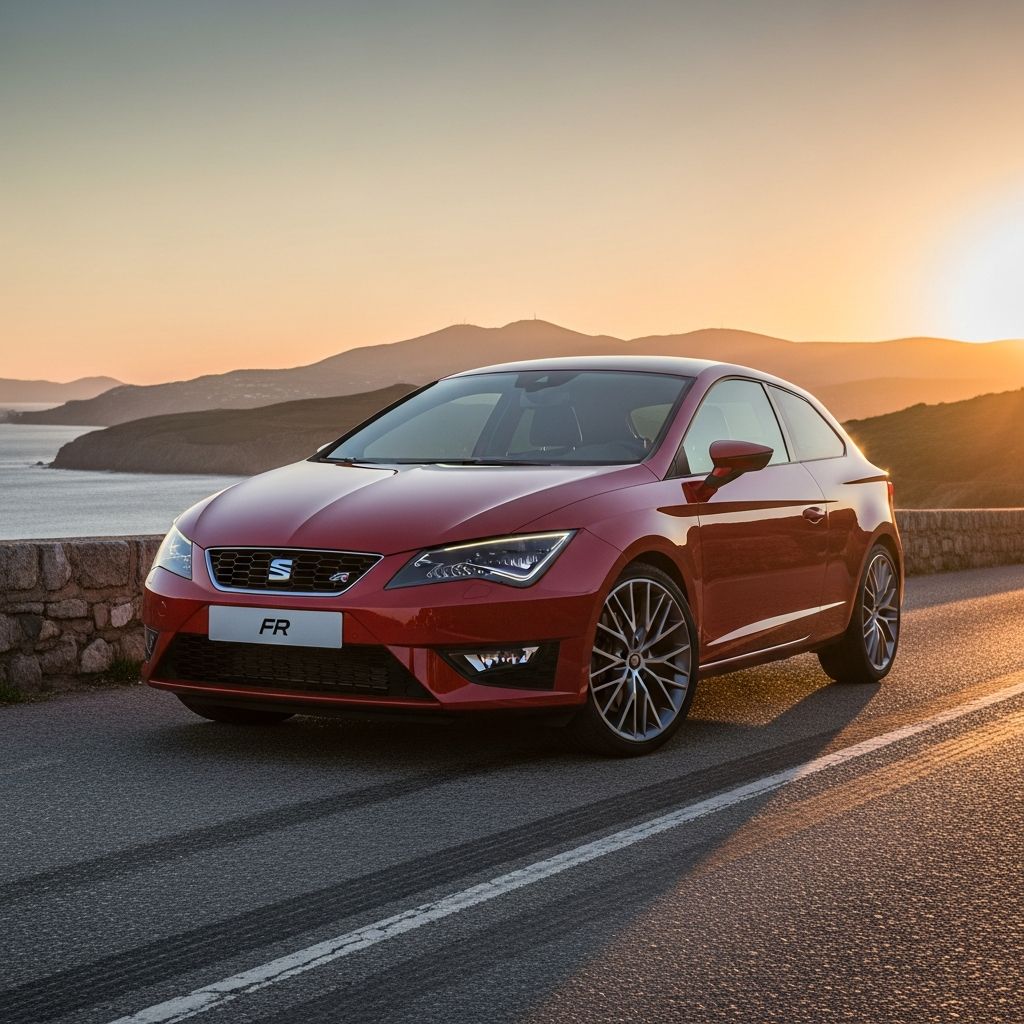
The SEAT Leon SC FR represents a compelling proposition in the three-door sports hatchback market, bridging the gap between practical everyday motoring and genuine performance credentials. Introduced as the compact variant of SEAT’s third-generation Leon platform, this machine arrives with an impressive combination of engineering refinement, aggressive styling, and turbocharged power that challenges more expensive competitors from established performance brands.
Understanding the SEAT Leon SC Platform and Positioning
Built on the MQB platform shared across the Volkswagen Group, the Leon SC distinguishes itself through purposeful design decisions that prioritize driver engagement. The three-door configuration eliminates rear passenger doors entirely, creating a shorter and marginally narrower profile compared to its five-door counterpart. Measuring 4,228 millimeters in length, this compact proportions position the Leon SC as the shortest vehicle in its competitive class—nearly 24 centimeters shorter than the Vauxhall Astra GTC—yet engineers managed to maintain luggage capacity at 380 liters through intelligent spatial optimization.
The engineering philosophy demonstrates that size reduction need not compromise practical functionality. The shortened wheelbase of 15 millimeters and overall length reduction of 35 millimeters compared to the five-door model have not translated into handling compromises, instead contributing to a more agile driving characteristic that appeals to enthusiasts seeking responsive vehicles without excessive physical dimensions.
The 1.8 TSI Turbocharged Engine: Technical Specification and Real-World Performance
At the heart of the Leon SC FR sits Volkswagen Group’s 1.8-liter turbocharged petrol engine, engineered to deliver 178 to 182 brake horsepower depending on specific tuning variants and test methodologies. This turbocharged four-cylinder powerplant achieves 0-62 mph acceleration in 7.4 seconds, positioning performance metrics directly alongside competitors including the Kia Pro_Cee’d GT while remaining marginally quicker than baseline hot hatchback alternatives.
The six-speed automatic transmission in standard form operates smoothly during relaxed driving scenarios, though optional seven-speed DSG transmissions introduce a taller seventh gear that enhances motorway efficiency characteristics. Engine behavior reflects VW Group engineering principles: responsive throttle response, linear power delivery, and turbocharger integration that minimizes lag during enthusiastic acceleration. The engine’s psychological appeal extends beyond mere numbers—the responsive character encourages spirited driving without inducing unsafe velocity escalation, reminiscent of vintage turbocharged performance machines that prioritized driver involvement over maximum capability.
Real-world driving reveals nuanced engine personality. Under gentle acceleration and cruising conditions, the TSI unit behaves as a refined, economical powerplant suitable for daily commuting. However, drivers exploiting available power will observe fuel economy figures deteriorating from claimed combined estimates of approximately 50 mpg toward actual consumption levels around 30 mpg, a characteristic shared with many turbocharged performance engines.
Fuel Economy and Emissions: Balancing Performance with Efficiency
Official combined fuel economy figures of 49.6 mpg with CO2 emissions of 132 g/km establish the Leon SC 1.8 DSG as demonstrably more efficient than direct rivals, partly attributable to stop/start technology integrated across all Leon engine variants. This advantage translates to approximately 10.4 mpg improvement over Ford Focus ST competitors and 11.4 mpg superiority when compared to Kia Pro_Cee’d alternatives, meaningful differentials for fleet managers and private buyers conscious of running costs.
Alternative powertrain options present different efficiency propositions. The 1.6 TDI Ecomotive diesel variant claims 85.6 mpg at 87 g/km CO2 emissions, substantially superior to gasoline alternatives and priced £1,110 less than the TSI model, creating a genuine dilemma for cost-conscious buyers willing to compromise performance for economical operation.
Interior Design Philosophy and Material Quality
The FR trim level elevates cabin presentation through deliberate material selections and ergonomic refinements. Leather upholstery adorns sports-shaped seats designed to provide lateral support during spirited cornering, complemented by a flat-bottomed leather steering wheel and leather-wrapped gear shift lever that reinforce premium positioning. Dark-tinted windows contribute to an interior atmosphere suggesting exclusivity and performance intent.
Climate management utilizes dual-zone independent control, acknowledging that occupant comfort preferences vary and passengers deserve individual temperature adjustment authority. The infotainment system derives from Volkswagen Group’s proven architecture, featuring touch-screen operation with integrated Bluetooth and USB connectivity—functionality that, at the time of introduction, represented competitive excellence in practical in-car technology integration.
Clever interior packaging includes a tap-open cubby positioned in front of the gear shift mechanism, accommodating small items without consuming substantial space. Compartmentalized side door bins provide storage for personal belongings, while the practical cabin layout suggests engineers prioritized driver-centric ergonomics. Chrome detailing on the dashboard and throughout the cabin adds visual interest without excessive ornamentation, maintaining a balance between sportiness and sophistication.
The abbreviated three-door configuration necessarily restricts rear passenger accommodation compared to five-door variants. Legroom and headroom become compromised for rear occupants, a practical limitation that emphasizes this model’s orientation toward two-to-three occupant journeys rather than family transport scenarios.
Exterior Styling and Visual Differentiation
The FR specification introduces distinctive visual elements elevating the Leon SC beyond base trim offerings. Seventeen-inch alloy wheel designs present an aggressive stance appropriate to performance pretensions, while redesigned front and rear bumper treatments incorporate more prominent air intakes and diffuser-style elements suggesting functional performance focus.
Twin chrome exhaust pipes exit the rear bodywork, a styling cue that, while not necessarily indicating performance capability, communicates sporting intent to external observers. LED tail light technology enhances nighttime visibility while contributing to contemporary visual presence, distinguishing newer examples from competitors featuring conventional incandescent illumination. Sports suspension lowering of 15 millimeters further emphasizes the FR trim’s performance-oriented character, creating more aggressive proportions and improving aerodynamic efficiency through reduced ride height.
Handling Characteristics and Driving Engagement
Testing environments reveal the Leon SC as a remarkably balanced and responsive machine, demonstrating precise steering feedback and supportive sports seating that communicates chassis behavior to attentive drivers. The compact dimensions and responsive suspension geometry create old-school hot hatchback characteristics—vehicles that encourage spirited driving without facilitating dangerous velocity escalation. The well-balanced platform translates driver inputs with immediacy, allowing occupants to feel suspension and tire behavior through steering wheel and seat contact, fostering confidence-building engagement.
Performance delivery resembles turbocharged machines from automotive history—specifically 1980s hot hatchbacks like the Ford Escort RS Turbo—where 138-182 horsepower represented accessible performance without excessive power that could overwhelm chassis capability. The Leon SC achieves similar acceleration metrics (0-62 mph in approximately 8.2 seconds for lower-powered variants) while maintaining approachability for ordinary drivers. Circuit testing environments highlight the vehicle’s composure through sustained cornering, demonstrating that reduced length and aggressive suspension tuning translate to genuine handling improvements rather than purely stylistic modifications.
Competitive Context and Market Positioning
| Comparison Metric | SEAT Leon SC 1.8 TSI | Ford Focus ST | Vauxhall Astra GTC | Kia Pro_Cee’d GT |
|---|---|---|---|---|
| Engine Displacement | 1.8L Turbo | 2.0L Turbo | 2.0L Turbo | 2.0L Turbo |
| Horsepower | 178-182 bhp | 197 bhp | 200 bhp | 198 bhp |
| 0-62 mph Acceleration | 7.4 seconds | Approx. 7.9 sec | 7.7 seconds | 7.4 seconds |
| Combined Fuel Economy | 49.6 mpg | 39.2 mpg | 38.2 mpg | 38.2 mpg |
| Overall Length | 4228 mm | 4368 mm | 4270 mm | 4255 mm |
| Luggage Capacity | 380 liters | 316 liters | 380 liters | 377 liters |
Pricing positioning represents substantial value consideration, with the FR 1.8 TSI model undercutting the equivalent Audi A3 by £2,875 despite comparable capability levels. This pricing advantage reflects SEAT’s brand positioning within the Volkswagen Group hierarchy, allowing engineering excellence and platform technology to reach customers at accessible price points. The overall pricing range from £15,550 to £22,255 on-the-road pricing provides multiple entry points depending on engine selection and trim level.
Practical Considerations for Prospective Buyers
The Leon SC FR 1.8 TSI appeals primarily to driving enthusiasts prioritizing engagement and performance character over ultimate raw power. The three-door configuration necessitates consideration of rear passenger access frequency—infrequent rear seat utilization favors this model, while families requiring regular rear seating should examine five-door alternatives. Fuel economy consciousness should account for real-world consumption diverging significantly from official claims when employing performance capabilities, though stop/start technology mitigates urban driving inefficiency compared to non-turbocharged alternatives.
Maintenance and ownership costs reflect Volkswagen Group standardization, meaning parts availability and service accessibility benefit from extensive dealer networks and aftermarket support. Insurance grouping and repair costs should prove reasonable for the performance segment, though comprehensive pricing analysis warrants comparison with specific circumstances and regional availability.
Assessment and Recommendation
The SEAT Leon SC FR 1.8 TSI represents engineering excellence distilled into an approachable sports hatchback package. The turbocharged engine delivers satisfying performance without excessive aggression, the compact platform encourages spirited driving, and intelligent cabin design balances premium materials with practical functionality. Superior fuel economy compared to direct competitors, combined with aggressive pricing, establishes compelling value propositions particularly for buyers prioritizing European engineering and driving engagement over badge prestige.
However, the machine demands acknowledgment that superior power alternatives exist for marginally higher investment, a consideration for buyers willing to compromise efficiency for accelerating performance. The three-door format requires lifestyle alignment, and real-world fuel economy deterioration under spirited driving should receive honest contemplation. Nonetheless, as a refined, enjoyable, and economical sports hatchback, the Leon SC FR 1.8 TSI merits serious consideration from discerning enthusiasts seeking practical performance without compromising daily usability.
References
- Review: SEAT Leon SC 1.8 TSI FR DSG — Leasing.com. 2013. https://leasing.com/car-leasing-news/driven-seat-leon-sc-1-8-tsi-fr-dsg/
- SEAT Leon SC FR 1.8 TSI 2013 review — Auto Express. 2013-04-10. https://www.autoexpress.co.uk/seat/leon/63494/seat-leon-sc-fr-18-tsi
- Long-term test review: SEAT Leon SC FR — Auto Express. https://www.autoexpress.co.uk/seat/leon/87691/long-term-test-review-seat-leon-sc-fr
- SEAT Leon SC (2013 – 2017) used car review — RAC Drive. https://www.rac.co.uk/drive/car-reviews/seat/leon/leon-sc-2013-2017/
- SEAT Leon SC (2013 – 2018) Driving Experience Review — Sun Motors. https://www.sunmotors.co.uk/vehicle-reviews/seat/leon/sc-2013-2018/driving-experience
Similar Articles


Read full bio of medha deb