Seat Leon e-Hybrid: Practical Electrified Family Car
A smart plug-in hybrid combining efficiency with everyday practicality
Embracing Hybrid Innovation: The Seat Leon e-Hybrid as a Modern Family Solution
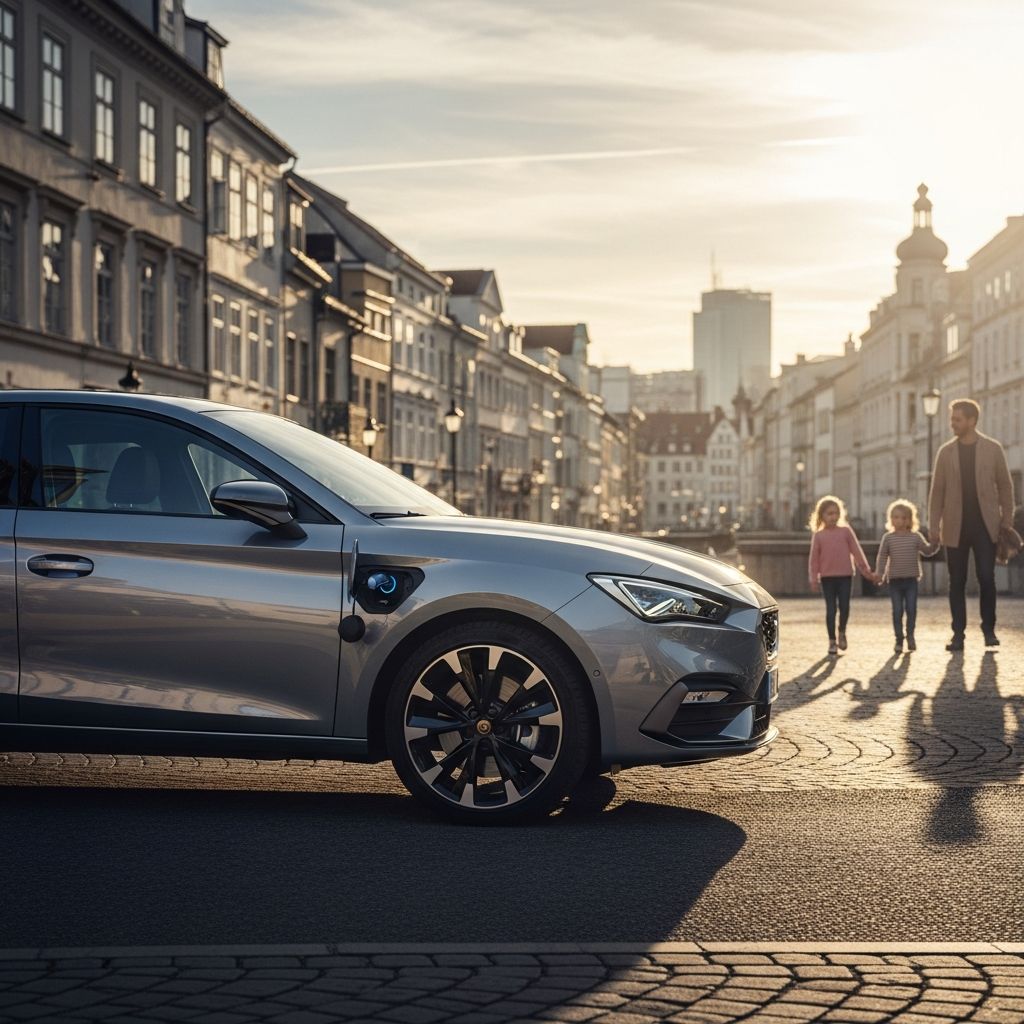
The automotive landscape has undergone significant transformation in recent years, with manufacturers increasingly integrating electrification into their core product lineups. The Seat Leon e-Hybrid represents a compelling entry point into this evolving market segment, offering a pragmatic approach to reducing emissions without sacrificing practicality or driving enjoyment. Launched as the fourth generation of Spain’s beloved family hatchback platform, this plug-in hybrid variant positions itself as an accessible alternative to more premium competitors while maintaining the characteristics that have made the Leon a popular choice among European motorists.
Powertrain Architecture and Performance Dynamics
At the heart of the Leon e-Hybrid lies a sophisticated hybrid system engineered through the Volkswagen Group’s advanced MQB Evo platform architecture. The configuration pairs a 1.4-litre turbocharged petrol engine producing 147 horsepower with a dedicated 114 horsepower electric motor, culminating in a combined output of 201 horsepower and 243 pound-feet of torque. This complementary pairing enables the vehicle to deliver meaningful acceleration and responsive throttle characteristics across various driving scenarios.
The petrol engine incorporates turbocharging and direct-injection technologies specifically calibrated for hybrid operation, ensuring seamless transitions between power sources. When combined with the six-speed dual-clutch automatic transmission featuring shift-by-wire technology, the system achieves notably smooth gear changes and enhanced efficiency compared to conventional mechanical transmissions. The electronic gear selection methodology reduces component weight while improving fuel economy by approximately 10 percent relative to earlier transmission generations.
Acceleration performance positions the Leon e-Hybrid competitively within its segment, achieving 0 to 62 miles per hour in 7.5 seconds with a maximum velocity of 137 miles per hour. These figures represent respectable performance characteristics for a family-oriented vehicle, delivering adequate performance for highway merging and overtaking maneuvers without excessive fuel consumption penalties.
Electric Range and Battery Capabilities
The 13.1 kilowatt-hour lithium-ion battery pack enables up to 40 miles of electric-only driving capability under official WLTP test conditions. This range proves sufficient for typical commuting patterns, school runs, and urban shopping excursions commonly encountered by family vehicle users. The battery capacity balances practical driving range against vehicle weight considerations, as larger battery installations would negatively impact performance and increase manufacturing costs.
The vehicle defaults to all-electric mode upon starting, provided the battery maintains adequate charge. The system intelligently transitions to hybrid mode when battery reserve drops below operational thresholds or when vehicle speed exceeds 87 miles per hour. This operational logic ensures maximum efficiency during urban and suburban driving while preserving battery capacity for zero-emission zones and environmental protection areas. Drivers retain manual override capabilities, allowing them to preserve battery charge for specific journey segments where electric propulsion proves most valuable.
Real-world fuel consumption figures demonstrate the practical benefits of electrification. Achieving approximately 85 miles per gallon on mixed driving routes—despite falling short of the theoretical 214 miles per gallon figure cited under ideal laboratory conditions—substantially reduces operational costs compared to conventional petrol-only vehicles. CO2 emissions measure between 25 and 30 grams per kilometre, positioning the Leon e-Hybrid as an environmentally responsible family transportation option.
Interior Comfort and Ergonomic Considerations
The Leon’s cabin design prioritizes comfort and usability for occupants across extended journeys. The FR Sport variant, representing the range’s peak offering, incorporates powered lumbar support adjustment, heated seats, and a heated steering wheel—amenities that enhance driver comfort during cold-weather driving. Microsuede upholstery surfaces add tactile quality to the driving environment.
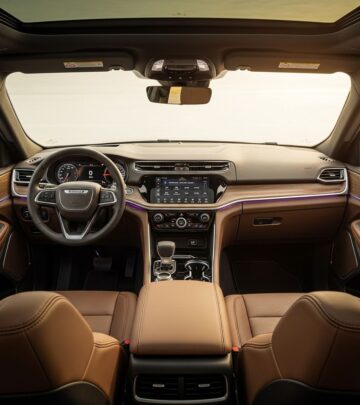
The infotainment ecosystem consists of a 10-inch central display panel paired with a 10.25-inch digital instrument cluster, both provided as standard equipment on e-Hybrid variants. These screens present vehicle status information, electric mode availability, and battery state-of-charge metrics, enabling drivers to optimize energy consumption actively. An ambient lighting system spanning the dashboard width and extending toward the door panels adapts coloration based on selected driving profile, creating visual feedback regarding active vehicle systems and safety features including blind spot detection and exit assistance functionality.
Technology features across the model range exhibit some limitations relative to competing alternatives. Adaptive cruise control and traffic sign recognition capabilities appear as optional upgrades rather than standard inclusions, requiring additional expenditure for buyers prioritizing advanced driver assistance systems. Semi-autonomous driving modes and exit assist functionality—which alerts drivers to approaching bicycles or vehicles when opening doors—enhance daily convenience and safety.
Storage Capacity and Practical Usability
One of the principal compromises inherent to plug-in hybrid architecture involves boot space reduction necessitated by battery pack installation. The Leon e-Hybrid hatchback provides 270 litres of cargo volume—a substantial reduction compared to conventional petrol models. However, this figure requires contextual interpretation; while the numerical capacity appears modest by class standards, the practical usability remains reasonable for most small family scenarios.
The boot floor height remains low relative to vehicle bumper height, facilitating easier loading of heavy objects and reducing physical strain during packing operations. The capacity reduction primarily manifests in reduced boot depth rather than lateral dimension limitations, preserving usable width for grocery shopping and routine cargo transport. The rear seats incorporate a 60/40 split folding mechanism, enabling extended flat-loading surfaces when additional cargo volume becomes necessary for holidays or special projects.
For families prioritizing storage capacity alongside electrification benefits, the Leon e-Hybrid Estate variant presents an superior solution. The estate bodystyle delivers 470 litres of boot space—a substantially more practical proposition for larger families or those requiring regular cargo transport. This configuration maintains the environmental and tax advantages of the plug-in hybrid system while addressing practical storage limitations, positioning it as an understated yet capable alternative to more expensive electrified family vehicles.
Handling Characteristics and Ride Quality
The Leon e-Hybrid exhibits engaging driving dynamics characteristic of Seat’s engineering philosophy emphasizing sporty handling alongside family-car practicality. The steering mechanism combines light effort at low speeds with progressive weight gain through cornering, instilling driver confidence when navigating winding roads. The calibration enables precise vehicle placement and stable high-speed cornering performance, positioning the Leon among the more dynamic plug-in hybrid hatches available to contemporary buyers.
Ride quality represents a deliberate engineering compromise between handling responsiveness and passenger comfort. The suspension tuning favors slightly firmer settings, reducing body roll during aggressive maneuvering while potentially transmitting greater road surface feedback compared to competitors prioritizing maximum isolation. Most drivers regard this calibration as acceptable—a reasonable trade-off yielding superior cornering capability without introducing jarring or uncomfortable sensations during everyday driving.
Electric mode delivers notably smooth and serene driving experiences, with silent electric motor operation providing satisfying cruising capability. The vehicle maintains motorway-speed stability without engaging the petrol engine, provided acceleration remains moderate and gradual. Transitioning to petrol operation introduces perceptible engine vibration and throttle response alterations, though these sensations remain unobtrusive and quickly become predictable to acclimated drivers. The dual-clutch transmission occasionally displays hesitation during rapid downshifting for aggressive acceleration sequences, though routine driving experiences smooth and nearly imperceptible gear changes.
Tax Efficiency and Operating Cost Benefits
The plug-in hybrid configuration delivers substantial tax advantages for both fleet and private purchasers. Company car drivers benefit from 6 percent Benefit in Kind taxation—a compelling advantage compared to conventional petrol or diesel alternatives. This reduced tax burden reflects official recognition of the Leon e-Hybrid’s lower-emission classification and environmental attributes.
Private buyers experience reduced insurance and maintenance expenses relative to larger hybrid vehicles, while monthly fuel costs diminish significantly through consistent electric charging and opportunistic all-electric driving. The combination of low tax liability, reduced fuel expenditure, and favorable emissions positioning makes the Leon e-Hybrid economically attractive for cost-conscious families prioritizing operational expense minimization.
Value Proposition and Market Positioning
The Leon e-Hybrid enters the plug-in hybrid market segment at competitive pricing relative to Volkswagen Golf GTE and Audi equivalents, delivering comparable capabilities at modestly reduced cost. This positioning appeals to practical buyers seeking established hybrid technology and engineering credibility without premium brand taxation. The vehicle represents approximately £31,000 starting price point for well-equipped examples, positioning it accessibly for professional families and active commuters.
Key Specifications Summary
| Specification | Detail |
|---|---|
| Combined Power Output | 201 horsepower |
| Combined Torque | 243 pound-feet |
| Acceleration (0-62 mph) | 7.5 seconds |
| Maximum Speed | 137 miles per hour |
| Battery Capacity | 13.1 kilowatt-hours |
| Electric Range | Up to 40 miles (WLTP) |
| Boot Space (Hatchback) | 270 litres |
| Boot Space (Estate) | 470 litres |
| Transmission | Six-speed dual-clutch automatic |
| CO2 Emissions | 25-30 g/km |
Frequently Asked Questions
What distinguishes the Leon e-Hybrid from conventional petrol vehicles?
The plug-in hybrid configuration enables extended all-electric driving capability for approximately 40 miles, reducing emissions and fuel consumption during urban and suburban commuting. When battery reserve depletes, the integrated petrol engine seamlessly engages, maintaining long-distance capability and eliminating range anxiety inherent to purely electric vehicles.
Does the reduced boot space present significant practical limitations?
While the 270-litre hatchback boot capacity falls below class average figures, real-world usability remains adequate for typical family scenarios. The low floor height and preserved lateral dimensions accommodate grocery shopping and routine cargo needs effectively. Estate variants providing 470 litres address storage concerns for larger families.
How does charging frequency impact long-term ownership costs?
Consistent home charging capability maximizes fuel savings and emission reductions. Drivers unable to charge regularly should consider conventional petrol alternatives, as infrequent charging diminishes the economic benefits justifying the plug-in hybrid premium purchase price.
What technological features warrant optional specification consideration?
Adaptive cruise control, traffic sign recognition, and semi-autonomous driving modes enhance convenience and safety during extended highway journeys. These optional systems prove particularly valuable for drivers regularly undertaking motorway commuting.
References
- Seat Leon e-Hybrid Review — Electrifying.com. Accessed April 2026. https://www.electrifying.com/reviews/seat-reviews/seat-leon-e-hybrid/review
- 2020 SEAT Leon e-HYBRID Review — Discover EV. Accessed April 2026. https://www.discoverev.co.uk/ev-reviews/seat-leon-e-hybrid-2020-review
- Volkswagen Group MQB Evo Platform Architecture Documentation — Volkswagen Group Technical Resources. 2019. https://www.volkswagengroupservices.com/en/technical-documentation
Similar Articles




Read full bio of Sneha Tete