Saab SVC Engine: Technical Deep Dive And Legacy
Discover Saab's groundbreaking variable compression technology that promised revolutionary power and efficiency from a compact 1.6L engine.
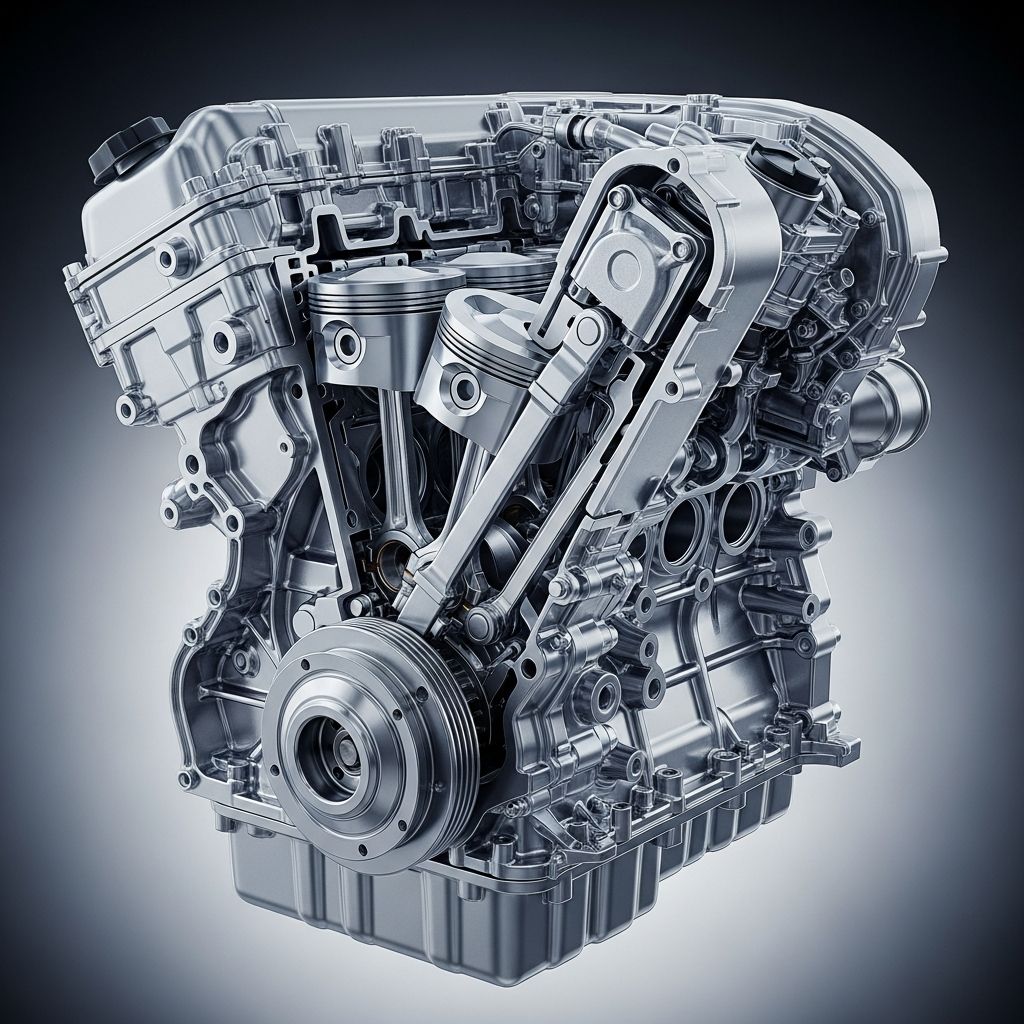
The Saab SVC (Variable Compression) engine represented a bold leap in engine design, blending high performance with impressive fuel savings in a compact 1.6-liter five-cylinder package. This prototype aimed to deliver the power of much larger engines while matching the economy of standard small-displacement units, thanks to its adaptive compression system and supercharging.
The Birth of a Technical Marvel
In the late 1990s, Saab engineers challenged conventional engine norms by developing the SVC concept. Traditional engines operate with fixed compression ratios, typically around 9:1 to 10:1, balancing power, efficiency, and durability. Saab’s innovation allowed dynamic adjustment, optimizing combustion for every driving scenario.
The project earned accolades, including ‘Best Technology of the Year’ awards in 2000 and 2001, highlighting its potential to transform the executive car segment. Saab, then under General Motors’ ownership, positioned the SVC as a cornerstone for future models like an updated 9-5.
Core Technology Behind Variable Compression
At the heart of the SVC is its monohead design—a cylinder head integrated with cylinders that pivots relative to the engine block. Hydraulic actuators tilt this assembly up to 4 degrees, altering the combustion chamber volume and thus the compression ratio.
- High-load mode: Compression drops to 8:1, enabling a potent supercharger to boost intake pressure up to 2.8 bar without detonation risk.
- Part-load cruising: Ratio rises to 14:1 for peak efficiency and low emissions.
This adaptability allowed a downsized 1.6L engine to produce 225 horsepower at 5800 rpm and 350 Nm (or up to 305 Nm in some tests) at 4000 rpm—figures rivaling 3.0L naturally aspirated engines.
Performance and Efficiency Breakthroughs
Road tests near Saab’s Trollhattan factory showcased the prototype’s capabilities in a 9-5 automatic. Despite its developmental stage, it offered spirited acceleration, flexible torque delivery, and the signature Saab five-cylinder soundtrack.
| Metric | Saab SVC 1.6L | Typical 1.6L 4-Cyl | Typical 3.0L V6 |
|---|---|---|---|
| Power (bhp) | 225 | 110-130 | 200-250 |
| Torque (Nm) | 350 | 150-180 | 280-350 |
| Fuel Economy (mpg) | 30+ | 30-35 | 20-25 |
| Compression Range | 8:1 to 14:1 | Fixed ~10:1 | Fixed ~9:1 |
The system promised up to 30% better fuel economy over comparable supercharged engines, with CO2 reductions and compliance with emerging emission standards. Prototype tests achieved around 28.5 mpg, a 25% improvement in some scenarios.
Supercharging Synergy and Design Innovations
A roots-type supercharger provided instant low-end response, complementing the variable compression. By reducing displacement, Saab minimized pumping losses while maximizing boost efficiency. The five-cylinder layout preserved Saab’s characterful inline-five rumble.
Additional features included adaptability for alternative fuels and potential direct injection, foreshadowing hybrid diesel-gasoline traits. Engineers described it as the ‘missing link’ between Otto and diesel cycles.
Real-World Prototype Testing
Early drives revealed impressive drivability. Under light throttle, high compression ensured smooth, economical progress. Hard acceleration engaged lower ratios and supercharger surge, propelling the 9-5 with vigor.
However, prototypes weren’t flawless. Audible mechanical noises from the tilting monohead echoed in the cabin, signaling refinement needs. Saab allocated years for durability tweaks, targeting a 2003 debut.
Future Prospects and Adaptability
The SVC platform promised scalability across Saab’s lineup, from compact sedans to estates. Its flexibility for biofuels and advanced injection hinted at sustained relevance amid tightening regulations.
Video demos from 2000 emphasized its platform potential, blending diesel-like efficiency with gasoline responsiveness—a vision for sustainable performance.
Why the SVC Never Made Production
Despite hype, General Motors shelved the SVC post-takeover, citing high development costs and complexity. The monohead’s precision engineering proved expensive to mass-produce reliably.
GM prioritized cost-effective platforms, sidelining Saab’s experimental edge. The 9-5 refresh proceeded without it, and Saab’s independence waned, culminating in bankruptcy by 2011.
Legacy and Influence on Modern Engines
The SVC pioneered variable compression, influencing later technologies like Nissan’s VC-Turbo (2018), which adjusts via a multi-link piston mechanism for similar gains.
Though unrealized, it underscored Saab’s innovative spirit—aircraft heritage translated to automotive frontiers. Enthusiasts still celebrate its ‘what if’ allure.
Technical Deep Dive: How It Works
Compression ratio ( r = (V_d + V_c) / V_c , where V_d is displacement volume and V_c is clearance volume) dictates efficiency. Higher r improves thermal efficiency ( η ≈ 1 – 1 / r^(γ – 1) , γ ≈ 1.4 for air-fuel mix) but risks knock under boost.
Saab’s hydraulic system modulates V_c seamlessly, ECU-controlled via throttle and load sensors. Supercharger intercooling further enabled safe high ratios.
Comparisons with Contemporary Rivals
- Vs. Audi 1.8T: Similar power (150-225bhp) but fixed turbo lag; SVC offered linear delivery and better part-throttle economy.
- Vs. BMW M54 3.0L: Matched torque but SVC’s smaller size aided weight savings and emissions.
- Vs. Diesel Alternatives: Approached torque fill and economy without turbo lag or noise.
Environmental and Economic Impact
With 30% fuel savings, the SVC could have cut fleet CO2 significantly pre-hybrid era. Low NOx from optimized combustion aligned with Euro 4/5 standards.
Enthusiast Perspectives and Collectibility
Today, SVC prototypes are rare gems in Saab museums. Videos and retrospectives fuel nostalgia for this ‘lost’ tech.
Frequently Asked Questions (FAQs)
What made the Saab SVC engine unique?
It varied compression from 8:1 to 14:1 using a tilting monohead, paired with supercharging for 225bhp from 1.6L.
Did the SVC ever enter production?
No, GM canceled it due to costs; it remained a prototype.
How did it achieve such power and efficiency?
Dynamic ratio adjustment optimized combustion, supercharger provided boost, downsizing reduced losses.
What were its real-world fuel figures?
Around 28-30+ mpg, 25-30% better than similar power engines.
Is variable compression used today?
Yes, in Nissan’s VC-Turbo and Infiniti QX50, echoing Saab’s concept.
References
- Saab SVC | Auto Express — Auto Express. 2002-01-01. https://www.autoexpress.co.uk/car-reviews/15016/saab-svc
- SAAB SVC Variable Compression – MotorVision – YouTube — YouTube (Retro Car Reviews). 2000-01-01. https://www.youtube.com/watch?v=Q5C1GWXPHWM
- Saab Variable Compression Engine Generates 225bhp Out Of 1.6L — SaabPlanet. 2020-01-01. https://www.saabplanet.com/saab-variable-compression-engine-generates-225bhp-out-of-1-6l/
- SAAB’s Variable Compression Engine – Strange, Live, Rare, Die — eEuroparts. 2023-01-01. https://eeuroparts.com/blog/saabs-variable-compression-engine-strange-live-rare-die
- MW 2000 MotorNews The Saab Variable Compression | Retro Review — YouTube. 2000-01-01. https://www.youtube.com/watch?v=dq_CXkyb–w
- saab svc engine concept promo 2000 – YouTube — YouTube. 2000-01-01. https://www.youtube.com/watch?v=oxR-3Un6WkU
- The Most Badass Saab Isn’t a Car — The Drive. 2016-01-01. https://www.thedrive.com/accelerator/1489/the-most-badass-saab-isnt-a-car
Similar Articles




Read full bio of medha deb