Renault Zoe Van E-Tech Review
Compact urban electric delivery solution with impressive efficiency and range
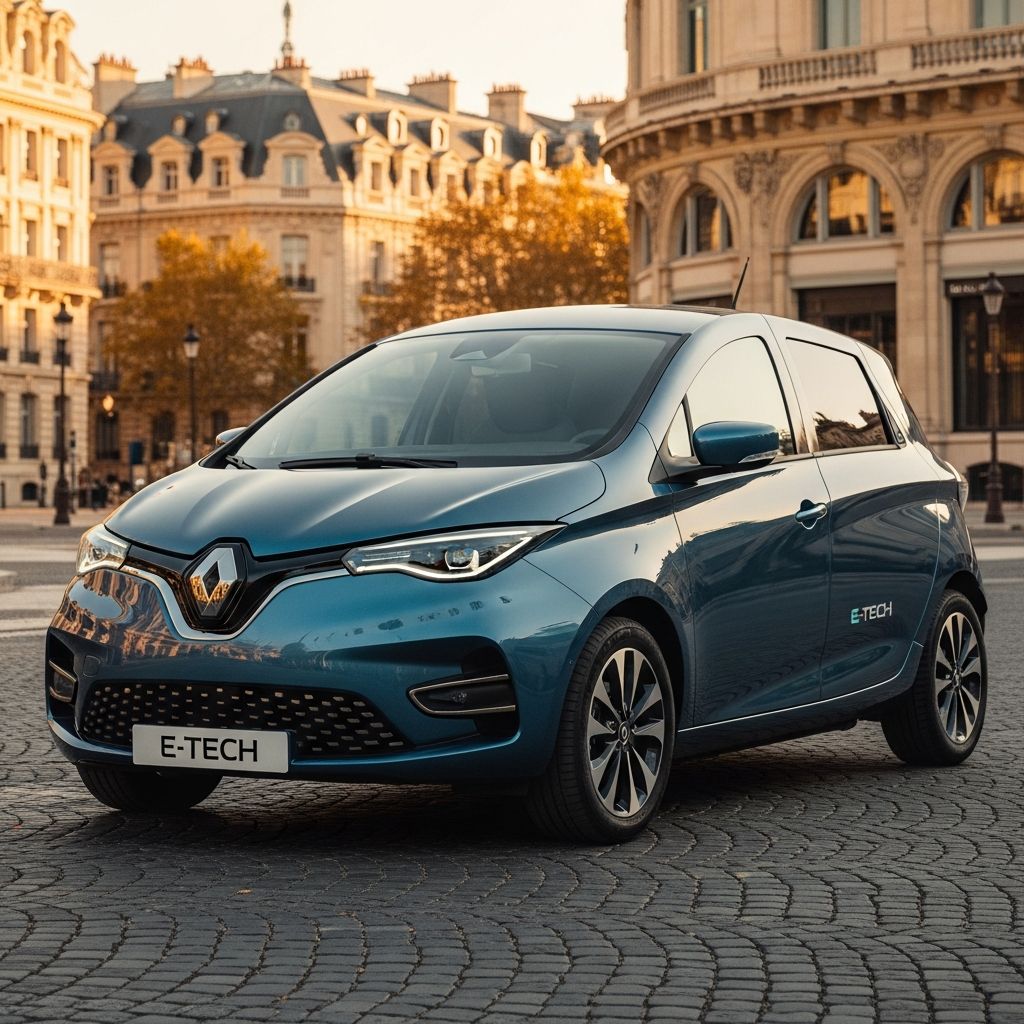
The Renault Zoe Van E-Tech Electric: A Fresh Approach to Urban Logistics
The emergence of electric vehicles in the commercial segment has opened new possibilities for businesses seeking sustainable transportation solutions. The Renault Zoe Van E-Tech Electric represents a distinctive entry into this market, combining the familiarity of a passenger car platform with cargo-oriented engineering. This vehicle bridges the gap between traditional light commercial vehicles and compact city cars, offering a unique proposition for operators working within urban environments and dealing with moderately-sized deliveries.
Understanding the Vehicle’s Design Philosophy
The Zoe Van E-Tech Electric maintains visual continuity with its passenger car sibling, presenting an understated commercial aesthetic that doesn’t immediately announce itself as a traditional van. This design choice reflects Renault’s strategy of repurposing proven car architecture for commercial purposes. The vehicle’s silhouette remains similar to the conventional Zoe passenger model, which contributes to its approachability and maneuverability in congested urban areas where larger vans would struggle.
The cargo area has been engineered to provide a practical loading space while retaining the compact footprint that makes city navigation feasible. With a load bay measuring 1.2 by 1.1 metres and a maximum payload capacity of 387 kilograms, the vehicle targets operators with specific requirements: those needing to transport smaller but bulky items regularly. This specification places it squarely within the niche of small-scale urban logistics rather than general-purpose commercial transport.
Cargo Capacity and Practical Usability
The loading volume of approximately 0.51 cubic metres represents a significant constraint when compared to conventional vans, yet this limitation aligns with the vehicle’s intended use case. The cargo floor maintains a flat configuration, facilitating straightforward loading and unloading operations without the need for specialized equipment. This practical consideration becomes particularly valuable for operators making multiple deliveries throughout the day.
The payload capacity of 387 kilograms establishes realistic expectations for users. While insufficient for heavy industrial goods or large-scale merchandise distribution, this weight allowance accommodates parcels, documents, smaller consumer goods, and similar items typical of urban delivery networks. The vehicle’s design prioritizes frequency of trips and operational efficiency over individual load size.
Access to the cargo area is straightforward, with the vehicle’s compact dimensions enabling parking in standard city spaces where larger commercial vehicles would require specialized loading bays. This accessibility represents a significant operational advantage for businesses managing multiple delivery routes across congested urban environments.
Performance Characteristics and Driving Experience
The Zoe Van E-Tech Electric delivers performance capabilities that distinguish it favorably within its segment. The vehicle accelerates smoothly up to urban speed limits, demonstrating the inherent characteristic of electric powertrains: immediate torque delivery that translates to responsive acceleration. At 30 miles per hour, the vehicle’s acceleration matches or exceeds that of comparable urban delivery vehicles, providing operators with confidence in managing traffic flow.
The driving experience benefits from the electric powertrain’s near-silent operation. This characteristic delivers dual advantages: reduced driver fatigue during extended operation and minimized noise pollution in residential areas during early morning or evening delivery windows. For operators conducting deliveries in noise-sensitive zones, this attribute represents a substantial operational benefit.
The electric motor generates 109 horsepower and 166 pound-feet of torque, enabling a claimed 0-62 miles per hour acceleration time of 11.4 seconds. While this metric may appear modest on the surface, the vehicle’s actual urban performance proves more than adequate, with the immediate torque response providing sufficient acceleration for merging into traffic and managing typical city driving scenarios.
Range and Energy Efficiency
The vehicle offers extended range capabilities, with the electric system delivering up to 245 miles on a full charge when operating in economy mode. This range specification addresses a critical concern for commercial operators: the ability to complete full working days without requiring mid-shift charging interventions. For typical urban delivery patterns involving multiple stop-and-start cycles, the projected range typically proves sufficient for comprehensive daily operations.
The driving dynamics accommodate two distinct operational modes. The “Eco” setting constrains throttle responsiveness and prioritizes energy conservation, extending maximum range. The standard mode provides the full 109 horsepower output, enabling more spirited acceleration when required for traffic management or schedule adherence. Operators can calibrate their driving approach based on daily requirements and remaining charge status.
Energy consumption reflects the vehicle’s lightweight construction and aerodynamic efficiency. The use of established passenger car architecture, while unconventional for commercial applications, delivers engineering refinements that minimize energy waste. This efficiency translates directly to reduced operational costs through decreased electricity consumption per mile traveled.
Interior Environment and Driver Comfort
The cabin environment reflects the vehicle’s automotive heritage, incorporating design elements typically associated with passenger cars rather than commercial vehicles. Interior appointments present a more refined aesthetic than conventional light commercial vehicles, with attention to material quality and visual presentation. This design approach contributes to driver satisfaction during extended operational periods.
The driving position provides adequate visibility of surrounding traffic and pedestrians, a critical safety consideration in congested urban environments. The compact dimensions and automotive design result in a natural driving position that many operators will find intuitive following minimal familiarization. Control responsiveness and steering feedback patterns mirror conventional passenger vehicles, facilitating transitions for operators accustomed to car-based transportation.
Climate control systems function independently of the electrical powertrain, meaning that cabin heating or air conditioning operates without degrading range performance. This operational independence proves valuable for operators working in seasonal extremes, preventing the energy consumption conflicts encountered in some electric vehicles where climate control substantially reduces available range.
Charging Infrastructure and Operational Planning
Integration into existing electric vehicle charging networks facilitates operational flexibility. The vehicle’s modest battery capacity compared to larger electric vehicles enables charging cycles that fit into realistic overnight or mid-shift scenarios. Operators managing delivery routes from fixed bases can implement charging protocols that align with shift patterns and delivery schedules.
The charging time frames align with operational windows available during business closures or shift transitions. This compatibility with existing commercial vehicle usage patterns removes potential barriers to adoption, allowing operators to transition established logistics networks to electric propulsion without radical operational restructuring.
Comparative Market Position
The Zoe Van E-Tech Electric occupies a distinctive market position, lacking direct competitors in its specific category. Traditional vans offer greater capacity but sacrifice the urban maneuverability and operational economy delivered by the electric platform. Larger electric vehicles provide greater payload and volume but sacrifice the navigation capabilities that define urban delivery operations. This positioning makes the vehicle particularly suitable for niche applications rather than general-purpose commercial transport.
Operators evaluating the Zoe Van should conduct realistic assessments of their actual requirements. The vehicle performs exceptionally within its design parameters but proves unsuitable for applications requiring larger payloads or volume capacities. Organizations successfully utilizing the Zoe Van typically operate within these defined constraints, making multiple daily trips rather than attempting bulk cargo transportation.
Stylistic Presentation and Brand Perception
The vehicle’s distinctive aesthetic establishes visual differentiation from conventional commercial vehicles. This design characteristic can contribute positively to brand perception for operators emphasizing environmental responsibility and operational modernity. The passenger car–derived styling appeals to urban business identities, distinguishing operators from traditional industrial or logistics aesthetics.
The sleek interior design elements reinforce the vehicle’s positioning as a contemporary commercial solution rather than a utilitarian workhorse. This presentation appeals to businesses incorporating electric vehicles as components of broader sustainability narratives or modern operational branding.
Practical Considerations for Prospective Operators
Businesses contemplating Zoe Van adoption should evaluate their specific operational requirements systematically. The vehicle excels for organizations conducting frequent deliveries of smaller items, parcels, documents, or light merchandise. Applications involving bulky but lightweight goods benefit particularly from the vehicle’s spacious cargo area relative to overall dimensions.
Operators managing routes covering 200+ miles daily will discover the extended range accommodates comprehensive shift coverage without mid-shift charging requirements. The payload limitation precludes applications requiring individual shipment weights exceeding 387 kilograms, but most urban parcel delivery networks operate within these specifications routinely.
Organizations establishing charging infrastructure at operational bases can integrate the Zoe Van into existing fleet structures with minimal operational disruption. The vehicle’s electric powertrain eliminates fuel procurement requirements and reduces maintenance complexity associated with internal combustion engines.
Environmental and Operational Economics
The transition from petroleum-based propulsion to electric operation delivers substantial lifecycle environmental benefits, particularly in urban environments where air quality impacts concentrate. Zero tailpipe emissions eliminate localized pollution contributors in residential delivery zones, addressing regulatory requirements increasingly prevalent across European cities.
Operational economics favor the Zoe Van for organizations calculating comprehensive cost structures. Electricity costs per mile substantially undercut fuel expenses for equivalent distance coverage. Reduced maintenance requirements associated with electric powertrains—the absence of oil changes, transmission servicing, and spark plug replacements—further compress operational expenses across vehicle lifespans.
Suitability Assessment Matrix
The Zoe Van E-Tech Electric demonstrates optimal suitability for:
- Urban parcel and document delivery services
- Small-scale retail merchandise transportation
- Courier operations within metropolitan areas
- Tradespeople requiring tool and equipment transport
- Businesses prioritizing environmental responsibility in operational imaging
- Fleet operators managing multiple daily delivery cycles
The vehicle demonstrates reduced suitability for:
- Applications requiring individual shipment weights exceeding 387 kilograms
- Long-distance regional distribution routes
- Operations with inconsistent charging infrastructure access
- Bulk cargo or consolidated shipment requirements
- Industries requiring specialized cargo configurations or equipment installation
Conclusion: Evaluating Commercial Viability
The Renault Zoe Van E-Tech Electric represents a thoughtfully engineered commercial vehicle addressing specific urban logistics requirements. Rather than attempting universal application, the vehicle achieves excellence within defined operational parameters. Organizations accurately assessing their requirements and confirming alignment with the vehicle’s specifications will discover a capable, efficient, and contemporary platform for urban delivery operations. The vehicle’s success depends fundamentally on operational honesty: confirming that actual requirements match the vehicle’s design intentions rather than attempting to stretch the platform beyond its intended applications.
References
- Renault Zoe Van E-Tech Electric Review from Global Vans — Global Vans UK. 2024. https://www.youtube.com/watch?v=2j2occXi97U
- Renault Zoe Van review: weeny electric goods-carrier tested — TopGear. 2024. https://www.topgear.com/car-reviews/renault/80kw-i-play-r110-50kwh-5dr-auto/first-drive
- Praktijkervaring Renault Zoe: dit vinden eigenaren van hun elektrische auto — AutoWeek. 2024. https://www.autoweek.nl/autotests/artikel/praktijkervaring-renault-zoe-dit-vinden-eigenaren-van-hun-elektrische-auto/
- Auto Review Renault Zoe I — ANWB. 2024. https://www.anwb.nl/auto/tests/auto-reviews/detail/0c4c97557ebd26f5b2170fffe6ab9386
- Renault Zoe Review 2026 | Performance & Pricing — Carwow. 2026. https://www.carwow.co.uk/renault/zoe
Similar Articles


Read full bio of Sneha Tete