Renault Megane RS: Performance Hot Hatch Excellence
Discover the thrilling capabilities of Renault's track-focused compact performance vehicle
Renault Megane RS: The Compact Performance Machine Redefining Hot Hatch Standards
The automotive landscape has witnessed numerous iterations of high-performance compact vehicles, yet few achieve the balance of practicality and track-focused engineering that defines the current generation Renault Megane RS. This French-engineered hot hatch represents a significant evolution in the brand’s sporting heritage, combining technological innovation with proven driving dynamics to create a vehicle that appeals to both daily commuters and weekend track enthusiasts.
Visual Presence and Aesthetic Design
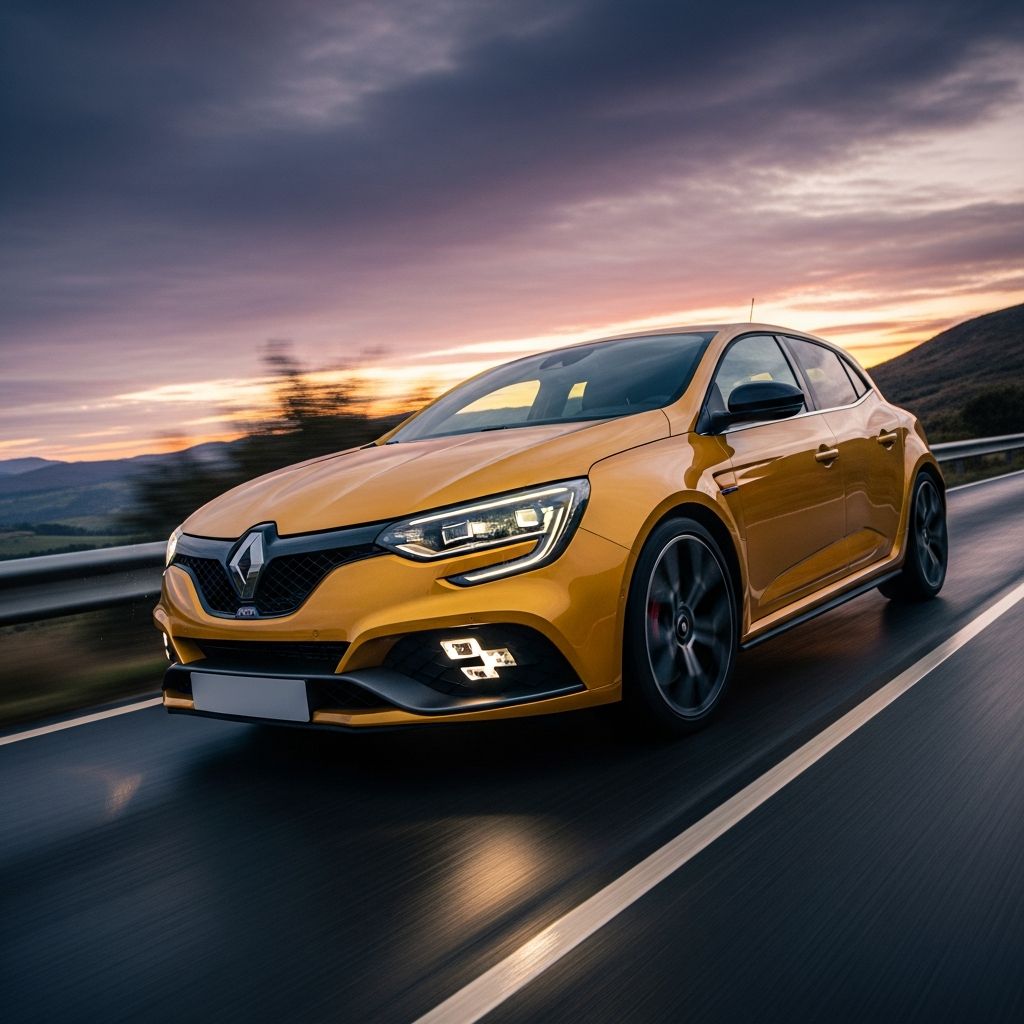
The Megane RS commands attention through its deliberately aggressive styling philosophy. The vehicle’s proportions emphasize a purposeful stance that immediately distinguishes it from conventional family hatchbacks. The wide track geometry is accentuated by pronounced wheel arches that house impressive 19-inch alloy wheels, contributing to the car’s muscular appearance. This visual language communicates the vehicle’s performance intentions without relying on excessive aerodynamic appendages or unnecessary ornamentation.
The design approach prioritizes functional aesthetics, where every visual element serves a purpose beyond mere decoration. The extended bodywork accommodates wider suspension geometry and performance-oriented componentry, while the lowered suspension creates the visual impression of a machine ready for dynamic engagement.
Powertrain Architecture and Performance Delivery
At the heart of the Megane RS lies a 1.8-litre turbocharged four-cylinder engine that produces 276 horsepower at 6,000 rpm, with a substantial torque delivery of 288 lb-ft maintained across a broad 2,400 to 4,800 rpm band. This engine, shared with the Alpine A110 sports car, represents a downsizing strategy that prioritizes responsive performance over displacement. The compact displacement allows for higher-revving characteristics while maintaining strong mid-range punch essential for road and circuit driving.
The engine’s character distinguishes itself through remarkable refinement in Comfort and Normal driving modes, where the acoustic signature remains muted and mechanical operation nearly imperceptible. This Jekyll-and-Hyde nature enables the vehicle to serve as a practical daily driver while retaining its performance credentials when engaged driving situations demand extraction of full capabilities.
Transmission Options and Control Delivery
Renault offers two distinct transmission choices, each with specific advantages:
- Six-speed manual transmission: The traditional clutch-pedal configuration provides direct mechanical connection between driver inputs and powertrain response. Despite previous generation critiques regarding slightly notchy engagement, this configuration remains the preferred choice for driving enthusiasts who value transparency and control feedback.
- Six-speed dual-clutch automatic: The EDC (Efficient Dual Clutch) system represents modern automatic transmission technology, offering rapid gear changes and reduced shift interruption. While improvements have addressed earlier shortcomings in response characteristics, the transmission’s inherent slight delay in engagement encourages many drivers toward manual selection for maximum involvement.
Chassis Technology and Handling Dynamics
The Megane RS introduces several technological innovations that elevate its handling capabilities beyond traditional hot hatch parameters. The inclusion of four-wheel steering technology represents a significant advancement, positioning the Megane RS as the sole current compact performance vehicle incorporating this system. The rear axle steering mechanism operates through a computer-controlled system that adjusts rear wheel angles based on vehicle speed and steering input magnitude.
At lower speeds, particularly during parking maneuvers and tight urban navigation, the rear wheels steer in the opposite direction relative to front wheel input, reducing the vehicle’s turning radius and enhancing low-speed agility. This functionality proves invaluable in congested urban environments where conventional front-wheel-drive vehicles struggle with tight corner navigation.
During high-speed driving, the system reverses its logic, steering rear wheels in the same direction as front inputs, thereby enhancing directional stability and reducing understeer tendencies. This dual-mode approach delivers measurable benefits for both practical daily operation and dynamic circuit driving, though the added weight from hydraulic and electronic components requires consideration in overall vehicle dynamics.
Suspension and Damping Characteristics
Adaptive damper technology represents another cornerstone of the Megane RS’s engineering philosophy. Unlike previous-generation models that offered fixed suspension geometry, the current iteration allows drivers to modulate suspension compliance through selectable driving modes. Comfort mode prioritizes ride quality over handling firmness, effectively softening the suspension setup to absorb road imperfections and provide passenger comfort on extended drives.
Normal mode establishes a middle ground between comfort and performance, suitable for mixed driving conditions encountered during typical daily operation. Sport modes progressively firm suspension response, improving body control during aggressive driving while accepting the trade-off of increased harshness over rough surfaces.
The wide track geometry combined with 235-section tyres delivers exceptional grip characteristics. The turn-in response proves sharp and direct, while mid-corner grip maintains predictable progression without abrupt transitions. The wide track measurement directly contributes to this grip development, creating a stable platform that resists body roll during cornering loads.
Variant-Specific Differentiation
| Variant | Key Specifications | Intended Application |
|---|---|---|
| Base RS 280 | 276 bhp, standard Sport chassis, adaptive dampers, four-wheel steering | Balanced daily driving with performance potential |
| RS Cup | 276 bhp, firmer suspension tuning, limited-slip differential, enhanced traction characteristics | Spirited driving and periodic track usage |
| RS Trophy | 297 bhp through revised turbo and exhaust, upgraded brakes, track-oriented tyres | Dedicated performance and circuit pursuit |
The base Megane RS 280 provides entry-level access to the performance platform, incorporating sufficient technology and capability for enthusiasts seeking daily-driven performance. The Cup variant introduces targeted modifications including suspension stiffening and mechanical grip enhancement through limited-slip differential integration. The Trophy model escalates commitment through elevated power output, larger brake systems, and performance-oriented tyre fitment specifically designed for circuit conditions.
Practical Integration and Daily Usability
Despite its performance focus, the Megane RS maintains surprising versatility as a daily transportation solution. The compact hatchback body preserves practical cargo capacity, while the adaptive damping system ensures that normal mode operation delivers comfort levels comparable to standard Megane variants. Interior design emphasizes functional simplicity rather than luxury appointments, though material quality and ergonomic consideration receive appropriate attention.
Climate control and convenience features operate independently of the driving mode selection, ensuring that practical requirements receive attention regardless of suspension or powertrain settings. This separation of concerns demonstrates engineering pragmatism, recognizing that occupant comfort and powertrain performance constitute distinct priorities.
Comparative Performance Context
The Megane RS operates within a competitive landscape populated by alternatives including the Honda Civic Type R and Hyundai i30 N. The four-wheel steering technology provides a distinctive handling characteristic that neither primary competitor currently offers. This innovation, combined with proven turbocharged engine reliability and proven Renault Sport heritage, establishes differentiation beyond simple power metrics or chassis specifications.
The development philosophy emphasizes not merely matching competitive specifications but rather establishing superiority through technological implementation. Renault’s engineering team selected turbocharging over larger-displacement engines, adaptive damping over fixed suspension geometry, and four-wheel steering over conventional front-drive layouts—each decision reflecting considered engineering judgment rather than cost-driven compromise.
Heritage and Continuous Development
The Megane RS builds upon decades of Renault Sport performance development, drawing lessons from previous generations while implementing modern technological capabilities. Earlier Renault Sport models established a cult following through track-focused engineering and accessible performance delivery. The current generation honors this heritage while addressing previous-generation criticisms through adaptive systems and refined powerplant characteristics.
The engineering team recognized that contemporary performance vehicle expectations extend beyond simple lap-time achievements. Modern buyers demand usability, refinement, and practicality alongside performance capabilities. The Megane RS architecture accommodates these seemingly contradictory requirements through intelligent systems integration and mode-selectable operation.
Technical Specifications Summary
- Engine displacement: 1.8 litres, turbocharged four-cylinder configuration
- Power output: 276 horsepower at 6,000 rpm (Trophy variant: 297 horsepower)
- Torque delivery: 288 lb-ft between 2,400–4,800 rpm
- Transmission options: Six-speed manual or six-speed dual-clutch automatic
- Suspension technology: Adaptive dampers with selectable driving modes
- Steering capability: Four-wheel steering with speed-dependent operation
- Tyre fitment: 235-section high-performance rubber
- Wheel size: 19-inch performance-oriented alloy construction
Frequently Asked Questions
How does the four-wheel steering system function?
The system employs computer-controlled hydraulic actuators that adjust rear wheel steering angles based on vehicle speed and front wheel input. Below approximately 50 km/h, rear wheels steer opposite to front inputs, reducing turning radius. Above this threshold, rear wheels steer in the same direction as front inputs, enhancing stability and reducing understeer tendency during cornering at higher speeds.
Can adaptive dampers be manually adjusted by the driver?
Yes, drivers select from multiple suspension modes—typically Comfort, Normal, and Sport—which progressively stiffen damper response. This allows customization without requiring mechanical adjustment, adapting suspension characteristics to road conditions and driving intentions instantaneously.
What distinguishes the Trophy variant from base RS models?
The Trophy variant increases horsepower from 276 to 297 through revised turbocharger and exhaust system modifications. Additionally, it features larger brake rotors, upgraded caliper technology, and track-specific high-performance tyres designed for sustained circuit operation.
Does the manual transmission provide superior performance delivery compared to the automatic?
The manual transmission offers more direct mechanical connection and slightly faster response characteristics, particularly during aggressive driving situations. However, the dual-clutch automatic has improved significantly and provides measurably faster gear transitions through simultaneous gear meshing preparation.
Driving Experience and Real-World Performance
The Megane RS delivers performance characteristics that transcend specification sheets. Engine response proves linear and progressive, with turbocharger boost delivery smooth rather than abrupt. The absence of lag stems from the relatively compact engine displacement and modern boost pressure management, creating an engine that feels more naturally-aspirated than traditionally turbocharged.
Handling proves predictable and confidence-inspiring, with the wide track geometry and suspension technology working in concert to manage body motion effectively. The four-wheel steering system operates transparently, requiring no conscious driver adjustment as the vehicle simply turns and responds more readily than expected from conventional front-drive configuration.
Braking performance delivers reassuring deceleration rates, with pedal feedback providing transparency regarding brake system state. The progressive brake response allows drivers to modulate deceleration precisely, essential for both emergency stopping and fine-tuned trail-braking during spirited driving.
References
- Renault Megane RS Review — Auto Express. 2024. https://www.autoexpress.co.uk/renault/megane/renaultsport
- Renault Megane RS Sport Chassis (2017-2020) Review — Evo Magazine. 2020-01-22. https://www.evo.co.uk/renault/renault-megane-rs/202133/renault-megane-rs-sport-chassis-2017-2020-review-forget-the-trophy
- Renault Megane RS Review 2026 — Top Gear. 2026. https://www.topgear.com/car-reviews/renault/megane-rs
- Renault Megane Renault Sport 250 Review — Drive Australia. https://www.drive.com.au/reviews/renault-megane-renault-sport-250-review/
Similar Articles





Read full bio of medha deb