Renault Kangoo Trakka 4×4: Practical Off-Road Capability
Exploring the French compact van's rugged transformation into an accessible adventure vehicle.
The Evolution of Practical Transportation: Understanding the Renault Kangoo Trakka 4×4
The automotive market has long been divided between style-focused vehicles and genuinely practical machines. The Renault Kangoo Trakka 4×4 represents an interesting convergence of these two philosophies, offering consumers a vehicle that prioritizes functionality without abandoning the ability to venture beyond conventional paved roads. Based on Renault’s widely-respected compact van platform, the Trakka variant emerged as an intriguing proposition for buyers seeking adventure-ready capability at an accessible price point.
When Renault first introduced the Trakka nameplate to the UK market in 2002, the company was making a bold statement about what affordable transportation could accomplish. Rather than chasing trendy crossover designs, the manufacturer doubled down on the Kangoo’s inherent strengths while adding genuine four-wheel-drive capability and protective exterior enhancements. This approach created a vehicle that stands apart from the compromise-laden lifestyle segments that have dominated consumer choices for decades.
Exterior Design: Form Follows Function
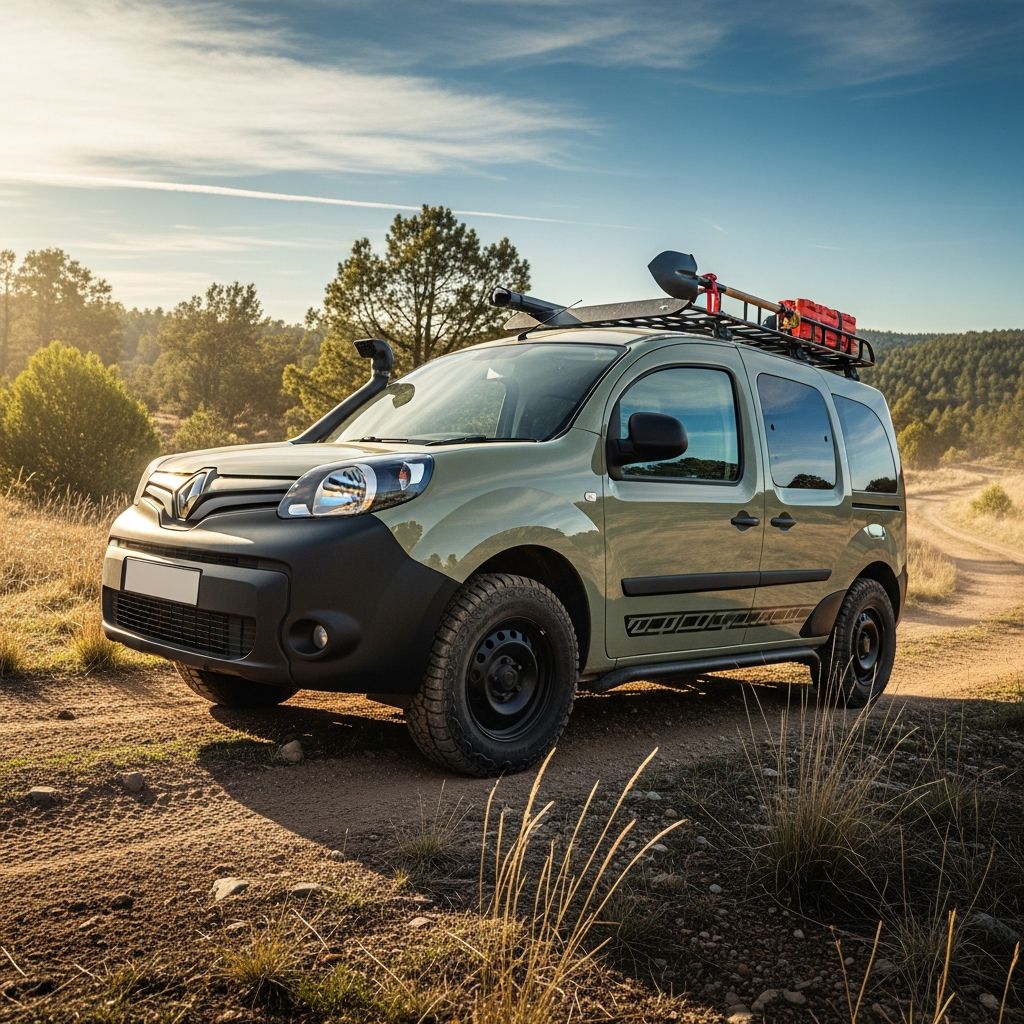
The Kangoo Trakka’s appearance immediately communicates its intended purpose. Unlike vehicles designed to merely suggest off-road capability, the Trakka implements substantive modifications that serve practical purposes. The raised suspension system increases ground clearance to 200mm, providing genuine articulation advantages when traversing uneven terrain. This elevation isn’t merely cosmetic but fundamentally alters the vehicle’s capability profile.
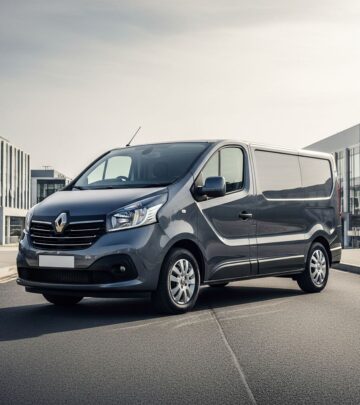
Protective elements define the visual character of the Trakka variant. Extended wheelarch cladding guards the tire sidewalls during rough driving, while reinforced bumpers absorb impacts that would compromise standard Kangoo bodywork. The tactical styling cues—including black protective mouldings, roof rails, and fog lamps—acknowledge that this vehicle will encounter challenges beyond typical urban commuting.
The dimensional specifications reflect the Trakka’s purpose-built nature:
- Overall length: 4,046mm
- Width including mirrors: 2,031mm
- Height: 1,890mm (notably taller than standard Kangoo variants)
- Wheelbase: 2,624mm
- Minimum kerb weight: 1,300kg
These proportions deliver the distinctive silhouette that distinguishes the Trakka from its urban-focused siblings. The elevated roofline accommodates the generous interior space while maintaining structural integrity required for off-road driving dynamics.
Interior Space and Practical Arrangements
The Kangoo platform has earned considerable recognition for its exceptional interior accommodation, a reputation that the Trakka variant fully inherits. The cabin offers skyscraper-level headroom—sufficient for occupants to comfortably stand upright regardless of their stature. This spaciousness extends throughout the seating area and cargo zone, creating an environment that accommodates activities from daily family transport to weekend adventure preparation.
Storage solutions proliferate throughout the cabin, reflecting the Kangoo’s van heritage. High-level compartments positioned near the roofline enable secure storage of smaller items, while low-level cubbies and pockets distribute throughout the cabin walls. A cleverly positioned full-sized bottle recess at the rear demonstrates attention to practical detail. The sliding rear doors facilitate access in confined parking spaces, while the top-hinged tailgate opens high enough to provide shelter during loading or inclement weather.
Cargo flexibility stands as a defining characteristic. With the rear seats folded, the Trakka accommodates tall objects that would frustrate most compact vehicles. The interior surfaces can be cleaned with a simple hose-down procedure, acknowledging that genuine adventure vehicles must tolerate muddy conditions. Luggage capacity measurements indicate 550 liters with seats upright, expanding substantially when rear seating is removed.
The five-door configuration includes a rear hatch in addition to the sliding side doors, providing multiple access options for cargo loading and passenger entry. This flexibility proves invaluable in real-world usage scenarios where traditional door swings might conflict with surrounding obstacles.
Powertrain and Performance Capabilities
The Kangoo Trakka’s engine options have evolved throughout its production history. Earlier variants featured a 1.6-liter 16-valve petrol engine delivering adequate performance for the vehicle’s weight and intended usage patterns. More recent iterations incorporate diesel powerplants, including the 1.9 dCi turbodiesel unit derived from applications in Renault’s Megane and Scenic model lines. Contemporary examples feature the 1.5L Blue dCi diesel, renowned for combining strong low-end torque with exceptional fuel efficiency.
Performance metrics reflect the vehicle’s practical emphasis rather than sporting pretension. Acceleration from stationary to 62 mph requires approximately 13.1 seconds in petrol configurations, hardly brisk but adequate for highway merging and general driving demands. Top speed capability reaches 95 mph, sufficient for motorway cruising yet illustrative of the Trakka’s fundamental orientation toward utility rather than speed.
Fuel economy performance carries particular significance for budget-conscious buyers. Petrol variants achieved approximately 32.9 mpg in standard testing cycles, with diesel alternatives offering superior efficiency through lower-end torque characteristics. Real-world consumption in mixed urban and long-distance driving typically ranged from 36 to 45 mpg, representing respectable efficiency for a vehicle of this size and capability level.
The fuel tank capacity of 60 liters provides acceptable range for extended journeys away from conventional fuel infrastructure. This capacity becomes relevant when venturing into remote areas where fuel availability becomes uncertain.
Four-Wheel Drive System: Genuine Off-Road Capability
The four-wheel drive system distinguishes the Trakka from its conventional Kangoo counterparts, introducing genuine off-road capability to the platform. Rather than adopting a part-time system requiring manual engagement, Renault implemented a permanent four-wheel drive configuration borrowed from the Scenic RX4 model. This approach delivers continuous torque distribution to all wheels, automatically optimizing grip as driving conditions demand.
The four-wheel drive system employs a Nissan hydraulic coupling to manage front-to-rear torque distribution, reflecting Renault’s pragmatic approach to sourcing proven technology rather than developing proprietary systems. This component automatically recognizes when front wheel slippage occurs and immediately redirects power rearward, preventing the vehicle from becoming immobilized in challenging conditions.
Off-road performance characteristics prove sufficient for most non-professional usage scenarios. The Trakka generates adequate grip to tackle significant inclines and traverse deep mud without becoming mired. The system prevents wheel spin that would otherwise bog down the vehicle in conditions where traction becomes marginal. However, users should recognize that demanding obstacles—steep rocky terrain, deep water crossings, and extreme angles—exceed the Trakka’s intentional design envelope.
Ground clearance of 200mm accommodates moderate off-road situations including occasional beach driving, light trail work, and weather-challenged conditions. This elevation represents a meaningful increase from standard passenger vehicles yet remains below serious off-road oriented platforms.
On-Road Handling and Driving Dynamics
Despite its utilitarian foundations, the Kangoo Trakka demonstrates surprising composure during on-road driving. The light power steering maintained its responsive characteristics despite the addition of four-wheel drive hardware, preserving the maneuverability advantages inherent to the Kangoo platform. The turning circle of 11 meters kerb-to-kerb enables maneuvering in confined spaces typical of urban parking situations.
Body roll becomes apparent during higher-speed cornering—an inevitable consequence of the elevated center of gravity and suspension geometry designed for off-road articulation rather than roadholding precision. However, this characteristic rarely translates into genuine handling problems during normal driving conditions. The Trakka proves unexpectedly capable when navigated enthusiastically through bending sections, suggesting competent chassis tuning beneath its pragmatic exterior.
Ride quality balances the demands of both road and rough terrain performance. The suspension system accommodates rough track driving without excessive harshness during on-road use, though the elevated ride height inevitably introduces some vertical movement during aggressive cornering. Wind noise from the electrically retractable fabric sunroof available on some configurations proves noticeable during motorway driving, reflecting the trade-offs inherent to adventure-oriented design priorities.
Off-Road Performance and Limitations
The Trakka’s off-road capabilities, while genuine, exist within defined parameters reflecting its commercial van origins. Noise and vibration accumulation rises dramatically during rough terrain driving, with everything around the occupants seemingly vibrating to separation. Power delivery feels strained on genuinely steep climbs, though sufficient for most non-extreme situations. The experience serves as a reminder that the Trakka targets practical adventure capability rather than extreme sport utility.
The vehicle proves most capable during modest off-road situations: fording shallow streams, navigating beach access routes, and climbing moderate inclines. Professional off-road driving courses exist beyond the Trakka’s intended performance envelope. Weekend excursions involving snowy mountain passes and unimproved trail following remain well within its realistic capability range.
Safety and Modern Features
Contemporary Trakka variants incorporate modern safety technologies reflecting current industry standards. Autonomous emergency braking systems detect potential collisions and implement corrective measures when driver response proves insufficient. Blind spot monitoring alerts drivers to vehicles occupying dangerous positions beyond standard mirror visibility. Trailer sway assist maintains directional stability when towing loads in challenging crosswind conditions.
These systems represent meaningful safety enhancements compared to earlier Trakka production, though potential buyers considering used examples should verify specific equipment availability as features varied across production years and market-specific variants.
Load Carrying and Towing Capacity
Practical load carrying capacity reaches approximately 550kg maximum, accommodating typical cargo without exceeding the vehicle’s structural and suspension limits. The Trakka accommodates towing operations with a braked maximum towing weight of 1,200kg and unbraked capacity of 685kg. More recent variants achieve approximately 1,500kg towing capacity, enabling meaningful work capability for property owners requiring occasional heavy equipment transport.
The modular roof rack system available on current variants enables secure attachment of rooftop tents and expedition equipment. This feature proves particularly valuable for consumers planning extended off-road camping or adventure travel incorporating sleeping accommodation.
Target Market and Practical Suitability
The Kangoo Trakka addresses a specific consumer segment often overlooked by mainstream vehicle manufacturers. Budget-conscious buyers requiring genuine utility and occasional off-road capability find the Trakka’s value proposition compelling. Original UK pricing around £11,000 represented exceptional accessibility for legitimate four-wheel drive capability—prices substantially below competing offerings from specialized manufacturers.
The vehicle appeals particularly to rural property owners requiring reliable winter capability, outdoor enthusiasts planning regular weekend expeditions, and families seeking flexible transportation combining practicality with adventure readiness. Professional users including surveyors, forestry workers, and utility contractors appreciate the generous cargo space combined with reliable four-wheel drive performance.
Urban application suitability remains more limited. The elevated fuel consumption relative to conventional cars, considerable wind noise during motorway driving, and utilitarian cabin presentation appeal primarily to buyers prioritizing functionality over stylistic posturing. Those seeking vehicles primarily reflecting personal image rather than serving genuine transportation needs would find more appealing alternatives.
Value Assessment and Market Positioning
The Trakka occupies a distinctive market position that contemporary manufacturers have largely abandoned in favor of crossover designs promising adventure capability without functional substance. No modern competitor combines genuine four-wheel drive capability, van-platform practicality, and accessible pricing in similar fashion. Current small four-wheel drive offerings including the Suzuki Ignis deliver stylish design but sacrifice the Trakka’s generous interior flexibility and load-carrying potential.
For budget buyers prioritizing genuine utility above fashion-forward styling, the Kangoo Trakka offers compelling value relative to equally priced alternatives. The combination of space, capability, reliability, and economy creates a vehicle that makes authentic sense for practical-minded consumers, regardless of whether that practicality appeals to broader market demographics.
Frequently Asked Questions
What distinguishes the Kangoo Trakka from the standard Kangoo passenger car?
The Trakka variant incorporates genuine four-wheel drive capability, increased ground clearance, protective exterior cladding, and raised suspension geometry. These modifications enable off-road performance while maintaining the Kangoo’s exceptional interior practicality and cargo flexibility.
Can the Kangoo Trakka handle serious off-roading?
The Trakka manages moderate off-road situations including beach driving, unimproved track navigation, and winter weather challenges. However, extreme terrain, rocky obstacles, and steep mountain terrain exceed its practical design envelope.
How does fuel economy compare with competing vehicles?
Diesel variants achieve 36-45 mpg in real-world mixed driving conditions, while petrol versions manage approximately 32.9 mpg. These figures compare favorably with similar-sized vehicles despite the Trakka’s elevated center of gravity and permanent four-wheel drive system.
What makes the Kangoo platform uniquely practical?
The commercial van heritage delivers generous interior headroom, multiple access points via sliding doors and tall tailgate, numerous storage compartments, and interiors designed for easy cleaning. These characteristics prove invaluable for families requiring flexible cargo arrangement and genuine usability.
References
- Renault Kangoo Trakka 4×4 — Auto Express. https://www.autoexpress.co.uk/renault/kangoo/15037/renault-kangoo-trakka-4×4
- Guilty pleasure: Renault Kangoo Trekka 4×4 — Petrolblog. https://petrolblog.com/articles/guilty-pleasure-renault-kangoo-trekka-4×4
- Renault Kangoo 1.6 16V Trekka 4×4 5dr Specifications — Top Gear. https://www.topgear.com/car-reviews/renault/16-16v-trekka-4×4-5dr/spec-0
- Renault Kangoo Trekka 1.6 16v 4×4 Review — Car Keys. https://www.carkeys.co.uk/car-reviews/renault-kangoo-trekka-1-6-16v-4×4
- The 2025 Renault Kangoo Trakka 4×4 REVEALED — YouTube. https://www.youtube.com/watch?v=cCkIFnUOHXc
- Renault Kangoo Trekka Discussion — Honest John Forum. https://www.honestjohn.co.uk/forum/post/index.htm?t=35474
Similar Articles




Read full bio of medha deb