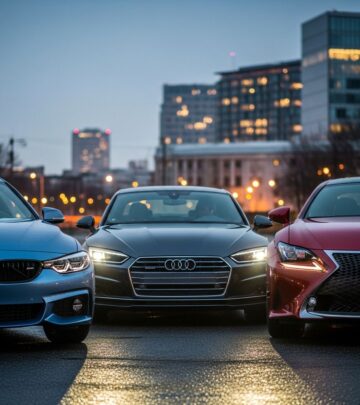
Porsche Cayenne Turbo S E-Hybrid Coupe Performance
Exploring the intersection of hybrid efficiency and supercar-level speed
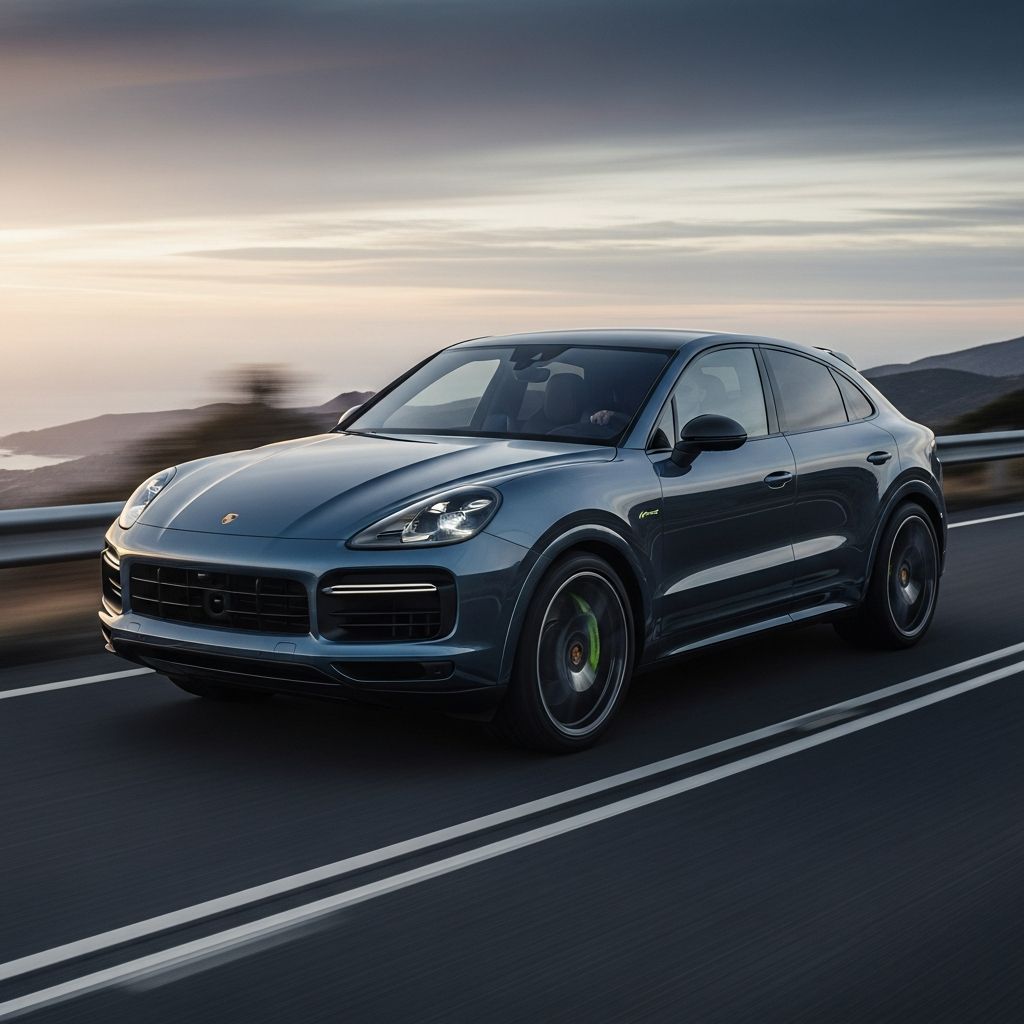
The Pinnacle of Performance: Understanding the Porsche Cayenne Turbo S E-Hybrid Coupe
The automotive landscape has undergone a profound transformation in recent years, with manufacturers seeking to balance raw performance with environmental responsibility. Few vehicles embody this philosophy more effectively than Porsche’s flagship plug-in hybrid offering. This exploration delves into what makes this premium SUV an extraordinary engineering achievement, examining its capabilities, limitations, and positioning within the competitive luxury SUV segment.
The Dual-Power Architecture: How the System Functions
At the heart of this vehicle lies a sophisticated dual-power system that represents years of Porsche’s engineering expertise. The arrangement combines two distinct power sources working in concert to deliver remarkable performance figures while maintaining the ability to operate emission-free during everyday driving scenarios.
The electric component features an integrated motor positioned within the eight-speed automatic transmission, generating 134 horsepower and 400 Newton-meters of torque. This electric motor functions as the primary power source when the vehicle operates in E-Power mode, the default setting that activates upon startup. In this configuration, drivers experience whisper-quiet operation with zero direct emissions, making it suitable for early morning commutes or navigating through urban zones.
The combustion element comprises a twin-turbocharged 4.0-liter V8 engine producing 541 horsepower and 567 lb-ft of torque in standard operation. When activated through the Sport or Sport Plus drive mode selectors, this twin-turbocharged powerplant produces a distinctive mechanical symphony that automotive enthusiasts recognize instantly. The combined system output reaches 671 horsepower and 900 Newton-meters of torque, establishing this variant as the most potent Cayenne iteration available in the market.
Real-World Electric Range and Practical Implications
Understanding the genuine electric-only capability requires examining both manufacturer specifications and field observations. Porsche officially certifies a WLTP-standard electric range of 24 miles on a full battery charge. However, real-world conditions often produce different results depending on environmental factors and driving patterns.
Testing conducted under cold weather circumstances revealed a more conservative range of approximately 18 miles on a complete charge. This variance highlights the importance of considering climate conditions when evaluating hybrid vehicles, as cold temperatures reduce battery efficiency and increase energy consumption. The 17.9-kilowatt-hour battery capacity supports this range, providing a practical capability for most daily commutes in urban and suburban environments.
The E-Charge mode offers an alternative operational strategy for drivers planning extended journeys. This setting allows the combustion engine to power the vehicle while simultaneously charging the battery pack, ensuring that the battery reaches optimal capacity before arriving at a destination. This feature proves particularly valuable for highway driving or situations where charging infrastructure may not be readily available.
Acceleration and Velocity: Performance Metrics Explained
The numerical specifications associated with this vehicle challenge conventional expectations regarding large utility vehicles. The acceleration from zero to 62 miles per hour occurs in 3.8 seconds according to official Porsche data, positioning this SUV within supercar territory for straight-line acceleration. The maximum velocity reaches 183 miles per hour, further demonstrating the engineering prowess invested in this platform.
Independent testing facilities have validated these performance claims through rigorous measurement protocols. Motor Trend’s evaluation confirmed a zero to 60 miles per hour time of 3.4 seconds in standardized testing conditions, with the quarter-mile time registered at 11.8 seconds at 118.4 miles per hour. These results place the Cayenne Turbo S E-Hybrid within the performance spectrum of dedicated performance vehicles, rather than traditional luxury SUVs.
The acceleration advantage stems from the coordinated deployment of both power sources. The electric motor delivers instantaneous torque availability, providing initial acceleration push before the turbocharged V8 engine reaches optimal boost pressure. This sequential power delivery creates a seamless acceleration sensation that betrays neither turbo lag nor transmission hesitation.
Handling Dynamics and Suspension Engineering
Despite weighing approximately 5,630 pounds, this vehicle demonstrates handling characteristics more reminiscent of sport sedans than traditional large SUVs. This achievement results from sophisticated suspension technology and active chassis management systems that fundamentally alter how the vehicle interacts with road surfaces.
The standard air suspension system adjusts ride height automatically based on vehicle speed and driving conditions. At highway velocities, the system lowers the vehicle to reduce aerodynamic drag and improve stability. During aggressive cornering, the suspension geometry optimizes to maintain consistent contact patches across all four tires.
The Porsche Dynamic Chassis Control system functions as an active anti-roll mechanism that electronically counteracts the body’s natural tendency to lean during cornering maneuvers. This technology applies corrective forces to individual wheels, maintaining near-horizontal orientation even during aggressive turns. The result delivers a sharpness and responsiveness that contradicts the vehicle’s considerable mass and size.
The steering response remains appropriately weighted and communicative, providing drivers with adequate feedback regarding road surface conditions and tire grip levels. Brake response meets performance expectations, with stopping distances from 60 miles per hour requiring approximately 109 feet, a respectable figure considering the vehicle’s weight and performance orientation.
Interior Design and Cargo Functionality
The cabin environment reflects Porsche’s premium positioning, with meticulous attention paid to material selection, surface finish, and spatial arrangement. The fastback roofline characteristic of the coupe variant creates a visually distinctive profile while introducing a subtle compromise in vertical headroom for rear-seat passengers. Despite the sloping design, genuine headroom remains available for typical occupants, and legroom extends generously through the rear seating area.
The powered tailgate provides convenient access to the cargo area, which measures 500 liters in capacity. This represents a reduction of 98 liters compared to conventional Cayenne variants, a consequence of the hybrid battery pack installation beneath the rear floor. While the reduction proves measurable, the remaining space accommodates typical luggage requirements for weekend excursions and family travel scenarios.
The technological integration within the cabin includes contemporary driver assistance systems, infotainment functionality, and climate control capabilities expected within premium vehicle segments. The eight-speed transmission operates seamlessly during electric-only driving, though subtle transmission shift engagement becomes perceptible as the system cycles through individual gears during electric operation.
Operational Characteristics and Driving Modes
The vehicle’s operational versatility emerges through multiple driving mode selections, each recalibrating system parameters to achieve specific performance or efficiency objectives. The E-Power mode prioritizes electric operation while preserving battery capacity for future use, ideal for predictable urban driving patterns. The Hybrid mode automatically blends both power sources based on driving demands and battery state-of-charge, optimizing overall efficiency and range.
Sport mode transitions the vehicle toward performance-oriented calibration, adjusting throttle response sensitivity, transmission shift timing, and suspension stiffness characteristics. Sport Plus mode represents the maximum performance setting, deploying both power sources with minimal constraint to maximize acceleration and dynamic responsiveness. In this setting, the vehicle produces that distinctive twin-turbocharged V8 growl that defines the performance driving experience.
The transmission’s behavior during electric operation requires acknowledgment, as the eight-speed gear system engages sequential shifting even during silent electric cruising. This mechanical engagement produces a subtle jolt as each ratio transitions, a characteristic distinguishing plug-in hybrid systems that utilize traditional transmissions rather than single-speed electric drivetrains.
Fuel Efficiency and Environmental Consideration
The official combined economy rating reaches 74.3 miles per gallon equivalent, translating to carbon dioxide emissions of 86 grams per kilometer under WLTP test procedures. These figures position the vehicle as the most efficient Cayenne variant available, though absolute fuel consumption during actual driving varies based on driving patterns and charge management practices.
For drivers prioritizing environmental impact reduction, the ability to complete most daily driving distances on electric power alone presents meaningful benefits. Commuting patterns involving regular charge opportunities at home or workplace enable substantial fossil fuel displacement throughout the year. The plug-in hybrid architecture delivers emissions reduction advantages for environmentally conscious consumers without requiring the compromises associated with fully electric vehicle ownership, such as charging infrastructure dependency and extended refueling duration.
Comparative Positioning Within the Porsche Cayenne Lineup
The Turbo S E-Hybrid variant occupies a unique position within the broader Cayenne family. The conventional turbocharged models offer sharper throttle response and marginally quicker acceleration figures, with the pure gasoline Turbo Coupe completing zero-to-60 acceleration in 3.2 seconds. However, the hybrid variant compensates with superior efficiency credentials and comparable overall driving experience quality.
The specialized Turbo GT variant represents a more focused performance execution, achieving even more aggressive acceleration times but at the expense of practical daily usability. The Turbo S E-Hybrid preserves greater versatility, combining genuine performance capability with the flexibility of zero-emission urban driving and superior fuel economy characteristics.
Market Positioning and Target Demographics
The substantial pricing associated with this vehicle, exceeding £125,000, positions it within an exclusive segment of premium SUV buyers. The combination of plug-in hybrid technology with high-performance specifications creates a somewhat paradoxical proposition. Buyers prioritizing environmental responsibility and operating cost reduction typically gravitate toward more affordable hybrid options or fully electric vehicles. Conversely, consumers pursuing maximum performance and acceleration capability often select conventional turbocharged variants or performance-oriented competitors.
The vehicle succeeds most effectively for buyers combining multiple acquisition priorities: those seeking authentic performance capability while maintaining environmental flexibility, individuals appreciating engineering sophistication for its own merit, and luxury segment consumers desiring a vehicle that differentiates itself through technological advancement rather than conventional horsepower escalation.
Technical Specifications Summary
| Specification | Value |
|---|---|
| Combined Power Output | 671 horsepower |
| Combined Torque | 900 Newton-meters |
| Zero to 62 mph Acceleration | 3.8 seconds |
| Maximum Velocity | 183 miles per hour |
| Electric-Only Range | 24 miles (WLTP certified) |
| Battery Capacity | 17.9 kilowatt-hours |
| Cargo Capacity | 500 liters |
| Curb Weight | 5,630 pounds |
| Combined Efficiency | 74.3 miles per gallon equivalent |
| CO2 Emissions | 86 grams per kilometer |
Practical Considerations and Ownership Implications
Ownership of this vehicle requires understanding maintenance requirements specific to plug-in hybrid systems. Battery health monitoring, electric motor servicing, and dual-system diagnostics necessitate specialized facility expertise and component availability. Long-term battery degradation represents a consideration for extended ownership horizons, though modern lithium-ion battery technology demonstrates respectable longevity characteristics when properly maintained.
The boot space reduction compared to conventional Cayenne variants warrants consideration for buyers requiring maximum cargo flexibility. The 98-liter capacity difference, while quantifiable, may prove insignificant for typical ownership patterns but deserves evaluation based on individual usage requirements.
Overall Assessment
The Porsche Cayenne Turbo S E-Hybrid Coupe represents a compelling engineering achievement that successfully integrates plug-in hybrid technology within a genuinely high-performance large SUV platform. The vehicle delivers supercar-equivalent acceleration, capable handling dynamics, and premium interior environment alongside meaningful electric driving range and superior fuel efficiency compared to purely combustion-powered alternatives.
However, the vehicle’s positioning between multiple automotive categories creates a somewhat ambiguous market proposition. It represents neither the most efficient choice for environmentally focused buyers nor the quickest option for performance enthusiasts. Rather, it succeeds most effectively for sophisticated buyers seeking technological sophistication, engineering excellence, and the flexibility to pursue multiple usage objectives within a single vehicle. For those buyers, the substantial investment delivers tangible value through authentic performance, practical efficiency, and the distinctive character that only Porsche engineering can provide.
References
- 2021 Porsche Cayenne Turbo S E-Hybrid First Test: Still a Firestarter — Motor Trend. 2021. https://www.motortrend.com/reviews/2021-porsche-cayenne-turbo-s-e-hybrid-first-test-review
- New Porsche Cayenne Turbo S E-Hybrid Coupe 2021 review — Auto Express. 2021. https://www.autoexpress.co.uk/large-suvs/353928/new-porsche-cayenne-turbo-s-e-hybrid-coupe-2021-review
- 2021 Porsche Cayenne Coupe Review — Motor Trend. 2021. https://www.motortrend.com/cars/porsche/cayenne-coupe/2021
- Tested: 2021 Porsche Cayenne E-Hybrid Coupe Nails the Three Vs — Car and Driver. 2021. https://www.caranddriver.com/reviews/a38182096/2021-porsche-cayenne-e-hybrid-coupe-by-the-numbers/
- Porsche Cayenne Turbo S E-hybrid: la puissance verte — Caradisiac. 2021. https://www.caradisiac.com/porsche-cayenne-turbo-s-e-hybrid-la-puissance-verte-salon-caradisiac-electrique-hybride-2021-188787.htm
Similar Articles


Read full bio of Sneha Tete