Peugeot Quark: Revolutionary Hydrogen Concept Vehicle
Explore Peugeot's groundbreaking hydrogen-powered concept car that redefined compact mobility
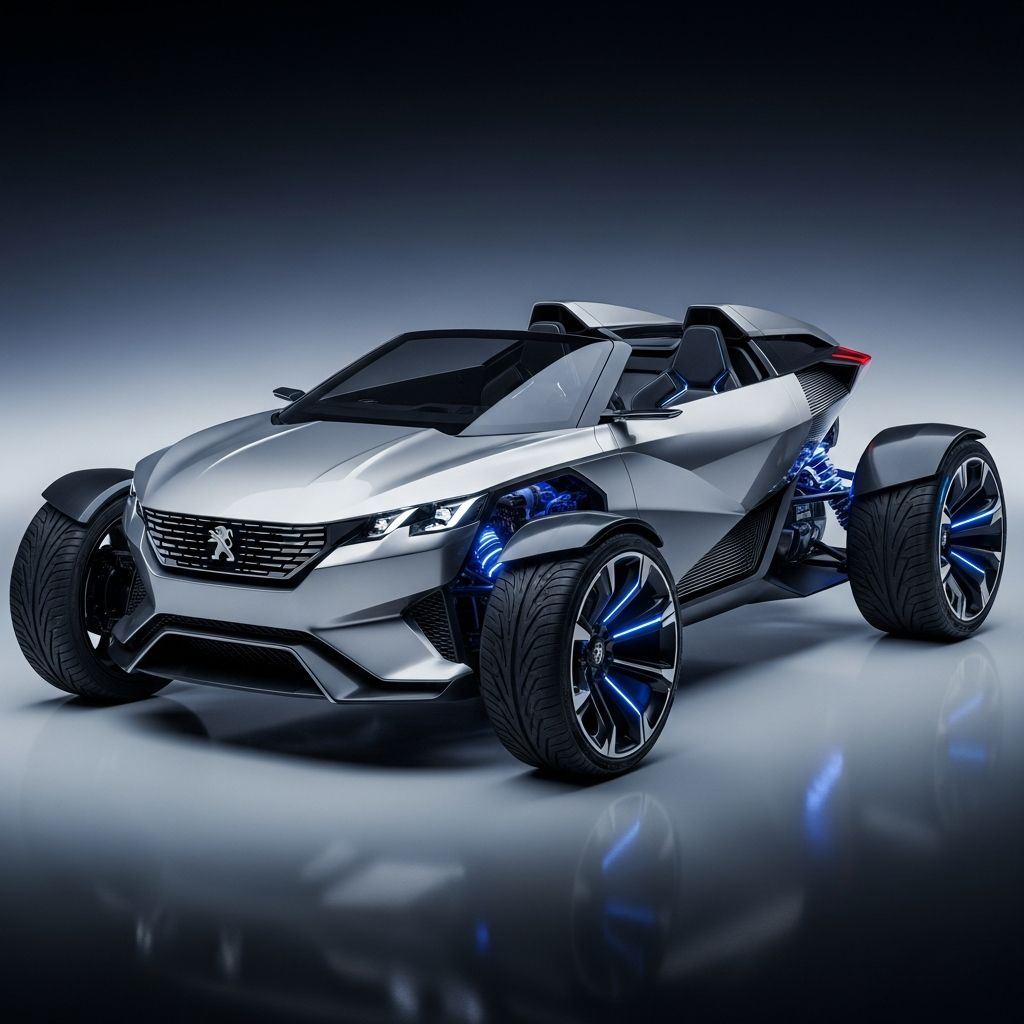
The automotive industry has long pursued alternative energy solutions to address environmental concerns and reduce dependence on fossil fuels. Among the most notable experimental vehicles is the 2004 Peugeot Quark, a concept car that represented a significant leap forward in hydrogen fuel cell technology and compact vehicle design. This two-seater, four-wheel-drive vehicle embodied Peugeot’s vision for clean, efficient urban mobility while incorporating cutting-edge engineering principles that challenged conventional automotive design.
Understanding the Quark’s Purpose and Vision
The Quark emerged during a period when Peugeot was actively researching hydrogen fuel cell applications for consumer vehicles. Following earlier experimental projects like the Fuel Cell Taxi and the H2O concept, the Quark represented the manufacturer’s commitment to miniaturizing and simplifying fuel cell technology without compromising practical performance. The vehicle was engineered to demonstrate that hydrogen-powered solutions could be viable for real-world transportation scenarios, particularly in urban environments where emissions reduction was becoming increasingly critical.
Rather than serving as a direct precursor to production models, the Quark functioned as a mobile laboratory and design showcase. It allowed engineers and designers to explore how fuel cell systems could integrate into compact vehicles while maintaining safety, efficiency, and user-friendly operation. The concept articulated Peugeot’s belief that the future of personal transportation lay not merely in electric vehicles powered by large battery packs, but in hydrogen systems that offered quick refueling capabilities and extended range.
Distinctive Exterior Design Language
The Quark’s aesthetic design immediately communicated its experimental nature while maintaining unmistakable Peugeot identity markers. The vehicle featured minimal bodywork that exposed its structural frame and mechanical components, creating a skeleton-like appearance that was simultaneously utilitarian and futuristic. Rather than concealing its innovative systems, the design philosophy celebrated them, making the Quark appear more like a rolling testbed than a traditional automobile.
Several design elements reinforced Peugeot’s brand recognition despite the radical appearance. The front end incorporated dual LED headlamps arranged in a distinctive configuration, the iconic Peugeot Lion badge positioned prominently, and a purposeful front grille that conveyed confidence and forward-thinking design. The minimal front bodywork functioned as a windshield and weather protection for occupants while maintaining the vehicle’s lightweight profile.
At the rear, the hydrogen tank was deliberately painted in striking red to symbolize the advanced technology contained within. This color choice served both functional and communicative purposes—it immediately signaled to observers that this vehicle operated on an alternative fuel system. The overall impression was of a vehicle from an imagined future, yet grounded in engineering practicality rather than pure fantasy.
Compact Proportions and Spatial Design
The Quark’s dimensions reflected its intended purpose as an urban mobility solution. With a length of 2,380 millimeters (93.7 inches) and a height of just 1,106 millimeters (43.5 inches), the vehicle offered remarkable maneuverability in congested city environments. The wheelbase measured 1,730 millimeters (68.1 inches), while front and rear track widths of 1,150 millimeters (45.3 inches) provided stability despite the compact footprint.
Despite its minimal exterior dimensions, the Quark incorporated dedicated storage spaces for passengers, demonstrating that compact design need not sacrifice practicality. The two-seater configuration balanced weight reduction with functional accommodation, ensuring that the vehicle could serve genuine transportation purposes rather than existing purely as an art installation.
Innovative Powertrain Architecture
The Quark’s drivetrain represented a paradigm shift in how automotive engineers approached electric and fuel cell propulsion. Rather than concentrating power delivery through a central motor and traditional transmission, the vehicle employed four independent electric motors—one integrated into each wheel. This radical architecture provided several distinct advantages over conventional powertrains.
Each in-wheel motor was engineered to produce a maximum torque of 100 Nm (73.7 foot-pounds), with a continuous output of 2.5 kilowatts and a peak output of 7 kilowatts. The four motors working in concert delivered a combined maximum torque of 400 Nm (295 foot-pounds) and a continuous combined power output of 28 kilowatts (37.5 horsepower). While these figures appear modest compared to conventional vehicles, they proved entirely adequate for urban driving scenarios and represented an efficient energy utilization strategy.
The permanent four-wheel-drive configuration inherent to the four-motor design contributed to impressive traction and handling characteristics. An electronic control module managed each motor independently, supplying torque according to driver demands through controlled current modulation. This system essentially replaced the differential mechanisms found in traditional vehicles, offering superior precision in distributing power among all four wheels.
Advanced Control Systems and Safety Features
The modular motor control approach enabled implementation of advanced driving assistance systems. Regenerative braking technology captured energy during deceleration, channeling it back into the hydrogen fuel cell system and onboard batteries to extend driving range. While not implemented on the demonstration vehicle, the system architecture could accommodate features such as anti-lock braking (ABS), electronic stability control (ESP), and cornering assistance that functioned at extremely low speeds to reduce the vehicle’s turning radius by inducing controlled wheel slip.
Hydrogen Fuel Cell Technology Simplification
The most significant technological achievement of the Quark lay not in performance metrics but in the engineering innovations that made hydrogen fuel cell systems practical for compact vehicles. Peugeot’s development team focused on miniaturization and simplification, reducing the bulk and complexity that had previously made fuel cell integration problematic.
A pivotal innovation involved replacing the traditional water-cooling system with air-cooling technology. Conventional fuel cell systems required extensive plumbing and heat management apparatus that consumed valuable space within a vehicle’s chassis. The air-cooled fuel cell eliminated this necessity, freeing significant internal volume while reducing overall system weight and complexity. This breakthrough allowed engineers to develop fuel cell systems suitable for smaller vehicle categories.
The Quark utilized a 9-liter hydrogen tank pressurized to 700 bars (approximately 10,152 pounds per square inch). This relatively small fuel storage capacity, combined with efficient fuel cell and electric motor technology, enabled a practical driving range of approximately 100 kilometers (62 miles) under standard driving conditions. Operating in economy mode, the vehicle could achieve distances up to 130 kilometers (81 miles), comparable to many battery electric vehicles of the era.
User-Friendly Hydrogen Refueling System
Recognizing that infrastructure and ease of use were critical barriers to hydrogen vehicle adoption, Peugeot engineered a plug-and-drive hydrogen replacement system for the Quark. Rather than requiring specialized fueling station connections, the system allowed operators to simply disconnect an empty hydrogen bottle and replace it with a fully charged unit. This approach demonstrated that hydrogen vehicle practicality extended beyond laboratory settings to encompass real-world operational scenarios where quick, simple refueling was essential.
Chassis Engineering and Material Selection
The Quark’s structural foundation reflected advanced material science and lightweight engineering principles. The chassis was constructed from cast aluminum, selected for its optimal strength-to-weight ratio and production feasibility. Body panels were fabricated from carbon fiber composite materials, which offered exceptional durability and rigidity while minimizing mass.
The combination of aluminum chassis and carbon fiber bodywork resulted in a curb weight of just 425 kilograms (937 pounds)—remarkably light even by modern standards. This featherweight construction proved essential for maximizing efficiency from the relatively modest fuel cell and battery power sources. Every kilogram of unnecessary mass represented wasted energy that could have extended driving range or improved acceleration.
Double-Wishbone Suspension and Handling Dynamics
Each wheel connected to the chassis through double-wishbone suspension geometry, a configuration more commonly associated with performance vehicles than concept cars. This sophisticated suspension design ensured precise handling characteristics and maintained wheel geometry through dynamic maneuvers. The 17-inch diameter wheels, proportionally large relative to the vehicle’s overall size, contributed to the Quark’s commanding visual stance while providing adequate rubber contact patch for traction and braking.
The suspension’s independent electronic control through individual wheel motors eliminated the need for mechanical differentials or limited-slip mechanisms, replacing them with software-controlled torque distribution that could adjust in milliseconds to changing road conditions.
Performance Characteristics and Practical Capabilities
The Quark’s engineering specifications reflected its primary design intent as an urban mobility solution rather than a high-performance vehicle. The estimated top speed of 110 kilometers per hour (68.4 miles per hour) proved entirely suitable for city driving, where speed restrictions typically limited operation well below this threshold. The vehicle’s real advantages lay not in acceleration or maximum velocity but in efficiency, responsiveness, and the instant torque delivery characteristic of electric motors.
The four-wheel-drive architecture and independent motor control provided handling characteristics that distinguished the Quark from conventional vehicles. Without traditional suspension anti-roll bars or complex mechanical differentials, the electronic control system could manage weight transfer and traction in ways that conventional architecture could not replicate. The vehicle demonstrated that radical mechanical simplification, paradoxically achieved through sophisticated electronic control, could produce superior driving dynamics.
Addressing Environmental and Urban Mobility Challenges
The Quark’s greatest significance lay in addressing two fundamental challenges facing urban transportation. First, cities worldwide struggled with air quality degradation caused by vehicle emissions. The hydrogen fuel cell system produced only water vapor as exhaust, offering genuine zero-emission operation at the point of use—a genuine advantage over battery electric vehicles that simply displaced emissions to distant power generation facilities.
Second, the vehicle addressed range anxiety and refueling convenience through its quick hydrogen bottle exchange system. Many observers recognized that the practical limitations of early electric vehicles extended beyond battery capacity to encompass refueling infrastructure and time requirements. The Quark’s approach suggested that hydrogen might overcome these barriers through simpler refueling mechanisms than required by current battery charging infrastructure.
In urban driving conditions characterized by frequent acceleration and deceleration, regenerative braking captured substantial energy that would otherwise dissipate as heat in conventional friction brake systems. The ability to recover braking energy without mechanical complexity or performance penalties represented a substantial efficiency advantage for stop-and-go city driving.
Design Innovation and Manufacturing Considerations
From an engineering perspective, the Quark demonstrated that radical aesthetic expression need not compromise structural integrity or functional performance. The exposed mechanical systems and minimal bodywork were not aesthetic indulgences but rather honest expressions of the vehicle’s construction philosophy. By revealing rather than concealing mechanical systems, designers invited scrutiny and understanding of the engineering innovations contained within.
The manufacturing implications of the Quark’s design deserved consideration. The use of cast aluminum and carbon fiber, while exotic for the era, represented materials increasingly available from suppliers serving the aerospace and high-performance automotive sectors. The four in-wheel motor configuration, while complex from an integration perspective, eliminated the need for traditional transmission, differential, and driveshaft systems that required substantial manufacturing infrastructure.
The Quark’s Legacy and Influence on Future Development
Although the Quark remained a concept vehicle never progressing to production, its engineering innovations and design philosophies influenced subsequent hydrogen vehicle research and concept development. The vehicle demonstrated that hydrogen technology had progressed sufficiently to merit serious exploration in consumer vehicle applications, moving beyond abstract scientific principles to practical, demonstrable systems.
The four in-wheel motor architecture later appeared in various electric concept vehicles from other manufacturers, validating Peugeot’s engineering approach. The regenerative braking system and electronic motor control strategies influenced hybrid and battery electric vehicle development across the industry. Hydrogen fuel cell technology continues evolving along pathways similar to those demonstrated by the Quark, though mainstream adoption remains limited by infrastructure constraints and alternative energy solutions.
Frequently Asked Questions About the Peugeot Quark
What powered the Peugeot Quark?
The Quark featured a hydrogen fuel cell system connected to four independent electric motors, one integrated into each wheel. The fuel cell generated electricity from hydrogen gas, while onboard batteries stored supplemental energy for peak power demands and received energy from regenerative braking systems.
What was the Quark’s range on a single hydrogen tank?
With its 9-liter hydrogen tank pressurized to 700 bars, the Quark achieved approximately 100 kilometers of range under standard driving conditions and up to 130 kilometers in economy driving mode.
How fast could the Quark travel?
The vehicle had an estimated top speed of 110 kilometers per hour (68.4 miles per hour), suitable for urban environments but not highway driving.
How much did the Quark weigh?
The entire vehicle weighed only 425 kilograms (937 pounds), achieved through cast aluminum chassis construction and carbon fiber body panels.
Why was the hydrogen tank painted red?
The red paint served as a visual indicator of the vehicle’s innovative hydrogen fuel cell technology, making the cutting-edge power system immediately apparent to observers.
Did the Quark ever go into production?
No, the Quark remained a concept demonstration vehicle. While praised for its innovative design and engineering, it never advanced to production development.
References
- 2004 Peugeot Quark Concept — Story Cars. Accessed April 2026. https://www.story-cars.com/2004-peugeot-quark-concept
- 2004 Peugeot Quark Concept — Supercars.net. Accessed April 2026. https://www.supercars.net/blog/2004-peugeot-quark-concept/
- PSA Peugeot Citroen Quark ATV Review — Hydrogen Cars Now. Accessed April 2026. https://www.hydrogencarsnow.com/index.php/peugeot-citroen-quark/
Similar Articles






Read full bio of Sneha Tete