Undefined Peugeot 307 CC: Complete Hardtop Convertible Guide
Discover the appeal, performance, and practicality of Peugeot's innovative convertible
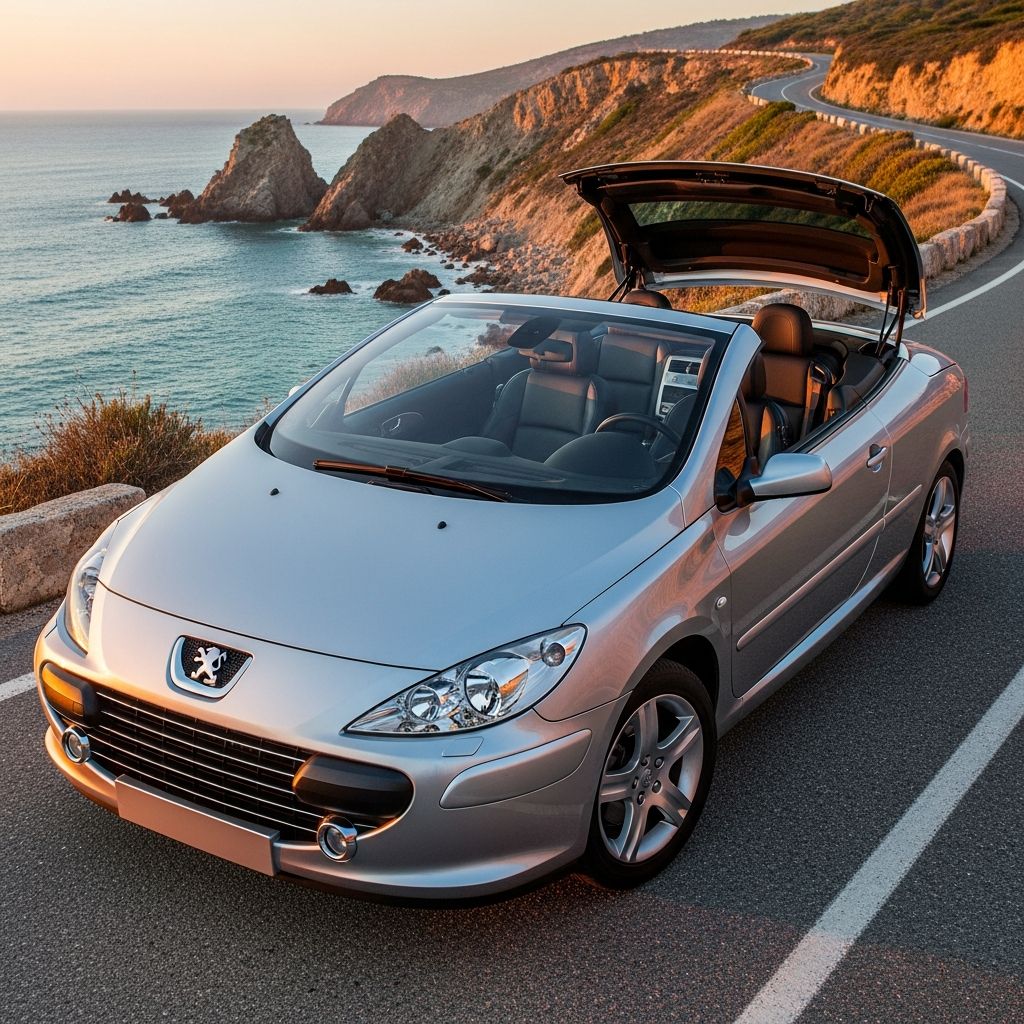
The Peugeot 307 CC represents a significant milestone in the evolution of affordable convertible motoring. Launched in the early 2000s, this vehicle brought a revolutionary approach to open-air driving with its innovative retractable metal roof technology. Unlike traditional fabric convertibles that have been commonplace for decades, the 307 CC introduced drivers to a new category of vehicle that seamlessly blended the security of a closed coupe with the freedom of convertible motoring.
Understanding the Innovation Behind the Metal Roof
The most distinctive feature of the Peugeot 307 CC is undoubtedly its folding metal roof mechanism. While Peugeot wasn’t the first manufacturer to experiment with this technology—the company had incorporated retractable metal roofs as far back as 1934 with the 401 model—the 307 CC brought this concept to the mainstream market with modern engineering sophistication.
One of the most impressive aspects of this roof design is the visual transformation it creates. With the roof raised and secured in place, the vehicle presents itself as a conventional coupe, with no obvious indication that it converts to an open-air configuration. This dual nature allows owners to enjoy the aesthetic benefits of a coupe while retaining the option to experience convertible driving whenever desired. The psychological impact of this design cannot be understated; bystanders often express surprise when witnessing the roof mechanism in operation.
The metal roof construction provides several tangible advantages over traditional fabric alternatives. It delivers enhanced security, superior insulation properties, and a more refined driving experience in adverse weather conditions. The structural integrity of a metal roof also contributes to improved safety characteristics, a consideration that became increasingly important in automotive design during the early 2000s.
Engine Performance and Power Delivery
The 307 CC arrived at market with two distinct engine configurations, both featuring 2.0-litre displacement with different power outputs. The entry-level variant produced 138 horsepower, while the more potent version generated 180 horsepower. This dual-engine strategy allowed Peugeot to appeal to buyers with varying performance expectations and budget considerations.
Despite the significant horsepower difference between these two options, acceleration figures reveal an interesting dynamic. The 138-horsepower model achieved 0-60 mph acceleration in approximately 11 seconds, while the more powerful 180-horsepower variant completed the same sprint in just 10 seconds. This relatively modest performance gap of merely 1 second reflects the additional weight penalties imposed by the convertible structure and retractable roof mechanism compared to the fixed-roof 307 sedan, which achieved the same acceleration in 9.2 seconds.
Top speed capabilities showed more dramatic differences. The 138-horsepower engine permitted a maximum velocity of around 127 mph, whereas the 180-horsepower variant achieved 140 mph. However, acceleration flexibility at lower speeds demonstrated less variance between the two options. The more powerful engine provided superior high-speed cruising capabilities and improved overtaking performance, but for urban driving and moderate highway speeds, both engines delivered adequate responsiveness.
Transmission Options and Driving Experience
Both engine variants came equipped with manual transmissions as standard equipment. However, the 138-horsepower model offered an optional four-speed automatic transmission, providing an alternative for buyers who preferred automatic gear selection, particularly those who anticipated frequent urban driving.
The automatic transmission represented a practical concession to city driving conditions, where stop-and-start traffic patterns could translate to reduced driver fatigue. This option reflected Peugeot’s understanding of diverse ownership requirements and driving circumstances that owners might encounter throughout the vehicle’s operational life.
Comprehensive Safety Architecture
The 307 CC embodied contemporary safety philosophy through its multi-layered approach to crash protection and incident prevention. The vehicle achieved a four-star rating in the Euro NCAP safety assessment, demonstrating its competence in collision protection scenarios.
The safety feature set included:
- Active safety systems: Anti-lock brakes, electronic traction control, and Electronic Stability Programme (ESP) for dynamic driving stability
- Passive safety components: Twin front airbags, side airbags, and automatic rear rollover hoops equipped with pyrotechnic deployment mechanisms that activated if the vehicle’s sensors detected an imminent rollover condition
- Structural reinforcements: Door safety brackets designed to prevent inadvertent door opening during high-speed collisions, supplemented by Electronic Brake Force Distribution (EBFD) technology
- Convenience safety features: Automatic rain-sensing windscreen wipers and intelligent light-sensing headlamps that adapted to ambient lighting conditions
- Occupant restraint systems: Seatbelt pretensioners and security alarm systems meeting Thatcham Category 1 standards
These integrated safety systems reflected Peugeot’s commitment to protecting occupants across multiple accident scenarios and driving conditions. The pyrotechnically operated rollover hoops represented particularly sophisticated engineering, addressing the inherent vulnerability of convertible vehicles to rollover incidents.
Interior Appointments and Practical Considerations
The 307 CC provided a well-appointed interior environment with several creature comfort features as standard equipment. Air conditioning with digital controls maintained climate comfort, while cruise control simplified long-distance highway driving. Aluminium interior detailing added visual sophistication to the cabin environment.
Optional enhancements included pearlescent exterior paint finishes and comprehensive leather interior trim packages that elevated the vehicle’s interior ambiance. Electric window systems provided convenient operation, while full body-coloured exterior panels contributed to a cohesive visual presentation.
Luggage accommodation presented a familiar compromise inherent to convertible design. The vehicle offered a generously proportioned boot when the roof remained in the raised position. However, stowing the retractable roof mechanism significantly reduced available cargo space, a trade-off that most convertible enthusiasts accepted willingly in exchange for the enhanced refinement and security that metal roof architecture provided.
Market Positioning and Competitive Context
The 307 CC successfully positioned itself as the most economical entry point into the hardtop convertible market segment. When it debuted, Peugeot’s prior experience with the 206 CC had established brand credibility in the convertible category. The company leveraged this expertise to bring the larger 307 CC to market several months before rival manufacturer Renault could launch their competing Megane CC model.
The 307 CC’s design execution received particular praise for its proportions and visual harmony. Compared to several competing hardtop convertibles of the era that displayed somewhat ungainly proportions, the 307 CC’s aesthetic lines appeared more carefully resolved and visually balanced.
Market response proved enthusiastic, as the CC variant represented approximately 10 percent of all Peugeot 306 sales during 2003, demonstrating strong consumer appetite for the convertible configuration.
Notable Design Elements and Distinctive Features
Beyond the headline-grabbing roof mechanism, the 307 CC incorporated several distinctive design cues. The rear light cluster design drew particular attention, with styling elements that some observers likened to humble strawberry fruits in appearance—a quirky design flourish that contributed to the vehicle’s distinctive character.
The modern multiplex wiring systems employed in the 307 CC reflected contemporary automotive technology integration, enabling sophisticated electronic functions that enhanced both convenience and safety. This advanced electrical architecture supported the numerous convenience and safety features integrated throughout the vehicle.
Real-World Ownership Considerations
While the 307 CC offered compelling features and innovative design, potential buyers should acknowledge several practical considerations. The retractable roof mechanism, despite its engineering sophistication, represented a potential maintenance vulnerability. Reports from the field indicated that roof operation sometimes encountered difficulties, with the mechanism occasionally becoming stuck in intermediate positions during raising or lowering cycles.
Rear visibility demonstrated notable constraints due to the vehicle’s design proportions, a characteristic that required driver adaptation, particularly during urban driving scenarios where visibility clarity becomes paramount.
The vehicle’s suitability varied considerably depending on intended usage patterns. Owners appreciated its capabilities as a relaxed cruising platform for leisurely driving occasions. However, the 307 CC did not position itself as a sporting or performance-oriented vehicle. Those seeking dynamic handling and spirited acceleration would encounter disappointment; the additional mass associated with convertible construction and roof mechanisms noticeably compromised performance relative to the fixed-roof sedan counterpart.
Frequently Asked Questions
What power outputs were available for the 307 CC?
The vehicle came equipped with 2.0-litre engines producing either 138 or 180 horsepower, allowing buyers to select between economy-focused or performance-oriented powerplants.
Does the metal roof affect performance and fuel consumption?
Yes, the retractable metal roof and convertible construction added significant weight compared to the fixed-roof sedan, resulting in slightly diminished acceleration and reduced top speed capabilities.
What transmission options were offered?
Manual transmissions came standard on both engine variants, with a four-speed automatic option available exclusively on the 138-horsepower model.
How safe is the 307 CC for convertible driving?
The vehicle achieved a respectable four-star Euro NCAP safety rating and incorporated sophisticated safety systems including pyrotechnically operated rollover protection hoops designed to deploy automatically during rollover incidents.
Is the roof mechanism reliable?
While generally dependable, the retractable roof occasionally experienced operational difficulties, with reports of mechanisms becoming stuck during raising or lowering sequences, potentially requiring professional intervention for resolution.
Conclusion: Assessing the 307 CC’s Legacy
The Peugeot 307 CC represented a meaningful advancement in affordable convertible motoring through its innovative metal roof technology and comprehensive feature integration. While it excelled as a comfortable, refined cruising platform with distinctive styling and practical four-seat accommodation, prospective buyers should recognize its limitations regarding dynamic performance and acknowledge potential reliability considerations surrounding the retractable roof mechanism. For those prioritizing comfort, refinement, and the psychological satisfaction of convertible ownership without sacrificing practicality or safety systems, the 307 CC delivered compelling value within the hardtop convertible segment.
References
- Peugeot 307 CC 2001 – 2007 review — CarsIreland.ie. YouTube. https://www.youtube.com/watch?v=J79rvOFsfmQ
- Peugeot 307 CC (2003 – 2009) used car review — RAC Drive. https://www.rac.co.uk/drive/car-reviews/peugeot/307/307-cc-2003-2009/
- Peugeot 307 CC (2003 – 2009) — Car and Driving Editorial Library. https://www.caranddriving.com/editorial-library-review.aspx?id=207356
- Is it a classic? Peugeot 307 CC — Petrolblog. https://petrolblog.com/articles/is-it-a-classic-peugeot-307-cc
- Peugeot 307 CC (2003 – 2008) – What are these like at 3 years old — Honest John Forum. https://www.honestjohn.co.uk/forum/post/index.htm?t=61327
Similar Articles





Read full bio of medha deb