Part-Worn Tyres: Risks vs Rewards
Discover if second-hand tyres save money or compromise safety with expert tests and buying tips.
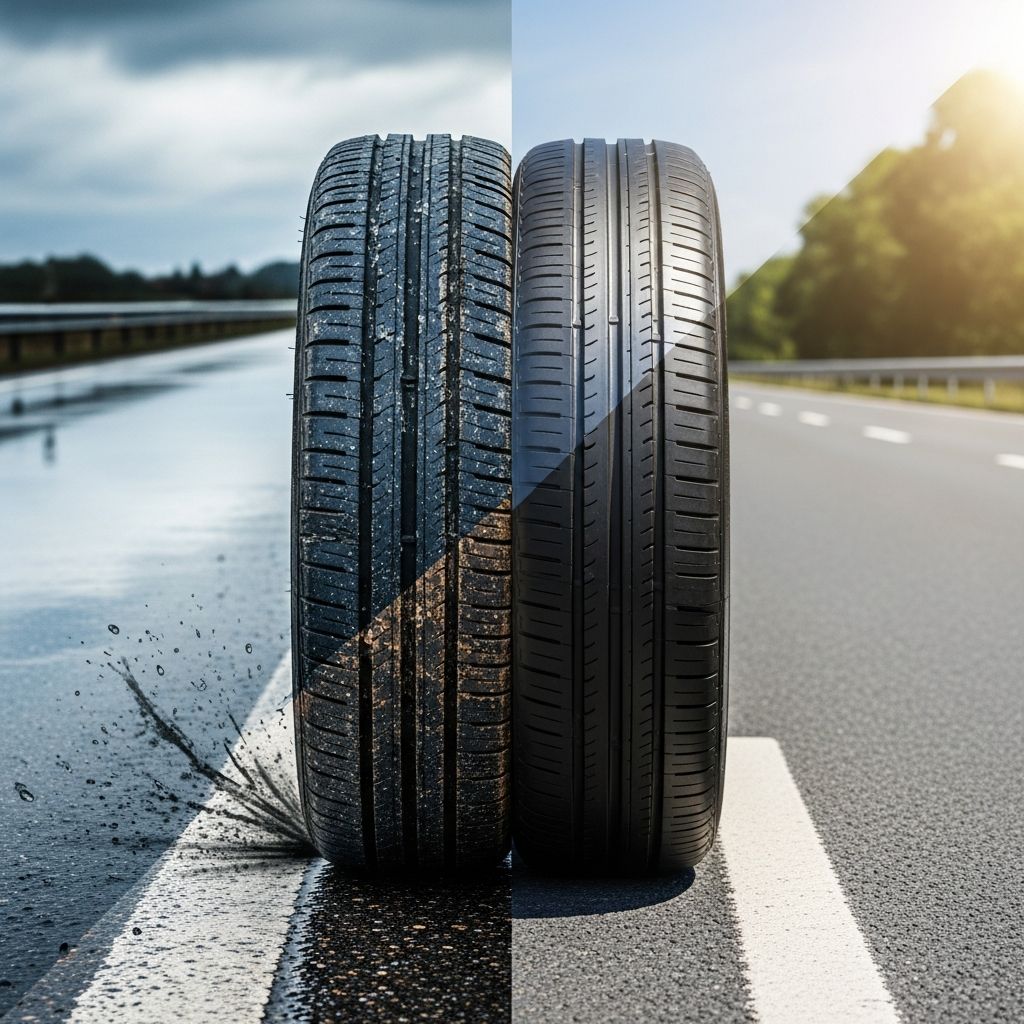
Part-worn tyres, also known as used or second-hand tyres, tempt budget-conscious drivers with their lower upfront price tag. However, real-world tests reveal significant safety compromises, particularly in wet conditions where stopping distances can extend by over 14 metres. This comprehensive guide examines performance differences, legal requirements, inspection essentials, and long-term value to help you decide wisely.
Performance Showdown: New vs Part-Worn Tyres
Independent tests at professional proving grounds highlight stark contrasts in braking and handling. In a 2024 evaluation using identical Ford Pumas, one equipped with fresh Continental SportContact 7 tyres and the other with the same model worn to the 1.6mm legal minimum tread, results were alarming on wet surfaces.
- From 70mph, new tyres stopped in 60.7 metres, while worn ones required 75.6 metres – a 14.9-metre deficit, roughly three car lengths.
- From 60mph, the gap persisted: 42.6 metres for new versus over 55.1 metres for worn.
- Handling suffered too, with worn tyres exhibiting pronounced understeer in corners due to reduced grip.
These disparities arise because new tyres start with 8-9mm tread depth, optimised for water dispersion and traction. Part-worn variants often have just 2-4mm, slashing hydroplaning resistance and stability.
Understanding Tread Depth and Its Impact
Tread depth is the critical metric for tyre efficacy. UK law mandates at least 1.6mm across the central three-quarters, but experts urge replacement at 3mm for safety.
| Tread Depth | New Tyres | Part-Worn Tyres | Safety Implication |
|---|---|---|---|
| Starting Depth | 8-9mm | 2-4mm typical | New tyres offer 2-4x more usable tread |
| Legal Minimum | N/A | 1.6mm | Worn tyres near limit from purchase |
| Recommended Replacement | 3mm | Immediate risk below 3mm | Shorter lifespan for part-worn |
| Wet Braking Advantage | Optimal | 15-30% longer stops | Higher crash risk in rain |
Beyond depth, uneven wear on shoulders signals accelerated failure, especially if prior damage or misalignment contributed.
Legal Standards for Selling Part-Worn Tyres
UK regulations under the Motor Vehicle Tyres (Safety) Regulations 1994 enforce strict criteria to mitigate risks. Sellers must:
- Conduct inflation pressure tests.
- Label tyres ‘PART-WORN’ in 4mm-high uppercase letters.
- Ensure no bulges, tears, or lumps inside or out.
- Verify at least 2mm tread around the full circumference with visible original grooves.
Despite these, illegal sales persist, with estimates of 6 million unsafe part-worn tyres on roads, per industry studies. Compliance offers minimal reassurance without full history disclosure.
Why Drivers Consider Part-Worn Options
Cost drives the choice: part-worn tyres can halve initial outlay. A 2023 survey found 39% of drivers delay replacements until MOT failure, 27% wait months on advisories, and 11% until outright failure.
Yet, this overlooks lifecycle costs. TyreSafe analysis shows part-worn at £6.33 per mm of usable tread versus £5.32 for new – a false economy given rapid wear-out.
Essential Checks Before Buying Part-Worn
If opting for used tyres, rigorous inspection is non-negotiable. Prioritise:
- Brand Quality: Stick to reputable names like Michelin or Bridgestone for proven construction.
- Pair Purchase: Match tyres on the same axle for balanced handling.
- Tread Uniformity: Gauge depth with a 3mm probe; reject uneven or shoulder wear.
- Carcass Integrity: Scan for cuts, sidewall bulges, or repair patches.
- History Probe: Ask about prior accidents, mileage, or repairs – walk away from unknowns.
- Labelling: Confirm ‘PART-WORN’ marking and regulatory compliance.
Reputable sellers provide provenance; dubious sources spell trouble.
The Hidden Dangers of Unknown History
Part-worn tyres’ opacity is their Achilles’ heel. Without records, hidden defects lurk:
- Internal damage from potholes or kerbing.
- Prior low-pressure runs causing belt separation.
- Accident involvement warping structure.
- Imports or scrapyard origins evading UK standards.
Insurance complications compound risks: some policies void claims on non-new tyres post-accident.
Cost-Per-Mile Reality Check
Premium new tyres like Bridgestone Turanza 6 guarantee 20,000 miles on petrol cars (15,000 on EVs), undercutting part-worn replacement frequency. High-tech composition – 30+ components – demands pristine condition for peak performance.
Consider: a £50 part-worn tyre with 2mm usable tread yields £25/mm. A £80 new tyre with 6mm usable (to 3mm replacement) costs £13.33/mm – superior economy and safety.
Alternatives to Part-Worn Tyres
Budget new tyres abound from £20-£50, fitting superminis to SUVs. Retailers offer budgets, mid-range, and premiums for every wallet, with warranties and fitting services.
Maintenance tips extend life:
- Rotate every 8,000km.
- Maintain 32-35psi.
- Align wheels annually.
Expert Verdict: Prioritise Safety
While part-worn tyres suit dire emergencies, new replacements deliver unmatched grip, durability, and reassurance. Tests prove the wet-road peril; economics favour fresh rubber long-term. Invest upfront for journeys without compromise.
Frequently Asked Questions
Are part-worn tyres legal in the UK?
Yes, if meeting 1994 regulations: 2mm minimum tread, labelling, no defects, and tested.
Can part-worn tyres pass an MOT?
They must hit 1.6mm tread, but low depth risks quick failure.
Do insurance companies cover accidents with part-worn tyres?
Some exclude them; verify policy terms.
How often should I replace tyres?
At 3mm tread or 5-6 years, regardless of depth.
What’s the best way to measure tread?
Use a gauge in three central grooves; replace below 3mm.
References
- Part-worn tyres: buying advice and test vs new tyres — Auto Express. 2024. https://www.autoexpress.co.uk/owning-car/86584/part-worn-tyres-buying-advice-and-test-vs-new-tyres
- Should I buy used or new tyres? What you need to know — Merityre. Accessed 2026. https://www.merityre.co.uk/news/should-i-buy-used-or-new-tyres
- Part Worn Tyres Vs New Tyres: Safety & Cost Guide — ETB Tyres. Accessed 2026. https://www.etbtyres.co.uk/whywedonotsellpartworntyres/
- Part Worn vs Brand New Tyres | FAQS — Charles Hurst Fast Fit. Accessed 2026. https://charleshurstfastfit.com/expert-insights/part-worn-vs-new-tyres
- Motor Vehicle Tyres (Safety) Regulations 1994 — UK Government (via secondary reference). 1994 (current). https://www.legislation.gov.uk/uksi/1994/1748/contents
Similar Articles








Read full bio of Sneha Tete