Optimal EV Battery Sizes: Balance Range and Weight
Discover why limiting EV batteries to around 100kWh maximizes efficiency, cuts costs, and reduces environmental impact without sacrificing practicality.
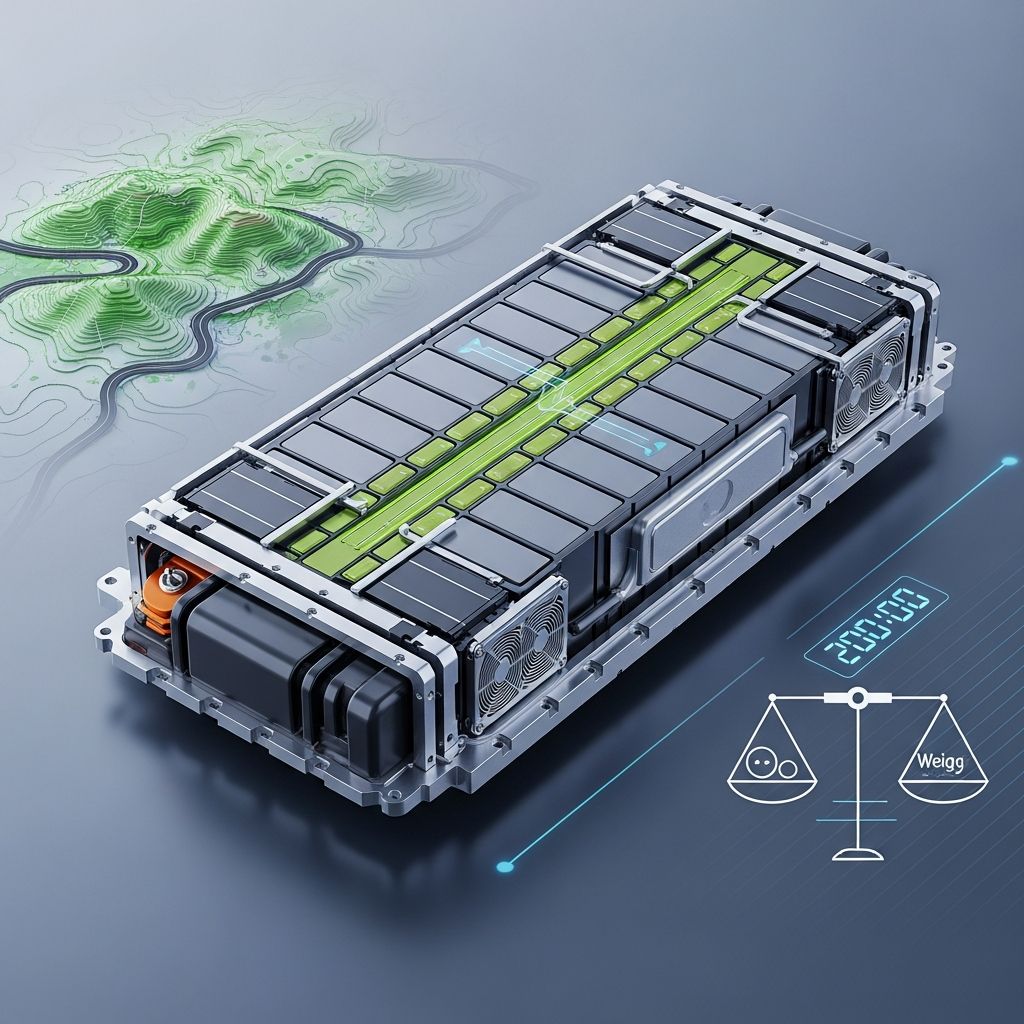
Electric vehicles represent a cornerstone of sustainable transportation, but their battery packs often dominate discussions on performance, cost, and environmental footprint. Rather than chasing ever-larger capacities for marginal range gains, prioritizing batteries around 100kWh or less offers a smarter path forward. This approach reduces vehicle weight, enhances efficiency, lowers ownership costs, and minimizes lifecycle emissions, making EVs more accessible for the average driver.
The Hidden Costs of Oversized Batteries
Large battery packs drive up manufacturing expenses, as they constitute 30-40% of an EV’s total cost. For most users, this premium buys unused capacity, since daily driving rarely exceeds 50-100 miles. Simulations show that scaling from a 28kWh to a 116kWh battery increases energy consumption by 13.4-16.9% across user types, primarily due to added mass that hampers efficiency. Urban commuters face the steepest penalty, with doubled battery size raising emissions by 20% from frequent thermal management cycles.
Weight from oversized packs not only worsens energy use but also accelerates tire wear, brake degradation, and suspension strain. A balanced 60-70kWh pack suffices for mainstream needs, aligning with global sales averages and providing 200-300 miles of EPA-rated range.
Understanding Battery Capacity: Gross vs. Usable Realities
Manufacturers quote gross kWh, but usable capacity—typically 5-10% less—determines actual range due to buffers protecting cell health. A 77kWh pack might deliver only 70-74kWh, equating to a 6% range variance between models. Efficiency metrics like Wh/mi further differentiate: efficient crossovers at 260Wh/mi outperform thirstier SUVs at 380Wh/mi, even with identical packs.
| Category | Typical Capacity (kWh) | Example Vehicles | Approx. EPA Range |
|---|---|---|---|
| Compact/City BEV | 30-55 | Nissan Leaf, MINI Electric | 100-180 mi |
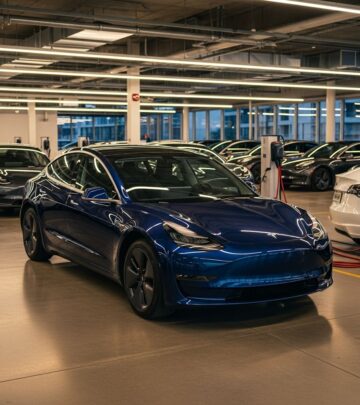
| Mainstream Sedan/Crossover | 55-80 | Hyundai Ioniq 5, Tesla Model 3 | 220-330 mi |
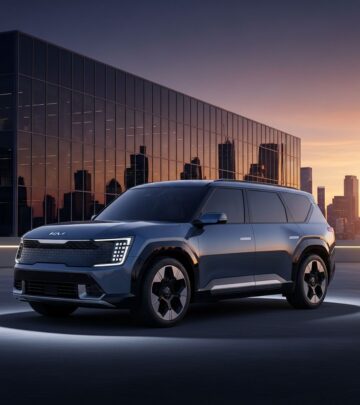
| Large SUV/Premium | 80-120 | Kia EV9, Mercedes EQS SUV | 280-350+ mi |
| Electric Pickup | 120-200+ | Rivian R1T, GMC Hummer EV | 300-400+ mi |
This table illustrates how 55-80kWh packs cover most scenarios without excess.
Real-World Driving Demands and Sizing Strategies
Base sizing on peak daily needs, not averages. If longest trips hit 120 miles, target a pack covering that plus a 15% buffer. Home charging renders giant packs obsolete for local drives. Long-distance users benefit most from larger capacities, slashing en-route stops by 260 annually versus small packs, but short-trip drivers save minimally.
- Urban commuters: 30-55kWh for 100-180 miles, prioritizing low weight.
- Rural drivers: 55-80kWh for flexibility on varied routes.
- Highway travelers: Up to 100kWh to cut charging frequency.
LFP chemistries excel here, offering durability for 20-90% cycles and fast charging tolerance, despite slightly lower density.
Boosting Range Without Ballooning Batteries
Enhance efficiency to stretch existing packs. Powertrain tweaks—like dual motors or multi-speed gearboxes—shift operations to peak efficiency zones on torque-speed maps. Tesla’s front-rear motor setup optimizes one for power, another for range. ZF’s 2-speed drives recenter operations similarly.
Advanced software elevates this further. Algorithmic controls permute strategies based on motor angle, boosting motor-inverter efficiency by 20% on real cycles without hardware adds. Removing excess load, like unused gear, also extends range simply.
Environmental and Economic Advantages of Restraint
Smaller batteries slash lifecycle emissions, especially for urban use where mass penalties amplify via HVAC demands. A 60kWh average aligns with market trends, curbing raw material demands like lithium and cobalt.
Ownership costs drop too: lower upfront prices, reduced energy bills from efficiency, and cheaper maintenance. Modeling tools like those from MathWorks optimize packs via simulations, balancing performance, cost, and validation.
Future Directions: Smarter, Lighter Packs
Emerging solid-state and next-gen chemistries promise higher density in compact forms, reinforcing the case for sub-100kWh norms. Standardization around modular 50-80kWh bases with swappable extenders could personalize without waste.
Regulations may push this: EU targets emphasize efficiency over raw range. Drivers benefit from lighter, nimbler EVs that handle like ICE counterparts.
Common Misconceptions About EV Range
- Larger always means better: No—added weight offsets gains for 80% of trips.
- Range anxiety is inevitable: Home/fast charging + efficiency solves it for modest packs.
- Big batteries future-proof: Tech advances will shrink needs further.
FAQs
What battery size suits daily commuters?
A 55-70kWh pack provides 220-300 miles, ample for 95% of drives with home charging.
Does battery weight really impact efficiency?
Yes, larger packs raise consumption 13-17%; urban drivers see highest relative hit.
Can software extend range without new batteries?
Absolutely—optimized controls improve efficiency by 20%, rivaling hardware upgrades.
Are LFP batteries ideal for smaller packs?
Yes, their cycle life and charging resilience maximize usable capacity daily.
How do I size for my needs?
Calculate peak days + 15% buffer, factor efficiency, and prioritize usable kWh.
Key Takeaways for EV Buyers
Opt for 60-100kWh packs: they deliver practicality without premiums. Pair with efficient designs and smart software for optimal results. This strategy accelerates EV adoption by making them lighter, cheaper, and greener.
References
- Electric Vehicle Battery Sizing Guide (kWh, Range & Use Cases) — Recharged. 2024. https://recharged.com/articles/electric-vehicle-battery-sizing
- The bigger the better? How battery size affects real-world energy consumption, charging, cost of ownership, and life-cycle emissions of BEVs — International Council on Clean Transportation (ICCT). 2024-04. https://theicct.org/publication/bev-battery-size-energy-consumption-cost-ownership-lca-ev-apr24/
- Increasing the range of EV with the same battery size – Part I – The efficiency — Silicon Mobility. 2023. https://www.silicon-mobility.com/increasing-the-range-of-ev-with-the-same-battery-part-i-the-efficiency/
- Battery Sizing and Design for Electric Vehicles — MathWorks. 2023. https://www.mathworks.com/content/dam/mathworks/mathworks-dot-com/company/events/post-event-email/3932801-Presentation.pdf
- Optimization of Electric Vehicle Battery Range — Ritar Power. 2024. https://www.ritarpower.com/blog/optimization-of-electric-vehicle-battery-range.html
Similar Articles


Read full bio of medha deb