Noble M400: The Lightweight Performance Machine
Discover how this twin-turbo British supercar delivers Ferrari-rivaling speed with minimalist design.
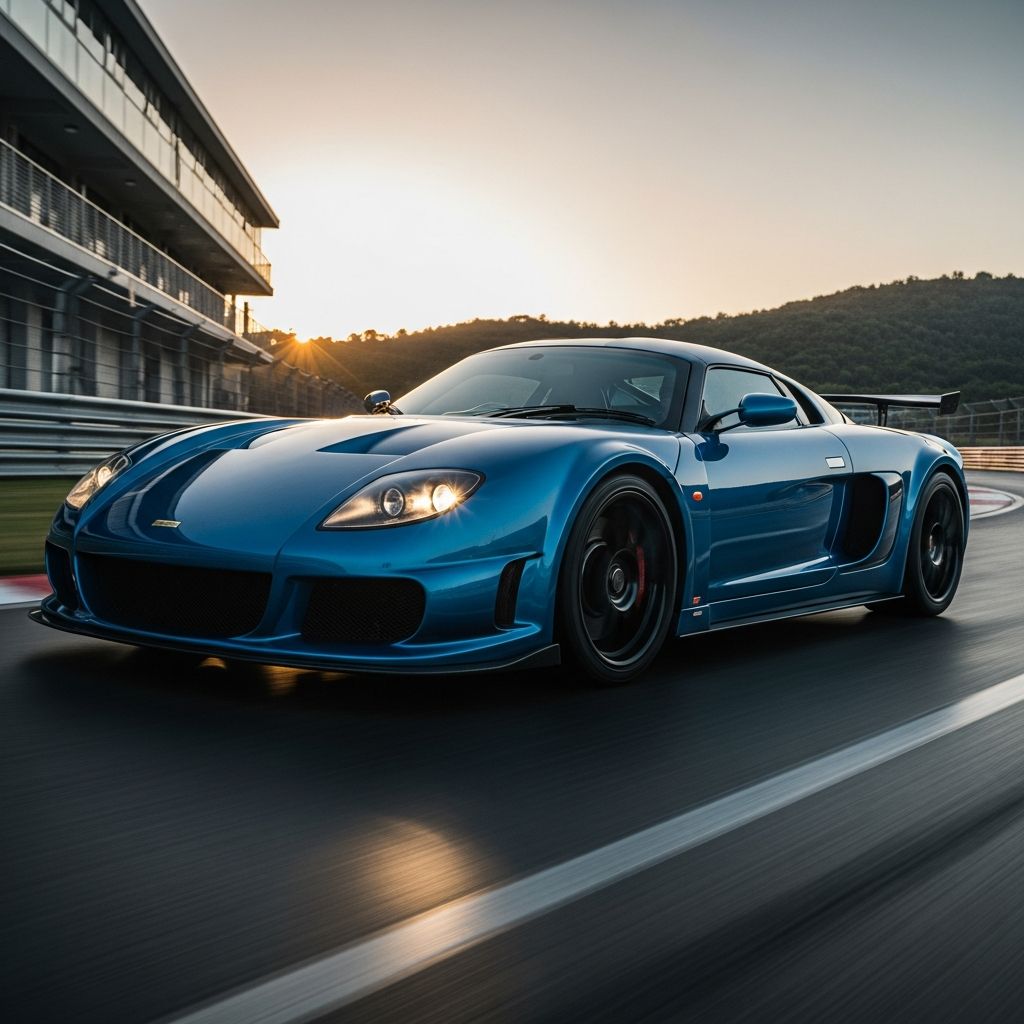
In an era dominated by established supercar manufacturers, the Noble M400 emerged as a David-against-Goliaths story in automotive performance. This British-engineered masterpiece demonstrates that raw speed and handling prowess don’t require luxury appointments, complicated electronics, or a seven-figure price tag. Instead, the M400 proves that stripping away unnecessary components and focusing on fundamental engineering excellence produces a driving experience that rivals machines costing several times as much.
Engineering Philosophy: Less Is More
The Noble M400 embodies a singular philosophy: create a machine that performs with precision and excitement by eliminating everything non-essential to that mission. This approach contrasts sharply with contemporary supercars loaded with traction control systems, multiple driving modes, and creature comforts designed to make the experience more manageable for average drivers. The M400 refuses such compromises.
The absence of advanced driver assistance systems represents a deliberate design choice rather than a cost-cutting measure. Without electronic traction control or stability management systems, the M400 demands respect and engagement from its operator. This directness creates an unfiltered connection between driver input and vehicle response—a quality increasingly rare in high-performance automobiles. The steering communicates road texture with impressive clarity, while throttle inputs translate immediately to acceleration without electronic interpretation.
Even basic safety systems like anti-lock braking were deemed unnecessary. Instead, Noble equipped the M400 with substantial mechanical braking components: 330mm rotors measuring 30mm thick at the front and 28mm at the rear, paired with four-piston calipers. The combination of mechanical robustness and the car’s featherweight construction results in stopping power that belies the minimalist approach.
Powertrain Performance and Capabilities
At the heart of the M400 lies a 2968cc twin-turbocharged V6 engine producing 450 brake horsepower at 6500 rpm and approximately 400 lb-ft of torque at 5000 rpm. This output places the machine in rarefied performance territory when combined with its 1060kg curb weight, resulting in a power-to-weight ratio of 431 horsepower per ton.
The twin-turbo configuration delivers performance that matches supercar legends from Ferrari and Lamborghini. Zero-to-60 acceleration occurs in approximately 3.3 seconds, a figure that equaled the Ferrari Enzo when the M400 was tested by major automotive publications. The quarter-mile arrives in 11.7 seconds at 120 mph, while top speed approaches 185 mph. These numbers place the M400 among the quickest accelerating vehicles ever tested, despite its humble origins as a kit-car derivative.
The turbocharger’s presence announces itself through a distinctive raspy exhaust note accompanied by turbo whistling and wastegate cracking. This mechanical soundtrack provides constant auditory feedback about boost pressure and engine load, creating an engaging driving experience beyond mere speed statistics. The turbocharged engine exhibits impressive torque characteristics throughout the rpm range, making the M400 surprisingly manageable during lower-speed driving despite its extreme performance potential.
| Performance Metric | Measurement |
|---|---|
| Engine Type | Twin-turbocharged V6 |
| Displacement | 2968cc |
| Peak Horsepower | 450 bhp @ 6500 rpm |
| Peak Torque | ~400 lb-ft @ 5000 rpm |
| Curb Weight | 1060 kg (2340 lbs) |
| 0-60 Acceleration | 3.3 seconds |
| Top Speed | ~185 mph |
| Fuel Economy | 14 mpg (observed) |
Chassis Dynamics and Handling Excellence
While horsepower figures capture headlines, the M400’s true genius manifests in its chassis behavior and suspension tuning. Beneath the carbon-fiber and aluminum bodywork lies a fundamentally stiff structure designed to resist flex and maintain precision during aggressive driving. This structural rigidity combines with carefully calibrated suspension geometry to create handling characteristics that automotive journalists compared favorably to Lotus Exige models.
The suspension demonstrates impressive grip levels, with skidpad testing revealing lateral acceleration of 1.02g—a figure that places the M400 in the same performance category as dedicated track-focused machinery. Despite this aggressive grip, the ride quality remains tolerable for street use. The suspension maintains composure over imperfections without excessive harshness, a balance that few lightweight performance cars achieve successfully.
Steering feedback represents another area where the M400 excels. The quick, communicative steering produces minimal lag between driver input and actual vehicle response. During low-speed cornering, the front end exhibits a slight tendency toward understeer when power is applied, a characteristic that builds driver confidence by providing predictable and progressive behavior rather than sudden performance transitions.
The rear suspension geometry allows for intentional and controlled oversteer, enabling skilled drivers to explore the car’s capabilities safely during recreational driving or track sessions. This predictable handling balance distinguishes the M400 from tail-happy track cars that demand constant attention to avoid embarrassing departures from the racing line.
Interior Design and Driving Experience
Stepping into an M400 reveals an interior stripped to essential components. Fixed-back carbon fiber racing seats grip occupants securely during aggressive driving while offering respectable comfort during normal driving. The dashboard features a simple bank of gauges providing all necessary information without overwhelming the driver with excessive data or complicated menu systems.
Wrap-around Sparco seating creates a focused driving environment that emphasizes the connection between pilot and machine. Despite using components from pedestrian vehicles—such as Ford Mondeo wiper and indicator stalks—the overall cabin assembly demonstrates competent construction quality. The spartan approach eliminates air conditioning in favor of weight savings, a compromise that becomes evident during summer driving sessions when the twin-turbo engine’s heat permeates the cabin.
Visibility from the driver’s seat remains adequate, with good sightlines for a machine of this size and performance capability. The driving position sits low and rearward, typical of purpose-built performance vehicles, creating an immersive driving environment that emphasizes connection with the road and vehicle behavior.
Braking and Stopping Performance
The M400’s braking system deserves particular attention as a masterclass in mechanical engineering. The combination of lightweight construction and substantial brake components produces stopping distances that rival supercars equipped with advanced brake technologies. From 70 mph, the M400 achieves a complete stop in 157 feet—a distance that reflects the efficiency of simple mechanical systems paired with minimal vehicle mass.
The absence of anti-lock braking doesn’t handicap the system in daily driving. Instead, drivers learn to modulate pedal pressure with precision, developing the muscle memory and feel that connected driving experiences demand. This mechanical simplicity extends service life while reducing complexity that could fail at inconvenient moments.
Comparative Performance Against Established Supercars
When the M400 debuted, its performance metrics challenged the notion that expensive established marques automatically delivered superior capabilities. The machine competed directly with Porsche 911 variants, Ferrari F430 models, and Lamborghini Gallardo examples in terms of acceleration and handling precision, yet arrived at a fraction of their purchase price.
The price differential—£55,995 at launch, equivalent to approximately £92,000 in contemporary currency—represented remarkable value considering the performance delivered. Buyers received a machine offering visceral engagement and pure driving satisfaction without the luxury appointments, complicated electronics, and maintenance costs associated with vehicles from established Italian and German manufacturers.
Practicality Considerations for Daily Driving
Despite its track-focused engineering and performance capabilities, the M400 demonstrates surprising practicality for occasional street use. The long-travel throttle pedal enables precise power modulation, making throttle response predictable and manageable during parking lot speeds and urban driving situations. The steering remains responsive without becoming overly sensitive at low speeds, preventing the fatigue that some unfiltered sports cars inflict during routine navigation.
Trunk space accommodates modest luggage requirements, while the cabin environment suits two occupants comfortably. Fuel economy averaged 14 mpg during real-world testing, a figure that, while not impressive, proves acceptable for a turbocharged performance machine with no efficiency-oriented engineering. The mechanical simplicity means fewer systems require specialized maintenance, reducing long-term ownership costs compared to technology-laden competitors.
Build Quality and Manufacturing
As a low-production specialty vehicle, the M400 demonstrated build quality that exceeded expectations for its category. Automotive journalists reported minimal assembly issues during testing, with fit and finish generally aligned with vehicles at considerably higher price points. The use of quality components throughout—including Sparco seating and Pirelli tires—reflected Noble’s commitment to delivering a complete driving package rather than cutting corners on component selection.
Individual examples exhibited variation in quality, a characteristic common to low-volume manufacturing where production tolerances and assembly consistency vary between units. Despite this inevitable variability, overall assessments indicated competent craftsmanship capable of supporting the machine’s performance potential and demanding driving missions.
Frequently Asked Questions
What makes the Noble M400 different from other kit cars?
The M400 transcends typical kit-car stereotypes through superior engineering fundamentals, including a purpose-built chassis, quality suspension components, and robust turbocharged engine technology. The philosophy emphasizes driving purity and mechanical precision rather than cost minimization, resulting in performance that rivals established supercar manufacturers despite the kit-car category classification.
How does the M400 compare to a Lotus Exige?
The M400 shares conceptual similarities with Lotus Exige models, particularly regarding minimalist design philosophy and focused driving dynamics. However, the M400 exceeds the Exige in outright performance metrics while offering slightly greater comfort for extended driving sessions. Automotive professionals suggested that Lotus would benefit by matching the M400’s engineering excellence in future models.
Is the M400 suitable for daily driving?
While engineered primarily for track use, the M400 demonstrates surprising practicality for occasional street use. The manageable throttle response, adequate visibility, and modest luggage space enable real-world driving scenarios. However, the lack of air conditioning and spartan interior limit extended urban commuting appeal.
What is the M400’s real-world fuel consumption?
Observed fuel economy during testing averaged 14 mpg, typical for turbocharged performance vehicles without efficiency optimization. Actual consumption varies based on driving style, with spirited driving reducing economy further while gentle driving potentially improves efficiency modestly.
How does performance compare to Ferrari and Lamborghini models?
The M400’s 0-60 acceleration of 3.3 seconds matches or exceeds contemporary Ferrari and Lamborghini performance while utilizing a simpler, more accessible technology package. The handling dynamics, while differing philosophically, enable comparable or superior real-world performance during spirited driving situations.
Legacy and Significance in Automotive History
The Noble M400 represents a watershed moment in automotive performance philosophy. The machine demonstrated that complexity, brand prestige, and luxury appointments don’t automatically translate to superior driving experiences. Instead, fundamental engineering excellence—achieved through material science, suspension tuning, and mechanical sympathy—can deliver performance that rivals vehicles costing several times as much.
This approach influenced subsequent thinking within the automotive industry, contributing to a broader appreciation for focused, driver-centric machines. The M400 proved that enthusiasts valued engagement, connection, and mechanical honesty over technological gadgetry and creature comforts designed to insulate occupants from driving responsibilities.
For anyone seeking a supercar experience combining visceral performance, engaging dynamics, and honest engineering, the Noble M400 remains an exceptional choice. The machine prioritizes driving enjoyment above all other considerations, creating an experience that transcends mere acceleration statistics to deliver something increasingly rare in contemporary automotive culture: pure, unfiltered, mechanical excitement.
References
- Twin-turbo V6, almost 320kW, rear-wheel drive and just 1000kg — Which Car. Accessed April 2026. https://www.whichcar.com.au/features/motor-archive-0105-noble-m400-feature
- Tested: 2006 Noble M400 — Car and Driver. March 2007. https://www.caranddriver.com/reviews/a15143880/the-outsiders-2007-noble-m400/
- Noble M400: review, history and specs of an icon — Evo. https://www.evo.co.uk/noble/205506/noble-m400-review-history-and-specs-of-an-icon
- First Look at the New Noble M400 — Road and Track. https://www.roadandtrack.com/new-cars/first-drives/reviews/a11601/no-bull-noble/
Similar Articles





Read full bio of medha deb