Nissan’s UK EV Revolution: Gigafactory Fuels Bold Future
Nissan accelerates UK's electric vehicle era with a massive gigafactory investment, transforming Sunderland into a global EV powerhouse.
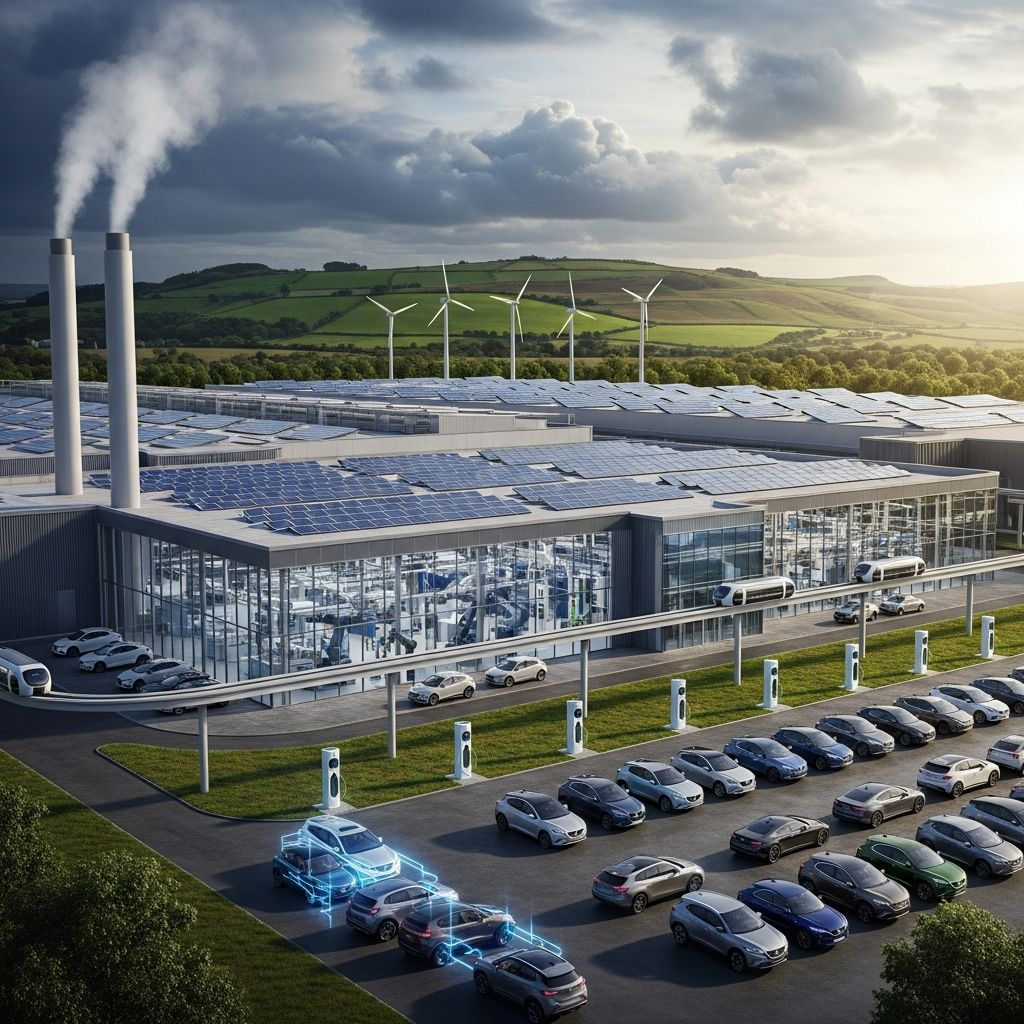
Nissan is dramatically reshaping its UK manufacturing landscape by committing billions to an electric vehicle ecosystem centered in Sunderland. This transformative project includes a state-of-the-art gigafactory capable of producing batteries for hundreds of thousands of EVs annually, signaling a pivotal shift from traditional engines to zero-emission mobility.
Strategic Pivot to Electrification in Sunderland
Sunderland has long been Nissan’s European production stronghold, but the company is now positioning it as the heart of its EV ambitions. The EV36Zero initiative represents a comprehensive overhaul, integrating vehicle assembly, battery production, and renewable energy infrastructure to create a fully integrated EV hub. This move not only sustains thousands of jobs but also establishes the UK as a competitive player in global EV manufacturing.
The core of this strategy is a partnership with Envision AESC, a leading battery specialist already operating in the region. Together, they aim to produce vehicles powered by locally made batteries, reducing supply chain vulnerabilities and carbon footprints. Nissan’s investment underscores confidence in the UK’s industrial capabilities amid global electrification trends.
The Gigafactory: Powering the EV Surge
At the project’s epicenter is a £1 billion gigafactory developed by Envision AESC, starting with a 9GWh annual capacity—enough for approximately 100,000 EV batteries. Plans include expansion to 25GWh with an additional £1.8 billion investment, enabling production for up to 250,000 vehicles yearly.
Existing facilities will also be upgraded: Plant 1 retrofits add 4.6GWh, while Plant 2 reaches 15.8GWh, collectively supporting 150,000 EVs per year. This phased approach ensures rapid scaling without disrupting current operations, where AESC already supplies batteries for the Nissan Leaf since 2012.
| Facility Phase | Capacity (GWh) | Equivalent EVs/Year | Investment |
|---|---|---|---|
| Initial Gigafactory | 9 | ~100,000 | £1bn |
| Plant 1 Retrofit | 4.6 | ~46,000 | Included |
| Plant 2 Expansion | 15.8 | ~150,000 | Included |
| Future Total | 25+ | ~250,000+ | +£1.8bn |
This table illustrates the gigafactory’s growth trajectory, highlighting its potential to dominate UK battery output.
New Electric Models Rolling Out from Sunderland
Over the next three years, Sunderland will transition from hybrid Qashqai production to three all-new EVs, including electric versions of the popular Juke and Qashqai, plus an updated Leaf. These models will leverage advanced batteries from the adjacent gigafactory, ensuring shorter supply lines and faster innovation cycles.
- Electric Juke: Compact crossover with enhanced range and performance for urban drivers.
- Electric Qashqai: Family SUV reimagined for zero-emissions, maintaining its bestseller status.
- Next-Gen Leaf: Pioneering EV with superior energy density, building on its third-generation upgrades.
This lineup positions Nissan to capture growing demand for affordable, practical EVs in Europe. Production ramps up alongside the gigafactory, creating synergies that boost efficiency.
Sustainable Energy Integration: Solar and Storage
Sustainability is woven into the EV36Zero blueprint. Nissan and partners plan up to 10 solar farms generating 132MW to power operations, complemented by a 1MW battery storage system. This setup captures daytime solar excess for nighttime use, stabilizing the grid and minimizing reliance on fossil fuels.
These features align with Nissan’s “EV36Zero” vision—achieving zero-emission, zero-waste manufacturing by 2050. The hub will serve as a blueprint for circular economy principles, recycling batteries and materials on-site.
Job Creation and Economic Ripple Effects
The project safeguards and expands employment at Sunderland, Nissan’s largest global plant. Initial phases support 6,000 direct jobs, with AESC employing 1,100 for battery production. Indirect benefits include supply chain roles, solar farm construction, and R&D positions.
UK officials hail it as a catalyst for domestic EV manufacturing. Business Secretary Kwasi Kwarteng noted its role in phasing out petrol and diesel vehicles while kick-starting local production. Industry Minister Chris McDonald emphasized strengthened global leadership through such investments.

Funding Breakdown and Government Backing
The £1 billion gigafactory draws from multiple sources: Nissan contributes £423 million to EV36Zero, AESC £450 million, and Sunderland City Council the balance. Total commitments could triple to £3 billion with expansions and model launches.
Government support via the Industrial Strategy includes EV supply chain pilots in the North East and West Midlands, enhancing resilience under the DRIVE35 program. Trade deals further secure export opportunities, protecting the sector long-term.
Global Context and Competitive Edge
Nissan’s UK push counters challenges like Brexit and EV policy shifts. By localizing batteries, it mitigates risks from international disruptions, as seen with the Leaf’s supply chain since 2013. The gigafactory anchors a competitive ecosystem, with AESC’s director Jim Marley calling it a foundation for global EV supply chains.
Compared to rivals, Sunderland’s hub offers unmatched vertical integration—vehicles, batteries, and renewables under one umbrella—potentially lowering costs by 20-30% through efficiency gains.
Challenges and Future Outlook
While promising, hurdles remain: scaling production amid raw material shortages, skilled labor recruitment, and policy stability. Nissan addresses these via targeted training and partnerships. By 2028, full operations could make Sunderland Europe’s top EV exporter.
Long-term, the hub supports Nissan’s Ambition 2030, targeting 40% EV sales globally. UK success could inspire similar hubs worldwide.
FAQs
What is the capacity of Nissan’s new UK gigafactory?
Initial 9GWh, expanding to 25GWh+ for over 250,000 EV batteries annually.
Which EV models will Sunderland produce?
Electric Juke, Qashqai, and next-gen Leaf, shifting from hybrids.
How many jobs will this create?
Thousands directly, including 6,000 at Nissan and 1,100 at AESC.
What sustainability features are included?
132MW solar farms and 1MW storage for zero-emission manufacturing.
When will production start?
Phased rollout over three years, with gigafactory operational soon.
References
- Nissan plans UK gigafactory as part of new EV hub — Argus Media. 2023-11-24. https://www.argusmedia.com/es/news-and-insights/latest-market-news/2230201-nissan-plans-uk-gigafactory-as-part-of-new-ev-hub
- Future of Nissan in the UK: new Gigafactory to power bold EV plans — Auto Express. 2025-04-19. https://www.autoexpress.co.uk/nissan/366575/future-nissan-uk-new-gigafactory-power-bold-ev-plans
- Nissan to build three new electric car models in Sunderland — Sky News (YouTube). 2023-11-24. https://www.youtube.com/watch?v=E1FEKPfentU
- Nissan launches £450m next-generation LEAF — UK Government. N/A. https://www.gov.uk/government/news/nissan-launches-450m-next-generation-leafin-major-vote-of-confidence-in-uks-industrial-strategy
- How Nissan Transformed Sunderland: The £450m EV Revolution — Automoto Network (YouTube). N/A. https://www.youtube.com/watch?v=v-OFZDX3LNI
- Next-gen Nissan LEAF signals £450m growth for UK EV industry — Innovation News Network. N/A. https://www.innovationnewsnetwork.com/next-gen-nissan-leaf-signals-450m-growth-for-uk-ev-industry/64805/
Similar Articles







Read full bio of medha deb