The Mk1 Golf GTI: Icon of Hot Hatch Heritage
Discover how Volkswagen's original performance hatchback revolutionized affordable motoring.
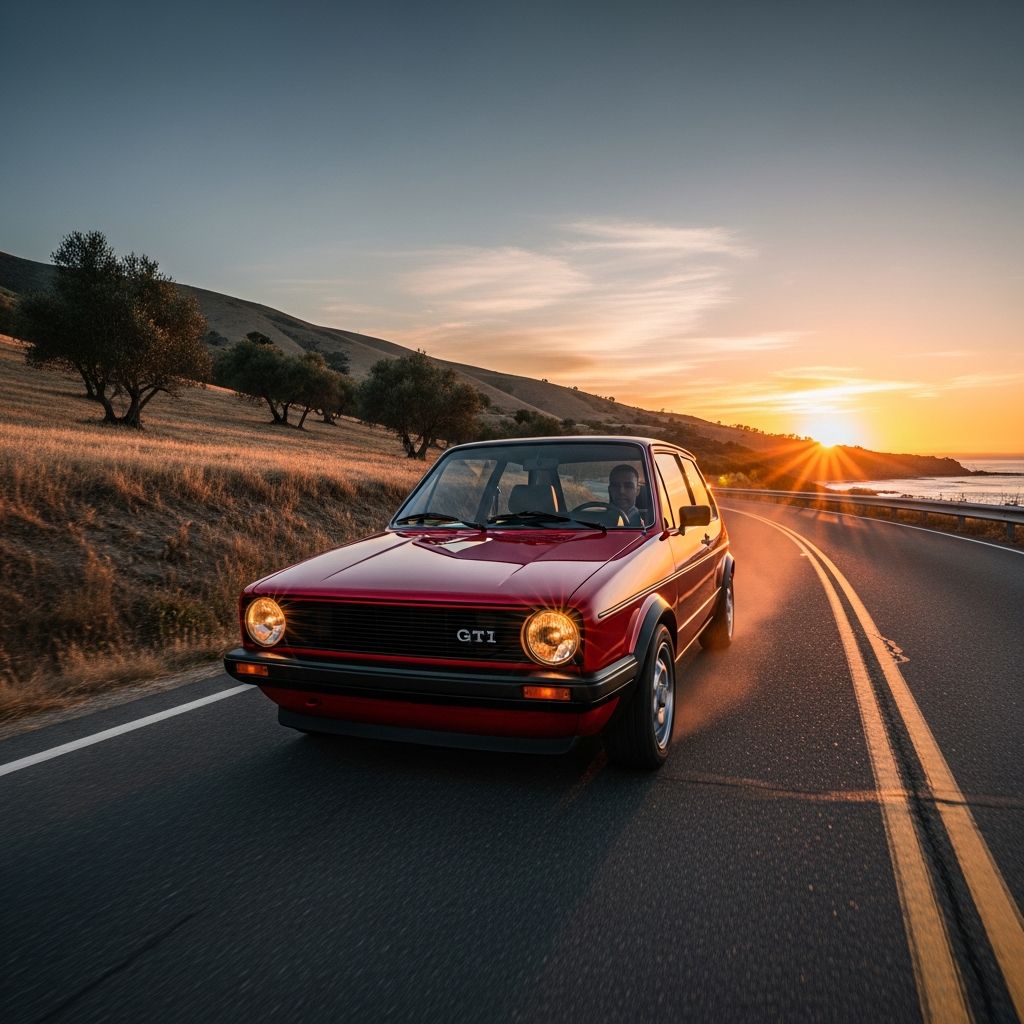
When Volkswagen introduced the first-generation Golf GTI in 1976, few could have predicted the seismic shift it would trigger across the automotive landscape. What began as an enthusiast-driven side project—reportedly conceived by dedicated engineers working after hours—blossomed into a cultural phenomenon that fundamentally redefined what consumers expected from affordable, practical transportation. Over its seven-year production run, more than 450,000 examples found their way into garages worldwide, establishing a template for the hot hatch category that remains largely unchanged today. The Mk1 GTI represented far more than simply adding horsepower to a mainstream sedan; it embodied a philosophical approach to performance that prioritized accessibility, reliability, and everyday usability alongside genuine driving engagement.
Engineering Vision and Mechanical Innovation
The foundation of the Mk1 GTI’s appeal rested upon straightforward engineering principles. Rather than pursuing exotic technologies or experimental powertrains, Volkswagen engineers elected to enhance the proven Golf platform with targeted mechanical upgrades that amplified both capability and character. The initial offering featured a 1.6-litre four-cylinder engine delivering 108 horsepower at 6,100 revolutions per minute, paired with a four-speed manual transmission. This powerplant generated approximately 57 percent more output than the standard Golf’s 1.5-litre alternative, transforming a modest family vehicle into something genuinely thrilling for enthusiasts accustomed to the leisurely pace of contemporary hatchbacks.
The propulsion system benefited from modern fuel injection technology—a relatively novel feature in the mid-1970s—which provided exceptional reliability and consistent performance characteristics that carburetted competitors simply could not match. This mechanical honesty extended throughout the drivetrain; there were no electronic aids, no variable valve timing, no turbochargers obscuring the mechanical relationship between driver input and mechanical response. What drivers received was visceral, immediate, and thoroughly mechanical.
Recognising that increased power demanded corresponding chassis refinement, Volkswagen’s engineering team implemented a comprehensive suspension overhaul. The GTI received a 20-millimetre reduction in ride height, specially tuned anti-roll bars at both front and rear axles, and upgraded braking hardware featuring ventilated front discs and a brake force regulator to prevent rear-wheel lockup during aggressive deceleration. The track width increased by 14 millimetres, accommodating wider rubber: 175/70HR13 radial tyres mounted on 5½-inch rims replaced the standard Golf’s narrower 145SR13 or 155SR13 alternatives. This seemingly modest increment in tyre width translated into genuinely tangible benefits in cornering adhesion and directional stability.
Shortly following the original launch, Volkswagen introduced a five-speed manual gearbox in 1979, providing improved motorway refinement and genuine efficiency gains. The most significant mechanical evolution arrived in 1982, when engineers enlarged the displacement to 1.8 litres and increased output to 110.5 horsepower. This enlarged engine retained the same 108 horsepower rating as the original but delivered substantially greater torque—110 lb-ft compared to 103 lb-ft in the earlier variant—fundamentally altering the character of the driving experience at lower engine speeds. The final production cars, designated Campaign models, incorporated further amenities including sunroofs, twin headlights, and Pirelli alloy wheels as standard specification.
Aesthetic Identity and Interior Atmosphere
Visual differentiation represented an essential element of the GTI concept, signalling performance intent to observers whilst creating distinct separation from ordinary Golf variants. The exterior presentation combined aggressive visual language with practical aerodynamic considerations. A jutting plastic front spoiler telegraphed performance credentials, whilst red-trimmed grille surrounds and black stripes running along door lower sections created distinctive visual separation from the regular model line. These flourishes proved sufficiently iconic that they persist in contemporary GTI iterations, a testament to the strength of the original design language.
The interior environment cultivated an atmosphere of sporting intentionality through carefully selected trim and hardware choices. Recaro bucket seats upholstered in characteristic tartan cloth material provided lateral support during spirited cornering whilst maintaining everyday comfort. The steering wheel borrowed directly from the sportier Scirocco TS variant, enhancing the tactile connection with the driving experience. Perhaps most famously, the gear knob adopted a distinctive golf-ball design—a small detail that became instantly recognisable and remains celebrated by enthusiasts decades later. An oil pressure gauge and rev counter acknowledged the sporting brief, providing drivers with genuine mechanical feedback rather than merely cosmetic instrumentation.
Driving Dynamics and Real-World Performance
The complete Mk1 GTI package manifested as a coherent whole precisely because no individual component dominated the experience. Performance figures that appear modest by contemporary standards—0-60 miles per hour in nine seconds for the 1.6-litre variant, with the 1.8 reducing this to 8.2 seconds—nevertheless created a compelling driving proposition. The engine demanded to be worked, responding to throttle inputs with mechanical urgency and delivering a purposeful character that made the driving experience actively engaging rather than passively comfortable.
Handling characteristics established the Mk1 GTI as the benchmark against which all subsequent hot hatches would inevitably be measured. The suspension geometry provided exceptional composure during enthusiastic cornering whilst maintaining a fundamentally compliant ride quality that rendered the car genuinely pleasant during everyday city navigation. Wind noise remained impressively controlled at motorway velocities, and the overall refinement belied the modest complexity of the engineering underneath. Fuel injection ensured reliable starts and smooth running in all conditions, eliminating the temperamental characteristics that plagued carburetted competitors.
Critically, the Mk1 GTI succeeded because it optimised the balance between competing demands rather than excelling exclusively in any single dimension. It was not the fastest accelerating car in its era, nor did it handle with the surgical precision of dedicated sports cars. Instead, it distributed talents across a broad spectrum—genuine acceleration, satisfying handling response, adequate comfort, practical interior space, and manageable running costs—combining these attributes into an experience that proved more satisfying and accessible than any genuine sports car alternative. A 0-60 time of approximately nine seconds represented thrilling capability for a car that seated four adults comfortably, provided legitimate boot space, and delivered fuel economy approaching 30 miles per gallon.
Specification Variations and Production Timeline
Understanding the Mk1 GTI’s evolution requires acknowledging the meaningful specification variations that emerged across its production span. Right-hand drive models remained unavailable until 1979, limiting early acquisition opportunities for British and Commonwealth buyers to imported left-hand drive examples. The 1979 introduction of the five-speed gearbox represented a watershed moment, dramatically improving the ownership experience for drivers regularly encountering motorway conditions. By 1982, the engine displacement increase to 1.8 litres substantially altered the character, particularly benefiting lower-revolutions-per-minute torque delivery and improving overall responsiveness.
Campaign models produced during the final production year incorporated luxury appointments previously considered inappropriate for a fundamentally sporting machine. Sunroofs, tinted glazing, leather steering wheel wraps, dual headlights, and interior door lock buttons reflected changing market preferences and Volkswagen’s strategic positioning toward broader appeal. These refinements, combined with the now-standard Pirelli alloy wheels, represented the zenith of Mk1 GTI specification sophistication, blending sporting character with genuine convenience features.
The Lasting Cultural Legacy
The Mk1 Golf GTI fundamentally altered consumer expectations regarding what affordable motoring could deliver. Previously, performance car enthusiasts confronted limited options: they could select between two-seat sports cars—often temperamental, cramped, and impractical—or conventional family vehicles offering neither excitement nor engagement. The GTI shattered this dichotomy, demonstrating conclusively that practical, reliable, affordable transportation could simultaneously deliver genuine driving satisfaction. It proved that performance required neither exclusivity nor exorbitant cost; it simply demanded intelligent engineering and clear priorities regarding what mattered most to real drivers.
This philosophy established the hot hatch as an enduring category rather than a temporary novelty. Every performance-oriented compact hatchback produced subsequently—from competitors’ offerings to Volkswagen’s own successors—acknowledged the Mk1 GTI’s template. The core recipe remained unchanged: take a proven, affordable platform, apply modest horsepower increases achieved through mechanical sincerity rather than exotic technology, implement focused chassis refinement, and deliver everything within a pricing structure accessible to mainstream buyers.
Collector Perspective and Modern Relevance
Contemporary classic car enthusiasm continues to recognise the Mk1 GTI as fundamentally important. These vehicles represent accessible entry points into enthusiast ownership, offering genuine mechanical character without demanding specialist knowledge or prohibitively expensive maintenance. Their modest curb weight—approximately 780 to 840 kilograms depending on specification—contrasts dramatically with modern vehicles, whilst their mechanical simplicity renders them comprehensible to drivers accustomed to contemporary complexity.
Original specifications demand careful verification when evaluating potential purchases, particularly regarding Campaign models with their specific equipment requirements. Sunroofs must match original patterns, tinted glass should exhibit period-appropriate characteristics, and Pirelli P-slot alloy wheels can be distinguished from later derivatives through their distinctive 7-millimetre gap spacing compared to the 10-millimetre variant employed on Mk2 applications. These details matter because they represent the final evolution of the original concept, representing the most complete development of Volkswagen’s vision.
Frequently Asked Questions
How much power did the original Mk1 GTI produce?
The initial 1.6-litre engine delivered 108 horsepower and 103 pound-feet of torque through a four-speed manual transmission. The 1982 1.8-litre variant increased output to 110.5 horsepower with 110 pound-feet of torque, though subtle refinements altered the character significantly.
When did right-hand drive examples become available?
Volkswagen did not introduce right-hand drive variants until 1979, making early acquisition by British buyers dependent upon imported left-hand drive models.
What defined the Campaign model specification?
Final production Mk1 GTIs, designated Campaign models, incorporated sunroofs, tinted glass, twin headlights, leather steering wheel wraps, interior door lock buttons, and distinctive Pirelli alloy wheels as standard specification.
How many Mk1 GTIs were produced?
Over 450,000 examples were produced during the seven-year manufacturing run from 1976 through 1983, establishing unprecedented volume for the performance hatchback category.
References
- Buying Guide: Volkswagen Golf GTI Mk1 (1976–1983) — Hagerty UK. Accessed April 2026. https://www.hagerty.co.uk/articles/buying-guides/buying-guide-volkswagen-golf-gti-mk1-1976-1983/
- Retro Road Test: MK1 Volkswagen Golf GTI — Leebot Home. Accessed April 2026. https://app.leebot.co.uk/@car-reviews/article/retro-road-test-mk1-volkswagen-golf-gti/
- Vintage AMS Review: 1976 Volkswagen Golf GTI — Curbside Classic. Accessed April 2026. https://www.curbsideclassic.com/vintage-reviews/1970s-vintage-reviews/european-brands-1970s-vintage-reviews/vintage-ams-review-1976-volkswagen-golf-gti-vw-hot-hatch-changes-the-game-but-americans-dont-get-it/
Similar Articles








Read full bio of medha deb