Mitsubishi Lancer Evolution: Performance, Legacy, And Specs
Discover the raw power, rally-bred handling, and enduring appeal of Mitsubishi's iconic Lancer Evolution performance sedan.
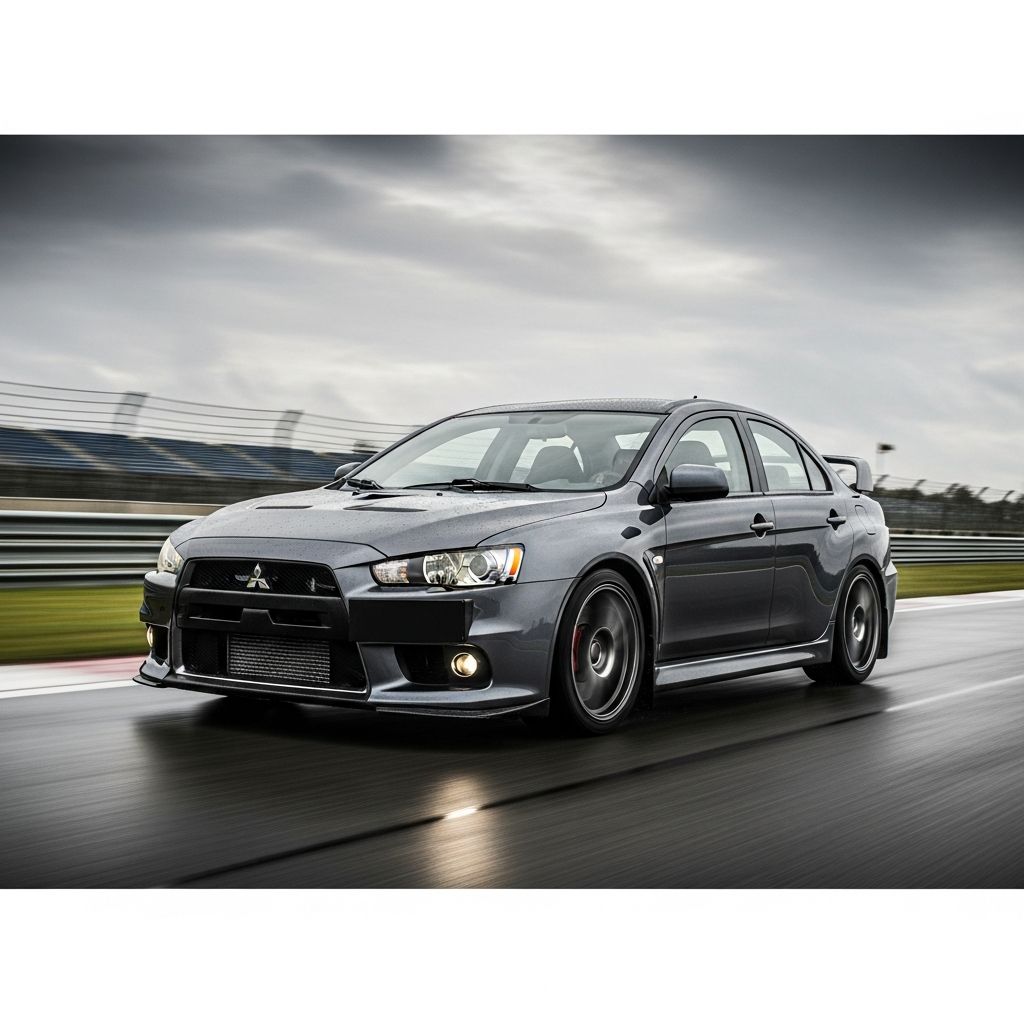
The Mitsubishi Lancer Evolution, affectionately known as the Evo, stands as one of the most revered performance sedans in automotive history. Built on a humble economy car platform, it transformed into a rally-bred beast capable of outpacing far more expensive rivals through sheer engineering prowess and driver engagement.
Engineering the Ultimate Performance Machine
At its core, the Evo utilized a compact sedan chassis augmented with a turbocharged 2.0-liter inline-four engine. Early models like the 2006 Evolution IX delivered 286 horsepower and 289 pound-feet of torque, while later iterations such as the 2015 Final Edition pushed outputs to 303 horsepower with enhanced mid-range pull. This powerplant, often featuring variable valve timing and minimal turbo lag, provided explosive acceleration, propelling the car to 60 mph in as little as 4.4 seconds in its quickest guise.
The transmission choices reinforced its no-nonsense ethos: a five-speed manual for base and RS variants, escalating to a six-speed in higher trims like the MR, with precise, guillotine-like shifts that demanded skilled clutch work for optimal launches. No automatic option existed, underscoring the car’s commitment to purist driving.
All-Wheel Drive Mastery
The Evo’s true secret weapon was its sophisticated full-time all-wheel-drive (AWD) system, incorporating an active center differential and limited-slip front and rear differentials. This setup allowed selectable modes for tarmac, gravel, or snow, enabling seamless adaptation to conditions without complex electronic nannies.
Advanced features like the Active Yaw Control (AYC) system used electronically controlled diffs to manage cornering attitudes. Drivers could induce controlled drifts by maintaining throttle, riding out understeer, and exiting corners with perfect four-wheel balance—a sensation akin to rally stages translated to public roads. Even with stability control disengaged, the system provided a safety net, making high-speed antics predictable and confidence-inspiring.
Chassis Dynamics and Handling Precision
Suspension upgrades were pivotal: Bilstein dampers, Eibach springs, and race-tuned geometry delivered ruthless body control. The result was a car that could be pushed to nine-tenths without surprises, understeering predictably if thresholds were exceeded unintentionally, or drifting on command with throttle input.
Steering stood out for its hydraulic assistance, offering simulator-like weighting, instant response, and direct feedback. Brakes, paired with sticky Yokohama Advan tires, endured relentless abuse, maintaining fade-free stopping power. On twisty roads or tracks, the Evo humbled pricier German sports sedans and American muscle, proving accessible speed for skilled drivers.
| Model Year | Horsepower | 0-60 mph | Key Upgrades |
|---|---|---|---|
| 2006 Evo IX | 286 hp | Mid-5s | Variable valve timing, new turbo housing |
| 2015 Final Edition | 303 hp | 4.4s | Bilstein shocks, enhanced diffs, sticky tires |
Interior and Everyday Practicality
While not a luxury cruiser, the Evo prioritized function. Recaro front seats provided exceptional support, cradling occupants during aggressive cornering without compromising larger frames, ranking among the best factory sport seats for comfort and hold.
Cabin space accommodated daily duties adequately, with supportive seating and workable rear room. Visibility was sedan-standard, though the prominent rear wing slightly obscured the view. As a daily driver, it navigated urban environments effortlessly, with ground clearance avoiding driveway scrapes and a firm yet livable ride.
Practicality extended to family use: three child restraint points, two ISOFIX anchors, and a reversing camera with guidelines. Lacking a spare tire, it relied on a sealant kit and compressor, typical for performance models. Fuel economy was predictably poor, but the deep exhaust rumble and taut ride constantly reminded drivers of its pedigree.
Safety and Reliability Considerations
The Evo earned a five-star ANCAP rating (33.56/37), bolstered by its AWD grip rather than advanced aids like autonomous emergency braking or blind-spot monitoring—features absent in its era. Basic safety was solid, prioritizing mechanical excellence over electronics.
Reliability stemmed from rally heritage; the chassis and drivetrain withstood abuse. However, the noisy cabin—clutch chatter, drivetrain whine, and mechanical scuffing—added to its raw character, endearing it to enthusiasts while alienating casual users.
Performance in Real-World Scenarios
Track testing revealed its prowess: the 2015 model out-accelerated contemporaries with commitment-launching launches on wide tires. Street driving felt intuitive, with power on tap across revs and brakes that never faltered. It excelled where others faltered, offering immersion that felt like holding the tie rods bare-handed.
- Track Confidence: Push to limits without fear; predictable understeer or intentional drifts.
- Street Usability: Firm ride absorbs imperfections; AWD shines in varied weather.
- Rally Spirit: Gravel mode transforms it into a stage weapon.
Comparisons with Rivals
Versus Subaru WRX STI, the Evo offered simpler modes and more rewarding immersion, retaining authenticity as STI chased broader appeal. It outperformed base Mustangs on courses despite less power, thanks to AWD and balance. Against luxury sedans, its affordability and capability embarrassed higher-priced options.
Model Evolution and Final Chapter
From the 4G63T-powered ancestors to the Evo X (2007-2016), refinements like the Final Edition imported 1,600 units with charisma-restoring tweaks. Production ended, but used examples abound, preserving the legend.
Why the Evo Endures
Buyers chose it for unfiltered joy: a best friend in trouble, bailing you out with precision. Its authenticity, from mechanical frenzy to driver-centric design, created lifelong fans. Not for luxury seekers, but for those craving pure performance.
Frequently Asked Questions
Is the Mitsubishi Lancer Evolution still available new?
No, production ceased after the 2016 Final Edition, but used models remain plentiful on dealer lots and enthusiast markets.
How does the Evo handle in snow or gravel?
Selectable AWD modes optimize traction for tarmac, gravel, or snow, making it exceptionally versatile.
Is the Evo suitable as a daily driver?
Yes, with adequate space, visibility, and a firm but forgiving ride; it’s practical for commutes despite its sporty nature.
What makes the Evo’s steering special?
Hydraulic power steering delivers precise, weighted feedback, feeling direct and engaging like a simulator.
Does the Evo have modern safety features?
Basic five-star safety via AWD and structure; lacks AEB or adaptive cruise but excels mechanically.
References
- REVIEW: 2015 Mitsubishi Lancer EVO – Sayonara! You Will Be Missed — BestRide Blog. 2015. https://blog.bestride.com/reviews/new-car-reviews/sayonara-mitsubishi-lancer-evo-you-will-be-missed/
- Tested: 2015 Mitsubishi Lancer Evo Final Edition — Car and Driver. 2015. https://www.caranddriver.com/reviews/a15102392/2015-mitsubishi-lancer-evolution-final-edition-test-review/
- 2006 Mitsubishi Lancer Evolution Review & Ratings — Edmunds. 2006. https://www.edmunds.com/mitsubishi/lancer-evolution/2006/review/
- Mitsubishi Lancer Evolution Final Edition review — WhichCar. N/A. https://www.whichcar.com.au/reviews/mitsubishi-evo-final-edition-review
- 2016 Mitsubishi Lancer Evolution Final Edition review — Practical Motoring. 2016. https://practicalmotoring.com.au/car-reviews/2016-mitsubishi-evolution-final-edition-review/
- Driving the 2014 Mitsubishi Lancer Evolution X GSR — Torque News. 2014. https://www.torquenews.com/106/driving-2014-mitsubishi-lancer-evolution-x-gsr-my-goodbye-rally-legend
Similar Articles



Read full bio of Sneha Tete