Undefined Mitsubishi Lancer Evolution: Rally History & Specs
Discover the raw power, rally-bred handling, and enduring appeal of Mitsubishi's iconic Lancer Evolution performance sedan.
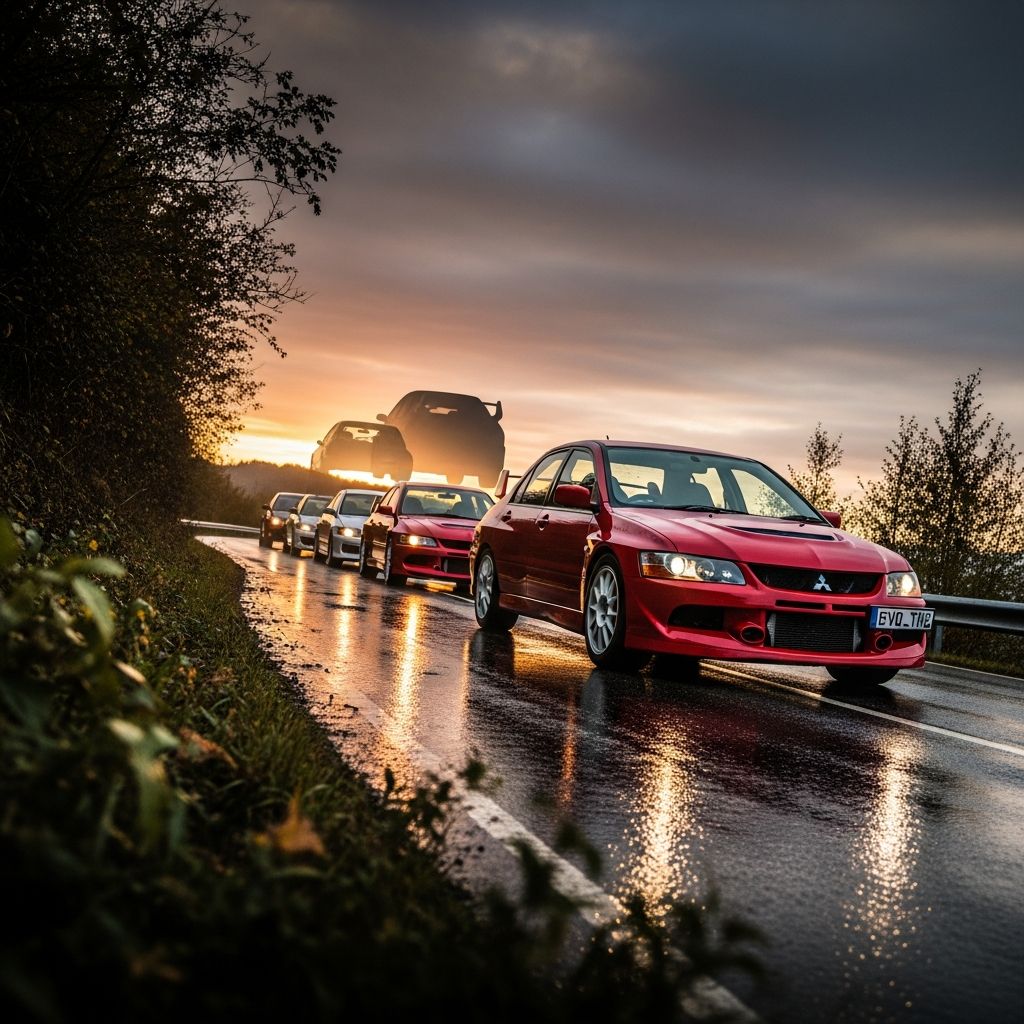
The Mitsubishi Lancer Evolution, affectionately known as the Evo, stands as a testament to engineering ingenuity, transforming a humble economy sedan platform into a world-beating performance machine. Born from Mitsubishi’s dominance in World Rally Championship (WRC) events, the Evo combined turbocharged power, sophisticated all-wheel drive, and razor-sharp handling to challenge pricier rivals. Over multiple generations, it delivered accessible thrills that enthusiasts still chase today.
Origins and Evolution of a Performance Icon
The Lancer Evolution lineage began in the early 1990s, with the Evo I debuting in 1992 as a homologation special for rally racing. Mitsubishi took the reliable Lancer sedan chassis, bolted on a turbocharged 4G63 engine, upgraded the suspension, and equipped it with all-wheel drive. This formula allowed it to punch above its weight, embarrassing more expensive sports cars on twisty roads and tracks.
Each subsequent model refined this blueprint. The Evo VIII introduced the legendary 271-hp 4G63T engine, known for its raw brutality and reliability under extreme abuse. By the Evo X era starting in 2007, Mitsubishi evolved to a 2.0-liter turbo four producing 303 horsepower, paired with advanced electronically controlled differentials. The Final Edition marked the emotional farewell, importing 1,600 units with enhanced Bilstein dampers, Eibach springs, and grippy Yokohama Advan tires.
- Evo I-III: Laid the foundation with active yaw control (AYC) for superior cornering.
- Evo IV-VI: Bigger turbo, refined chassis for better road manners.
- Evo VII-IX: 4G63T peak power, synonymous with rally success.
- Evo X: Modernized with Super All-Wheel Control (S-AWC), six-speed SST transmission option.
This progression cemented the Evo’s reputation as an affordable gateway to supercar-like performance, often outperforming German sedans and American muscle on road courses.
Powertrain: Turbocharged Heart of the Beast
At the core of every Evo beats a turbocharged inline-four engine, delivering explosive mid-range torque that propels the car forward with relentless urgency. The 2015 Final Edition’s 2.0-liter unit churns out 303 hp and sounds ferocious, like it’s devouring everything in its path. Power surges through a close-ratio five- or six-speed manual (or optional dual-clutch SST), with short gearing ensuring the engine stays in its sweet spot even at highway speeds.
Transmission shifts fall with mechanical precision, each gear engaging like a “guillotine,” providing driver confidence during aggressive maneuvers. The final-drive ratio keeps revs high for freeway cruising, minimizing speed drop-off in overdrive. Fuel economy suffers as a trade-off—expect high consumption on premium unleaded—but the visceral delivery makes it worthwhile for short, spirited blasts.
| Model | Engine | Horsepower | 0-60 mph | Key Feature |
|---|---|---|---|---|
| Evo VIII | 2.0L Turbo 4G63T | 271 hp | ~4.7s | Raw, punishing dynamics |
| Evo X GSR | 2.0L Turbo | 291 hp | 4.5s | Recaro seats, comfort |
| 2015 Final Edition | 2.0L Turbo | 303 hp | 4.4s | Bilstein shocks, Advan tires |
These specs highlight why the Final Edition is the quickest Evo tested, achieving 60 mph in 4.4 seconds with committed launches.
Chassis and Handling: Rally DNA on Public Roads
What sets the Evo apart is its Super AWD system, evolving from simple viscous couplings to advanced electronic diffs like Active Center Differential (ACD), Active Stability Control (ASC), and Active Yaw Control (AYC). Drivers select modes—tarmac, gravel, snow—for tailored traction, making it faster and more predictable than rear- or front-drive rivals.
On track or twisty roads, the Evo invites pushing to 90% without surprises. It understeers predictably if you overload a corner, or drifts beautifully with throttle input. Brakes endure abuse, steering feels telepathic—hydraulically assisted for pure feedback—and suspension (Bilstein/Eibach in Final Edition) delivers flat cornering with a firm yet liveable ride.
Compared to a turbo Mustang, the Evo’s AWD makes average drivers quicker, turning corners into playgrounds where power slides are effortless and safe. Even with ESP off, diffs intervene subtly to prevent spins, embodying rally heritage.
Interior Comfort and Practicality: Spartan but Supportive
Evo cabins prioritize function over luxury, featuring durable plastics, supportive Recaro seats that cradle during hard cornering without crushing larger frames, and straightforward controls. Visibility is sedan-good, though the rear wing slightly obstructs the view. Boot space suits weekend use, but no spare tire—just a compressor kit—limits long-trip appeal.
Seats earn praise for balancing race-like bolstering with daily comfort, ideal for rally jumps or bumpy roads. Ride quality is firm yet forgiving, jittery over potholes but controlled in sporty driving. Noise intrudes—clutch chatter, drivetrain whine, turbo spool—but adds to the immersive frenzy.
Practicality shines in usability: decent rear legroom, three child anchors plus two ISOFIX points, reversing camera. It’s no luxury cruiser, but basics work well for a performance focus.
Safety and Everyday Usability
The Evo earns solid safety ratings, like 5-star ANCAP (33.56/37), thanks to robust structure and AWD stability. Lacking modern aids like AEB or blind-spot monitoring, it relies on driver skill and mechanical grip. Chrome accents and dated infotainment show age, but core dynamics remain timeless.
For daily duties, it’s surprisingly versatile: ground clearance avoids driveway scrapes, highway stability is solid (though revvy at 100 km/h), and it’s more comfortable than pure track cars. Fuel thirst and no spare suit enthusiasts over commuters.
Performance Benchmarks and Rival Comparisons
The Final Edition outpaces predecessors, hitting benchmarks with ease. Against Subaru WRX STI, it offers simpler modes but superior diff tech for drifts. Nissan GT-R fans recognize the four-wheel slide sensation. Versus pricier foes, its value shines—$50K-ish for 300+ hp and track prowess.
- Pros: Explosive acceleration, intuitive handling, AWD versatility.
- Cons: Harsh ride, poor economy, basic interior.
Why the Evo Endures: A Driver’s Car for the Ages
Though production ended, used Evos thrive in enthusiast circles. The Final Edition recaptures early models’ charisma, blending brutality with refinement. It’s anti-social in noise and manners but addictive in speed and feedback—a car that rewards commitment.
Frequently Asked Questions (FAQs)
Is the Mitsubishi Evo X reliable?
Yes, with proper maintenance; the 4G63 legacy is bulletproof, though Evo X turbos need care.
What’s the best Evo generation?
Subjective—VIII for raw power, X Final for modern polish.
Can the Evo handle daily driving?
Firm ride and fuel use make it better for enthusiasts than commuters.
How does Evo compare to WRX STI?
Evo edges in diff sophistication and straight-line speed.
Are used Evos a good buy?
Excellent value for performance, but check maintenance history.
References
- REVIEW: 2015 Mitsubishi Lancer EVO – Sayonara! You Will Be Missed — BestRide Blog. 2015. https://blog.bestride.com/reviews/new-car-reviews/sayonara-mitsubishi-lancer-evo-you-will-be-missed/
- Tested: 2015 Mitsubishi Lancer Evolution Final Edition — Car and Driver. 2015. https://www.caranddriver.com/reviews/a15102392/2015-mitsubishi-lancer-evolution-final-edition-test-review/
- 2016 Mitsubishi Lancer Evolution Final Edition review — Practical Motoring. 2016. https://practicalmotoring.com.au/car-reviews/2016-mitsubishi-evolution-final-edition-review/
- Mitsubishi Lancer Evolution Final Edition review — WhichCar. N/A. https://www.whichcar.com.au/reviews/mitsubishi-evo-final-edition-review
- Driving the 2014 Mitsubishi Lancer Evolution X GSR — Torque News. 2014. https://www.torquenews.com/106/driving-2014-mitsubishi-lancer-evolution-x-gsr-my-goodbye-rally-legend
Similar Articles



Read full bio of medha deb