Mitsubishi Lancer Evolution: Rally-Bred Performance And Legacy
Discover the raw power, rally-bred handling, and enduring appeal of Mitsubishi's iconic Lancer Evolution across its legendary generations.
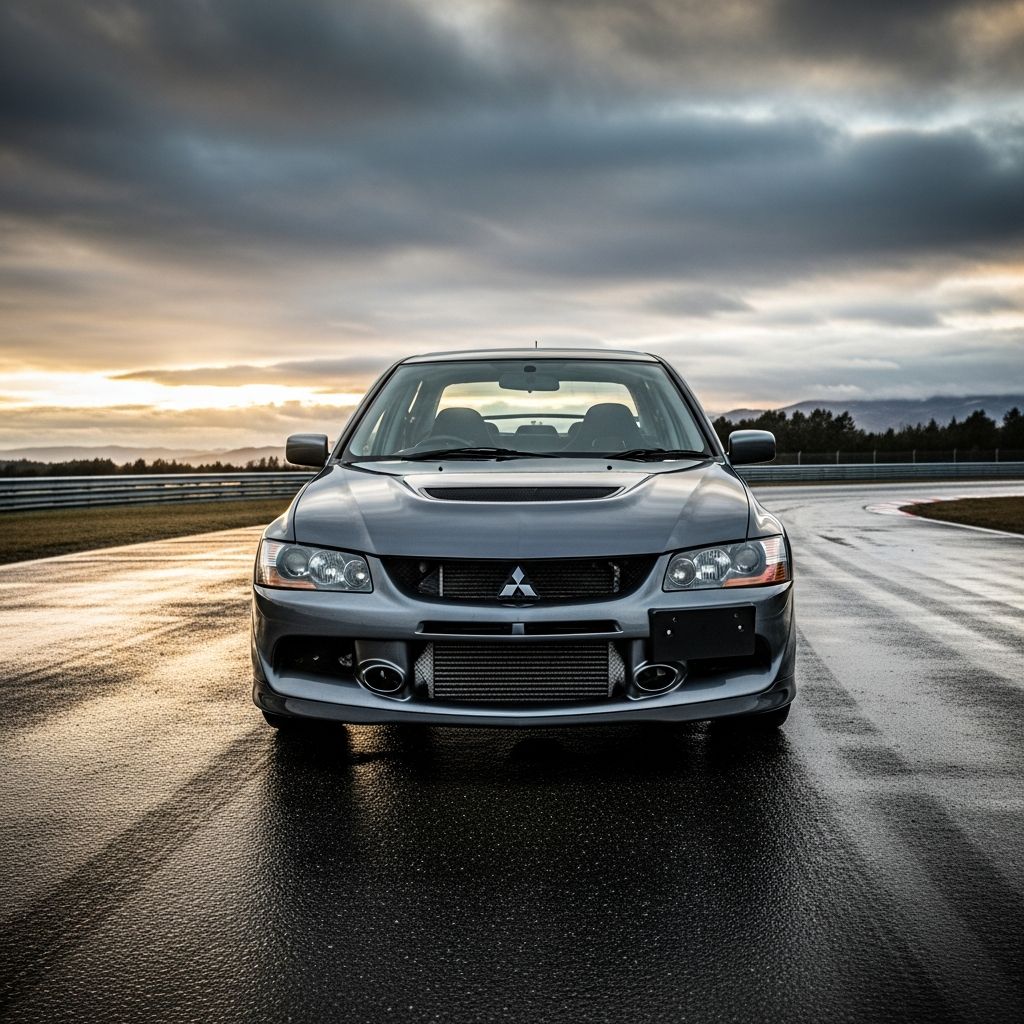
The Mitsubishi Lancer Evolution, affectionately known as the Evo, stands as a pinnacle of affordable performance engineering. Born from World Rally Championship dominance, this compact sedan transformed a humble economy platform into a track-devouring monster, blending turbocharged power, all-wheel drive, and razor-sharp handling.
Origins in Rally Glory
The Evo’s story begins in the high-stakes world of rally racing during the 1990s. Mitsubishi engineers took the unassuming Lancer sedan and infused it with Group A homologation requirements, mandating road-legal versions to compete. The result was the Evo I in 1992, featuring a turbocharged 2.0-liter 4G63 engine producing around 250 horsepower, paired with Mitsubishi’s innovative Active Yaw Control (AYC) system for superior cornering.
Subsequent models evolved rapidly. The Evo III introduced variable valve timing for better mid-range torque, while the Evo VI refined aerodynamics with an adjustable rear wing, securing Mitsubishi’s first WRC constructors’ title in 1998. This rally pedigree directly influenced road cars, delivering grip and agility that humbled pricier rivals.
Engineering a Performance Icon
At the heart of every Evo beats the legendary 4G63T turbocharged inline-four engine, a powerplant renowned for its durability and tunability. In later iterations like the Evo IX, it pushed 286 horsepower and 320 lb-ft of torque, often exceeding factory figures with basic mods. The engine’s iron block and forged internals allowed it to withstand 500+ horsepower in modified forms without grenading.
The true genius lies in the drivetrain. Mitsubishi’s Super All-Wheel Control (S-AWC) system, debuting on the Evo X, integrates Active Yaw Control, Active Stability Control, and Active Central Differential for torque vectoring across all four wheels. Drivers select modes like Tarmac, Gravel, or Snow, enabling precise handling on varied surfaces. This setup allows controlled drifts or neutral cornering balance, far surpassing many rear-drive sports cars.
| Model | Engine Power | 0-60 mph | Key Tech |
|---|---|---|---|
| Evo VI | 276 hp | 4.5 sec | AYC, ACD |
| Evo IX | 286 hp | 4.5 sec | Brembo brakes, Bilstein shocks |
| Evo X Final | 303 hp | 4.4 sec | S-AWC, wider tires |
This table highlights performance progression, with the Final Edition Evo X achieving 0-60 mph in 4.4 seconds thanks to sticky Yokohama Advan tires and a short 4.69:1 final drive.
Driving Dynamics That Define Thrills
Behind the wheel, the Evo delivers an unfiltered connection to the road. Hydraulic power steering provides telepathic feedback, feeling almost manual in its directness, while Bilstein dampers and Eibach springs ensure flat cornering with minimal body roll. Reviewers note it outperforms even modern muscle cars on tracks, pushing to 90% effort without surprises—understeer if you lift off throttle prematurely, or power-oversteer with a planted right foot.
- Steering Precision: Weighted and communicative, ideal for point-and-shoot cornering.
- Braking Prowess: Massive Brembo rotors scrub speed repeatedly without fade.
- Transmission: Six-speed manual with guillotine-like shifts, demanding clutch mastery for launches.
- Drivetrain Magic: AYC diffs enable four-wheel drifts akin to a Nissan GT-R, but at half the price.
On public roads, the Evo’s rally roots shine during spirited drives, though its firm ride transmits every bump. Yet, it’s surprisingly composed for daily use, with Recaro seats offering excellent support without hip-crushing tightness.
Evo X: The Pinnacle and Swan Song
The tenth generation, launched in 2007, marked a shift with a new chassis and 4B11T engine, shedding the 4G63 for emissions compliance. Producing 291 horsepower standard (303 in Final Edition), it retained the Evo ethos while adding refinement. The Final Edition, limited to 1,600 units in the US, featured wide-body kit, upgraded suspension, and matte bronze 18-inch BBS wheels.
Performance peaked here: quarter-mile in 12.9 seconds at 109 mph, with track times embarrassing pricier foes. Yet, it remained accessible at around $40,000, a bargain for sub-4.5-second acceleration. Production ended in 2016 amid tightening regulations, leaving enthusiasts mourning the loss of an analog icon.
Interior Comfort and Practicality
Cabin space prioritizes driver focus over luxury. Recaro buckets hug occupants during hard cornering, blending support with livability for larger frames. Rear seats accommodate adults for short trips, and the trunk swallows weekend gear, though no spare tire—just a compressor kit—limits long-haul appeal.
Tech is dated by modern standards: basic infotainment, reversing camera on later models, and no advanced driver aids like adaptive cruise. Fuel economy hovers at 17-23 mpg, demanding premium unleaded, but safety earns 5-star ANCAP ratings via robust AWD and structure.
Comparisons with Rivals
The Evo consistently outshines the Subaru WRX STI in handling purity. While the STI leans more, the Evo stays flat, feeling more elemental. Versus Ford Focus RS or Nissan GT-R, it offers similar grip at lower cost, though less refined daily.
- Vs. STI: Superior body control, less insulated feel.
- Vs. Mustang: Better on twisty roads despite less power.
- Vs. GT-R: Comparable drift capability, fraction of price.
Ownership Realities and Modifications
Running costs reflect performance: premium fuel, frequent tire wear from sticky rubber, and turbo maintenance. Reliability shines if serviced properly—the 4G63’s reputation borders mythical. Modding culture thrives; bolt-ons yield 350+ hp easily, with drag cars exceeding 1,000 hp.
Common issues include transfer case wear in high-mileage Evos and synchro grinds in manuals. Still, resale holds strong for clean examples, often appreciating as collectibles.
Why the Evo Endures
In an era of sanitized crossovers, the Evo’s raw charisma—snarling turbo, mechanical symphony, and driver involvement—remains unmatched. It’s anti-social in noise and ride but addictive in ability, converting skeptics instantly. Final Editions linger on lots, a last chance to own rally legend.
Frequently Asked Questions
Is the Mitsubishi Evo X reliable?
Yes, with proper maintenance. The drivetrain handles abuse well, though clutches and turbos need attention post-100,000 miles.
What’s the best Evo generation?
Subjective; Evo VI-VIII for 4G63 purity, Evo X for refinement and power.
Can you daily drive an Evo?
Absolutely, with firm but forgiving ride, supportive seats, and practical space, though noisy and thirsty.
How does Evo compare to WRX STI?
Evo edges in handling flatness and feedback; STI offers more power in later models.
Are Evo Final Editions worth the premium?
Yes, for rarity, upgrades, and 303 hp—quickest stock Evo at 4.4-second 0-60.
References
- REVIEW: 2015 Mitsubishi Lancer EVO – Sayonara! You Will Be Missed — BestRide Blog. 2015. https://blog.bestride.com/reviews/new-car-reviews/sayonara-mitsubishi-lancer-evo-you-will-be-missed/
- Tested: 2015 Mitsubishi Lancer Evo Final Edition — Car and Driver. 2015. https://www.caranddriver.com/reviews/a15102392/2015-mitsubishi-lancer-evolution-final-edition-test-review/
- 2016 Mitsubishi Lancer Evolution Final Edition review — Practical Motoring. 2016. https://practicalmotoring.com.au/car-reviews/2016-mitsubishi-evolution-final-edition-review/
- Mitsubishi Lancer Evolution Final Edition review — WhichCar. N/A. https://www.whichcar.com.au/reviews/mitsubishi-evo-final-edition-review
- Driving the 2014 Mitsubishi Lancer Evolution X GSR — Torque News. 2014. https://www.torquenews.com/106/driving-2014-mitsubishi-lancer-evolution-x-gsr-my-goodbye-rally-legend
Similar Articles



Read full bio of medha deb