Mitsubishi Lancer Evo: 10 Generations Explained
Explore the legendary Mitsubishi Lancer Evolution: from rally roots to road icon, with specs, history, and buying tips.
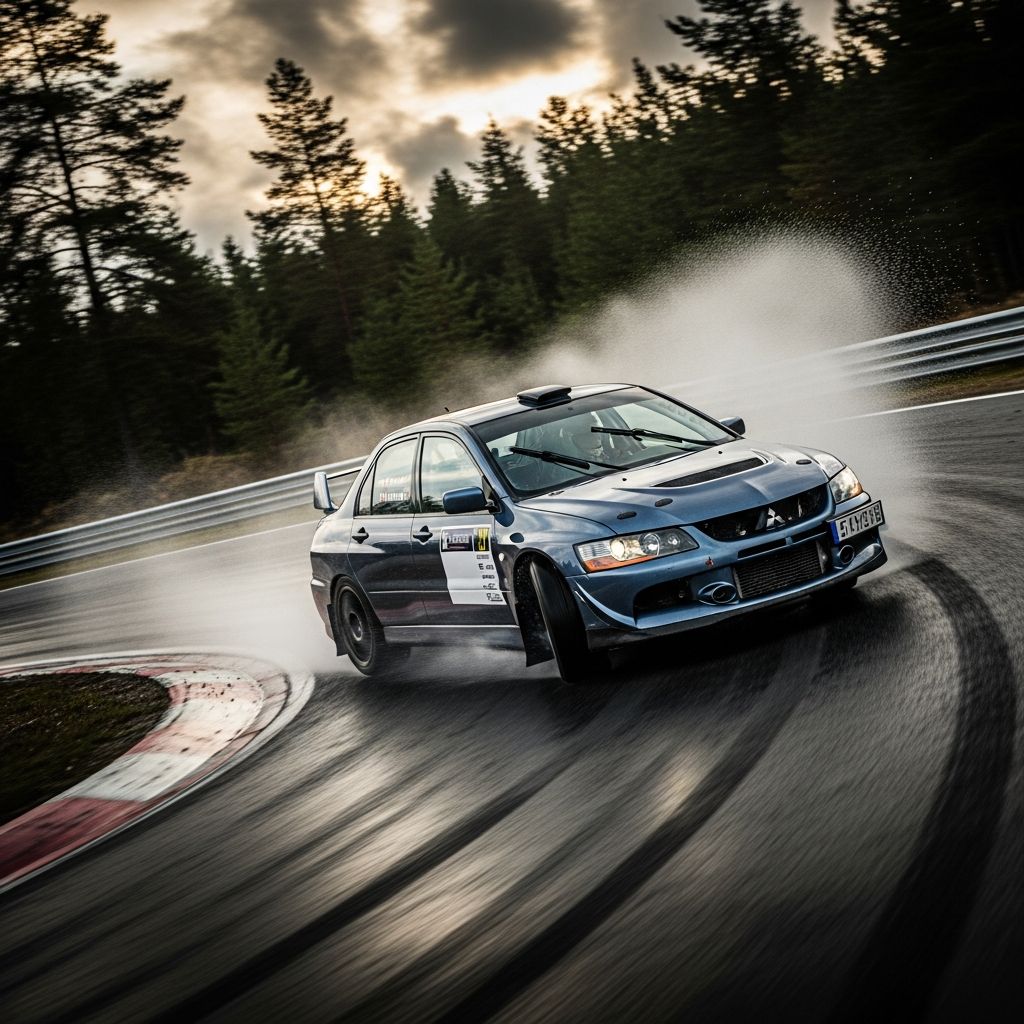
The Mitsubishi Lancer Evolution, known simply as the Evo, stands as one of the most revered performance sedans in automotive history. Produced from 1992 to 2016, this Japanese rally-bred machine transformed a humble family saloon into a turbocharged, all-wheel-drive beast capable of dominating both gravel stages and twisting tarmac roads.
Origins in Rally Racing Glory
The Evo’s story begins in the high-stakes world of World Rally Championship (WRC) competition. Mitsubishi Motors launched the first Lancer Evolution in 1992 to homologate their rally car under Group A regulations, which required a certain number of road-going versions. This necessity birthed a road-legal monster powered by the legendary 4G63 turbocharged 2.0-liter inline-four engine, paired with advanced all-wheel drive.
Early success came swiftly. Driver Tommi Mäkinen secured four consecutive WRC drivers’ titles from 1996 to 1999 behind the wheel of Evo models, cementing Mitsubishi’s reputation and the Evo’s status as a rally icon. The car’s active yaw control and viscous coupling differentials allowed it to carve through corners with precision, whether on loose surfaces or dry pavement.
Evolution Across Ten Generations
Over 24 years, Mitsubishi refined the Evo through ten distinct generations, each marked by Roman numerals. Each iteration built on the last, enhancing power, shedding weight, and improving chassis dynamics while adhering to Japan’s ‘gentleman’s agreement’ capping official output at 276 horsepower until later models.
| Generation | Years | Engine | Power (hp) | Key Features |
|---|---|---|---|---|
| Evo I | 1992-1994 | 2.0L 4G63T Turbo I4 | 250 | Homologation special, full-time AWD, 5-speed manual |
| Evo II | 1994-1995 | 2.0L 4G63T Turbo I4 | 256 | Bigger brakes, revised aero |
| Evo III | 1995-1996 | 2.0L 4G63T Turbo I4 | 270 | Active rear diff, body kit upgrades |
| Evo IV | 1996-1998 | 2.0L 4G63T Turbo I4 | 276 | New platform, twin-scroll turbo, rotated engine |
| Evo V | 1998-1999 | 2.0L 4G63T Turbo I4 | 276 | Brembo brakes, Recaro seats, wider track |
| Evo VI | 1999-2001 | 2.0L 4G63T Turbo I4 | 276 | AYC standard, Tommi Mäkinen editions |
| Evo VII | 2001-2003 | 2.0L 4G63T Turbo I4 | 276 | 6-speed manual, updated suspension |
| Evo VIII | 2003-2005 | 2.0L 4G63T Turbo I4 | 276 | Strengthened chassis, forged pistons |
| Evo IX | 2005-2007 | 2.0L 4G63T Turbo I4 | 286 | LHD option, intercooler upgrades |
| Evo X | 2007-2016 | 2.0L 4B11T Turbo I4 | 291-303 | S-AWC, 6-speed SST auto option |
This progression showcases Mitsubishi’s relentless pursuit of perfection. Early models like the Evo I were raw and track-focused, with spartan interiors featuring bucket seats and minimal frills. By the Evo X, creature comforts improved slightly, but the focus remained on performance.
Engineering Marvels Under the Hood
At the heart of every Evo beats a turbocharged 2.0-liter engine, evolving from the iron-block 4G63 to the aluminum 4B11T in the final generation. The 4G63, famous for its durability in DSM platforms like the Eagle Talon, produced anywhere from 250 to 286 hp officially, though real-world figures often exceeded 300 hp with basic mods.
All-wheel drive is the Evo’s secret weapon. Systems like Active Yaw Control (AYC) in earlier models and Super All-Wheel Control (S-AWC) in the Evo X actively distribute torque between wheels for neutral handling. Drivers can select modes for tarmac, gravel, or snow, making it versatile year-round. Transmissions stuck to manuals—5-speed in early gens, 6-speed later—though the Evo X introduced a dual-clutch SST for quicker shifts.
Driving Dynamics That Define a Legend
Owners and reviewers rave about the Evo’s intuitive handling. It understeers predictably if pushed too hard, yet drifts beautifully under power. The hydraulic steering provides razor-sharp feedback, and the short gearing keeps the turbo spooled on highways. On track, it punches above its weight, outpacing pricier rivals thanks to its mechanical grip and balance.
Braking evolved too: from standard setups in Evo I to Brembos in later models, ensuring fade-free stops. Suspension tuning prioritized flat cornering, though it results in a firm ride unsuitable for plush commuting.
Strengths and Weaknesses of Evo Ownership
- Pros: Unmatched AWD traction in all conditions; rally-proven reliability; tunable for massive power gains; practical four-door sedan; engaging manual gearbox.
- Cons: Harsh ride and noisy cabin; parts scarcity for older JDM models; heavy for its size; less aftermarket than Subaru WRX STI; interior plastics feel cheap.
Despite drawbacks, the Evo’s pros make it a favorite for enthusiasts seeking a ‘turn-key racer.’ Its sedan body offers family utility without sacrificing speed.
Buying an Evo Today: What to Know
In 2026, used Evos range from $20,000 for high-mileage Evo VIIIs to $50,000+ for pristine Final Edition Evo Xs. Prioritize rust-free examples, especially imports. Check for transfer case wear, turbo health, and clutch condition—common failure points. Later LHD models (post-2005) are easier for U.S. buyers.
Maintenance demands premium fuel and synthetic fluids. The 4G63 is bulletproof if not abused, but Evo X’s 4B11 requires timing chain vigilance. Budget $2,000-5,000 yearly for upkeep on a driven example[10].
Iconic Special Editions
Limited runs like the Tommi Mäkinen Evo VIs (celebrating WRC wins) feature unique aero, gold wheels, and lightweight parts. The 2015 Final Edition Evo X packed Bilstein shocks, 303 hp, and a matte finish as a swan song. These command premiums but offer collectible appeal.
Legacy and Modern Relevance
Though discontinued, the Evo’s influence endures in aftermarket tuning and gaming culture. It paved the way for modern hot hatches, proving affordable performance needn’t compromise grip or fun. With electrification looming, the Evo remains a pure internal-combustion thrill.
Frequently Asked Questions (FAQs)
What makes the Mitsubishi Lancer Evo special?
Its combination of turbo power, AWD grip, and rally pedigree in a sedan package sets it apart.
Which Evo generation is best for beginners?
Evo VIII or IX offer refined handling and LHD availability without Evo X complexity.
How reliable is the Evo long-term?
Very, if maintained properly; the 4G63 engine can exceed 200,000 miles.
Can I daily drive an Evo?
Yes, but expect a stiff ride and high revs; ideal for enthusiasts.
What’s the Evo vs. Subaru WRX STI difference?
Evo emphasizes neutral handling; STI is more tail-happy. Both legends.
References
- Mitsubishi Lancer Evolution – Wikipedia — Wikipedia. 2023-10-01. https://en.wikipedia.org/wiki/Mitsubishi_Lancer_Evolution
- REVIEW: 2015 Mitsubishi Lancer EVO – Sayonara! You Will Be Missed — BestRide Blog. 2015-06-15. https://blog.bestride.com/reviews/new-car-reviews/sayonara-mitsubishi-lancer-evo-you-will-be-missed/
- Mitsubishi Lancer Evolution – The Ultimate Guide & Research Hub — Supercars.net. 2022-05-20. https://www.supercars.net/blog/all-brands/mitsubishi/mitsubishi-lancer-evo-guide/
- Mitsubishi Lancer Evo: The Ultimate Guide (2026) — JDM Buy Sell Blog. 2026-01-10. https://www.jdmbuysell.com/blog/mitsubishi-lancer-evo/
- Tested: 2015 Mitsubishi Lancer Evo Final Edition — Car and Driver. 2015-04-01. https://www.caranddriver.com/reviews/a15102392/2015-mitsubishi-lancer-evolution-final-edition-test-review/
- Mitsubishi Lancer Evolution Buying Guide — CarGurus. 2023-08-15. https://www.cargurus.com/Cars/articles/mitsubishi-lancer-evolution-buying-guide
Similar Articles






Read full bio of medha deb