Mercedes-Benz SLR McLaren: 2,157 Produced, 617 HP Icon
Discover the legendary Mercedes-Benz SLR McLaren, a fusion of 1950s racing heritage and modern supercar innovation from Mercedes and McLaren.
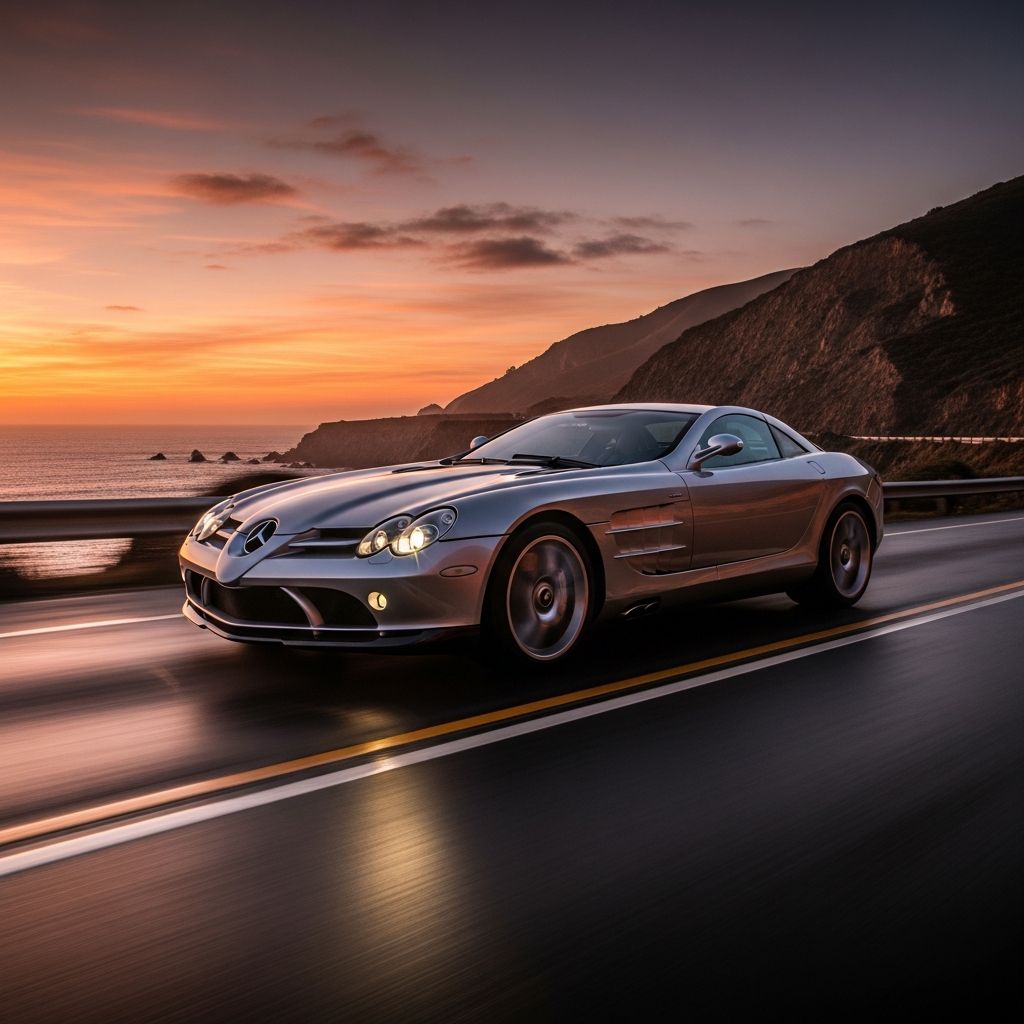
The Mercedes-Benz SLR McLaren stands as a pinnacle of automotive engineering, merging the storied racing legacy of Mercedes-Benz with the cutting-edge expertise of McLaren Automotive. Produced from 2003 to 2010, this grand tourer captured the imagination of enthusiasts worldwide through its blend of raw power, luxurious comfort, and innovative design inspired by mid-20th-century racing icons.
Roots in Racing Glory: From 1950s Silver Arrows to Modern Marvel
The SLR’s heritage traces directly to Mercedes-Benz’s dominant era in motorsport during the 1950s. Known as the Silver Arrows, Mercedes cars like the 300 SLR excelled in Formula One, sports car racing, and rallies, showcasing lightweight construction and superior performance. The 300 SLR, meaning ‘Sport, Leicht, Rennsport’ or ‘Sport, Light, Racing,’ triumphed in the 1955 World Sportscar Championship, including a record-breaking Mille Miglia win by Stirling Moss at an average speed of 157.65 km/h.
Tragedy struck at the 1955 Le Mans race, prompting Mercedes to withdraw from factory motorsport for nearly four decades. Two road-legal 300 SLR Uhlenhaut Coupés were crafted, recognized as the era’s fastest cars, but they faded into obscurity post-withdrawal. This legacy resurfaced in 1999 with the Vision SLR concept, a homage to those pioneers, built on the R129 SL-Class platform and fusing Mercedes’ luxury with McLaren’s Formula 1 prowess.
Birth of a Collaboration: Mercedes and McLaren Unite
Mercedes-Benz, holding a 40% stake in the McLaren Group during development, partnered with McLaren to birth the SLR McLaren (C199/R199/Z199). Unveiled as a production-ready evolution of the 1999 Vision SLR and 2003 Vision SLR Roadster concepts, it was assembled at McLaren’s Technology Centre in Woking, England.
This Anglo-German alliance combined Mercedes’ reliability and comfort with McLaren’s lightweight materials and aerodynamic mastery. The result was a front-mid-engine grand tourer classified more as a GT due to its automatic transmission and refined driving dynamics, despite supercar credentials.
Revolutionary Engineering: Carbon Fiber and Supercharged Might
At its core, the SLR pioneered production car technology. It featured the first full carbon-fiber monocoque chassis, bonded to an aluminum subframe housing a hand-built AMG supercharged 5.4-liter (later 5.5-liter) all-aluminum V8 engine. This powerhouse delivered 617 horsepower and 580 lb-ft of torque, propelling the car from 0-60 mph in 3.6 seconds with a top speed exceeding 208 mph.
Every body panel was carbon fiber, enhancing rigidity and reducing weight to around 3,950 lbs. The front-mid-engine layout positioned the V8 behind the front axle for optimal balance. Formula 1-inspired elements included a deployable rear spoiler that boosted downforce and acted as an air brake. Braking came from massive carbon-ceramic discs, resistant to fade up to 2,200°F, marking another first for production vehicles.
| Key Specs | Coupe (Standard) | 722 Edition |
|---|---|---|
| Engine | 5.4L Supercharged V8 | 5.4L Supercharged V8 |
| Power | 617 hp | 650 hp |
| Torque | 580 lb-ft | 604 lb-ft |
| 0-60 mph | 3.6 sec | 3.6 sec |
| Top Speed | 208 mph | 209 mph |
| Weight | ~3,950 lbs | ~3,957 lbs |
Design Mastery: Aerodynamics Meets Retro Flair
The SLR’s elongated, low-slung silhouette evoked the 300 SLR while incorporating modern cues. Its silver bodywork, wide stance, and sleek lines made it appear sculpted from a single metallic block. Subtle changes from concept to production refined the front fascia with F1-derived air intakes and a long hood emphasizing grand touring poise.
Inside, a carbon-fiber tub enveloped occupants in luxury: buttery leather, Alcantara, and advanced electronics. The cabin prioritized comfort for high-speed cruises, with gullwing doors—a nod to the 300 SL—adding theatrical flair. McLaren’s influence shone in the chassis tuning, delivering sharp handling without sacrificing ride quality.
Performance Variants: Standard, Roadster, and 722 Edition
Launched as a coupe in 2003, the SLR evolved with a 2007 roadster (R199) featuring a folding fabric roof while retaining identical powertrain specs. The 2006 SLR McLaren 722 Edition paid tribute to Stirling Moss’s Mille Miglia car (his #722). Upping output to 650 hp via revised supercharging and internals, it included stiffer suspension, larger carbon-ceramic brakes, and unique styling like matte silver finishes. Only 150 units were made, accelerating to 62 mph in 3.6 seconds and hitting 209 mph.
Later, the 722 S Roadster amplified this with weight savings and enhanced aero, solidifying the SLR’s status as a collector’s icon.
Driving Dynamics: GT Comfort with Supercar Thrill
Despite 617+ hp through rear wheels via a 5-speed automatic (later paddle-shift), the SLR balanced ferocity and usability. Its front-mid layout provided neutral handling, aided by active aerodynamics and McLaren’s suspension wizardry. Reviewers praised its composure on twisty roads and autobahns alike, though some noted the auto gearbox dulled engagement compared to rivals.
- Acceleration: Explosive yet linear supercharger boost.
- Braking: Unfading stops from high speeds.
- Handling: Precise steering with minimal body roll.
- Sound: Refined V8 growl with supercharger whine.
Production and Market Legacy: Rarity and Value
Over 2,157 units were produced across variants, with prices starting at $455,000. Today, well-maintained examples fetch $300,000–$600,000 at auction, their exclusivity amplified by the Mercedes-McLaren split post-2009. The SLR’s 20th anniversary in 2023 reignited admiration for its blend of heritage and tech.
Enduring Appeal: Why the SLR Still Captivates
Two decades on, the SLR endures as a bridge between eras—honoring 1950s triumphs while pioneering carbon-fiber and ceramic tech. Its collaboration ethos, limited run, and versatile GT-supercar nature ensure lasting allure for collectors and drivers.
Frequently Asked Questions (FAQs)
What does SLR stand for in Mercedes-Benz SLR McLaren?
SLR stands for ‘Sport Leicht Rennsport,’ echoing the 1950s 300 SLR racer.
How many SLR McLarens were produced?
Approximately 2,157 units across coupe, roadster, and special editions from 2003–2010.
What makes the 722 Edition special?
Named for Stirling Moss’s race number, it boasts 650 hp, upgraded brakes, and exclusive styling.
Is the SLR McLaren a true supercar or GT?
It’s a grand tourer with supercar performance, thanks to its automatic transmission and comfort focus.
Where was the SLR built?
Assembled at McLaren’s Technology Centre in Woking, England.
References
- History of the Mercedes-Benz SLR McLaren — GTspirit. 2012-05-15. https://gtspirit.com/2012/05/15/history-of-the-mercedes-benz-slr-mclaren/
- The Mercedes-Benz SLR McLaren Doesn’t Get the Respect It… — MotorTrend. N/A. https://www.motortrend.com/features/mercedes-benz-slr-mclaren-supercar-history-retrospective
- Mercedes-Benz SLR McLaren — Wikipedia. N/A. https://en.wikipedia.org/wiki/Mercedes-Benz_SLR_McLaren
- Mercedes-Benz SLR McLaren Model Year History — JD Power. N/A. https://www.jdpower.com/cars/history/mercedes-benz/slr-mclaren
- The Mercedes-Benz SLR McLaren turns 20 years old… — Classic Driver. N/A. https://www.classicdriver.com/en/article/cars/mercedes-benz-slr-mclaren-turns-20-years-old-and-were-still-madly-love
Similar Articles


Read full bio of medha deb