Mazda’s Independent Hybrid Strategy for the CX-5
Mazda develops proprietary hybrid technology prioritizing driving dynamics over cost efficiency
A New Direction in Hybrid Development
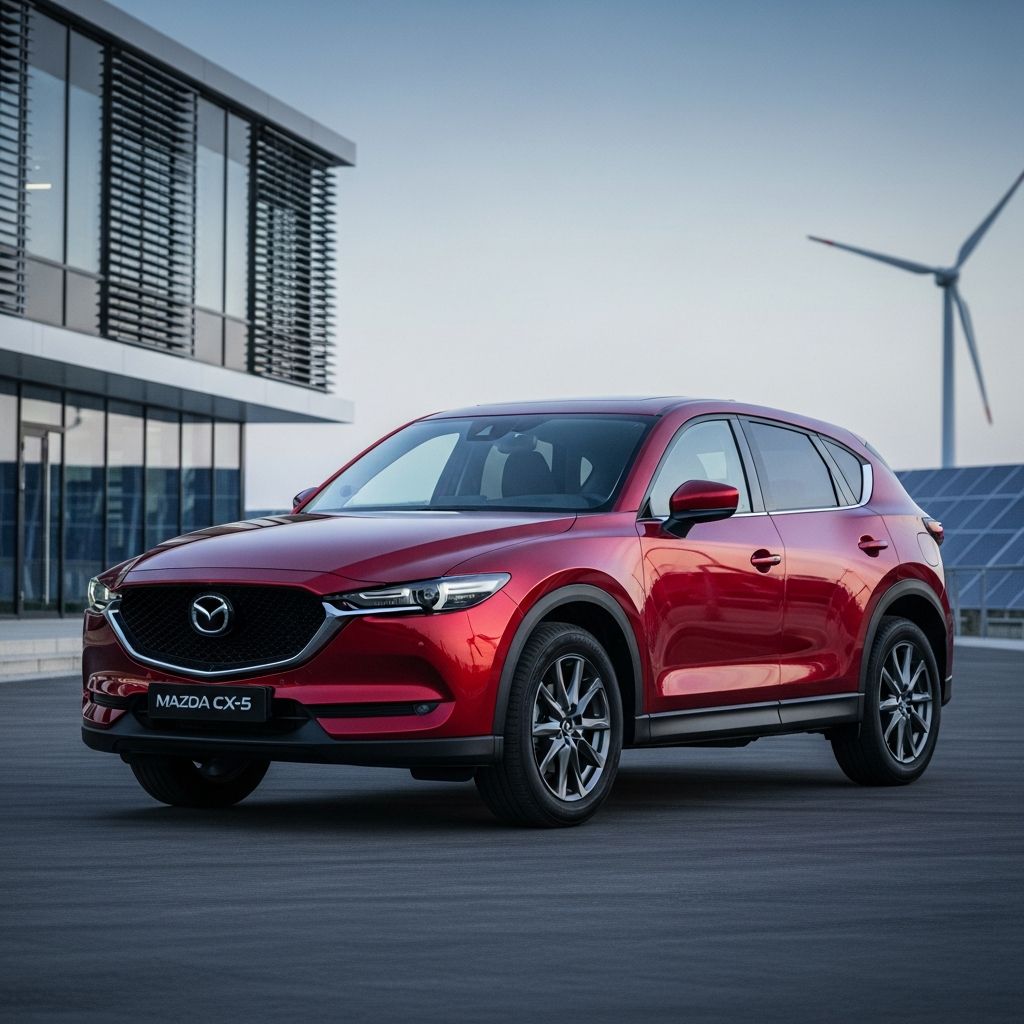
The automotive industry has witnessed a significant shift in hybrid technology adoption, with manufacturers increasingly offering electrified powertrains to meet consumer demands and environmental regulations. Mazda, a company historically known for emphasizing driving enjoyment and mechanical refinement, has taken an unconventional approach by refusing to adopt a proven hybrid solution from its longtime partner Toyota. Instead, the Japanese automaker has committed substantial resources to developing its own proprietary hybrid system specifically designed for the CX-5, one of its most successful product lines.
This strategic decision represents a fundamental commitment to maintaining Mazda’s core brand identity while advancing toward electrification. Rather than compromise on the attributes that define the Mazda driving experience, the company has chosen to invest in technology that aligns with its engineering philosophy and market positioning.
Understanding Jinba Ittai: The Driving Philosophy Behind the Decision
Central to comprehending Mazda’s rejection of Toyota’s hybrid technology is understanding the concept of “Jinba Ittai,” a Japanese term that has become synonymous with the Mazda brand. This philosophy describes a harmonious connection between driver and vehicle, often compared to the unified bond between a horse and its rider. For Mazda, this translates to delivering a driving experience characterized by linearity, directness, and dynamic engagement.
When Mazda executives evaluated available hybrid solutions, they recognized that Toyota’s established series-parallel hybrid system, while proven and efficient, did not align with this fundamental brand principle. The series-parallel configuration, which integrates planetary gearsets and multiple electric motors into a unified unit, prioritizes fuel economy and operational efficiency. However, it introduces complexity into the powertrain that can diminish the direct mechanical feedback that Mazda considers essential to its brand promise.
This philosophical foundation became the primary driver behind Mazda’s decision to pursue independent hybrid development. The company determined that preserving its identity in an increasingly electrified automotive landscape was more important than adopting readily available technology from a partner manufacturer.
The Technical Architecture of Mazda’s SkyActiv-Z Hybrid
Mazda’s proprietary hybrid system, designated SkyActiv-Z, employs a fundamentally different architectural approach compared to Toyota’s integrated design. The system positions the electric motor between the traditional combustion engine and a conventional transmission, mirroring the layout found in Mazda’s plug-in hybrid electric vehicle (PHEV) offerings, particularly the CX-60 model.
This series-hybrid-like configuration provides several distinct advantages from a driving dynamics perspective. By maintaining a more direct mechanical connection through traditional transmission components, the system preserves the tactile feedback and responsive character that Mazda customers expect. The placement of the electric motor allows for more intuitive power delivery progression and maintains what enthusiasts describe as “mechanical feel” during acceleration and deceleration cycles.
Other manufacturers including Kia, Hyundai, and Great Wall Motors have adopted similar parallel hybrid architectures, with industry analysts noting that this approach generally delivers superior refinement and dynamic character compared to Toyota’s integrated system. The tradeoff, however, involves fuel consumption metrics that typically fall short of Toyota’s optimized efficiency figures.
Development Timeline and Market Introduction Strategy
The rollout timeline for Mazda’s hybrid technology reflects a carefully planned global strategy. The SkyActiv-Z hybrid was originally scheduled for introduction in the North American market during 2027, positioning it ahead of availability in other regions. This phased approach allows Mazda to validate the technology in a major market before expanding distribution internationally.
For Australian consumers, the CX-5 hybrid variant is not expected to arrive until 2028 as part of the model year update cycle. This delayed timeline provides Mazda with adequate opportunity to refine manufacturing processes, gather performance data, and adjust any aspects of the system based on real-world operational experience in the North American market.
Currently, the CX-5 in most markets, including Australia, continues to utilize Mazda’s naturally aspirated 2.5-liter four-cylinder engine. Recent optimization efforts have slightly improved fuel consumption metrics, reducing combined cycle figures from 7.5 to 7.4 liters per 100 kilometers, demonstrating Mazda’s commitment to incremental efficiency gains even with conventional powertrains.
Cost Considerations and Consumer Pricing
Beyond philosophical concerns, economic factors significantly influenced Mazda’s hybrid development decision. Mazda leadership explicitly stated that Toyota’s hybrid system had become prohibitively expensive over time. Licensing and implementation costs associated with Toyota’s mature technology had escalated to levels that would necessitate substantial price increases for end consumers.
By developing its own system, Mazda aims to offer hybrid capability at more accessible price points while maintaining acceptable profit margins. This cost consideration becomes increasingly important in markets experiencing economic uncertainty and fuel price volatility. In regions where petrol prices approach $2.50 per liter, consumers demonstrate heightened sensitivity to both vehicle acquisition costs and operational expenses.
Mazda’s two-tiered hybrid approach further addresses cost concerns. The entry-level mild hybrid configuration prioritizes affordability while delivering modest efficiency improvements. A performance-oriented strong hybrid variant provides customers seeking premium driving dynamics with advanced capabilities without forcing all CX-5 buyers into expensive technology they may not require.
Performance Versus Efficiency: Redefining Hybrid Priorities
A critical distinction separates Mazda’s hybrid strategy from competitors’ approaches. While most manufacturers optimize hybrid systems primarily for fuel economy achievement and emissions reduction, Mazda explicitly prioritizes creating a superior driving experience above the baseline petrol engine. This fundamental philosophical difference shapes every aspect of the SkyActiv-Z development process.
Mazda executives acknowledged that fuel consumption figures for their hybrid system would likely not achieve parity with Toyota’s more efficiency-optimized approach. However, company leadership determined that the driving experience benefits and alignment with brand values justified accepting slightly higher fuel consumption compared to the most efficient competitors.
This positioning recognizes a market segment of consumers who value performance, engagement, and driving pleasure alongside environmental responsibility. Rather than attempting to compete directly on fuel economy metrics where established competitors possess significant advantages, Mazda differentiates through delivering a unique value proposition centered on driver satisfaction and mechanical engagement.
Technological Innovations Within SkyActiv-Z
Mazda has incorporated advanced engineering innovations into the SkyActiv-Z platform that address specific performance objectives. The system utilizes super-lean fuel mixture combustion strategies that dramatically improve engine efficiency and reduce fuel consumption without sacrificing performance characteristics.
Additionally, the hybrid system incorporates thermoelectric heat recovery technology that captures otherwise wasted thermal energy generated during combustion cycles. This recovered energy supplements the electric motor’s power reserve, improving overall system efficiency and reducing fuel consumption while maintaining the driving dynamics Mazda prioritizes.
These technical features collectively contribute to lower fuel consumption and reduced carbon emissions compared to conventional naturally aspirated engines, positioning the hybrid variant as an environmentally responsible choice without requiring customers to compromise on the mechanical engagement and performance feedback that defines the Mazda brand experience.
Market Context and Competitive Positioning
Mazda’s hybrid strategy emerges during a period when hybrid powertrains have become the most popular drivetrain format for passenger vehicles and SUVs in key markets. This trend accelerates as petrol prices experience volatility due to geopolitical tensions and consumers seek reduced operational costs amid economic uncertainty.
The CX-5, as Mazda’s best-selling mid-sized SUV, represents a critical vehicle in the company’s portfolio. Offering competitive hybrid technology becomes increasingly important for maintaining market share against rivals offering hybrid variants. However, rather than follow established competitors into proven hybrid architectures, Mazda determined that differentiation through proprietary technology aligned with brand values would prove more effective long-term.
In North America, where Mazda previously offered the CX-50 with a Toyota-sourced series-parallel hybrid system since 2022, the transition to SkyActiv-Z represents a deliberate shift toward independent technology. This move signals Mazda’s confidence in proprietary development and commitment to vertical integration of critical powertrain technologies.
Looking Forward: The Future of Mazda’s Electrification Strategy
The SkyActiv-Z hybrid development represents a foundational element in Mazda’s broader electrification roadmap. Following the recent introduction of battery-electric vehicles including the CX-6e, hybrid technology serves as an intermediate step toward full electrification while addressing current consumer preferences and charging infrastructure limitations.
Mazda’s approach demonstrates that companies can successfully pursue independent technological development even when established alternatives exist, provided that differentiation creates distinct consumer value. By prioritizing driving engagement, mechanical feedback, and brand alignment over pure efficiency metrics, Mazda has positioned itself distinctively within the hybrid market segment.
The SkyActiv-Z hybrid promises to deliver an alternative for consumers seeking electrified vehicles that preserve the driving characteristics associated with Mazda’s brand heritage. As this technology matures and reaches global markets beginning in 2027-2028, it will demonstrate whether Mazda’s strategy of philosophical alignment and dynamic performance can successfully compete against efficiency-optimized alternatives in an increasingly crowded hybrid marketplace.
References
- Why Mazda ditched Toyota’s hybrid tech for its own, slated for 2028 — Chasing Cars. 2025. https://www.chasingcars.com.au/news/car-technology/why-mazda-ditched-toyotas-hybrid-tech-for-its-own-slated-for-2028/
- 2027 Mazda CX-5 Hybrid to fill the gap left by 2.5-litre turbo-petrol — CarsGuide. 2025. https://www.carsguide.com.au/car-news/mazda-working-on-potent-hybrid-cx-5-2027-mazda-cx-5-hybrid-to-fill-the-gap-left-by-25
- Hybrid Electric Vehicles: Current Status and Future Trends — International Energy Agency. 2024. https://www.iea.org/
Similar Articles





Read full bio of Sneha Tete