Mastering Efficiency: Japan’s Auto Revolution
Discover how Japanese automakers transformed scarcity into strength through innovative philosophies and smart design.
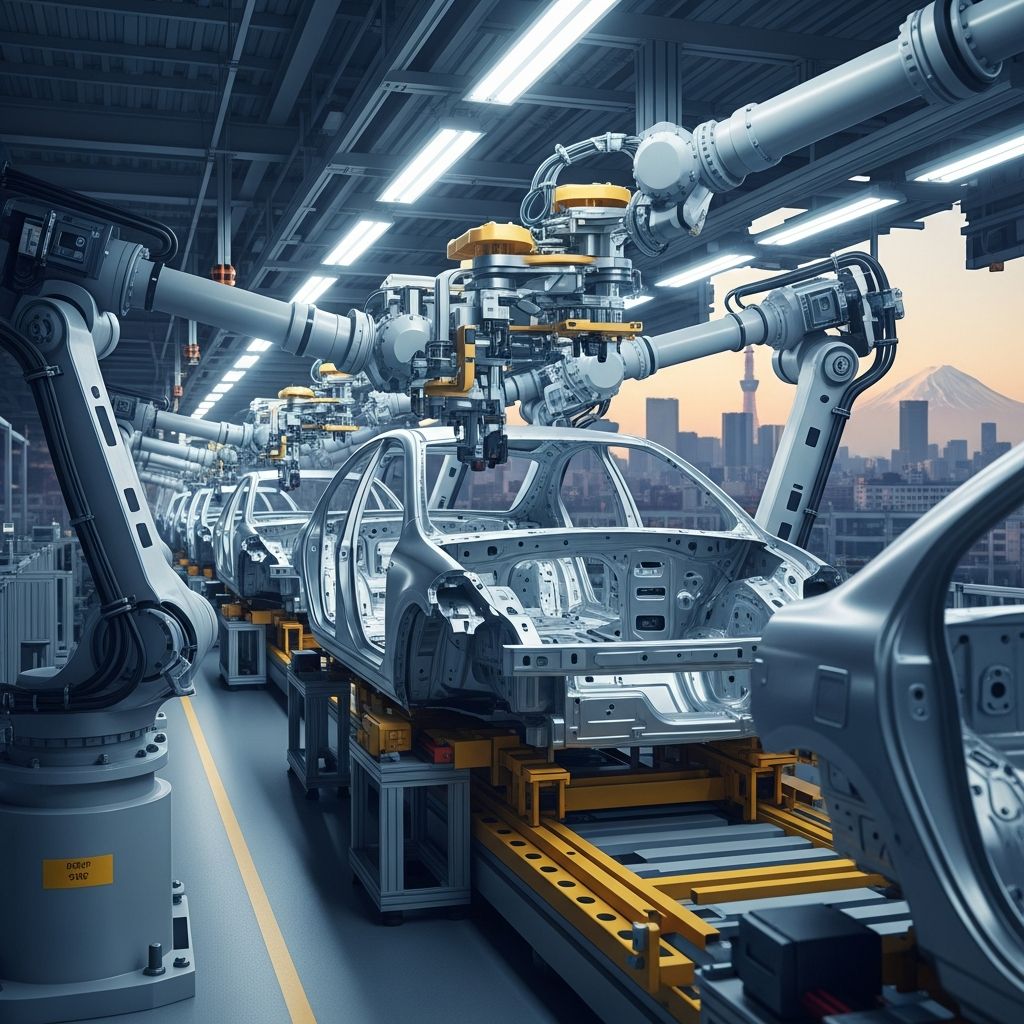
Japanese automakers have long been synonymous with reliability, affordability, and ingenuity. Facing post-war resource shortages and fierce international competition, companies like Toyota, Honda, and Nissan developed unique methodologies that prioritized doing more with less. These approaches not only secured their market dominance but also fundamentally altered vehicle design paradigms worldwide.
The Foundations of Japanese Automotive Ingenuity
The story begins in the mid-20th century, when Japan rebuilt its economy amid devastation. Automakers inherited a legacy of textile innovation, particularly from Toyota’s origins. Sakichi Toyoda, Toyota’s founder, revolutionized looms with automatic fault-detection mechanisms that halted production upon detecting defects, ensuring quality without waste. This principle evolved into the bedrock of modern car manufacturing.
Central to this evolution is the
Toyota Production System (TPS)
, a framework emphasizing waste elimination, just-in-time inventory, and employee empowerment. TPS transformed factories into lean operations where every process adds value. Unlike Western mass-production models reliant on stockpiles, Japanese methods synchronize supply with demand, minimizing excess materials and storage costs.- Just-in-Time (JIT): Parts arrive precisely when needed, reducing inventory by up to 90% in some plants.
- Jidoka: Automation with human intelligence, where machines stop for issues, preventing defective products.
- Standardized Work: Balances workloads to optimize flow and safety.
These elements fostered a culture where efficiency drives design, influencing everything from component simplicity to overall vehicle architecture.
Kaizen: The Philosophy of Relentless Improvement
**Kaizen**, meaning “change for the better,” permeates Japanese manufacturing. It empowers every worker—from assembly line operators to engineers—to suggest incremental enhancements. This bottom-up approach contrasts with top-down directives common elsewhere, yielding profound results over time.
For instance, Toyota’s cross-car beam, a structural component in models like the bZ4X electric vehicle, exemplifies Kaizen. Originally designed to dampen engine vibrations in internal combustion engines, decades of refinements made it lighter, stronger, and adaptable to EVs. Such iterative tweaks accumulate, reducing weight by grams per iteration but tons across production volumes.
| Aspect | Traditional Approach | Kaizen Approach |
|---|---|---|
| Decision Making | Top executives | All employees |
| Focus | Large overhauls | Small, daily changes |
| Outcome | Infrequent gains | Continuous efficiency |
Kaizen’s impact extends beyond factories. Suppliers integrate it, creating tight-knit networks called
keiretsu
, where firms collaborate on cost reductions while sharing risks. This structure allowed Japanese companies to undercut American rivals despite trade barriers, maintaining low prices through firm-level efficiencies.Monozukuri: Elevating Craftsmanship in Mass Production
Complementing Kaizen is
Monozukuri
, or “making things,” which instills artisan pride in industrial-scale output. Skilled workers, revered asTakumi
(masters), bring meticulous attention to detail, ensuring durability and precision.In practice, Monozukuri manifests in simplified designs that prioritize longevity. Japanese engines, for example, use fewer parts than European counterparts, easing maintenance and boosting reliability. This philosophy influenced compact car designs that maximize interior space while minimizing material use—hallmarks of models like the Honda Civic or Toyota Corolla.
During the 1970s oil crises, these traits propelled Japanese exports. Fuel-efficient, affordable vehicles captured U.S. markets, forcing Detroit to adapt. By focusing on essential features, Japanese makers avoided bloat, creating cars that delivered value without excess.
Resource Constraints as Catalysts for Design Innovation
Limited raw materials post-WWII compelled radical rethinking. Japanese engineers optimized for scarcity, developing lightweight alloys and modular platforms shared across models. A single chassis might underpin sedans, SUVs, and trucks, slashing development costs by 30-50%.
This modularity shines in platform strategies. Toyota’s TNGA (Toyota New Global Architecture) exemplifies it: shared underpinnings enhance rigidity, handling, and crash safety while reducing parts count. EVs benefit too, as proven EV beams repurpose ICE-honed designs for quieter cabins.
Design-wise,
kodo
(soul of motion) in Mazda or Honda’s “man-maximum, machine-minimum” mantra shrinks cockpits visually while expanding them practically. Aerodynamics receive obsessive focus; subtle curves cut drag without wind-tunnel extravagance.- Shared platforms reduce R&D expenses.
- Lightweight materials improve fuel economy.
- Minimalist interiors cut costs, enhance ergonomics.
Keiretsu Networks: Collaborative Supremacy
Japan’s success owes much to keiretsu—interlinked conglomerates of manufacturers, suppliers, and banks. Unlike adversarial U.S. supplier relations, keiretsu foster trust-based partnerships. This enabled rapid scaling during export booms, evading protectionist policies through internal cost controls.
MITI (Ministry of International Trade and Industry) guided this ecosystem, coordinating R&D and exports. Yet, firm-level innovations like TPS proved decisive, insulating Japanese makers from globalization pressures that burdened unionized American plants.
Global Influence and Modern Adaptations
TPS and Kaizen spread worldwide; Ford and GM adopted them post-1980s crises. Today, amid EV transitions and chip shortages, Japanese firms leverage these tools. Toyota’s bZ4X reuses refined components, ensuring affordability despite battery costs.
Honda’s e:Architecture modularizes EVs similarly, while Nissan’s Ariya prioritizes efficient packaging. These evolutions maintain the “more with less” ethos, positioning Japan strongly in electrification.
Challenges and Future Horizons
Japanese automakers face software lags and luxury gaps versus Tesla or BMW. Yet, their hardware prowess endures. Hybrids like Prius demonstrate prescience, blending efficiency philosophies with new tech.
Looking ahead, Kaizen will refine solid-state batteries and autonomous systems. Resource efficiency remains vital amid sustainability demands.
Frequently Asked Questions
What is Kaizen in car manufacturing?
Kaizen is a continuous improvement philosophy where workers at all levels contribute ideas to enhance processes, quality, and efficiency.
How did Toyota start?
Toyota originated from loom manufacturing, applying quality-control innovations to automobiles via TPS.
Why are Japanese cars reliable?
Monozukuri craftsmanship and rigorous testing ensure durability, with skilled Takumi workers upholding high standards.
What role did keiretsu play?
Keiretsu networks enabled cost efficiencies and collaboration, outpacing American competitors.
Are these methods still relevant for EVs?
Yes, refined components like cross-beams adapt ICE lessons to electric vehicles effectively.
References
- Why Automakers Like Toyota Have To Unlearn How To Make Cars — The Autopian. 2023. https://www.theautopian.com/why-automakers-like-toyota-have-to-unlearn-how-to-make-cars/
- Japanese carmakers have a secret ingredient — Premcar. 2023. https://premcar.au/japanese-carmakers-have-a-secret-ingredient/
- How Japanese Automakers Thwarted American Competition — Yale Undergraduate Research Journal. 2009. https://elischolar.library.yale.edu/yurj/vol1/iss1/33/
- Why Japanese-made cars are affordable and durable — YouTube (Video Transcript). 2023. https://www.youtube.com/watch?v=ZukIRIfmq7g
Similar Articles







Read full bio of Sneha Tete