Low Traffic Neighborhoods: Benefits, Fines, Key Insights
Discover how Low Traffic Neighbourhoods reshape urban streets, from safer communities to hefty fines and heated public disputes.
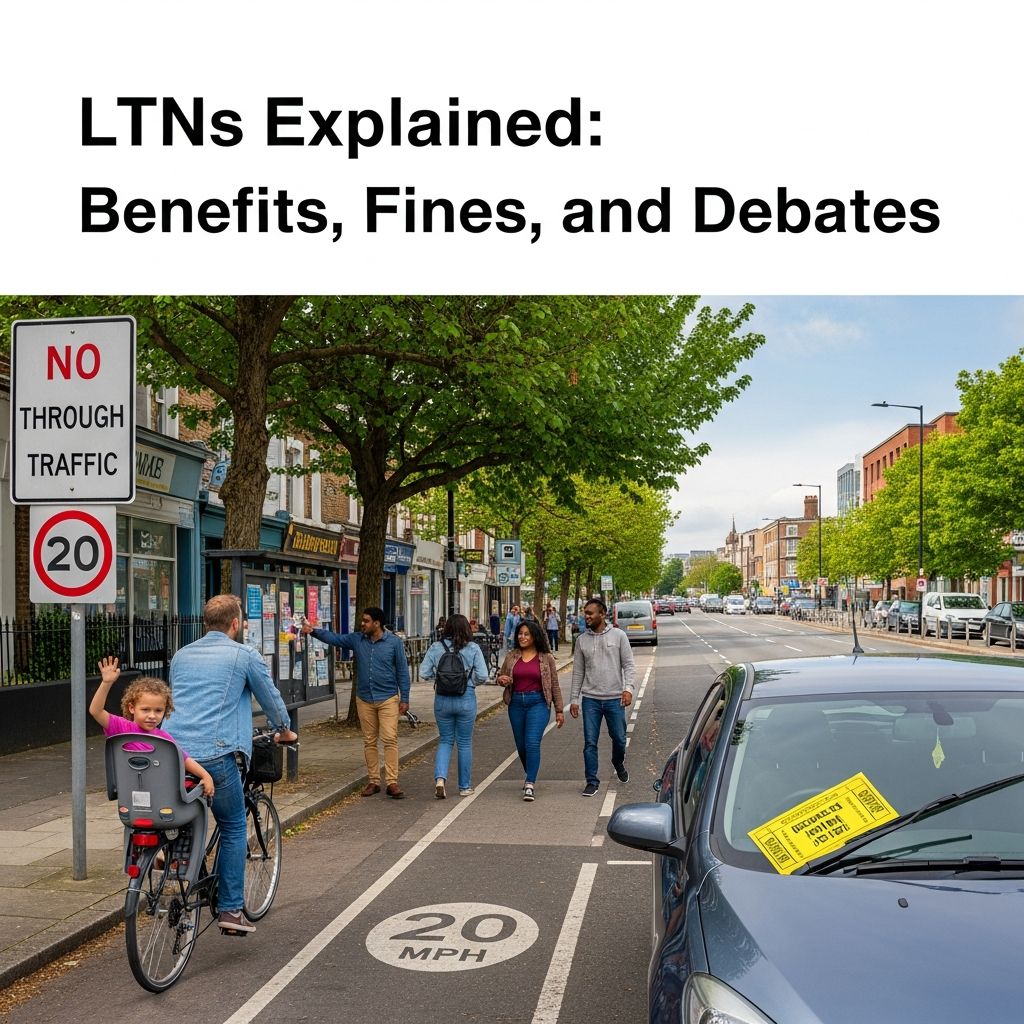
LTNs Explained: Benefits, Fines, and Debates
Low Traffic Neighbourhoods (LTNs) represent a transformative approach to urban planning in the UK, designed to curb excessive vehicle use on local residential roads. These initiatives prioritize pedestrians, cyclists, and community life by blocking rat-runs—shortcuts used by non-residents—while permitting essential access for deliveries and locals. Emerging prominently during the 2020 pandemic, LTNs have sparked both enthusiasm for greener streets and backlash over enforcement and equity.
Core Principles Behind LTN Implementation
At their heart, LTNs aim to reclaim residential areas from heavy through-traffic, fostering environments where children play safely and residents walk freely. Authorities select streets based on criteria like poor air quality, high collision rates, limited green spaces, and elevated child obesity levels. Interventions often start as trials, allowing data collection and public input before permanence.
Physical changes include narrowing roads to one lane, expanding sidewalks, and installing speed bumps. Non-physical measures rely on signage and cameras. For instance, bus gates permit public transport passage while barring private cars, and diagonal blocks at intersections prevent cut-throughs. Planters or bollards serve as low-cost barriers, enhancing aesthetics alongside function.
- Access Rules: Residents and service vehicles enter freely; through-traffic faces restrictions.
- Trial Periods: Typically 6-18 months, with resident feedback shaping outcomes.
- Speed Reduction: Redesigned layouts encourage slower driving, boosting pedestrian safety.
Enforcement Tools and Financial Penalties
Modern LTNs leverage Automatic Number Plate Recognition (ANPR) cameras to monitor entries. Exemptions for residents involve registering plates digitally. Violators receive Penalty Charge Notices (PCNs) by post, typically £130, halved to £65 if paid within 14 days.
Revenue from fines has surged: one report noted nearly 700,000 PCNs in 2022 across London, generating £40.8 million. A single council issued 200,000 fines over three years from two streets, potentially worth £26 million. Critics decry this as a ‘money-making’ scheme, though councils claim funds support road maintenance.
| Violation Type | Standard Fine | Early Payment | Common Locations |
|---|---|---|---|
| Unauthorized Through-Traffic | £130 | £65 (14 days) | ANPR-monitored streets |
| Ignoring Signage | £130 | £65 | Entry points |
| Bus Gate Breach | £130 | £65 | Public transport routes |
Signage confusion exacerbates issues; varying hours (e.g., peak times only) and vehicle exemptions challenge drivers, especially newcomers. Some councils removed misleading ‘open’ signs after complaints.
Reported Gains from LTN Schemes
Proponents highlight measurable improvements. Traffic volumes drop by up to 46.9% internally, with boundary roads seeing minimal 1.6% rises. Car-related casualties halve, speeds slow by 33%, and crime falls 10-18% over time.
Air quality enhances as idling and acceleration decrease, aiding areas with historically high pollution. Schools benefit from safer routes to class, potentially curbing obesity through active travel. A Department for Transport survey across London, Birmingham, Wigan, and York found 45% resident support, with many unaware they lived in one.
- Safety Boost: Fewer accidents, especially involving vulnerable road users.
- Community Revival: Quieter streets encourage outdoor activities.
- Environmental Wins: Lower emissions in targeted zones.
Key Challenges and Criticisms
Despite positives, LTNs face scrutiny. Traffic displacement burdens main roads, often in deprived areas, raising pollution there. Green activists like John Stewart call them ‘inherently unfair,’ benefiting affluent neighborhoods while penalizing others.
Emergency access concerns prompted shifts from bollards to cameras in some spots, following fire and ambulance consultations. A Times study showed London traffic rising 11.4% post-lockdown in LTN boroughs, questioning net emission cuts.
Consultation gaps fuel resentment; rushed rollouts during COVID bypassed full engagement. Failed trials abound: Salisbury scrapped a £412,000 scheme after one month due to business woes.
Real-World Examples and Outcomes
London leads with borough-wide LTNs, generating over £56 million in fines. Tower Hamlets saw political fallout, with mayor Lutfur Rahman re-elected in 2022 on an anti-LTN platform. Oxford and Croydon hosted protests, linking LTNs to ’15-minute city’ conspiracies.
Positive cases persist: Westminster University research found negligible neighboring traffic hikes, countering displacement fears. RoSPA endorses LTNs with mitigations like main-road calming.
| Location | Implementation Year | Outcome | Key Metric |
|---|---|---|---|
| London Boroughs | 2020 | Ongoing/Mixed | £40.8M fines (2022) |
| Salisbury | 2021 | Scrapped | £412K cost |
| Tower Hamlets | 2022 | Political Reversal | Election Impact |
Future Directions for LTNs
As trials evolve, best practices emerge: robust consultation, hybrid barriers (cameras over bollards), and integrated public transport. Funding shifts from fines to grants could reduce perceptions of revenue grabs. Long-term monitoring proves vital—some schemes endure, others adapt or end.
Government guidance stresses equity, urging avoidance of undue boundary road strain. With urban growth, LTNs could expand if paired with broader strategies like cycle superhighways.
Frequently Asked Questions (FAQs)
Are LTNs permanent?
Many begin as trials; successes become permanent based on data and feedback. About half persist post-evaluation.
How do I avoid LTN fines?
Watch for signs, use sat-nav updates, and register your plate if residing inside. Apps like Waze flag LTNs.
Do LTNs affect emergency services?
Cameras allow quick access; physical barriers are rare now, adjusted per service input.
Can LTNs improve air quality?
Internal reductions yes, but boundary effects vary; studies show net benefits with proper design.
Who pays for LTNs?
Councils fund via budgets or grants; fines offset maintenance, not primary revenue.
References
- What is a Low Traffic Neighbourhood? LTN plans, penalties and controversy explained — Auto Express. 2024-06-19. https://www.autoexpress.co.uk/tips-advice/363477/what-low-traffic-neighbourhood-ltn-plans-penalties-and-controversy-explained
- What are low traffic neighbourhoods? — Right Hand Drive. Undated (accessed 2026). https://www.righthanddrive.co.uk/what-are-low-traffic-neighbourhoods/
- Low Traffic Neighbourhood — Wikipedia (summarizing studies). 2026. https://en.wikipedia.org/wiki/Low_Traffic_Neighbourhood
- RoSPA’s quick guide to low traffic neighbourhoods — Royal Society for the Prevention of Accidents (RoSPA). Undated (PDF). https://www.rospa.com/siteassets/documents/active-travel/rospas-quick-guide-to-low-traffic-neighbourhoods.pdf
- Pros and cons of low-traffic neighbourhoods — The Week. Undated (accessed 2026). https://theweek.com/news/transport/961168/pros-and-cons-of-low-traffic-neighbourhoods
- Low Traffic Neighborhoods — Open Plans. Undated (accessed 2026). https://www.openplans.org/low-traffic-neighborhoods
Similar Articles







Read full bio of Sneha Tete