Lotus Exige S Roadster: Performance Convertible Guide
Discover the thrilling performance of Lotus's fastest open-air sports car
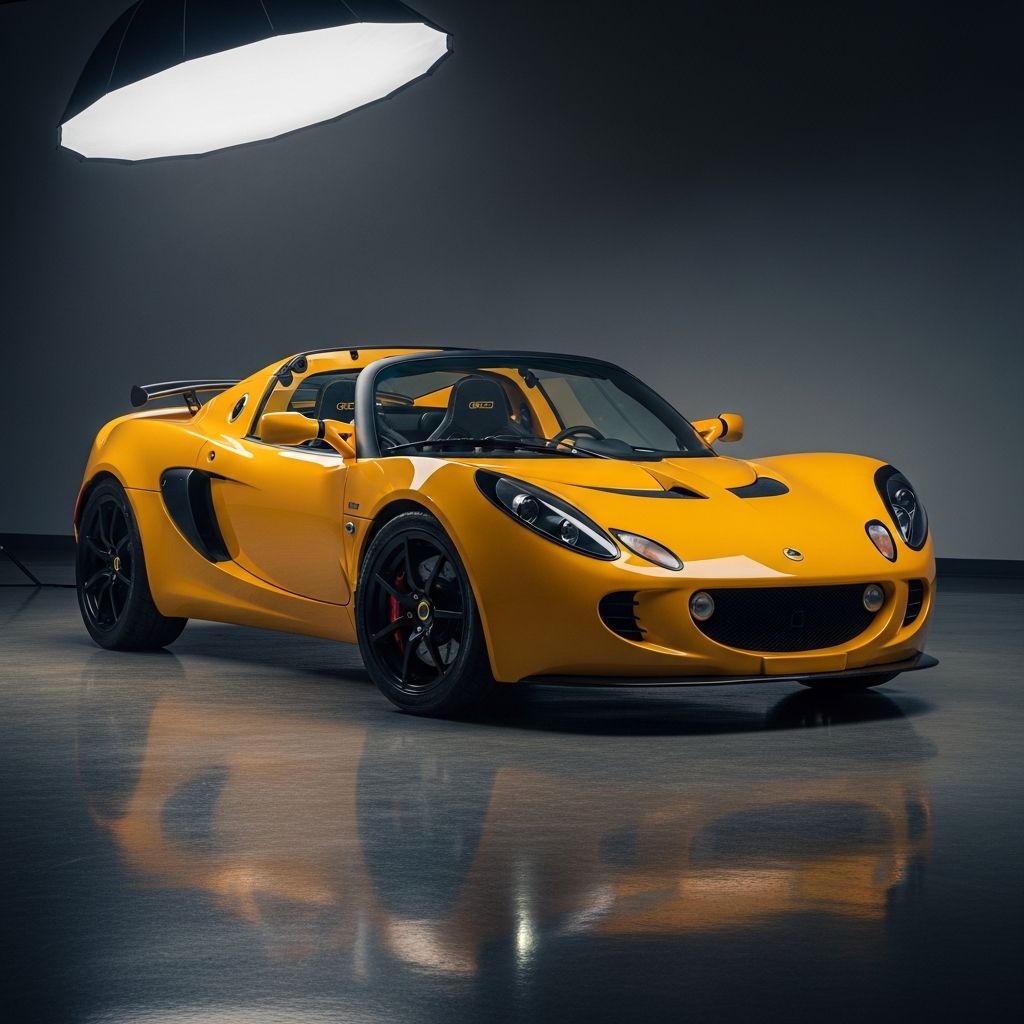
The automotive world has long sought to balance raw performance with the visceral experience of open-air driving. The Lotus Exige S Roadster represents a pinnacle achievement in this pursuit, delivering supercharged acceleration and precision handling in a convertible format that refuses to compromise on speed or agility. Since its 2013 introduction, this British sports car has challenged conventional wisdom about removable roofs and performance vehicles, proving that lightness and power can coexist without sacrificing either attribute.
Engine Architecture and Power Delivery
At the heart of the Exige S Roadster lies a 3.5-liter supercharged V6 engine borrowed from Lotus’s flagship Evora model. This engineering choice represents a significant departure from earlier Exige generations, which relied on smaller four-cylinder powerplants. The supercharger ensures consistent torque availability across the rev range, delivering maximum torque of 400 Newton-meters at 4,500 revolutions per minute and peak power output of 345 horsepower at 7,000 rpm.
The engine’s character distinguishes itself through rapid throttle response and linear acceleration delivery. Unlike turbocharged alternatives that exhibit boost lag, the supercharger provides immediate tractability from low engine speeds, allowing drivers to exploit available power in virtually any driving scenario. The six-cylinder architecture produces a distinctive auditory signature that enthusiasts appreciate during spirited driving, with the supercharger whine providing consistent acoustic feedback throughout the acceleration envelope.
Acceleration and Top Speed Specifications
Performance metrics establish the Roadster as Lotus’s fastest convertible offering to date. The vehicle achieves zero-to-sixty-mile-per-hour acceleration in 3.8 seconds, positioning it as a formidable competitor among open-top sports cars. This performance figure surpasses many contemporary convertibles by substantial margins, with particular advantage over higher-displacement competitors.
The factory-imposed top speed limitation of 145 miles per hour reflects engineering considerations related to aerodynamic stability with the soft roof installed. The removable cloth roof design introduces different aerodynamic characteristics compared to the fixed-roof coupe variant, necessitating conservative speed management protocols. Despite this electronic governor, the Roadster maintains acceleration intensity throughout its velocity range, delivering uncompromised low and mid-range performance.
Transmission and Drivetrain Configuration
A six-speed manual transmission serves as the exclusive gearbox offering in production vehicles, though engineers explored automatic transmission variations for market-specific applications. The clutch mechanism demands substantial driver engagement, exhibiting considerably heavier actuation than conventional sports cars. This mechanical characteristic reinforces the raw, unfiltered driving experience that defines the Exige philosophy.
The transmission layout occasionally presents challenges during rapid sequential downshifting, particularly when transitioning between third and second gear positions. The gearbox housing placement influences shifter geometry, requiring drivers to develop muscle memory for efficient gear changes. Rear-wheel-drive configuration channels all engine output to the contact patch, maximizing acceleration responsiveness and enabling deliberate control of vehicle dynamics during aggressive cornering.
Weight Distribution and Chassis Dynamics
The Roadster achieves remarkable mass efficiency, weighing approximately 1,166 kilograms in production form. This represents a negligible ten-kilogram advantage over its fixed-roof sibling, demonstrating engineering prowess in integrating convertible mechanisms without substantial weight penalties. The reduced mass compared to competitors enables the relatively modest displacement engine to generate superior power-to-weight ratios.
Suspension geometry employs double-wishbone front and rear arrangements, providing precise geometric control across the vehicle’s operational envelope. The suspension tuning prioritizes body control and cornering precision, offering responsive feedback that communicates road surface conditions directly to the driver. Damping characteristics balance compliance over imperfections with composure during sustained lateral acceleration, creating a chassis capable of delivering track-day performance while remaining manageable on public roads.
Handling Characteristics and Driver Engagement
Steering presentation exhibits the characteristic Lotus feedback philosophy, with constant low-amplitude chatter communicating tire-surface interaction nuances. Weight buildup proves moderate, preventing steering from feeling artificially assisted while maintaining manageability at parking speeds. The steering feel conveys confidence-inspiring precision during intentional driving, encouraging drivers to exploit available grip with increasing confidence.
Cornering behavior demonstrates neutral balance with progressive breakaway characteristics that reward smooth inputs and punish abrupt steering changes. The chassis proves forgiving when driven at reasonable speeds, progressively warning drivers through increasing steering effort before transitioning to oversteer conditions. Braking performance meets contemporary standards, with confident deceleration and straightforward pedal modulation facilitating threshold braking techniques.
Tire Technology and Grip Management
Pirelli P-Zero Corsa tires provide the grip foundation, delivering predictable adhesion limits and communicative feedback throughout the driving envelope. These performance-oriented tires generate sufficient cornering grip to explore the chassis’s capabilities while maintaining manageable breakaway characteristics. The relatively narrow tire cross-sections minimize rolling resistance while maintaining adequate contact patch dimensions for the vehicle’s power output.
Traction control management proves straightforward, with electronic assistance intervening progressively to prevent unintended wheel slip. Deliberate throttle management enables controlled oversteer conditions, particularly in lower gears during acceleration out of corners. The vehicle’s light weight magnifies the effect of weight transfer, creating pronounced nose-dive during braking and body roll during cornering that communicates dynamic inputs clearly to aware drivers.
Soft-Top Architecture and Weather Protection
The removable cloth roof mechanism operates manually, requiring modest physical effort for installation and removal procedures. Unlike hydraulically powered hard-top systems found in more expensive competitors, the manual cloth configuration reduces complexity and associated failure points. The soft top provides adequate weather protection during light precipitation, though sustained heavy rainfall eventually permits water penetration around sealing edges.
Acoustic insulation properties remain limited compared to fixed structures, with wind and engine noise penetrating the cabin during high-speed cruising. This characteristic aligns with the vehicle’s philosophy of delivering unfiltered sensory experiences rather than isolated cocoon environments. Storage of the collapsed roof requires planning, as compact folding dimensions nevertheless consume trunk volume during travel.
Interior Accommodation and Practical Considerations
The two-seat configuration dedicates the entire cabin to driver and passenger without rear-seat or storage flexibility. Ingress and egress requires deliberate body positioning, as the low roofline and compact doorways necessitate careful maneuvering. Once settled, the seats provide adequate lateral support during aggressive driving, though longitudinal spacing proves snug for taller occupants.
Creature comfort features remain minimal, reflecting the vehicle’s performance-oriented priorities. Climate control systems function adequately during open-top driving, though cabin ventilation when the roof is in place remains limited compared to vehicles with modern HVAC designs. Dashboard layout prioritizes essential information presentation, avoiding distracting infotainment systems that would add unnecessary mass.
Comparative Performance Analysis
| Metric | Exige S Roadster | Porsche 911 Cabriolet | BMW M440i Convertible |
|---|---|---|---|
| Engine Displacement | 3.5L Supercharged V6 | 3.4L Twin-Turbo Flat-Six | 3.0L Twin-Turbo Inline-Six |
| Power Output | 345 hp | 385 hp | 382 hp |
| Torque | 400 Nm | 500 Nm | 500 Nm |
| 0-60 Acceleration | 3.8 seconds | 4.2 seconds | 4.6 seconds |
| Vehicle Weight | 1,166 kg | 1,595 kg | 1,880 kg |
| Top Speed | 145 mph | 190 mph | 155 mph |
The Exige S Roadster’s acceleration advantage stems from exceptional power-to-weight ratio despite lower absolute horsepower figures. The substantially lighter construction compensates for competitive disadvantages in displacement and forced induction approaches, delivering superior performance in real-world driving scenarios where engine operating parameters remain constant.
Track Performance and Capability
The chassis setup emphasizes precision over raw grip, rewarding smooth driving technique with rewarding feedback and predictable behavior boundaries. Track sessions demonstrate the vehicle’s capability to exploit available grip without introducing vague or disconnected characteristics. Braking performance sustains intensity throughout extended track sessions without significant fade, while suspension rigidity prevents bottoming during aggressive cornering.
The manual transmission encourages active driver participation during circuit work, with gear changes requiring deliberate attention that maintains heightened situational awareness. Tire temperatures normalize quickly during warm-up phases, enabling rapid entry into optimal operating windows. The relatively modest power output prevents extreme tire stress, allowing extended track sessions without rapid degradation.
Practical Ownership Considerations
Fuel consumption figures approximate 10.1 liters per 100 kilometers during mixed driving, reflecting efficiency penalties associated with supercharger operation and performance-oriented calibration. The supercharged engine requires premium octane fuel to prevent detonation during full-load operation, affecting running costs compared to naturally aspirated alternatives. Regular maintenance intervals maintain engine longevity, with supercharger service intervals requiring professional attention.
Pricing positions the Roadster at premium levels, with historical market values near $127,000 USD reflecting British market context. This pricing positions the vehicle significantly below competitors from established luxury manufacturers, emphasizing value proposition based on driving experience rather than brand prestige or feature content.
Frequently Asked Questions
Does the convertible configuration compromise performance compared to the coupe?
No performance penalty exists between roadster and coupe variants. Both versions produce identical power outputs and share virtually identical acceleration figures. The roadster’s marginally lower weight partially compensates for aerodynamic disadvantages introduced by roof-line modifications.
Can the soft-top remain installed during track driving?
Yes, many drivers maintain the roof installation during circuit work, though removal eliminates aerodynamic complications. The cloth roof demonstrates adequate structural integrity during spirited driving, though aerodynamic efficiency improves substantially with the roof removed or stowed.
Is the manual transmission the only available option?
Production vehicles exclusively featured manual transmission, though automatic variants were explored for potential market introduction. No contemporary production automatic transmission has been officially offered, reserving manual operation for authentic driver engagement.
What fuel grade does the engine require?
Premium octane gasoline (95-98 RON) is required to prevent detonation in the supercharged engine. Lower octane fuels compromise performance and risk engine damage under high-load conditions.
How does wind noise at highway speeds compare to other convertibles?
Wind noise remains pronounced compared to vehicles featuring weather-sealed cabins, though this characteristic aligns with the open-air driving experience. Experienced convertible drivers typically find this aspect acceptable given the vehicle’s performance orientation.
Conclusion: Embodying Pure Driving Dynamics
The Lotus Exige S Roadster represents a philosophical commitment to delivering driving engagement without compromising performance delivery. The combination of supercharged acceleration, responsive steering, and composed chassis dynamics creates an environment where driver involvement directly influences vehicle behavior. The manual transmission, limited creature comforts, and unfiltered sensory feedback reinforce the notion that automotive enjoyment transcends entertainment features and comfort appointments. For enthusiasts prioritizing dynamic engagement and genuine performance over luxury appointments, the Exige S Roadster stands as a compelling expression of automotive values that prioritize the fundamental pleasure of driving.
References
- Lotus Exige S Roadster – Test Drive, Tour and Impressions — Shmee150 (YouTube). 2016. https://www.youtube.com/watch?v=wjXt3c2bRtw
- Lotus Exige S Roadster Review — Drive Australia. 2013. https://www.drive.com.au/reviews/lotus-exige-s-roadster-review/
- Review: Lotus Exige S Roadster — Top Gear Philippines. 2016. https://www.topgear.com.ph/drives/review-lotus-exige-s-roadster-a00024-20161018
- Lotus Exige S Roadster Becomes Brand’s Fastest Drop-top Ever — AutoWeb. 2013. https://www.autoweb.com/lotus-exige-s-roadster-becomes-brands-fastest-droptop-ever
- Driven: Exige S Roadster — SELOC. 2013. https://www.seloc.org/articles/driven/driven-exige-s-roadster/
Similar Articles




Read full bio of Sneha Tete