Cup 250 vs Series 1: Lotus Elise Evolution
Discover how the modern Lotus Elise Cup 250 stacks up against the iconic Series 1 original in performance, handling, and driving thrill across 25 years.
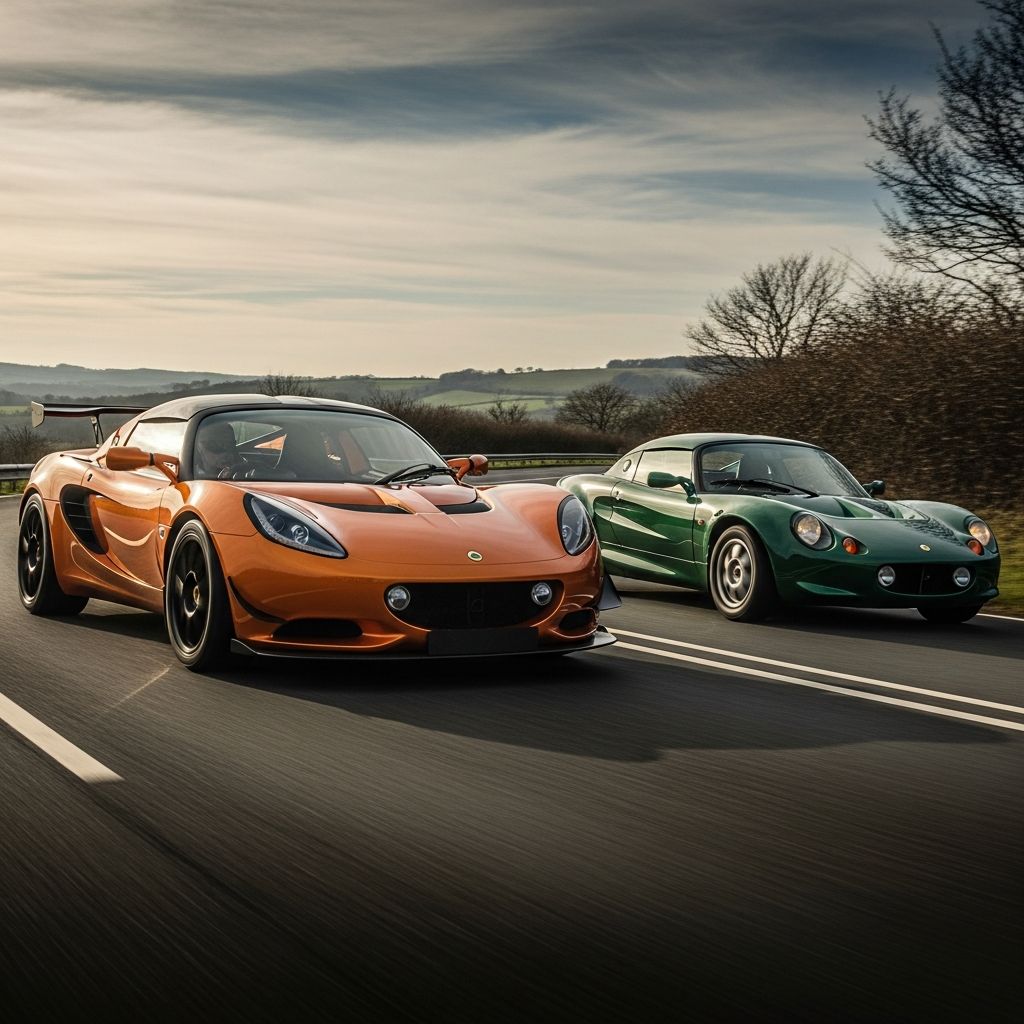
The Lotus Elise stands as a benchmark for lightweight sports cars, and comparing its modern pinnacle, the Cup 250, with the groundbreaking Series 1 reveals how core principles endure over decades. This analysis dives into their engineering, performance metrics, and driving experiences to highlight what makes each special.
Historical Foundations of the Lotus Elise
Launched in 1996, the Series 1 Elise redefined affordable performance with its bonded aluminum chassis and featherweight construction at just 725kg. Powered by a 1.8-liter Rover K-series engine producing 118bhp, it achieved 0-60mph in around 6 seconds and a top speed of 126mph, prioritizing agility over outright speed.
This original model’s success stemmed from Lotus’s philosophy of ‘light is right,’ enabling sharp handling without electronic aids. Its low center of gravity at 470mm enhanced cornering prowess, while minimal weight improved braking and efficiency. Over 25 years later, the chassis blueprint remains largely intact, proving its timeless effectiveness.
Powertrain Advancements: From Naturally Aspirated to Supercharged
The Series 1’s Rover-sourced 1.8-liter unit delivered linear power with 118bhp and adequate torque for spirited road use. It paired with a five-speed manual, emphasizing driver involvement over rapid shifts.
In contrast, the Cup 250 employs a supercharged 1.8-liter Toyota 2ZR-FE engine, boosted to 245bhp and 250Nm. This setup catapults it to 0-60mph in 3.9 seconds and 154mph top speed, transforming it into a supercar contender despite weighing 931kg. The supercharger’s immediate response provides punchier acceleration, though the increased weight demands more from the chassis.
| Specification | Series 1 | Cup 250 |
|---|---|---|
| Engine | 1.8L NA, 118bhp | 1.8L Supercharged, 245bhp |
| 0-60mph | 6.1s | 3.9s |
| Top Speed | 126mph | 154mph |
| Weight | 725kg | 931kg |
| Price (Period) | £18,950 (1996) | £49,595 |
This table underscores the Cup 250’s doubled power and performance edge, balanced by added mass from safety features like ABS and ESC.
Chassis and Suspension Dynamics
The Series 1’s chassis offered telepathic steering feedback and neutral balance, with softer suspension allowing compliance over bumps while maintaining poise. Narrower tires enhanced precision, letting drivers feel every surface nuance.
The Cup 250 refines this with firmer damping, wider track-focused tires, and aerodynamic aids for superior grip. Its suspension handles crests with stability, landing plushly despite air between wheels and road. Gear linkage is crisper, with an exposed mechanism adding mechanical allure. At higher speeds, it shines, though the Series 1 feels more forgiving at everyday paces.
- Series 1 Strengths: Lighter, more playful on twisty roads; clearer feedback from softer setup.
- Cup 250 Strengths: Higher limits, better composure over undulations; aero-enhanced stability.
Braking Systems: Feel vs Safety
Series 1 brakes feature lightweight Metal Matrix Composite (MMC) discs with AP Racing calipers, providing progressive bite and superb modulation. Drivers can precisely trail-brake, sensing wheel lockup thresholds intuitively.
The Cup 250’s larger setup includes ABS, prioritizing safety on slippery surfaces. While effective, it lacks the Series 1’s raw feel, though cold-weather reassurance is invaluable. This trade-off reflects modern regulations versus purist engagement.
Interior and Everyday Usability
Both cabins emphasize minimalism, but the Series 1’s spartan setup—manual windows, no air-con—amplifies the raw experience. Space is tight, rewarding compact drivers.
Cup 250 adds comforts like electric windows and air-con, broadening appeal without bloating weight significantly. Build quality feels more refined, with better noise isolation at speed.
Track vs Road Performance Insights
On track, the Cup 250’s power and grip dominate, lapping faster with downforce and sticky compounds. The Series 1 excels in fluidity, its lightness enabling slides without drama.
Road tests reveal the Cup 250’s maturity: sharper engine, precise shifts, and unflappable handling. Yet the Series 1’s simplicity delivers addictive purity at lower velocities.
Ownership Costs and Market Position
Series 1 values hold strong, with adjusted 1996 prices around £36k today, appealing to collectors. Maintenance favors Rover engine familiarity.
Cup 250 commands £49k new, with running costs higher due to supercharger upkeep. As a final Elise variant, residuals remain robust.
Driving Impressions: Timeless Thrill
Piloting the Series 1 feels like time travel—unfiltered, communicative, alive. Every input yields instant response.
The Cup 250 amplifies this to modern extremes: ferocious acceleration, glued handling, yet familiar chassis soul. It demands respect at its pace but rewards mastery.
Which Elise Reigns Supreme?
For purists seeking analog joy, the Series 1 wins. Speed demons and track enthusiasts favor the Cup 250’s capabilities. Both embody Lotus DNA.
Frequently Asked Questions
Is the Lotus Elise Cup 250 worth the premium over Series 1?
Yes, for blistering performance and safety; no, if raw lightness is priority.
How does Elise weight impact handling?
Lower weight enhances agility, responsiveness, and efficiency across models.
Can the Series 1 compete with modern Elises on track?
It holds its own in skilled hands, prioritizing finesse over grip.
What engine powers the Cup 250?
Toyota 1.8L supercharged 2ZR-FE, 245bhp.
Are Elises daily drivers?
Possible but compromised by space, ride, weather protection.
References
- Lotus Elise Cup 250 vs Lotus Elise Series 1 — Auto Express. 2016-11-01. https://www.autoexpress.co.uk/car-group-tests/353883/lotus-elise-cup-250-vs-lotus-elise-series-1
- Lotus Elise — Wikipedia. 2023-10-15. https://en.wikipedia.org/wiki/Lotus_Elise
- Lotus Elise – The Ultimate Guide — Supercars.net. 2022-05-20. https://www.supercars.net/blog/all-brands/lotus/lotus-elise/
Similar Articles



Read full bio of medha deb