Jeep Grand Cherokee Powertrains
Discover the dynamic engine lineup of the Jeep Grand Cherokee, from robust V6 performance to efficient PHEV hybrids for ultimate versatility.
Jeep Grand Cherokee Powertrains: Performance and Efficiency Redefined
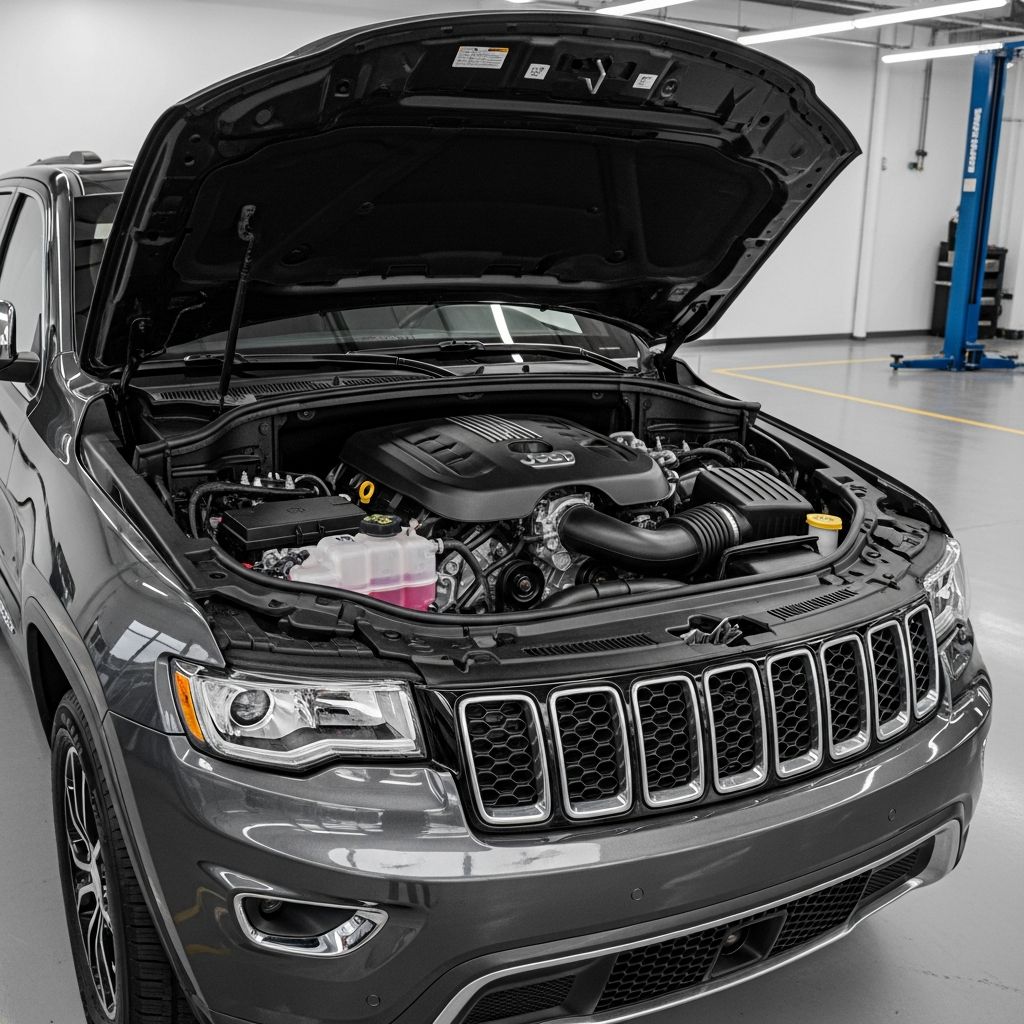
The Jeep Grand Cherokee stands as a benchmark in the midsize SUV segment, renowned for blending luxury, off-road prowess, and advanced powertrain technology. At its core, the vehicle’s engine lineup delivers a balance of raw power, towing capability, and modern efficiency, catering to diverse driving needs from urban commutes to rugged trails. Recent models emphasize two primary powertrains: the proven 3.6-liter Pentastar V6 for traditional gasoline performance and the innovative 2.0-liter turbocharged plug-in hybrid (PHEV) 4xe system for eco-conscious drivers seeking electrified capability.
Core Engine Specifications Overview
The 2025 and 2026 Jeep Grand Cherokee models streamline their offerings to focus on reliability and versatility. The standard 3.6L Pentastar V6 engine produces 293 horsepower and 260 pound-feet of torque, paired with an 8-speed automatic transmission. This setup excels in everyday driving and heavy-duty tasks, boasting a maximum towing capacity of 6,200 pounds when properly equipped.
In contrast, the 2.0L Turbo PHEV I4 combines a turbocharged gasoline engine with an electric motor, yielding a combined 375 horsepower and an impressive 470 pound-feet of torque. While its towing maxes at 6,000 pounds, it shines in fuel efficiency with up to 56 MPGe combined and an electric-only range of around 25-26 miles.
| Feature | 3.6L Pentastar V6 | 2.0L Turbo PHEV I4 |
|---|---|---|
| Horsepower | 293 hp | 375 hp (combined) |
| Torque | 260 lb-ft | 470 lb-ft (combined) |
| Max Towing | 6,200 lbs | 6,000 lbs |
| Fuel Economy (Combined) | 19-22 MPG | 56 MPGe |
| Electric Range | N/A | 25-26 miles |
| Gas Tank | 23 gallons | 19 gallons |
| Drivetrain | RWD/4WD | 4WD standard |
This table highlights the trade-offs: the V6 prioritizes towing and range, while the PHEV emphasizes torque and efficiency.
Standard V6: The Heart of Everyday Adventure
The 3.6-liter Pentastar V6 has been a staple in Jeep’s lineup for years, earning accolades for its durability and smooth power delivery. In the Grand Cherokee, it propels the SUV from 0-60 mph in a respectable time, making it ideal for highway merging and light off-roading. Its 293 horsepower ensures confident acceleration, while 260 lb-ft of torque supports family hauling without strain.
Fuel economy hovers around 19 city / 26 highway MPG for 2WD models, dropping slightly for 4WD or the three-row Grand Cherokee L variant at 21 MPG combined. With a 23-gallon tank, drivers enjoy extended range for long trips. Maintenance is straightforward, thanks to the engine’s widespread use across Stellantis vehicles, keeping costs low.
- Pros: Superior towing (6,200 lbs), larger fuel tank, proven reliability.
- Cons: Lower fuel efficiency compared to PHEV, no electric-only mode.
PHEV 4xe: Electrified Power for Modern Drivers
Jeep’s 4xe technology transforms the Grand Cherokee into a plug-in hybrid powerhouse. The 2.0L turbo four-cylinder engine teams with a high-voltage battery and electric motor, delivering instant torque for quick launches—0-60 mph in about 6.0 seconds. The system’s 470 lb-ft provides effortless passing power and trail-conquering low-end grunt.
Owners benefit from up to 26 miles of electric-only driving, perfect for short commutes with zero emissions. When the battery depletes, it seamlessly switches to hybrid mode, maintaining 56 MPGe combined. The smaller 19-gallon tank is offset by the hybrid’s thriftiness, potentially reducing lifetime fuel costs significantly.
- Pros: Massive torque, electric range, tax incentives in many regions.
- Cons: Slightly reduced towing, higher upfront cost, charging infrastructure dependency.
Trim-Level Engine Availability
Engine choices vary by trim, allowing buyers to match power to lifestyle. The V6 powers most gasoline models, from base Laredo to premium Summit Reserve.
| Trim | 3.6L V6 | 2.0L PHEV 4xe |
|---|---|---|
| Laredo / Laredo X | Yes | No |
| Altitude / Altitude X | Yes | No |
| Limited | Yes | No |
| Overland | Yes | Optional (4xe) |
| Summit / Summit Reserve | Yes | Optional |
| Trailhawk 4xe | No | Yes |
| Anniversary Edition 4xe | No | Yes |
PHEV exclusivity applies to 4xe-branded trims like Trailhawk 4xe, emphasizing off-road hybrid capability with standard 4WD.
Performance in Real-World Scenarios
On pavement, both engines pair with an 8-speed automatic for crisp shifts and adaptive programming. The V6 offers linear power for relaxed cruising, while the PHEV’s electric boost provides sports-car-like responsiveness. Off-road, Quadra-Trac systems enhance traction, with the PHEV’s instant torque aiding low-speed rock crawling.
Towing tests confirm the V6’s edge for trailers over 6,000 lbs, thanks to its thermal management. The PHEV, though capable, suits lighter loads better due to battery weight. Fuel savings in hybrid mode can exceed 50% in mixed driving, per EPA estimates.
Evolution of Grand Cherokee Engines
Historically, the Grand Cherokee offered V8s like the 5.7L Hemi (up to 360 hp), but recent shifts prioritize efficiency. The fifth-generation (2021+) introduced the PHEV, aligning with electrification trends. For 2026, a 324-hp turbo 2.0L four-cylinder emerges as a non-hybrid upgrade, bridging gasoline and hybrid worlds with 332 lb-ft torque.
The Pentastar V6 remains, refined for better economy via variable valve timing. Diesel options persist in some markets, but U.S. focus is on gas and PHEV.
Ownership Considerations: Cost, Maintenance, and Incentives
Upfront, PHEV models command a premium (often $10,000+ over V6), but federal tax credits up to $7,500 offset this for qualifiers. Long-term, hybrids lower fuel bills—potentially $1,000/year savings at average mileage. V6 maintenance is cheaper, with parts ubiquitous.
Both share robust 8-speed transmissions, but PHEV batteries carry an 8-year/100,000-mile warranty. Resale holds strong, especially for 4xe amid EV demand.
Comparing to Competitors
Against rivals like Toyota Grand Highlander (hybrid-focused) or Ford Explorer (V6/turbo), the Grand Cherokee excels in towing and off-road hardware. Its PHEV torque surpasses most, though efficiency trails pure EVs.
- Grand Cherokee V6: Matches Explorer’s towing, beats in luxury.
- 4xe: Outpowers Highlander Hybrid, adds plug-in range.
Frequently Asked Questions (FAQs)
Which Grand Cherokee engine is best for towing?
The 3.6L V6 tows up to 6,200 lbs, edging out the PHEV’s 6,000 lbs.
Does the PHEV require frequent charging?
No, it runs as a hybrid indefinitely, but charging maximizes efficiency (25+ miles electric).
Is the V6 available on all trims?
Yes, on non-4xe trims; PHEV is 4xe-exclusive.
How does 2026 change the lineup?
A new 324-hp turbo I4 joins, offering mid-tier power without hybridization.
What’s the fuel economy for daily driving?
V6: 19-26 MPG; PHEV: 56 MPGe with charging.
Choosing Your Ideal Powertrain
Select the V6 for maximum towing and simplicity, or the 4xe for torque, efficiency, and green credentials. Test drives reveal the PHEV’s unique electric surge, while the V6 delivers timeless Jeep character. Both elevate the Grand Cherokee’s legendary status in a competitive field.
References
- 2025 Jeep Grand Cherokee Engine Options | Power & Specs — CDJR Barre. 2025. https://www.cdjrbarre.com/jeep-grand-cherokee-engine-options.htm
- Jeep Grand Cherokee L Engine Specs — Northlake CJD. N/A. https://www.northlakecjd.com/jeep-grand-cherokee-l/engine-specs.htm
- 2025 Jeep Grand Cherokee Engine & Tow Specs — Academy Jeep. 2025. https://www.academyjeep.com/research/jeep-grand-cherokee-engines-and-towing.htm
- 2026 Jeep Grand Cherokee Review, Pricing, and Specs — Car and Driver. 2026. https://www.caranddriver.com/jeep/grand-cherokee
- Jeep Grand Cherokee Capability — Jeep Official Site. 2025. https://www.jeep.com/grand-cherokee/capability.html
Similar Articles



Read full bio of medha deb