Jaguar XJ6 3.0 Sport Review: Luxury Performance At £39,000
Discover how Jaguar's entry-level luxury sedan combines affordability with sophisticated engineering and impressive performance capabilities.
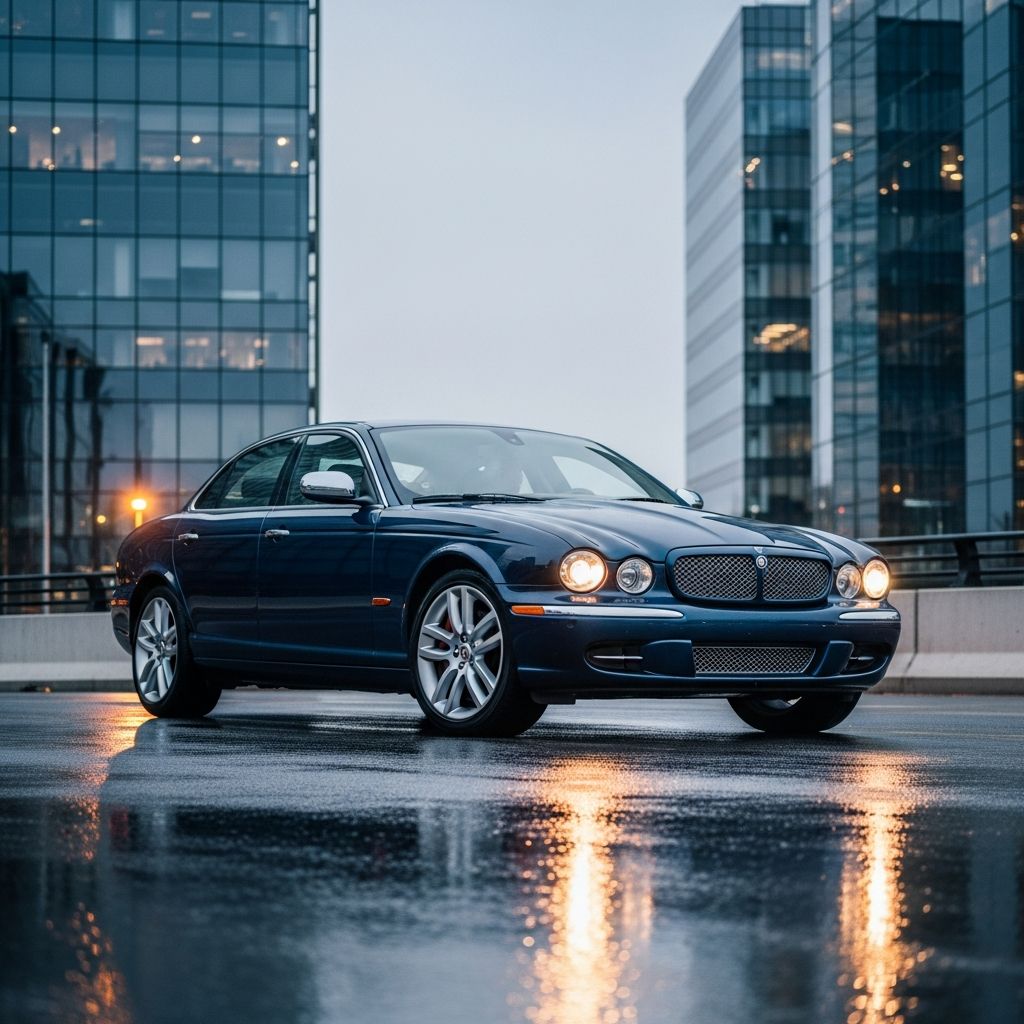
The automotive market frequently witnesses manufacturers introducing entry-level variants of their flagship models, yet few accomplish this feat with the sophistication demonstrated by Jaguar’s latest offering. The XJ6 3.0 Sport represents a thoughtfully engineered approach to luxury accessibility, challenging the notion that performance and refinement must necessarily demand substantial financial investment. Rather than serving as a diluted compromise, this model establishes itself as a genuine contender within the competitive luxury sedan category.
Understanding the Engineering Foundation
At the heart of this vehicle lies a time-tested powerplant that delivers surprising capability within a practical framework. The 3.0-litre engine produces 240 brake horsepower, providing adequate thrust for spirited driving while maintaining reasonable operating costs. What distinguishes this powertrain is not merely its specifications, but rather how Jaguar has integrated it into a significantly lighter platform compared to its eight-cylinder counterparts.
The development team achieved a weight reduction exceeding 200 kilograms relative to the previous V8 entry model, fundamentally altering the dynamics equation. This strategic mass reduction ensures that performance suffers no meaningful compromise despite the smaller displacement engine. The mathematics of acceleration become particularly interesting: the vehicle achieves zero to sixty miles per hour in 7.8 seconds, which notably outpaces the entry-level Mercedes S-Class variant by approximately two full seconds. Such real-world performance advantages demonstrate that engineering sophistication sometimes outweighs raw cubic capacity.
Construction and Structural Integrity
Jaguar’s commitment to contemporary construction techniques becomes evident through the vehicle’s innovative body structure. The bonded and riveted aluminium construction benefits from a 60 percent increase in torsional rigidity compared to conventional methods, creating a platform that responds predictably to driver inputs while maintaining structural integrity throughout the vehicle’s operational lifetime. This methodical approach to manufacturing contributes substantially to the vehicle’s refined character during both highway cruising and demanding driving scenarios.
The structural efficiency translates directly into improved noise isolation and vibration damping characteristics. Occupants experience a surprisingly hushed cabin environment, with wind and road noise effectively attenuated through acoustic engineering and sealing precision. This refinement approaches the character associated with the brand’s eight-cylinder models, yet comes packaged within a more economical framework.
Dynamic Performance and Handling Characteristics
Perhaps the most compelling aspect of the XJ6 3.0 Sport experience emerges during engaged driving. The steering system delivers immediate and predictable response characteristics, creating an intuitive relationship between driver intention and vehicle motion. For a large luxury sedan, the handling prowess proves genuinely remarkable, offering the nimbleness of considerably smaller vehicles without sacrificing ride comfort or composure.
The Sport specification distinguishes itself through firmer suspension tuning that enhances cornering grip without introducing harshness into the daily driving experience. Jaguar’s CATS computer active suspension system continuously monitors road surface conditions, adjusting damping characteristics to maintain optimal balance between comfort and control. The electronic traction control system works seamlessly with the suspension platform, inspiring genuine confidence during both aggressive and routine driving scenarios.
Braking performance meets luxury automotive standards with excellent stopping power and responsive pedal feel. The system demonstrates the progressive modulation expected from premium vehicles, allowing drivers to modulate deceleration with precision. This capability proves particularly valuable during motorway driving where frequent speed adjustments occur.
Practical Considerations: Operating Costs
The transition toward a naturally aspirated 3.0-litre engine versus larger displacement alternatives brings tangible financial benefits that extend well beyond initial purchase negotiations. Combined cycle fuel economy reaches 27 miles per gallon, a respectable figure for a large luxury sedan with this performance profile. Insurance classifications favour the smaller engine option, with premium calculations reflecting reduced risk profile compared to higher-powered variants. Carbon dioxide emissions similarly benefit from the downsizing strategy, delivering environmental considerations alongside financial advantages.
The philosophy underlying this powertrain choice reflects Jaguar’s recognition that contemporary luxury buyers increasingly demand efficiency alongside capability. Rather than forcing buyers to choose between performance and economy, the 3.0-litre option provides balanced compromise that satisfies both considerations.
Interior Refinement and Equipment Philosophy
Jaguar’s approach to equipping the entry-level XJ6 demonstrates confidence in the complete package rather than imposing artificial limitations to drive sales toward higher trim levels. The base configuration includes electrically adjustable leather seating surfaces, sophisticated climate control technology, cruise control functionality, and reach-adjustable pedals that accommodate diverse driver physiques. The integrated sound system meets high-end expectations despite the entry-level positioning.
The Sport trim amplifies this foundation with figure-hugging seating surfaces that provide lateral support during spirited driving, tuned suspension geometry that firms up the ride without introducing discomfort, and eighteen-inch alloy wheels that enhance both aesthetics and handling characteristics. These additions reinforce the performance-oriented character without introducing excessive complexity.
Market Positioning and Value Proposition
At the £39,000 price point, the XJ6 3.0 Sport occupies a unique market position. It delivers authentic luxury credentials alongside genuine performance capabilities at a level that challenges established competitors. The Mercedes S-Class entry variant requires substantially longer acceleration times while commanding comparable or elevated pricing. BMW’s 7-Series alternative similarly requires budget escalation to achieve comparable feature completeness.
This pricing strategy reflects Jaguar’s deliberate approach to democratizing luxury motoring. The company refuses to compromise fundamental quality or refinement in pursuit of cost reduction. Instead, engineering ingenuity produces a vehicle that satisfies luxury expectations while maintaining reasonable purchase accessibility.
Driving Experience Synthesis
The cumulative experience of piloting the XJ6 3.0 Sport reveals a vehicle engineered with sophisticated understanding of contemporary luxury buyer priorities. The large sedan delivers remarkable agility for its dimensions, inspiring confidence that encourages rather than intimidates enthusiastic driving. Simultaneously, the refinement quotient remains sufficiently elevated to make extended highway journeys genuinely pleasurable rather than merely tolerable.
The steering system emerges as perhaps the most distinctive attribute. Its responsiveness communicates road surface texture and vehicle attitude with commendable clarity, transforming what could be an oversized, cumbersome platform into something approaching sports car immediacy. The absence of performance deficit despite engine downsizing validates Jaguar’s engineering commitment to this model variant.
Reliability and Ownership Considerations
Jaguar’s manufacturing heritage provides reassurance regarding long-term durability expectations. The vehicle incorporates proven powertrain technology combined with contemporary refinement strategies. Parts availability remains reasonable given the brand’s market presence, and specialist servicing networks operate throughout most developed markets. Potential buyers should note the vehicle’s relative youth in the marketplace; comprehensive long-term reliability data remains somewhat limited compared to established competitors with longer production histories.
Conclusion: Evaluating the Complete Package
The Jaguar XJ6 3.0 Sport successfully challenges the notion that entry-level luxury requires uncomfortable compromise. This vehicle delivers the refinement, performance, and style associated with the brand’s premium positioning while maintaining reasonable acquisition costs and operating expenses. For buyers seeking genuine luxury credentials without excessive financial burden, this model merits serious consideration. The engineering sophistication, genuine driving engagement, and comprehensive equipment specification combine to create genuine value within the competitive luxury sedan marketplace. Jaguar has produced not merely a cost-reduced alternative but rather a thoughtfully conceived interpretation of what contemporary entry-level luxury automobiles should represent.
References
- Jaguar XJ6 3.0 Sport – Auto Express — Auto Express. 2003-03-04. https://www.autoexpress.co.uk/car-reviews/15414/jaguar-xj6-30-sport
- Jaguar XJ 3.0-litre V6 Diesel R-Sport SWB Saloon Review — Car Keys. https://www.carkeys.co.uk/car-reviews/jaguar-xj-30-litre-v6-diesel-r-sport-swb-saloon-review
- Review: The Still Brilliant Jaguar XJ — Top Gear. https://www.topgear.com/car-reviews/jaguar/xj/30d-v6-r-sport-4dr-auto/first-drive-0
- Time Well Spent: Jaguar XJ R-Sport 3.0D V6 Recommended — Auto Britannia. 2016-08-22. https://autobritannia.net/2016/08/22/time-well-spent-jaguar-xj-r-sport-3-0d-v6-recommended/
- Jaguar XJ (2003 – 2009) Used Car Review — RAC Drive. https://www.rac.co.uk/drive/car-reviews/jaguar/xj/xj-2003-2009/
Similar Articles






Read full bio of Sneha Tete