Jaguar F-Type Project 7: Ultimate Roadster Review
Discover the raw power, Le Mans-inspired design, and thrilling dynamics of Jaguar's limited-edition F-Type Project 7 beast.

Jaguar F-Type Project 7: The Pinnacle of British Performance
The Jaguar F-Type Project 7 stands as a monumental achievement in automotive engineering, transforming the acclaimed F-Type roadster into a track-focused masterpiece. Limited to just 250 units worldwide, this special-edition vehicle pays homage to Jaguar’s seven Le Mans victories, blending retro-inspired aesthetics with cutting-edge technology for an unparalleled driving experience.
Origins and Heritage: Born from Racing Legacy
Conceived by Jaguar’s Special Vehicle Operations (SVO), the Project 7 draws direct inspiration from the iconic D-Type racers that dominated Le Mans in the 1950s. The name ‘Project 7’ explicitly references those seven triumphs, infusing the car with a sense of historical prestige. Every detail, from the aerodynamic fairing to the British Racing Green paint scheme, evokes the golden era of Jaguar motorsport.
Development began as a design exercise by Ian Callum, Jaguar’s director of design, who signed the very first production example. Pre-production sales were so strong that all 250 units sold out before manufacturing even commenced, underscoring the model’s instant desirability among collectors and enthusiasts.
Design Evolution: Aerodynamics Meets Artistry
Visually, the Project 7 departs dramatically from the standard F-Type convertible. A prominent carbon-fiber fairing rises behind the driver’s head, mimicking the D-Type’s silhouette and housing functional aero elements. The body features nine carbon-fiber components, including a rear spoiler that generates 91% more downforce at 186 mph compared to the base model.
Aluminum construction keeps the curb weight at 1,585 kg—80 kg lighter than the V8 convertible—enhancing agility without compromising structural integrity. White roundels and deployable roll hoops add to the racing motif, while a removable canopy offers limited weather protection, stored neatly in the trunk.
- Key Aero Enhancements: Rear spoiler for increased stability at high speeds.
- Material Savings: Carbon fiber reduces weight and boosts downforce by 177% over the standard F-Type at top speed.
- Styling Tribute: Shark-fin fairing and green livery channel Le Mans heritage.
Powertrain Mastery: Supercharged V8 Fury
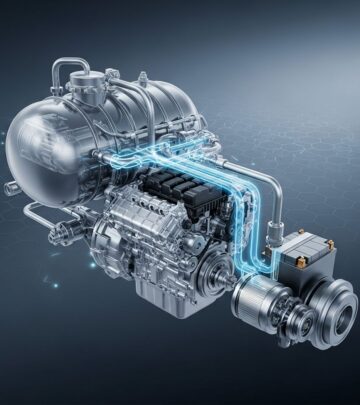
At the heart lies a 5.0-liter supercharged V-8 engine, tuned to deliver 575 horsepower and 516 lb-ft of torque—making it Jaguar’s most potent rear-wheel-drive production car. This surpasses the standard F-Type’s output, propelling the Project 7 from 0-60 mph in approximately 3.5 seconds and on to a 186 mph top speed.
An 8-speed Quickshift transmission ensures lightning-fast gear changes, calibrated specifically for this model. The supercharger’s instant torque delivery demands respect; even slight throttle inputs can overwhelm the rear tires, creating spectacular burnouts accompanied by explosive exhaust crackles.
| Performance Metric | Project 7 Spec | Standard F-Type V8 Convertible |
|---|---|---|
| Horsepower | 575 hp | 495 hp |
| 0-60 mph | ~3.5 sec | 4.3 sec |
| Top Speed | 186 mph | 186 mph |
| Weight | 1,585 kg | 1,665 kg |
| Nürburgring Lap | 7:35 min | N/A |
Chassis and Suspension: Precision Engineering
Suspension upgrades define the Project 7’s dynamic prowess. Front springs are 80% stiffer, yet the ride remains compliant and comfortable on public roads, thanks to bespoke damper tuning with a softer low-speed rate and progressive stiffening.
Revised front knuckles increase kingpin inclination for sharper steering feel and greater camber under load, maximizing grip. The rear is only 8% stiffer to aid traction, resulting in a balanced, athletic chassis that dives eagerly into corners.
Equipped with Continental ContiForceContact tires, the setup prioritizes track performance, though they can struggle to harness the full power output during aggressive launches or high-speed turns.
Driving Dynamics: Thrill on Road and Track
Behind the wheel, the Project 7 unleashes sensory overload. The active exhaust system, switchable for road or track, emits a symphonic roar—deep, brutal, and louder than any production car tested. In tunnels, the crackling overrun will leave ears ringing.
Traction control is exemplary, allowing controlled slip before intervening firmly. Disabling it reveals the raw supercharger surge, turning rear tires into “bonfires” under full throttle. On circuits like the Nürburgring, it clocked a 7:35 lap, Jaguar’s fastest ever, while at Virginia International Raceway, it managed 3:02.2 despite tire limitations.
Daily usability shines through: the ride absorbs imperfections smoothly, and the interior retains F-Type luxury with added carbon racing seats and five-point harnesses.
Interior Refinements and Collector Appeal
The cabin blends opulence with purpose. Bespoke seats hug occupants securely, and a plaque bearing Ian Callum’s signature adorns the console in unit #1. Traditional F-Type switchgear persists, augmented by track-focused additions like the exhaust mode selector.
With only 250 built, values have appreciated significantly over a decade. Owners report manageable running costs for such exclusivity, praising its reliability and character.
Pricing and Exclusivity: Investment on Wheels
Launched at around $175,995—a $110,000 premium over the base F-Type—the Project 7 justified its cost through rarity and performance. Today, it commands collector premiums, appealing to those seeking a usable track weapon.
FAQs
What makes the Jaguar Project 7 special?
It’s a limited-edition F-Type with 575 hp, Le Mans-inspired design, and record Nürburgring time, celebrating Jaguar’s racing heritage.
How powerful is the Project 7’s engine?
The supercharged 5.0L V8 produces 575 horsepower, Jaguar’s most powerful RWD model.
Is the Project 7 track-capable?
Yes, with enhanced aero, suspension, and a 7:35 Nürburgring lap, though tires limit ultimate grip.
What’s the ride like on regular roads?
Surprisingly compliant despite stiff springs, balancing comfort and sportiness.
Are Project 7 cars still available?
All 250 sold out pre-production; they now trade as collector items.
References
- Jaguar F-Type Project 7 First Drive Review — MotorTrend. 2014. https://www.motortrend.com/reviews/jaguar-f-type-project-7-first-drive-review
- Jaguar F-Type Project 7 First Drive Review — Car and Driver. 2014. https://www.caranddriver.com/reviews/a15099652/jaguar-f-type-project-7-first-drive-review/
- Jaguar Project 7, the most powerful 2WD Jag ever — YouTube (Harry’s Garage). 2024. https://www.youtube.com/watch?v=aQ3DGNKF6pc
- Jaguar Project 7 review — YouTube. 2014. https://www.youtube.com/watch?v=9v_s8l93NmA
- Jaguar Project 7 drive review — YouTube (Harry’s Garage). 2014. https://www.youtube.com/watch?v=5Rloxi8MQAw
- First Impression: Jaguar F-Type Project 7 — GTspirit. 2014-08-13. https://gtspirit.com/2014/08/13/first-impression-jaguar-f-type-project-7/
Similar Articles




Read full bio of Sneha Tete