Isuzu D-Max 2021: Capability Meets Refinement
Discover how the redesigned D-Max balances worksite performance with lifestyle appeal
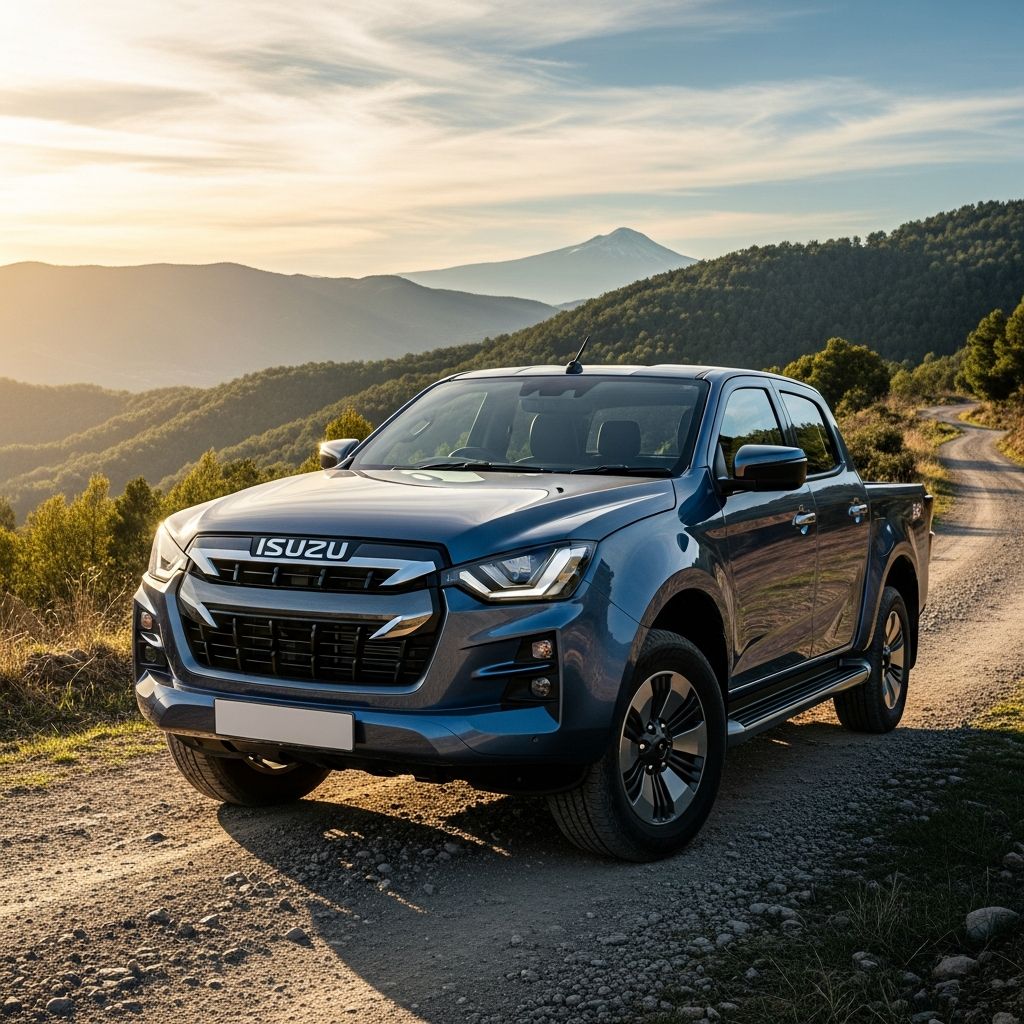
The Isuzu D-Max 2021: A Comprehensive Evolution in the Pickup Segment
The automotive market has long been divided between utilitarian work vehicles and comfort-focused family transport. The 2021 Isuzu D-Max attempts to bridge this gap by presenting a pickup that acknowledges both demands without fully compromising on either front. This redesign marks a substantial departure from its predecessor, introducing a vehicle that carries genuine ambitions beyond the traditional tradespeople demographic.
Generational Advancement and Market Positioning
When Isuzu unveiled the new D-Max generation, the pickup segment underwent a noticeable shift. The company invested considerable engineering effort to reposition what has traditionally been viewed as a basic work tool into something capable of appealing to buyers seeking lifestyle versatility. This transformation reflects broader market trends where pickup ownership increasingly encompasses both professional utility and personal lifestyle considerations.
The redesigned platform incorporates substantial refinements across multiple dimensions. Enhanced structural rigidity, improved interior appointments, and modern electronic systems distinguish this iteration from earlier D-Max generations. The vehicle now competes directly against established rivals like the Ford Ranger and Toyota HiLux, vehicles that have long dominated discussions about premium pickup offerings.
Technology and Safety: A New Standard
One of the most compelling aspects of the 2021 D-Max lies in its comprehensive safety apparatus. The vehicle achieved a five-star Euro NCAP rating, demonstrating measurable improvement in crash protection and occupant safety compared to previous generations. This achievement reflects a deliberate engineering philosophy prioritizing accident prevention and occupant protection.
The safety technology suite includes several sophisticated systems:
- Forward collision warning with automatic emergency braking capabilities
- Traffic sign recognition that monitors and displays speed limit information
- Adaptive cruise control on automatic transmission variants
- Lane keeping assistance to prevent unintended lane departures
- Speed limiting functions for controlled velocity management
These systems work in concert to create a comprehensive safety net, particularly valuable during extended driving sessions where driver fatigue becomes a concern. The inclusion of these technologies in a pickup class vehicle was previously uncommon, representing genuine innovation in the segment.
Powertrain Performance and Characteristics
The engine selection centers on a 3.0-liter turbocharged diesel four-cylinder unit producing 140 kilowatts of power and 450 newton-meters of torque. This specification delivers adequate performance for a vehicle weighing approximately two tonnes in base trim. The engine demonstrates characteristics typical of modern diesel units, preferring to operate through the mid-range rather than demanding peak revolutions.
Acceleration from rest to 62 miles per hour requires approximately 13 seconds, a timeframe that reveals the engine’s work-oriented philosophy rather than performance ambitions. The engine generates noticeable noise under acceleration, particularly during initial throttle application. This acoustic signature stems from the diesel combustion process rather than engineering oversight, a characteristic prospective buyers should anticipate.
The six-speed automatic transmission operates with generally smooth quality, managing shifts with minimal disruption to forward progress. However, the transmission exhibits a tendency toward aggressive downshift behavior when moderate acceleration is requested, causing engine revolutions to climb noticeably. This characteristic reflects the transmission’s programming toward responsive performance rather than refined progression.
Driving Dynamics and Comfort Assessment
The suspension architecture reveals its underlying design priorities through on-road behavior characteristics. The system performs admirably at motorway speeds, where it maintains composed body control and reasonable passenger comfort. However, at lower urban velocities, the suspension exhibits a fidgety quality that betrays its fundamental orientation toward load-carrying and off-road negotiation rather than passenger refinement.
The absence of undue body roll at highway speeds demonstrates competent engineering, and the D-Max settles into long-distance cruising without excessive noise or vibration intrusion once initial acceleration concludes. Nevertheless, the vehicle lacks the integrated refinement of dedicated SUVs or premium pickup offerings, where suspension tuning prioritizes passenger sensation alongside utility requirements.
Steering characteristics lean toward lightness, facilitating ease of maneuverability during low-speed parking and urban navigation. The tight turning circle, combined with front and rear parking sensor integration, creates a vehicle that responds intuitively to driver inputs in confined spaces. This approachability represents a practical advantage for daily usage in congested environments.
Interior Design and Equipment Levels
The cabin layout demonstrates considerable improvement over earlier iterations. Higher-specification models feature leather-appointed seating with heating functionality, heated steering wheel controls, and improved ergonomic support. Adjustable steering column tilt and reach mechanisms accommodate diverse driver body types, a refinement that enhances day-long operational comfort.
Top-tier variants incorporate touchscreen infotainment systems featuring wireless Apple CarPlay and Android Auto compatibility. These connectivity features represent industry-standard expectations in contemporary vehicles, yet their presence in the pickup segment was previously uncommon. The inclusion signals Isuzu’s recognition that modern buyers expect seamless smartphone integration regardless of vehicle category.
The equipment progression across trim levels follows strategic differentiation. Base work-focused variants emphasize practical functionality with appropriate cost consciousness, while higher specifications introduce luxury appointments designed to attract buyers viewing the vehicle as personal transportation. This segmentation strategy allows Isuzu to serve distinct market segments with a single platform.
Off-Road Credentials and Terrain Management
The D-Max retains authentic four-wheel-drive capability through selectable systems that include low-range gearing. Isuzu has engineered faster engagement times for these systems compared to previous generations, reducing the interval between selection and active four-wheel-drive operation. This enhancement proves valuable during rapid terrain transitions.
A mechanical rear differential lock on higher-specification models provides genuine traction enhancement during challenging terrain negotiation. Hill descent control and hill start assist functions further extend off-road competency, enabling controlled descent and departure on steep slopes. The vehicle demonstrates considerable capability in rough terrain, responding predictably to diverse surface conditions and obstacles.
Ground clearance and approach/departure angle specifications position the D-Max competitively within its class. The vehicle exhibits the mechanical robustness expected from a purpose-built four-wheel-drive utility vehicle, translating to confidence during wilderness exploration and remote access requirements. However, certain competitors integrate more sophisticated electronic terrain management systems that enhance off-road capability further.
Fuel Economy and Operational Economics
The diesel powertrain delivers competitive fuel consumption figures, with claimed consumption around 7.7 liters per 100 kilometers during standardized testing cycles. Real-world results typically increase modestly depending on driving patterns and load conditions. For a utility vehicle of this dimension and purpose, these figures represent reasonable efficiency expectations.
Operating cost considerations extend beyond fuel consumption to include maintenance intervals, service parts availability, and residual value expectations. The diesel engine technology is well-established with extensive global support infrastructure, suggesting reasonable long-term ownership economics for operators maintaining the vehicle appropriately.
Market Positioning and Value Proposition
The 2021 D-Max arrives at an inflection point where numerous traditional competitors have withdrawn from the segment. This market shift creates opportunity for Isuzu to establish stronger positioning against remaining rivals. The vehicle’s comprehensive equipment levels, particularly the safety technology integration, create tangible differentiation justifying price positioning.
Prospective buyers should consider the D-Max’s dual-purpose capability when evaluating overall value. The vehicle successfully serves both work requirements and family transport functions without complete compromise on either responsibility. This flexibility creates compelling ownership economics for buyers requiring versatile transportation.
Assessment and Recommendations
The 2021 Isuzu D-Max represents considerable engineering effort directed toward segment advancement. The vehicle successfully addresses previous-generation shortcomings while introducing contemporary features that enhance daily usability and ownership satisfaction. Safety technology leadership within the pickup category demonstrates a commitment to occupant protection and accident prevention that deserves recognition.
However, refinement limitations remain evident, particularly in engine acoustics and suspension tuning priorities. These characteristics reflect the vehicle’s fundamental utility orientation and represent unavoidable compromises inherent to pickup design philosophy. Buyers seeking sedan-like refinement will experience disappointment, while those prioritizing capability and equipment will likely find considerable satisfaction.
The D-Max appeals primarily to buyers requiring authentic four-wheel-drive capability, genuine load-carrying function, and modern amenities. Professionals requiring reliable workhorse transportation combined with family-friendly features, plus buyers viewing pickup ownership as lifestyle choice, will find the vehicle meets their expectations effectively. The comprehensive safety technology suite and improving refinement position the D-Max as a genuinely competitive offering in an increasingly important market segment.
References
- New Isuzu D-Max 2021 review — Auto Express. 2021. https://www.autoexpress.co.uk/isuzu/d-max/108695/new-isuzu-d-max-2021-review
- 2021 Isuzu D-Max SX 4×2 review — Drive. 2021. https://www.drive.com.au/reviews/2021-isuzu-d-max-sx-4×2-review/
- Isuzu D-Max 2021 review: SX — CarsGuide. 2021. https://www.carsguide.com.au/tradies/isuzu-d-max-sx-80797
- 2021 Isuzu D-Max LS-U review – with accessories — Drive. 2021. https://www.drive.com.au/reviews/2021-isuzu-d-max-ls-u-review-with-accessories/
- 2021 Isuzu D-Max X-terrain Car Review — DriveLife. 2021. https://www.drivelife.co.nz/2021/06/2021-isuzu-d-max-x-terrain-car-review-dont-mention-the-m-word/
Similar Articles



Read full bio of medha deb