Hyundai i20 1.1 CRDi Blue: Ultimate Fuel Saver
Explore how the Hyundai i20 1.1 CRDi Blue delivers unmatched diesel economy in a practical supermini package for budget-conscious drivers.
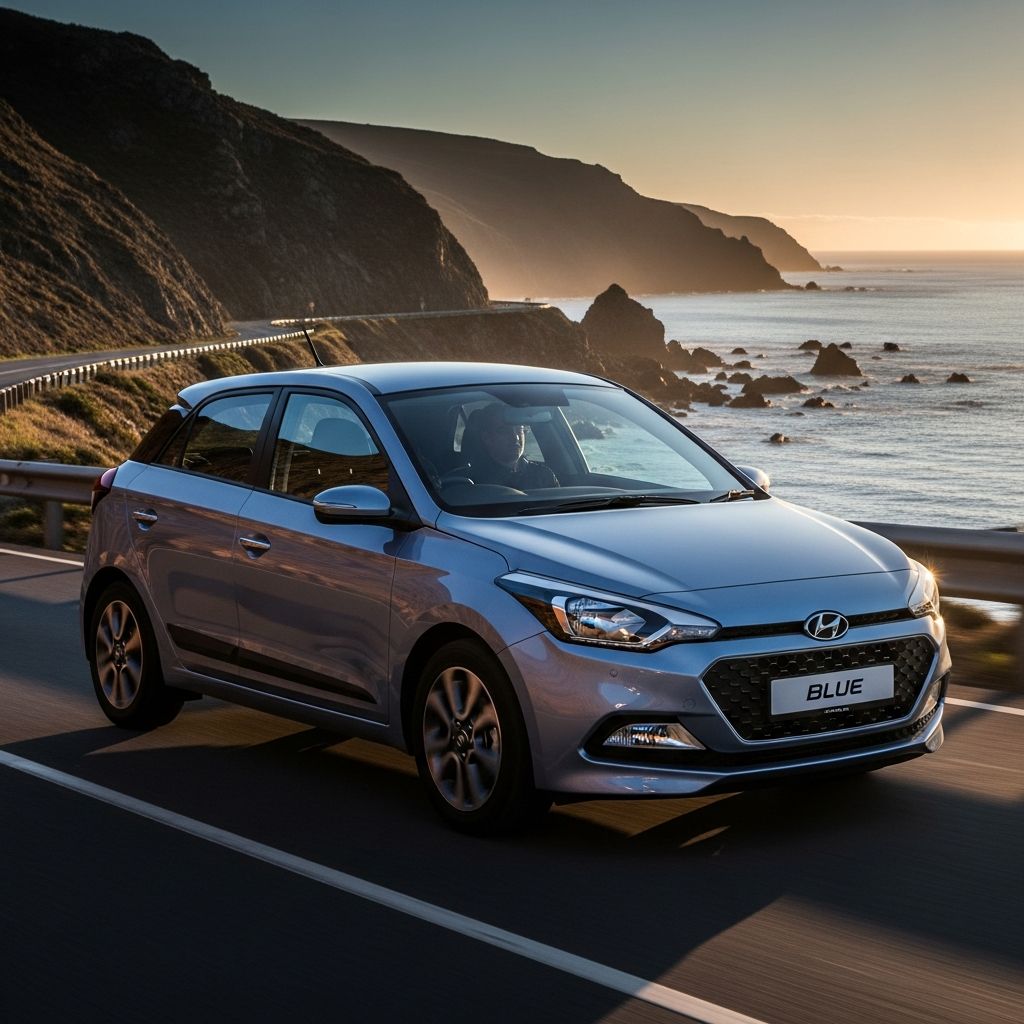
Hyundai i20 1.1 CRDi Blue: The Benchmark for Diesel Efficiency
The Hyundai i20 1.1 CRDi Blue redefines what drivers can expect from a compact hatchback in terms of fuel savings without sacrificing everyday usability. Powered by a clever 1.1-liter three-cylinder turbodiesel engine, this model achieves remarkable economy figures that place it among the leaders in its class for non-hybrid vehicles. Ideal for commuters and families seeking to minimize running costs, it combines smart engineering with reliable performance.
Powertrain Excellence: Small Engine, Big Savings
At the heart of the i20 1.1 CRDi Blue lies a 1.1-liter inline-three turbodiesel engine producing 74 horsepower and 133 lb-ft of torque. This compact unit employs common-rail fuel injection, a high 16:1 compression ratio, and DOHC valvetrain with four valves per cylinder to extract every drop of efficiency from diesel fuel. Paired with a six-speed manual gearbox and stop-start technology, it delivers combined fuel economy of around 63.5 mpg (UK), with urban figures reaching 53.5 mpg and extra-urban up to 94.2 mpg.
These numbers translate to CO2 emissions as low as 84-156 g/km, earning it road tax advantages like a first-year VED of £100 followed by £140 annually. The engine’s transversal front-mounted layout and front-wheel drive setup keep weight down to about 2,568 lbs (1,258 kg), aiding its sprightly efficiency.
Performance in Perspective: Steady Rather Than Speedy
While economy is the star, acceleration takes a backseat. The i20 hits 62 mph in 16 seconds, with a top speed of 100 mph—adequate for city and highway cruising but not for spirited driving. Torque peaks between 1,750-2,500 rpm, providing usable low-end pull for overtaking and hill climbs. Power-to-weight ratio sits at 34.7 lb/hp, reflecting the focus on frugality over thrill.
| Performance Metric | Value |
|---|---|
| 0-62 mph | 16.0 seconds |
| Top Speed | 100 mph |
| Power | 74 hp |
| Torque | 133 lb-ft |
| Power-to-Weight | 34.7 lb/hp |
This table summarizes key dynamics, highlighting the model’s no-nonsense approach.
Practical Dimensions for Real-World Use
As a five-door supermini, the i20 accommodates five passengers comfortably. Luggage capacity expands from 11.5 cubic feet to 36.8 cubic feet with seats folded, making it versatile for shopping trips or weekend getaways. The 13.2-gallon fuel tank supports a total range exceeding 839 miles on a full fill-up, minimizing refueling stops.
- Seating: 5 passengers with good rear legroom for the class.
- Cargo: Flexible boot space suits families.
- Turning Circle: Nimble handling in urban environments.
- Weight Distribution: Balanced for stable road manners.
Design and Comfort: Modern Yet Understated
Hyundai’s second-generation i20 adopted a sharper, more contemporary look compared to its predecessor, blending European styling cues with Asian reliability. The Blue trim adds eco-focused touches like low-rolling-resistance tires and aerodynamic tweaks. Inside, materials feel durable, with a logical dashboard layout featuring Bluetooth connectivity and air conditioning as standard in higher specs. Ride quality absorbs bumps well, though wind noise intrudes at motorway speeds.
Cost of Ownership: Where It Shines Brightest
Purchase prices for used 2014-2018 models hover around £7,000, often still under warranty, offering exceptional value. Low BIK rates appeal to company car drivers, and insurance groups remain affordable. Maintenance is straightforward thanks to widespread Hyundai dealer support, with the diesel engine proving durable beyond 100,000 miles when serviced properly.
Real-world users report averages near 70 mpg with careful driving, close to the claimed 88.4 mpg combined cycle under ideal conditions. This beats many rivals, positioning the i20 high in MPG rankings for Hyundais and diesels overall.
Competitive Landscape: How It Stacks Up
Against siblings like the Kia Rio, the i20 edges out in pricing and emissions but lags slightly in acceleration. It outperforms petrol counterparts in economy and rivals like the Ford Fiesta or VW Polo in frugality, though those offer peppier options. For pure diesel efficiency, few non-hybrids match its credentials.
| Rival Model | Combined MPG | CO2 g/km | 0-62 mph |
|---|---|---|---|
| Hyundai i20 1.1 CRDi Blue | 63.5 | 84-156 | 16.0s |
| Kia Rio 1.1 CRDi | ~67 | ~90 | 14.9s |
| Ford Fiesta 1.5 TDCi | ~70 | ~100 | 12.5s |
This comparison underscores the i20’s economy lead despite modest pace.
Safety and Reliability: Built to Last
Equipped with six airbags, ABS, and stability control, the i20 earned strong crash test ratings. Its diesel powertrain’s simplicity contributes to above-average reliability scores. Owners praise minimal breakdowns, with common issues limited to minor electronics.
Driving Experience: Efficient and Engaging Enough
Steering is precise for parking and lane changes, while the suspension balances comfort and control. The engine’s refinement surprises, with minimal vibration thanks to balance shafts. Highway refinement improves with the six-speed’s tall ratios, keeping revs low for optimal economy.
Environmental Impact: A Green Choice
With the lowest CO2 among non-hybrids at launch, the i20 supports eco-conscious driving. Its efficiency reduces fuel consumption significantly, lowering the carbon footprint per mile compared to thirstier superminis.
Who Should Buy This Model?
- High-mileage commuters prioritizing fuel bills.
- Families needing a spacious, cheap-to-run hatch.
- Company car users valuing low emissions tax.
- Budget buyers seeking warranty-backed used value.
Avoid if you crave rapid acceleration or premium interiors.
FAQs
What is the real-world MPG of the Hyundai i20 1.1 CRDi Blue?
Owners achieve 60-70 mpg on average, nearing the official 63.5-88.4 mpg claims with mixed driving.
Is the 1.1-liter diesel engine reliable?
Yes, it’s known for longevity with regular servicing, often exceeding 150,000 miles.
How does it compare to petrol versions?
Diesel variants crush petrols in economy (63.5 vs. ~45 mpg) but offer less power.
What are the running costs like?
Very low: cheap tax, insurance, and fuel, plus strong residuals.
Is it suitable for motorways?
Yes, with a 100 mph top speed and 839-mile range, it’s capable for long trips.
Final Thoughts on Value
The Hyundai i20 1.1 CRDi Blue remains a smart pick for efficiency-focused buyers, blending top-tier MPG, practicality, and affordability in a package that punches above its weight. Its legacy endures in the used market as a frugal gem.
References
- Hyundai i20 1.1 CRDi Blue 5 door — GreenCarGuide.co.uk. 2014. https://www.greencarguide.co.uk/green-car-guides/hyundai-i20-1-1-crdi-blue-5-door/
- 2014 Hyundai i20 1.1 CRDi blue 75 Specs & Performance — EncyCarpedia. 2023. https://www.encycarpedia.com/us/hyundai/14-i20-1-1-crdi-blue-75-hatch
- Hyundai i20 1.1 CRDi 75PS S Blue — GreenCarGuide.co.uk. 2015. https://www.greencarguide.co.uk/green-car-guides/hyundai-i20-1-1-crdi-75ps-s-blue/
- 2015 Hyundai i20 1.1 CRDi Specs Review — Automobile-Catalog.com. 2015. https://www.automobile-catalog.com/car/2015/2094200/hyundai_i20_1_1_crdi.html
- Hyundai i20 Blue drive 1.1 diesel – mpg !! — Fuelly Forums. 2014. https://www.fuelly.com/forums/f8/hyundai-i20-blue-drive-1-1-diesel-mpg-16787.html
- Hyundai i20 (2012 – 2014) used car review — RAC Drive. 2023. https://www.rac.co.uk/drive/car-reviews/hyundai/i20/i20-2012-2014/
Similar Articles



Read full bio of medha deb