Hyundai Getz Used Buyer’s Guide: Reliability, Costs, Tips
Discover why the Hyundai Getz remains a smart, affordable choice for city driving and budget-conscious buyers even years later.
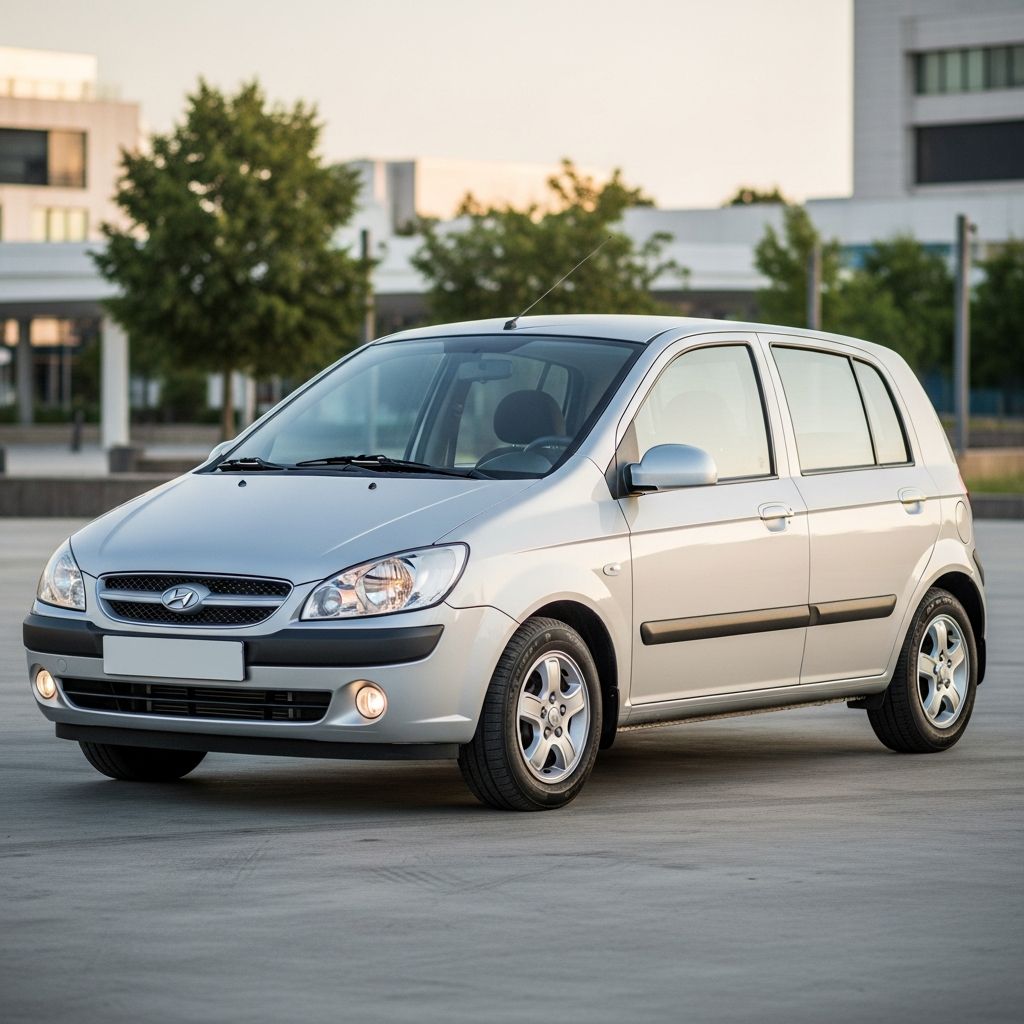
The Hyundai Getz, produced from 2002 to 2011, emerged as a practical supermini that challenged established rivals with its blend of affordability, maneuverability, and surprising spaciousness. Designed primarily for urban environments, this hatchback prioritized ease of use for new drivers and families seeking low running costs without sacrificing comfort or safety.
Design and Dimensions: Built for City Life
With its tall, cab-forward profile, the Getz maximizes interior volume within a subcompact footprint. Measuring around 3.8 meters in length, it slips effortlessly into tight parking spots and navigates congested streets. The elevated seating position provides excellent visibility, making it ideal for inexperienced motorists. Rubberized door guards and reinforced bumpers add resilience against everyday dings in busy areas.
Despite its modest exterior, the cabin feels airy. Front occupants enjoy ample head and legroom for taller adults, while rear space accommodates average-sized passengers comfortably—though very tall individuals may find knee room tight on longer trips. Boot capacity hovers at 254 liters with seats up, expanding to over 1,000 liters when folded, sufficient for groceries or weekend gear.
- Key Dimensions: Length: ~3825mm; Width: ~1660mm; Height: ~1490mm
- Wheelbase supports stable handling without excess bulk
- Five-door layout enhances practicality for families
Engine Lineup and Performance
The Getz offered a range of petrol engines tuned for peppy city acceleration rather than highway cruising. Entry-level 1.1-liter units delivered basic propulsion for light loads, while mid-range 1.3- and 1.4-liter fours provided balanced output. Top models featured a 1.6-liter engine producing 78kW at 5800rpm and 144Nm at 3200rpm, propelling the lightweight body with enthusiasm.
Five-speed manuals shifted crisply, pairing well with the engines’ torque curves for quick merges. Four-speed automatics were available but dulled responsiveness and thirstier on fuel, better suited to stop-start commutes. Real-world tests logged 0-100km/h in under 12 seconds for manuals, with top speeds around 170km/h.
| Engine | Power | Torque | 0-100km/h (Manual) |
|---|---|---|---|
| 1.1L | 49kW | 99Nm | ~14s |
| 1.3/1.4L | 60-66kW | 115-123Nm | ~12s |
| 1.6L | 78kW | 144Nm | ~10.5s |
Higher-revving mills sounded busy at speed but remained refined in daily use. Owners praise the lively low-end pull, ideal for weaving through traffic.
Fuel Efficiency and Running Costs
Hyundai claimed combined figures as low as 6.2L/100km for the 1.6 manual on 91RON fuel, earning green credentials with 148g/km CO2. Independent tests often hit 8-9L/100km in mixed driving, still competitive for the era. A 45-liter tank supports 500+km ranges, minimizing fill-ups.
Low insurance groups and cheap parts keep ownership affordable. Routine servicing intervals at 15,000km or annually cost under $300, with widespread dealer networks—even in rural spots—thanks to rental fleet popularity. Tires and brakes prove durable, often lasting 50,000km+.
- 45L tank; 91RON petrol recommended
- Real-world economy: 7.5-8.6L/100km
- 3.5-star fuel efficiency rating
Handling and Ride Quality
Independent front struts and torsion-beam rear suspension deliver agile cornering beyond expectations for a budget car. Light steering aids parking precision, while a compliant ride absorbs potholes effectively. It’s no sports sedan, but the planted feel inspires confidence on twisty roads.
City dwellers appreciate the compact turning circle (under 10m) and effortless low-speed agility. At highway paces, stability holds firm, though wind noise creeps in above 110km/h.
Safety Features and Ratings
Earning a four-star ANCAP rating, the Getz punched above its weight with dual front airbags standard (sides optional). Electronic stability control, traction control, ABS with EBD, and active headrests featured on higher trims. A full-size steel spare added peace of mind.
- ANCAP: 4 stars
- Standard: Dual front airbags, ABS/EBD
- Options: Side airbags, ESC
Post-2005 updates bolstered crash structures, enhancing occupant protection.
Interior Comfort and Practicality
Simple, durable plastics withstand years of use without cracking. Seats offer decent support, with height adjustment on manuals. Air conditioning chills quickly, and a basic stereo suffices for most. Storage cubbies abound, including door pockets and a lidded center console.
Recyclability reaches 89%, appealing to eco-conscious buyers. Five-seater capacity works for most, though rearmost passengers suit shorter jaunts.
Long-Term Reliability and Common Issues
Remarkably robust for its price, the Getz avoids widespread faults. Mechanics report few engine or transmission gremlins even past 150,000km. Rust resistance holds up in coastal areas, and electronics remain trouble-free.
Minor niggles include aging tailgate handles, thin paint prone to chips, and yellowing headlights—easily remedied. Regular oil changes prevent timing belt woes at 100,000km intervals.
- Strengths: Engine durability, cheap repairs, easy maintenance
- Watch For: Paint chips, headlight haze, suspension bush wear
Used Market Insights: Buying Smart
Prices start under $5,000 for high-mileage examples, rising to $8,000-$12,000 for low-km 2009+ models. Inspect service history, test for clutch slip (manuals), and scan for accident damage. Post-2006 facelifts refined styling and added features.
| Year Range | Avg Price (AUD) | Key Updates |
|---|---|---|
| 2002-2005 | $3,000-$6,000 | 1.3L intro, basic safety |
| 2006-2011 | $6,000-$12,000 | Restyle, improved chassis |
Rivals like Toyota Yaris or Mazda2 offer alternatives, but Getz undercuts on value.
Owner Experiences: Real-World Verdict
Forum users rave about its fun factor, with one logging 90,000km over 12 years hassle-free. New drivers love the forgiving dynamics, while commuters value economy. Drawbacks? Limited rear legroom and dated auto boxes.
“Feels larger than it is, handles like a sports car minus the power.”
Frequently Asked Questions (FAQs)
Is the Hyundai Getz reliable for long-term ownership?
Yes, with proper maintenance, it exceeds 200,000km easily. Focus on timing belts and fluids.
What’s the best engine choice?
The 1.4L or 1.6L manuals balance fun and economy best.
How fuel-efficient is it really?
Expect 7-9L/100km; manuals edge out autos.
Are parts hard to find?
No—Hyundai’s network and aftermarket support keep costs low.
Suitable for families?
Great for small families or urban singles; boot expands well.
Why Choose a Used Getz Today?
In 2026, the Getz endures as a no-nonsense urban warrior. Its blend of reliability, low costs, and engaging drive makes it a top pick for budget buyers. Test drive one to experience its charm firsthand.
References
- Hyundai Getz Review & Road Test — Drive.com.au. 2009. https://www.drive.com.au/reviews/hyundai-getz-review-road-test/
- Used Hyundai Getz review: 2002-2011 — CarsGuide. 2023-10-15. https://www.carsguide.com.au/car-reviews/hyundai-getz-used-review-2002-2012-13618
- Used Hyundai Getz review — ReDriven. 2022. https://redriven.com/reviews/hyundai/getz/used-hyundai-getz-review/
- 12 years & 90,000 km with a Hyundai Getz Prime 1.3 GLX — Team-BHP. 2020. https://www.team-bhp.com/forum/long-term-ownership-reviews/208830-12-years-90-000-km-hyundai-getz-prime-1-3-glx.html
Similar Articles



Read full bio of medha deb