Hyundai Getz Used Buyer’s Guide: Practical Checks & Costs
Discover why the Hyundai Getz remains a smart, affordable choice for city driving and family use in the used car market.
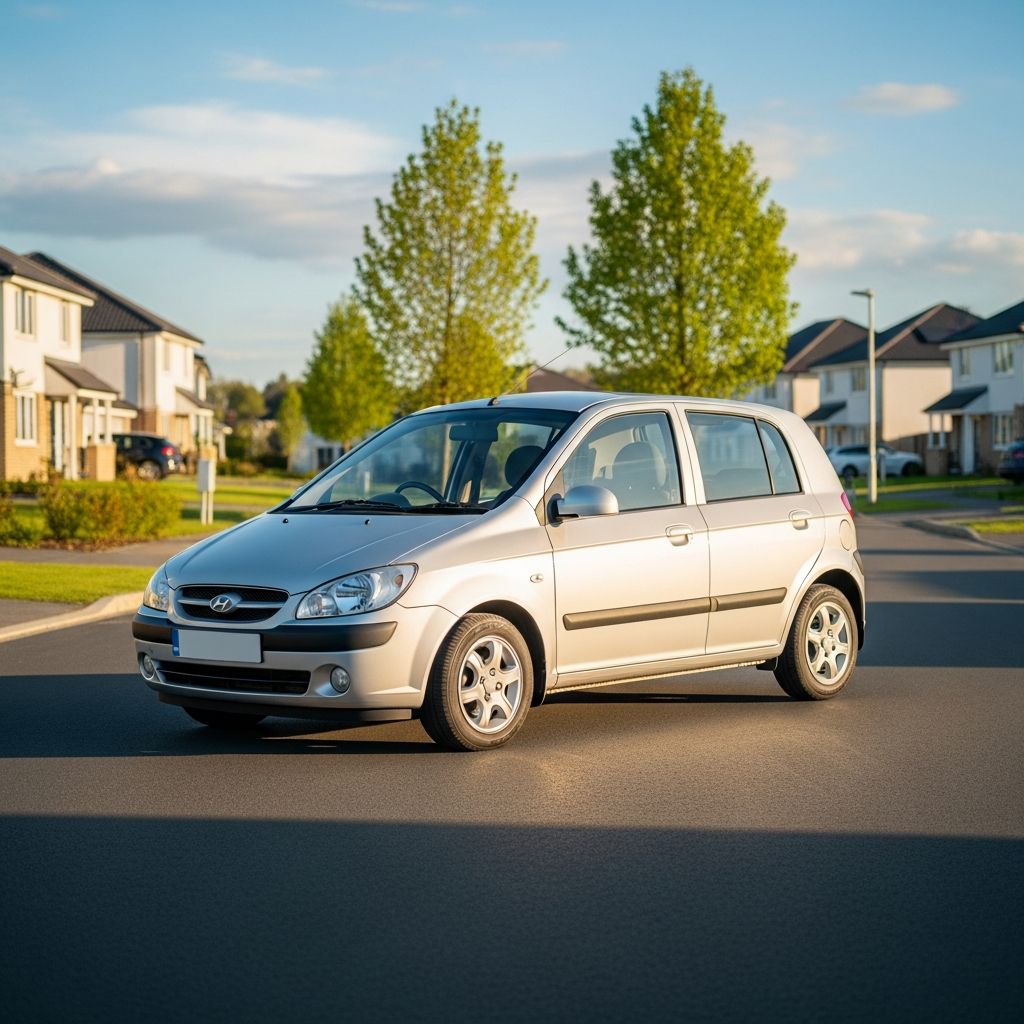
The Hyundai Getz, produced from 2002 to 2009, emerged as a compelling option in the supermini segment, offering European-inspired styling, practical space, and low running costs at a competitive price. This compact hatchback challenged established rivals by delivering value without major compromises, making it a strong contender in the used market today.
Origins and Design Philosophy
Launched at the 2002 Geneva Motor Show, the Getz marked Hyundai’s push into the premium end of budget motoring. Drawing from the Clix concept car, it featured a wheel-at-each-corner layout that maximized interior room while keeping external dimensions tidy at 3,830mm long and 1,660mm wide. This design prioritized urban agility, ease of parking, and a balanced profile with clean lines that avoided the cluttered aesthetics common in some contemporaries.
The exterior boasted a modern, fuss-free look with flowing contours from front grille to rear hatch, appealing to buyers seeking understated elegance. Inside, the cabin impressed with competitive space for four adults, a logical dashboard layout, and versatile seating. The rear bench slid forward or back, reclined, and split 60/40—including the seat cushion—for flexible cargo configurations, setting it apart from many peers that only split the backrest.
Engine Lineup and Performance
Power came from two petrol engines: a 1.4-liter unit producing 62.5kW and 117Nm, and a 1.6-liter option with slightly more punch. Both favored high revs over low-end torque, suiting city driving but requiring gear changes on highways. The five-speed manual transmission shifted smoothly post-2005 facelift, while the four-speed automatic dulled responsiveness and hurt economy.
| Engine | Power | Torque | Fuel Economy (L/100km) |
|---|---|---|---|
| 1.4L Petrol | 62.5kW | 117Nm | 6.1 combined |
| 1.6L Petrol | ~78kW | ~145Nm | 6.2 combined |
Real-world consumption hovered around 10L/100km in urban tests due to tall gearing, prompting drivers to rev harder for overtakes. Modest acceleration—0-100km/h in about 12 seconds for the 1.4—suited commuting but lagged behind sportier rivals. Handling was vague with underdamped suspension, prioritizing comfort over cornering precision, though the facelifted model improved gear feel and engine refinement.
Practicality and Everyday Usability
Despite its size, the Getz accommodated five passengers comfortably for short trips, with class-average legroom and headroom. Boot space varied from 250 liters (seats up) to over 1,000 liters folded, enhanced by the sliding rear bench. City dwellers appreciated the tight turning circle and slim width for threading through traffic.
- Key Practical Features: Sliding/reclining/splitting rear seats for legroom or cargo flexibility.
- 89% recyclable materials, ahead of class norms.
- Easy parking thanks to compact footprint.
- Functional dashboard with clear controls.
Trims ranged from base models with air conditioning and power steering to higher specs adding alloys, fog lights, and CD players. The 2005 update brought revised engines, better transmissions, and cosmetic tweaks for broader appeal.
Safety and Reliability Assessment
Safety started basic: driver’s airbag standard from launch, passenger bag added in 2003. Post-facelift models often included ABS and electronic brakeforce distribution (EBD). ANCAP ratings reached two stars, reflecting the era’s standards but trailing modern cars. Post-2003 models are preferable for dual airbags.
Reliability shines in used examples. Owners report few intrinsic faults; common issues like tailgate handles or thin paint chipping stem from age rather than design flaws. Mechanics note robust engines and chassis holding up well, with low ownership costs. No widespread problems emerged from forums or reviews, unlike some rivals.
- Buyer’s Checklist:
- Check for post-2003 dual airbags.
- Inspect paint/handles for wear.
- Test manual shift quality (avoid sluggish autos).
- Verify service history for timing belt.
- Scan for rust on underbody.
Running Costs and Ownership Experience
Affordability defined the Getz: cheap insurance, parts, and fuel (unleaded only). Servicing intervals were reasonable, and Hyundai’s warranty covered early models comprehensively. Fuel thirst improved slightly post-2005, but manuals outperformed autos. Resale held steady due to reputation for durability.
Owners praise spaciousness feeling larger than specs suggest, sports-car-like handling in bends (despite modest power), and value. Drawbacks include thirsty urban driving and soft ride, but it excels as a budget daily driver.
Market Position and Rivals
The Getz undercut Toyota Yaris and Honda Jazz on price while matching space. Against Vauxhall Corsa or Ford Fiesta, it offered lower costs and sharper looks but softer dynamics. Yaris edged in reliability ratings (four stars), yet Getz’s four-star verdict from some testers highlights its package.
| Rival | Strengths | Getz Edge |
|---|---|---|
| Toyota Yaris | Legendary reliability, standard ABS | Lower price, more seat flexibility |
| Ford Fiesta | Sharper handling | Better value, fuel economy |
| Hyundai Getz | Affordable, spacious | – |
Buying Advice for Used Getz
Target 2005+ facelifts for refinements. Budget $3,000-$6,000 AUD for low-km examples. Prioritize manuals, full service logs, and crash history. Test drive for gearshift slickness and engine smoothness. With care, expect 200,000+ km longevity.
Pros: Cheap to run, reliable, practical, stylish for price.
Cons: Average performance, basic safety, firm ride on poor roads.
Owner Insights and Long-Term Verdict
Feedback emphasizes surprise at interior room and fun handling. One owner called it ‘larger than it looks, handles like a sports car minus the speed.’ Mechanics confirm minimal failures, ideal for first-time buyers or fleets.
Rated 60/100 by some, four stars by others—it’s no class leader but punches above weight for budget supermini duties. In today’s used market, the Getz delivers European flair at economy prices, perfect for urbanites seeking reliability without premium tags.
Frequently Asked Questions (FAQs)
Is the Hyundai Getz reliable?
Yes, with few common faults; engines and chassis endure high mileage well.
What’s the fuel economy like?
Around 6-10L/100km; better with manual and steady driving.
Are there safety concerns?
Two-star ANCAP; opt for post-2003 with dual airbags and ABS.
How practical is the boot?
250-1,000+ liters; sliding seats boost versatility.
Should I buy manual or auto?
Manual for better performance and economy.
References
- Used Hyundai Getz review: 2002-2004 — CarsGuide. 2004-01-01. https://www.carsguide.com.au/car-reviews/used-car-review-hyundai-getz-2002-2004-13269
- Used car review: Hyundai Getz 2005-2007 — Drive.com.au. 2009-09-26. https://www.drive.com.au/reviews/used-car-review-hyundai-getz-20052007-20090926-14t99/
- Hyundai Getz (2002 – 2009) — Car and Driving. 2002. https://www.caranddriving.com/cdwebsite/road-test-video-review.aspx?id=208555
- Used Hyundai Getz review — ReDriven. 2023. https://redriven.com/reviews/hyundai/getz/used-hyundai-getz-review/
- 2009 Hyundai Getz Reviews — CarSurvey.org. 2009. http://www.carsurvey.org/reviews/hyundai/getz/2009/
Similar Articles



Read full bio of medha deb